15
Irving Penn
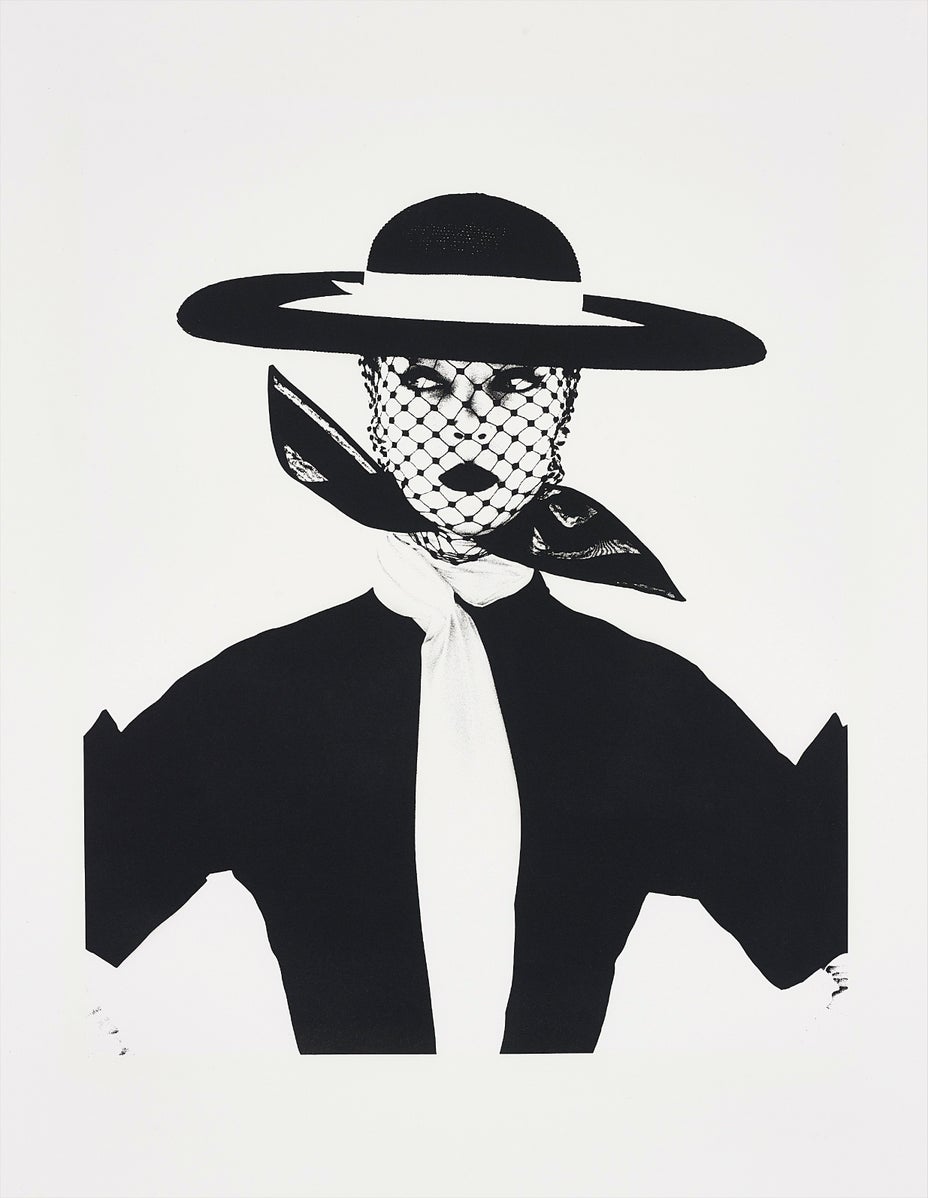
Black and White Vogue Cover (Jean Patchett), New York
This work is number 11 from the edition of 34. As of this writing, the Art Institute of Chicago holds another print from this edition.
Full-Cataloguing
At a time when his peers were creating fashion photographs with ornate settings, Penn’s seemingly minimalist approach was unconventional and distinctive. He replaced indulgent sets with plain backdrops that enabled him to extract the essence of his subjects. Black and White Vogue Cover perfectly exemplifies his emphasis on form, shape and line. The juxtaposition of black and white in this composition reveals his discerning eye and understanding of positive and negative space. Jean Patchett, the subject of this image and one of Penn’s favourite models, recalled his brilliance in constructing an entirely monochromatic vision: ‘My lips were black. I remember using eyebrow pencil on my lips.’
Part scientist, all artist, Penn experimented for years before arriving in 1967 at the perfect combination of platinum and palladium, which resulted in prints ‘far finer and sweeter’ than platinum alone. His unwavering dedication to the platinum-palladium process was demonstrated in his hand-coating of every print. ‘I myself brushed every single print,’ he recalls. ‘I’d be jealous of anyone else doing that. I printed many at night. I’d shake Lisa by the shoulder in bed. If she liked the picture, she’d reach up and pull me down for a kiss.’ Throughout his unparalleled career, Penn remained deeply interested in the printing process and the many ways in which a single negative can be interpreted.
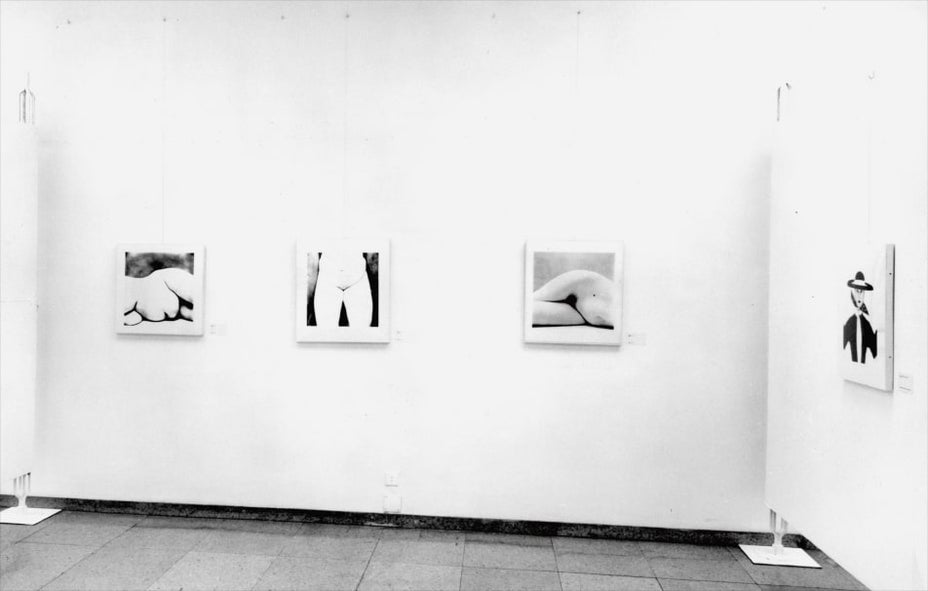
Black and White Vogue Cover was first realised in platinum-palladium no later than 1968 in an edition of 34. It is likely that this image was one of the first fashion images Penn printed using his newly perfected process. As indicated in his hand on the verso, the platinum-palladium print offered here is the actual print that was exhibited in his first international solo exhibition in 1975. Opening at Turin’s Galleria Civica d’Arte Moderna then travelling to Galleria d'Arte Moderna di Bologna (currently Museo d’Arte Moderna di Bologna) and London’s The Photographers’ Gallery, the show was dedicated to his platinum-palladium prints and featured fresh iterations of images he had originally created for Vogue. Later, in 1984, a gelatin silver edition not exceeding 16 was realised.
Irving Penn
American | B. 1917 D. 2009Irving Penn was one of the 20th century’s most significant photographers, known for his arresting images, technical mastery, and quiet intensity. Though he gained widespread acclaim as a leading Vogue photographer for over sixty years, Penn remained a private figure devoted to his craft. Trained under legendary art director Alexey Brodovitch in Philadelphia, he began his career assisting at Harper’s Bazaar before joining Vogue in 1943, where editor and artist Alexander Liberman recognized Penn’s distinctive eye and encouraged him to pursue photography. Penn’s incomparably elegant fashion studies reset the standard for the magazine world, and his portraits, still lifes, and nude studies broke new ground. His 1960 book Moments Preserved redefined the photographic monograph with its dynamic layout and high-quality reproductions. In 1964, Penn began printing in platinum and palladium, reviving this 19th-century process to serve his own distinct vision. An innovator in every sense, Penn’s approach to photography was endlessly adventurous. Few photographers of his generation experimented as widely with both conventional and historic print processes, and none achieved Penn’s level of excellence in all.