169
Heuer
Ref. 741.603 GMT
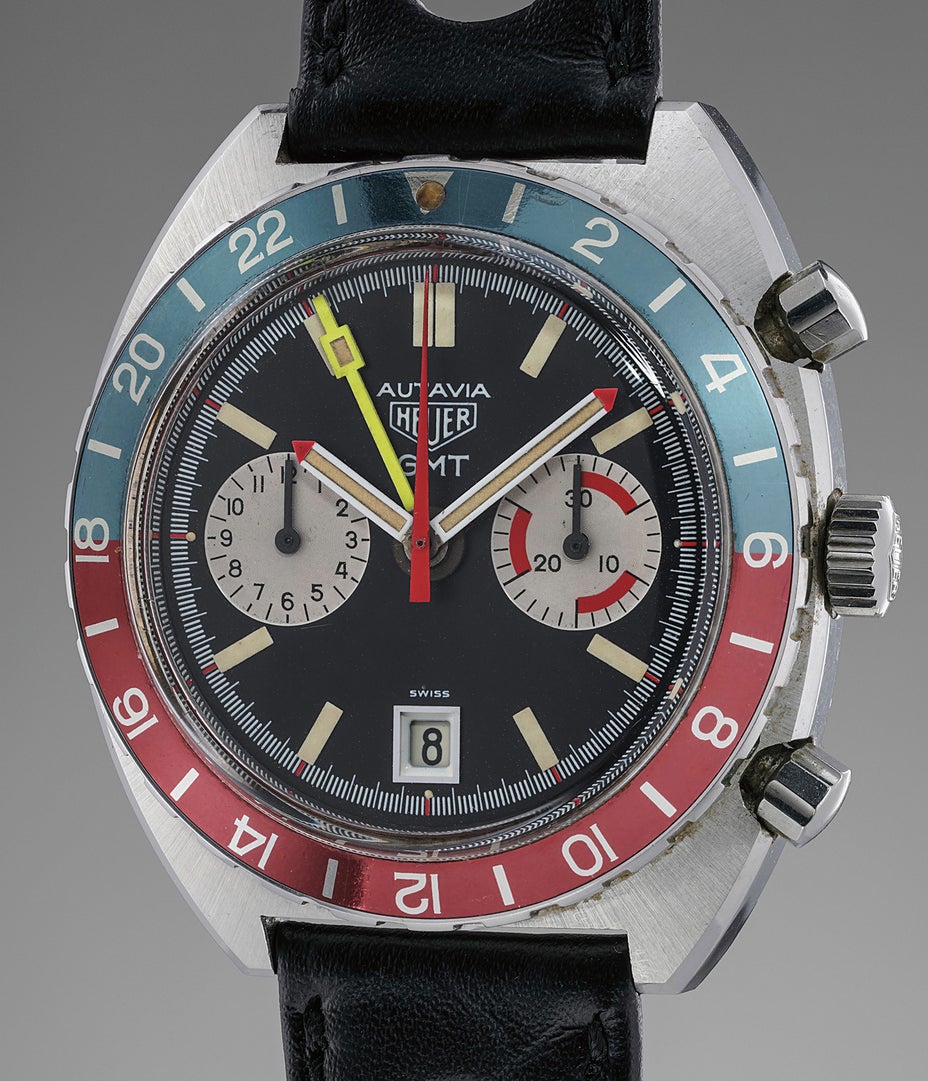
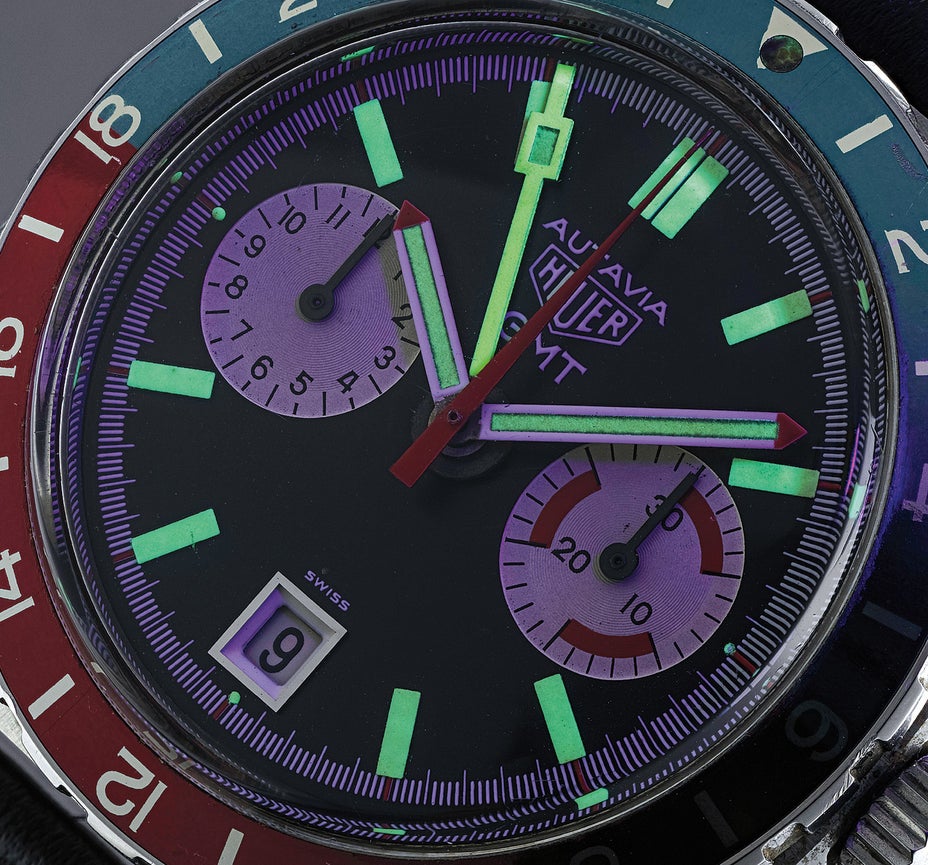
Autavia GMT
A stainless steel chronograph wristwatch with dual time zone indication, date and bright yellow GMT second time zone hand
Estimate
CHF10,000–15,000
€8,800–13,200
$10,200–15,400
Sold For
CHF13,750
Manufacturer
Heuer
Year
Circa 1974
Reference No
741.603 GMT
Case No
297'746
Model Name
Autavia GMT
Material
Stainless steel
Calibre
Manual, cal. Valjoux 7741, 17 jewels
Bracelet/Strap
Leather
Clasp/Buckle
Stainless steel pin buckle
Dimensions
42mm Diameter
Signed
Case, dial and movement signed
Full-Cataloguing
The design of the Autavia changed drastically over the course of the model’s history, but Jack Heuer’s concern for legibility remained a constant motivation for the changes it received.
Primarily designed for race car drivers, the case of the first Autavia reference 2446 displayed a bold and very masculine design. The watch’s versatility became evident when Heuer later introduced a GMT version in the late 1960s. Later the design would follow the evolution on the Autavia and the GMT function would appear on the tonneau case reference 741.603 in the mid-1970s. This was a difficult time to introduce a new manual winding watch as the demand for automatic and quartz movements was very strong. Therefore Heuer used a very distinctive color scheme and strong design cues, hoping that its bright GMT would make up for its unpopular movement. Unfortunately, Heuer found it difficult to find a market for its latest Autavia. It is only decades later that this watch would finally receive the attention it deserves with the rising demand of manual winding chronographs.
The present GMT reference 741.603 is a fantastically well preserved testament to a period during which long distance flights were not as common as they are today!
Primarily designed for race car drivers, the case of the first Autavia reference 2446 displayed a bold and very masculine design. The watch’s versatility became evident when Heuer later introduced a GMT version in the late 1960s. Later the design would follow the evolution on the Autavia and the GMT function would appear on the tonneau case reference 741.603 in the mid-1970s. This was a difficult time to introduce a new manual winding watch as the demand for automatic and quartz movements was very strong. Therefore Heuer used a very distinctive color scheme and strong design cues, hoping that its bright GMT would make up for its unpopular movement. Unfortunately, Heuer found it difficult to find a market for its latest Autavia. It is only decades later that this watch would finally receive the attention it deserves with the rising demand of manual winding chronographs.
The present GMT reference 741.603 is a fantastically well preserved testament to a period during which long distance flights were not as common as they are today!
Heuer
Swiss | 1860This iconic chronograph manufacturer has a long tradition of precision timekeeping. As early as 1882, founder Edouard Heuer held a patent for a chronograph watch; in 1887, he received a patent for an oscillating pinion, which is still in use today. These specialized timepieces have been at the heart of the firm's success, enabling the brand to be chosen as early timekeepers for the Olympics. In 1969, the company introduced their first automatic chronograph watch, the Monaco Heuer, which celebrated the Monaco Grand Prix. Other key chronograph models include the Autavia and the Carrera, all of which having become iconic models of the firm.