102Δ︎
Heuer
Ref. 1163T
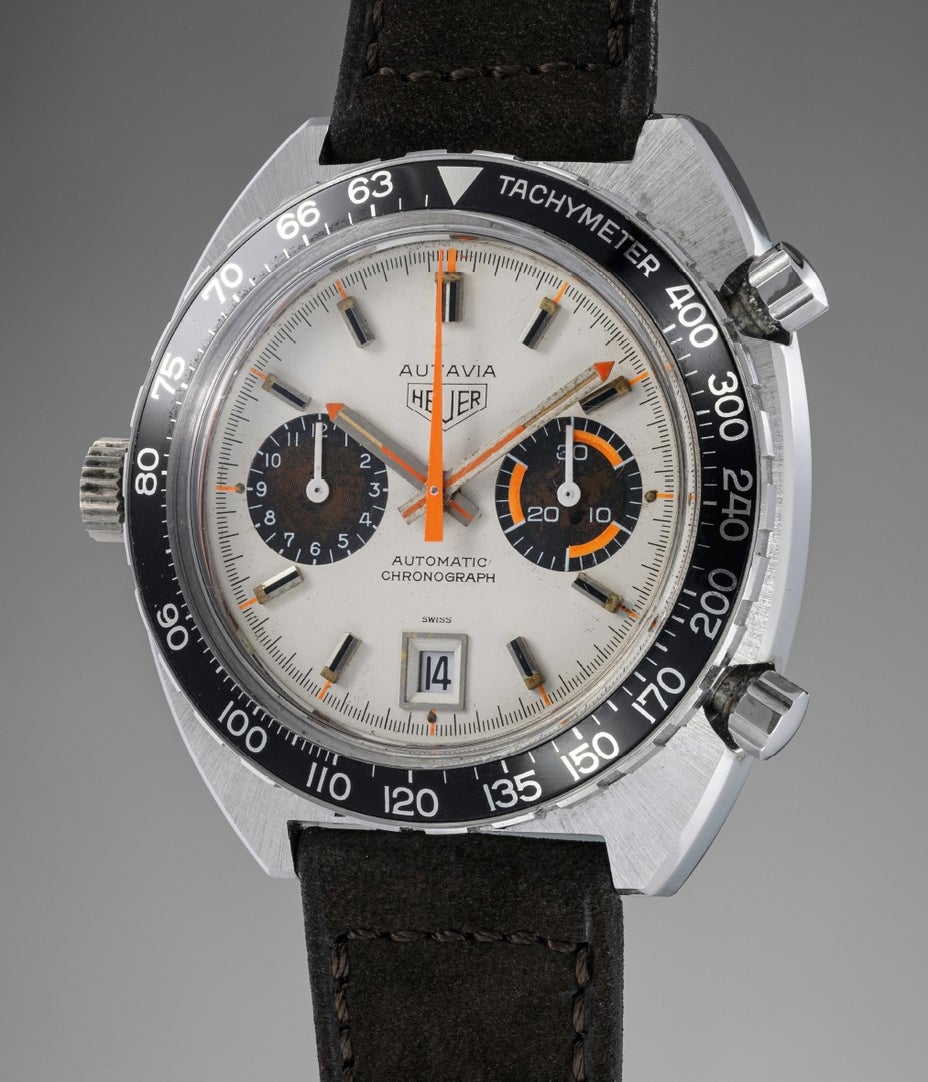
Autavia "White Orange boy"
A very attractive and rare stainless steel chronograph wristwatch with orange accents on a white dial
Estimate
CHF8,000–12,000
€6,900–10,300
$8,500–12,700
Sold For
CHF10,625
Manufacturer
Heuer
Year
Circa 1971
Reference No
1163T
Case No
241'760
Model Name
Autavia "White Orange boy"
Material
Stainless steel
Calibre
Automatic, cal. 12, 17 jewels
Bracelet/Strap
Leather
Clasp/Buckle
Stainless steel pin buckle
Dimensions
40mm Diameter
Signed
Case, dial and movement signed
Full-Cataloguing
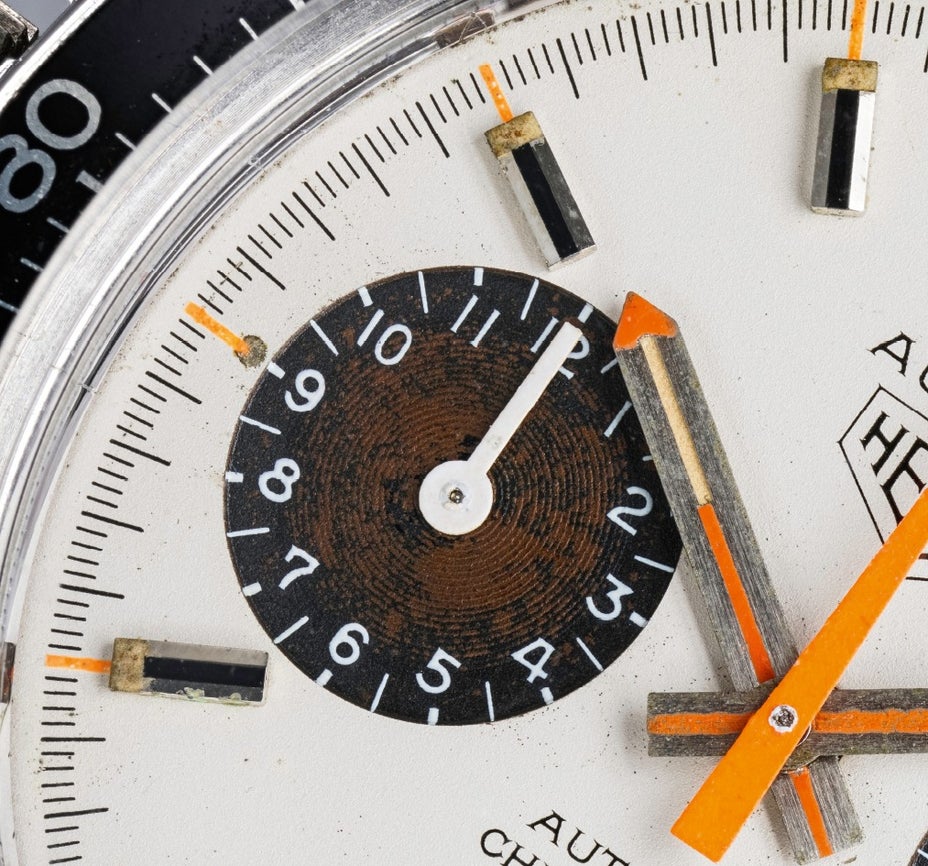
Heuer launched in 1969 its first automatic chronograph movement, the caliber 11. Housed in their three iconic chronograph models at the time which were the Carrera, the Autavia and the Monaco, this movement was soon replaced by the more robust and more accurate caliber 12, featuring a gilt plate instead of a nickel plate. The present watch is powered by this gilt caliber but what makes it even more remarkable is to be found on the dial. The early 70s saw the use of bright colors in design and day to day objects. The watch industry also took up on this trend and Heuer offered some watches with orange accents on the dial. The best known is the “Orange Boy” with a reverse panda dial with orange accents. The present watch, nicknamed "White Orange Boy" is actually its exact opposite, featuring a white dial with black registers, that have beautifully aged to a warm and lively brown patina while the orange accents have remained very bright. This version is much rarer, as scholars have not witnessed more than 10 examples to have surfaced so far.
The very well preserved condition of its case should persuade any demanding collector that this watch is a great addition to his or her collection.
The very well preserved condition of its case should persuade any demanding collector that this watch is a great addition to his or her collection.
Heuer
Swiss | 1860This iconic chronograph manufacturer has a long tradition of precision timekeeping. As early as 1882, founder Edouard Heuer held a patent for a chronograph watch; in 1887, he received a patent for an oscillating pinion, which is still in use today. These specialized timepieces have been at the heart of the firm's success, enabling the brand to be chosen as early timekeepers for the Olympics. In 1969, the company introduced their first automatic chronograph watch, the Monaco Heuer, which celebrated the Monaco Grand Prix. Other key chronograph models include the Autavia and the Carrera, all of which having become iconic models of the firm.