1067Σ︎
Grand Seiko
Ref. 6145-8030
61GS
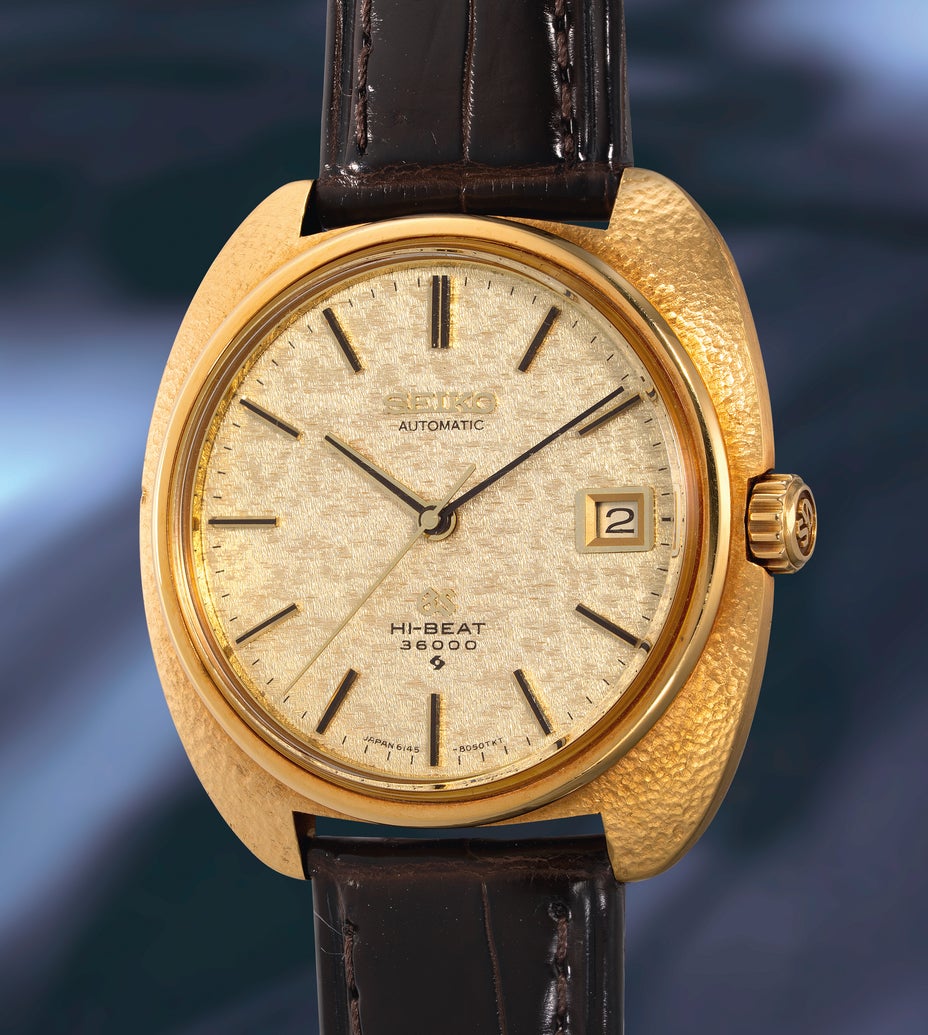
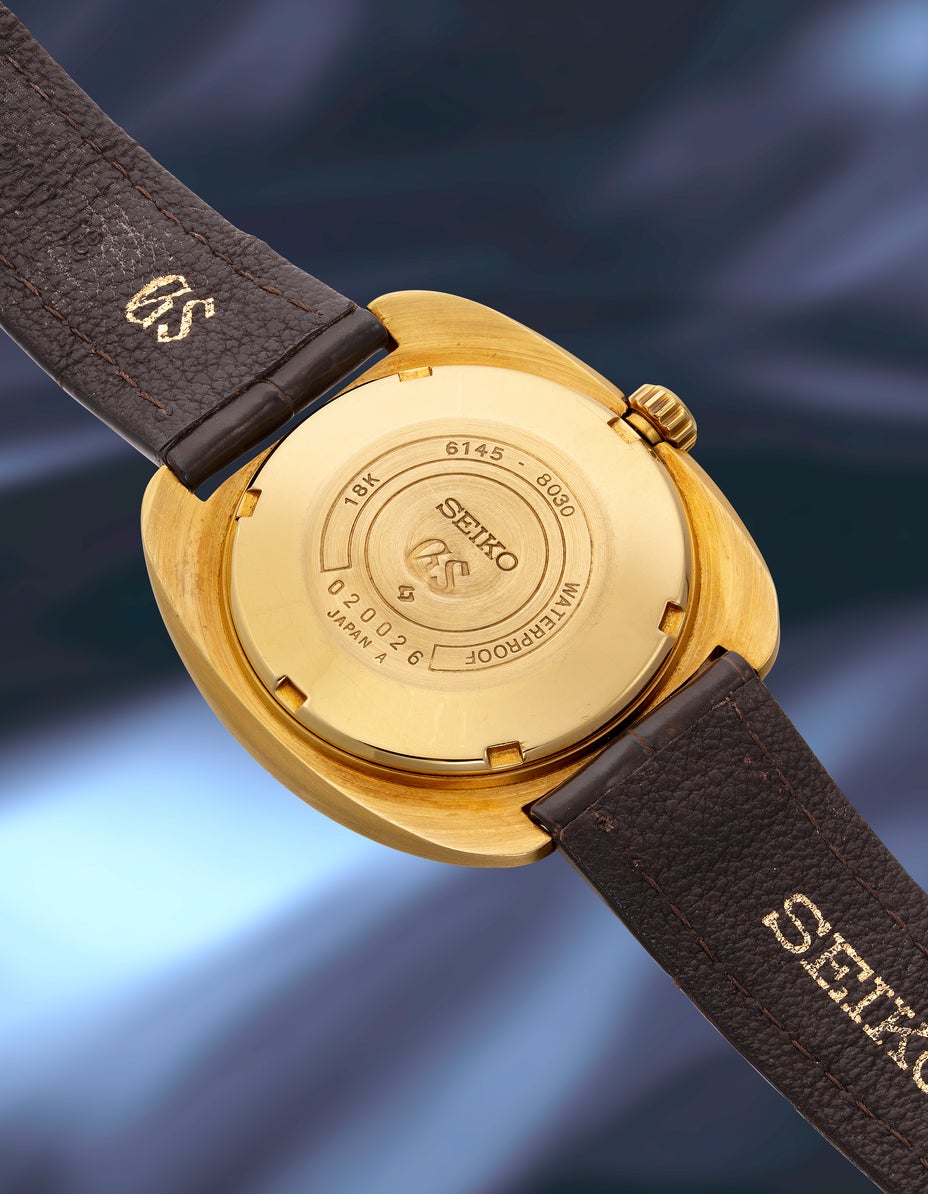
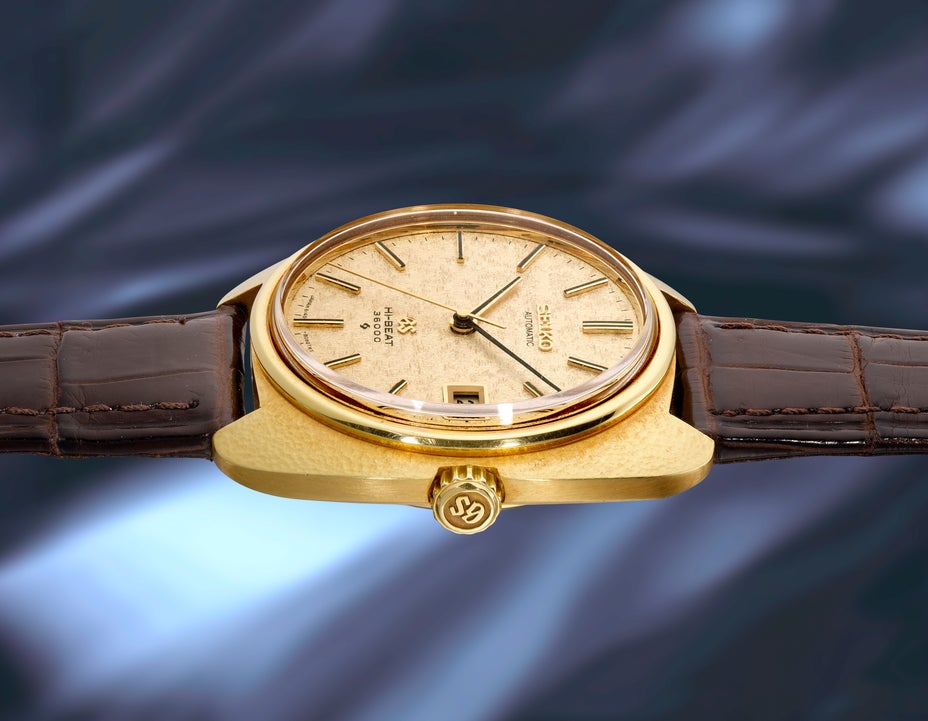
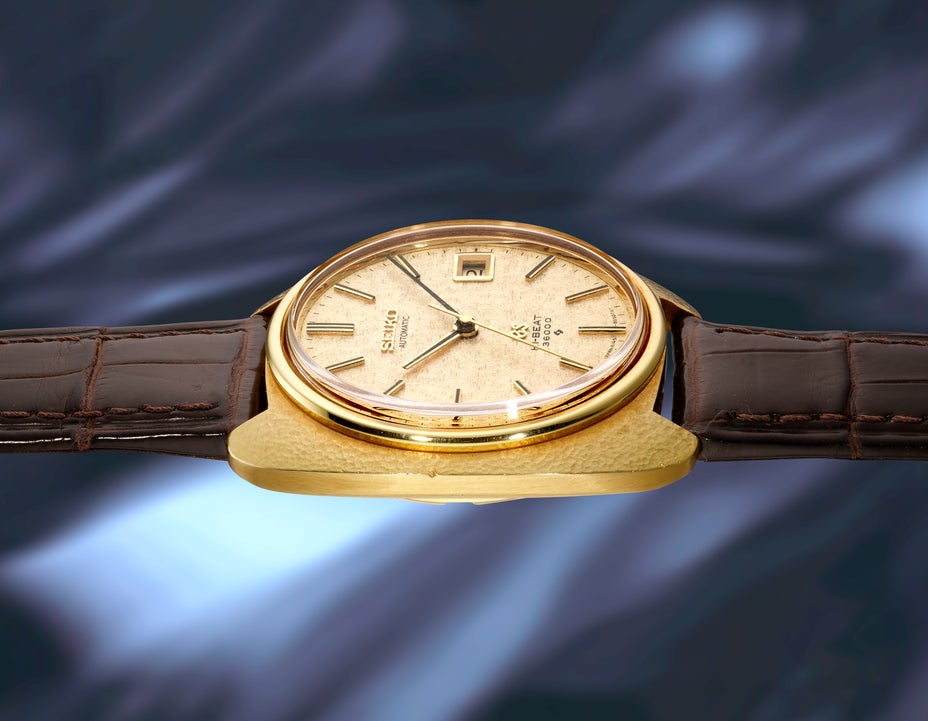
A rare and attractive yellow gold cushion-shaped wristwatch with center seconds, date, hammered gold case and "Starlight" Kirazuri dial
Estimate
HK$48,000–95,000
€5,400–10,600
$6,200–12,200
Manufacturer
Grand Seiko
Year
Circa 1970
Reference No
6145-8030
Case No
020’026
Model Name
61GS
Material
18K yellow gold
Calibre
Automatic, cal. 6145A, 25 jewels
Bracelet/Strap
Crocodile
Clasp/Buckle
18K yellow gold Grand Seiko pin buckle
Dimensions
37.5mm diameter
Signed
Case, dial, movement and buckle signed
Full-Cataloguing
Good to know:
- First Japanese watch with a 10-beat self-winding movement
- Very rare timepiece in excellent condition
- Fine hammered gold case with Kirazuri champagne dial
Produced from 1968 to 1975, the 61GS is a rare timepiece that stood as the flagship model of Grand Seiko during that period. Built at the brand’s Suwa factory, it succeeded the 62GS, the first automatic Grand Seiko, and featured the advanced high-beat, self-winding Grand Seiko 6100 series movement.
The present watch is a combination of traditional craftsmanship and splendid watchmaking artistry. Cased in fine-hammered yellow gold, the watch features a champagne dial crafted in the traditional “Kirazuri” technique. Originated in the Edo period, it was an artistic flourish for ukiyo-e woodblock prints, by applying crushed mica powder to the surface, creating a gentle sparkling effect in the light. From certain angles under the light, it sparkles, and from others, it gives off a soft, matte yellow glow; up close, the texture resembles the grain of tree bark, yet under a loupe, the pattern transforms into a crisscross, linen-like weave.
The 61GS is the first 10-beat automatic watch of Japan, meaning there are 10 vibrations in each second. The 10-beat 6145A movement improves isochronism, which provided better stability and accuracy in different positions and under external disturbances. This self-winding movement also has an added hand-winding mechanism, which is absent in the 62GS self-winding model.
For mid-century watch lovers, or collectors that appreciate traditional Japanese artisanal works, this 61GS is a rare find to bear the iconic Kirazuri dial that continues to be one of Grand Seiko’s most celebrated dial patterns in the present times, and a historic benchmark of Japan’s watchmaking artistry.