3
Gordon Parks
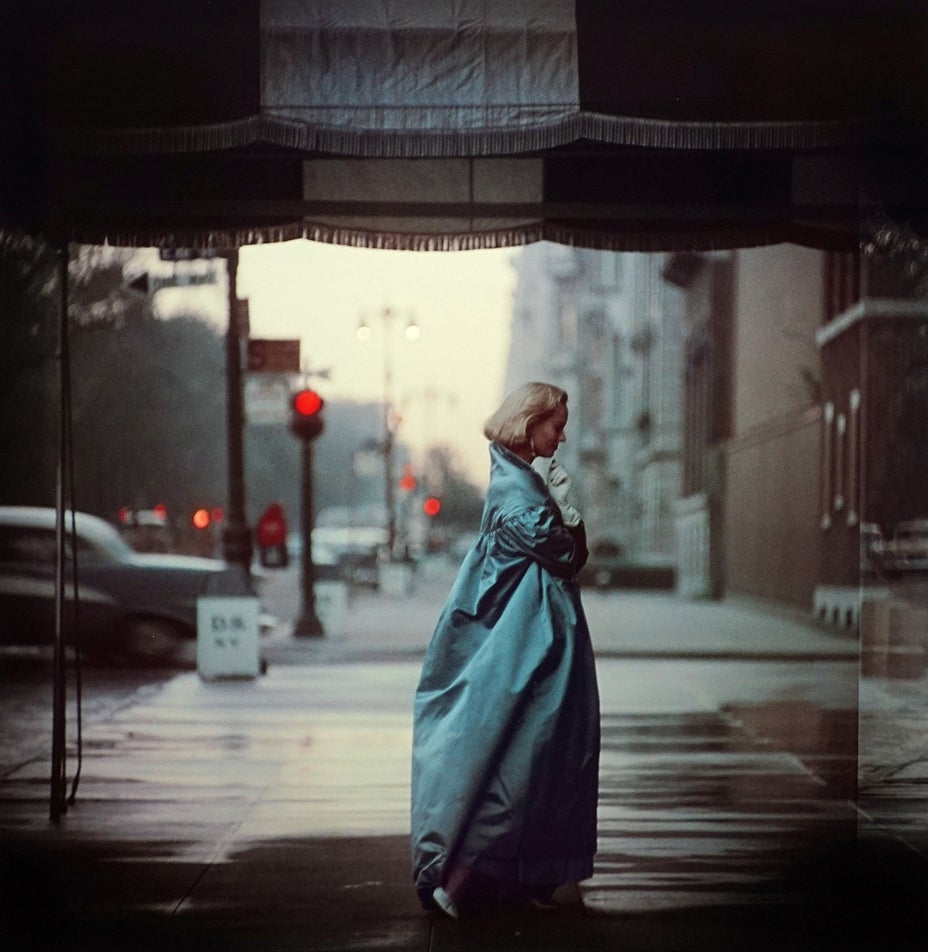
Untitled, New York, N.Y.
Estimate
$5,000–7,000
1956
Archival pigment print, printed 2015.
28 x 28 in. (71.1 x 71.1 cm)
Signed, dated, numbered 1/10 by Peter W. Kunhardt, Jr., Executive Director of the Gordon Parks Foundation, in pencil on a Foundation copyright credit label affixed to the verso.
Full-Cataloguing
While known primarily for his superlative documentary photographs, Gordon Parks also created a large and superbly elegant body of work in the fashion genre. Some of his earliest jobs in the 1940s were fashion assignments made in Minneapolis and Chicago; these caught the attention of Vogue art director Alexander Liberman who regularly published Parks’s photographs in the magazine’s pages. Parks’s ability to work as both a documentarian and a fashion photographer brought him to LIFE magazine, where he photographed subjects as divergent as crime in Harlem and the collections in Paris.
Parks was one of photography’s true Renaissance men, and he produced, alongside his formidable photographic oeuvre, novels, a series of memoirs, books of poetry, musical compositions, and the blockbuster films Shaft (1971) and Shaft’s Big Score! (1972). His ability to create so productively in so many fields is nothing short of remarkable, as is the fact that he did so in the face of racial injustice. One of his most famous images, American Gothic—of an African-American cleaning women in Washington, D. C., in 1942—was made on a day he had been refused service at a clothing store, a movie theater, and a restaurant. Of his early drive to succeed, he said, “I had a great sense of curiosity and a great sense of just wanting to achieve. I just forgot I was Black and walked in and asked for a job and tried to be prepared for what I was asking for.”
Parks was one of photography’s true Renaissance men, and he produced, alongside his formidable photographic oeuvre, novels, a series of memoirs, books of poetry, musical compositions, and the blockbuster films Shaft (1971) and Shaft’s Big Score! (1972). His ability to create so productively in so many fields is nothing short of remarkable, as is the fact that he did so in the face of racial injustice. One of his most famous images, American Gothic—of an African-American cleaning women in Washington, D. C., in 1942—was made on a day he had been refused service at a clothing store, a movie theater, and a restaurant. Of his early drive to succeed, he said, “I had a great sense of curiosity and a great sense of just wanting to achieve. I just forgot I was Black and walked in and asked for a job and tried to be prepared for what I was asking for.”