Priority Bidding is here! Secure a lower Buyer’s Premium today (excludes Online Auctions and Watches). Learn More
Property from a European Collection

45

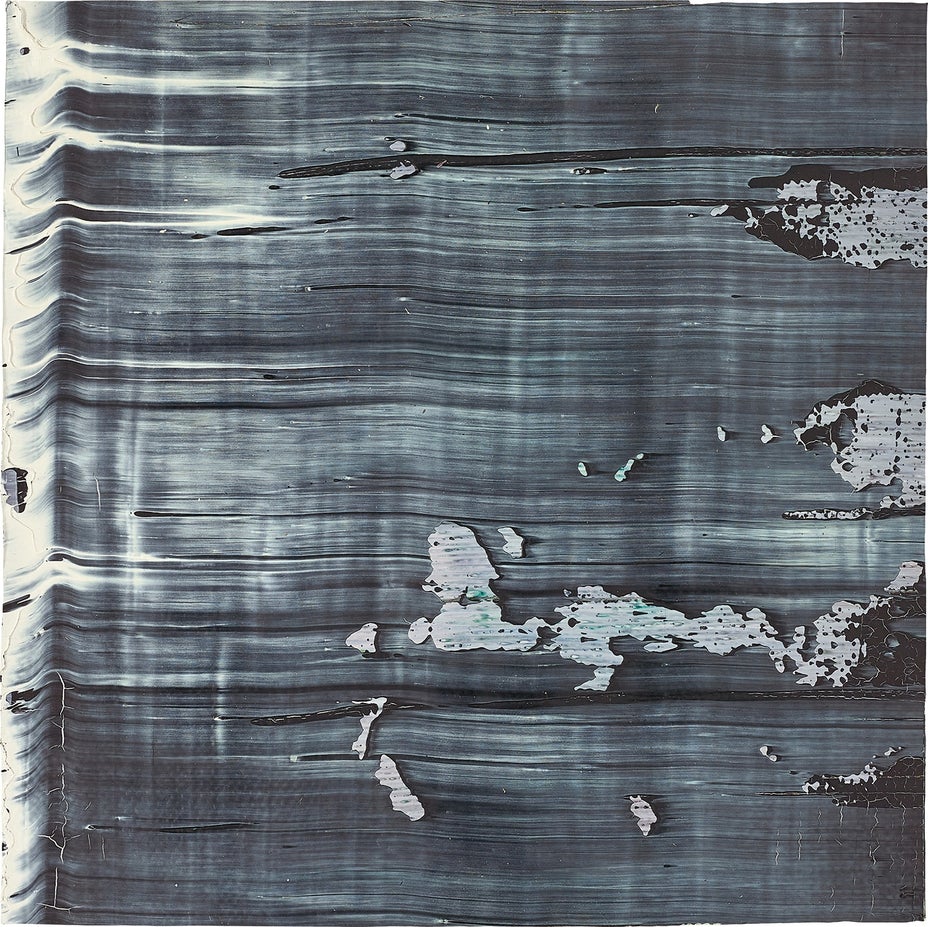
Gerhard Richter

Souvenir

Estimate
£50,000 - 70,000
Lot Details
Oil on canvas, mounted to ivory cardboard.
1995
canvas 21 x 21 cm (8 1/4 x 8 1/4 in.)
framed 43.8 x 35.7 cm (17 1/4 x 14 in.)
Signed and numbered '49' in black ink on a label affixed to the reverse of the frame, one of 64 unique parts from the painting CR 813-1, published by Anthony d'Offay Gallery, London, contained in a pale wooden frame specified by the artist.
Catalogue Essay
In 1994, Gerhard Richter used a carpet knife to cut up a freshly painted work, formerly CR 813-1. His intention was not to destroy (as with some 98 of his other canvases) but to distribute, transforming the canvas into editions by dividing it into sixty-four equal squares. This fragmentation created a series of intimate works forever connected to the now lost larger painting, yet with individual, distinct compositions and narratives. The works were sold at Anthony d’Offay Gallery, London to mark their exhibition Gerhard Richter: Painting in the Nineties, 1 June – 4 August 1995.

Gerhard Richter

German | 1932
Powerhouse painter Gerhard Richter has been a key player in defining the formal and ideological agenda for painting in contemporary art. His instantaneously recognizable canvases literally and figuratively blur the lines of representation and abstraction. Uninterested in classification, Richter skates between unorthodoxy and realism, much to the delight of institutions and the market alike. Richter's color palette of potent hues is all substance and "no style," in the artist's own words. From career start in 1962, Richter developed both his photorealist and abstracted languages side-by-side, producing voraciously and evolving his artistic style in short intervals. Richter's illusory paintings find themselves on the walls of the world's most revered museums—for instance, London’s Tate Modern displays the Cage (1) – (6), 2006 paintings that were named after experimental composer John Cage and that inspired the balletic 'Rambert Event' hosted by Phillips Berkeley Square in 2016. 
Browse Artist