26
George Condo
Stanley Steamer (Fat Jim)
Estimate
£180,000–220,000‡︎
oil on canvas
127 x 106.7 cm (50 x 42 in.)
Signed, titled and dated 'Condo 09 Stanley Steamer' on the reverse.
Full-Cataloguing
George Condo’s work is populated by a surreal assemblage of figures: from the madcap cavalier to the howling clown, his subjects are characterised by an antic energy. His portraiture rallies the disjunctive, often coaxing unsettling wholes from apparently discrete parts. It exists at the limits of the imagination, hinting at the truth latent within troubled visions. Condo observes ‘as each [character] becomes real, so do their environments, their place of being. Sometimes, I think they even come from some imaginary character’s mind.’ (George Condo in conversation with Anne Bonney, Bomb Magazine, Issue 40, Summer 1992).
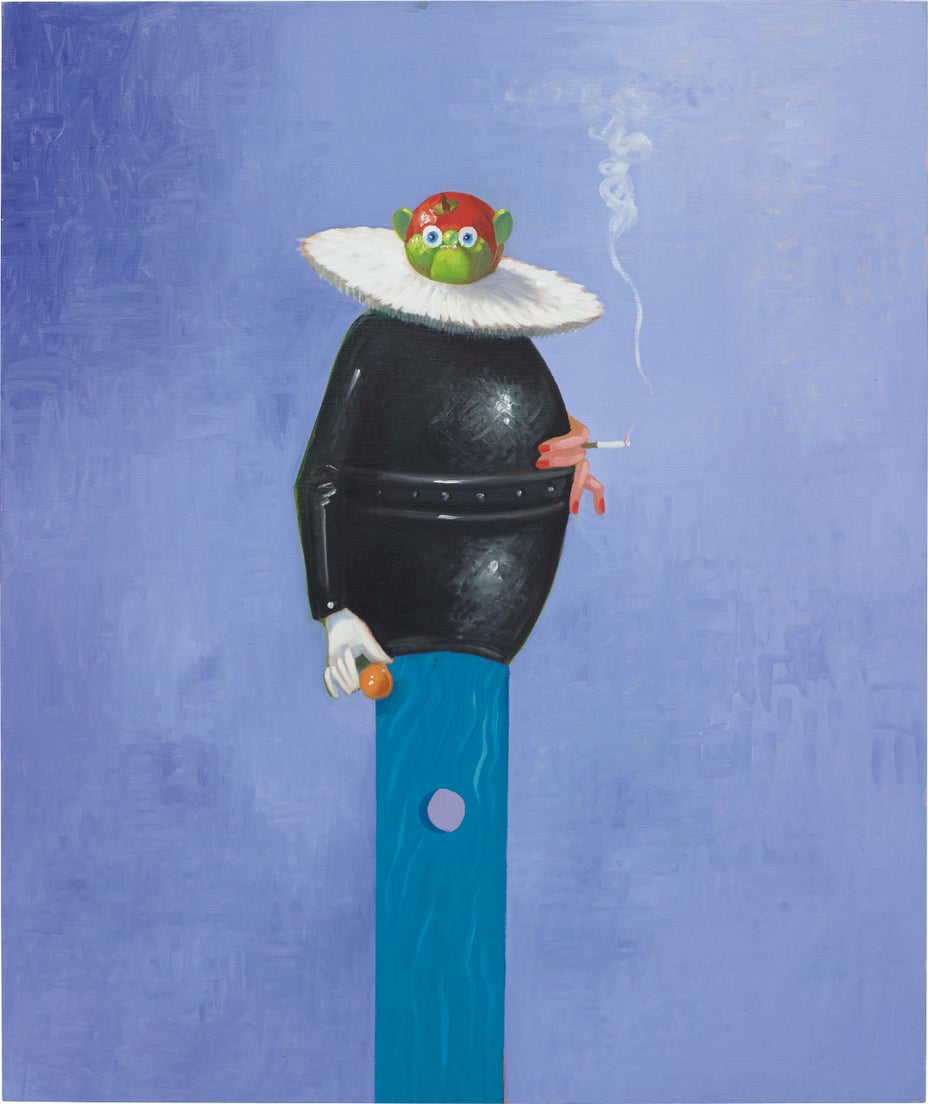
Stanley Steamer (Fat Jim) imagines a typically mysterious sitter. A collection of parts approximates a human form: an apple becomes the head, a metallic barrel the torso, and a wooden plank the legs. One gloved hand holds what appears to be an orange; the other holds a cigarette between painted nails. The posture is strikingly similar to that struck in Skinny Jim, another work from the same year in which a polka-dotted clown holds similar appendages in analogous positions. Yet the two are far from identical; Stanley Steamer (Fat Jim) moves further away from a conventionally recognisable human form. Nonetheless, the artist’s focus is squarely trained on humanity.
Condo relates that the ‘portrait is often a picture into the interior of a subject as opposed to the way they might look on the outside - that idea of portraying the interior of a person's thoughts and the way that they think they look or the way they feel like they look.’ (George Condo in Marina Cashdan, ‘The Mental States of George Condo,' Huffington Post, 25 January 2011). The artist is interested in states of mind, in mapping the affective through the physical. In Stanley Steamer (Fat Jim), he disassembles the complex webs which constitute an individual’s identity. Apple-headed and ruff-sporting, the figure is plainly clownish – a cruelly ridiculed figure. Yet there is also a certain dignity at play; in the upright posture and gracefully poised cigarette, the character contrives the elegance of a movie star. A startling and eccentric phantasm, Fat Jim is a hallucinatory exploration of personhood.
Stanley Steamer (Fat Jim) imagines a typically mysterious sitter. A collection of parts approximates a human form: an apple becomes the head, a metallic barrel the torso, and a wooden plank the legs. One gloved hand holds what appears to be an orange; the other holds a cigarette between painted nails. The posture is strikingly similar to that struck in Skinny Jim, another work from the same year in which a polka-dotted clown holds similar appendages in analogous positions. Yet the two are far from identical; Stanley Steamer (Fat Jim) moves further away from a conventionally recognisable human form. Nonetheless, the artist’s focus is squarely trained on humanity.
Condo relates that the ‘portrait is often a picture into the interior of a subject as opposed to the way they might look on the outside - that idea of portraying the interior of a person's thoughts and the way that they think they look or the way they feel like they look.’ (George Condo in Marina Cashdan, ‘The Mental States of George Condo,' Huffington Post, 25 January 2011). The artist is interested in states of mind, in mapping the affective through the physical. In Stanley Steamer (Fat Jim), he disassembles the complex webs which constitute an individual’s identity. Apple-headed and ruff-sporting, the figure is plainly clownish – a cruelly ridiculed figure. Yet there is also a certain dignity at play; in the upright posture and gracefully poised cigarette, the character contrives the elegance of a movie star. A startling and eccentric phantasm, Fat Jim is a hallucinatory exploration of personhood.
George Condo
AmericanPicasso once said, "Good artists borrow, great artists steal." Indeed, American artist George Condo frequently cites Picasso as an explicit source in his contemporary cubist compositions and joyous use of paint. Condo is known for neo-Modernist compositions staked in wit and the grotesque, which draw the eye into a highly imaginary world.
Condo came up in the New York art world at a time when art favored brazen innuendo and shock. Student to Warhol, best friend to Basquiat and collaborator with William S. Burroughs, Condo tracked a different path. He was drawn to the endless inquiries posed by the aesthetics and formal considerations of Caravaggio, Rembrandt and the Old Masters.