58
Falcone
A most probably unique and visually arresting pink gold wristwatch with regulator style display, enamel dial, day and moonphase indications
Estimate
CHF60,000–120,000
€63,600–127,000
$73,400–147,000
Manufacturer
Falcone
Year
Circa 1985
Case No
1A
Material
18k pink gold
Calibre
Manual, cal 7001, 17 jewels
Bracelet/Strap
Leather
Clasp/Buckle
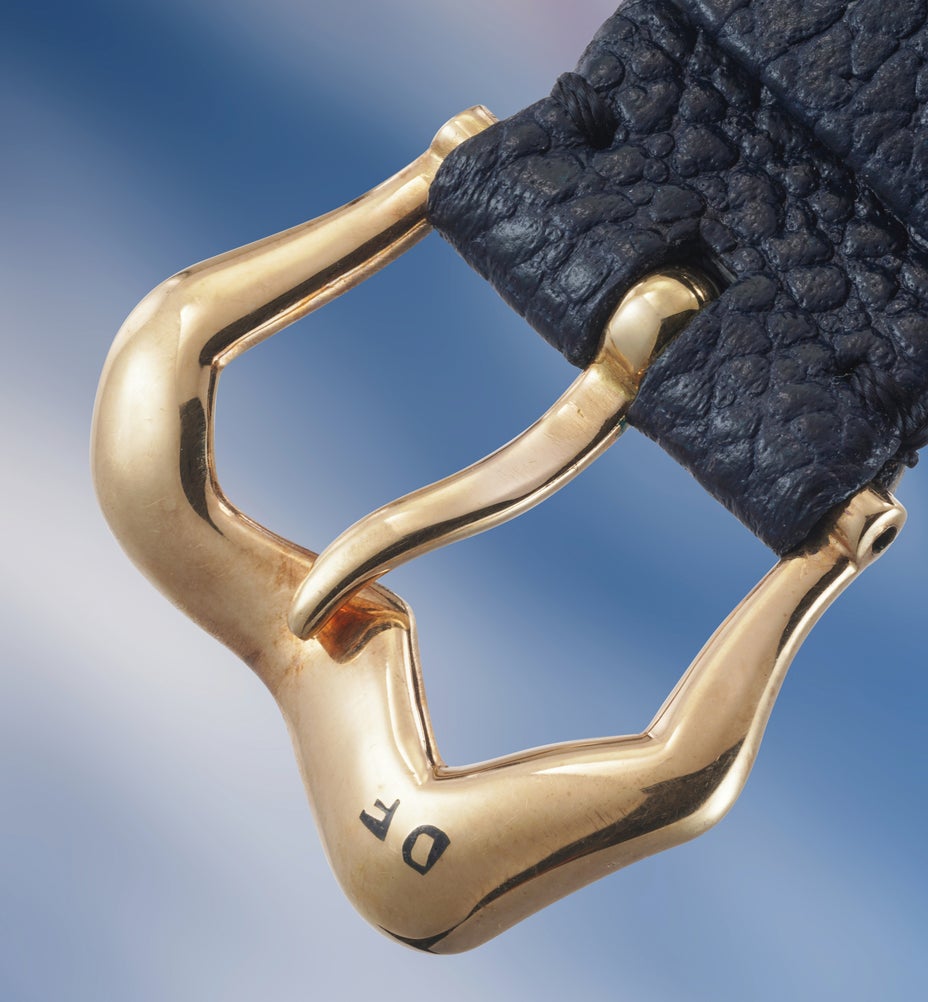
18k pink gold
Dimensions
32mm width X 35mm length (longest ends)
Signed
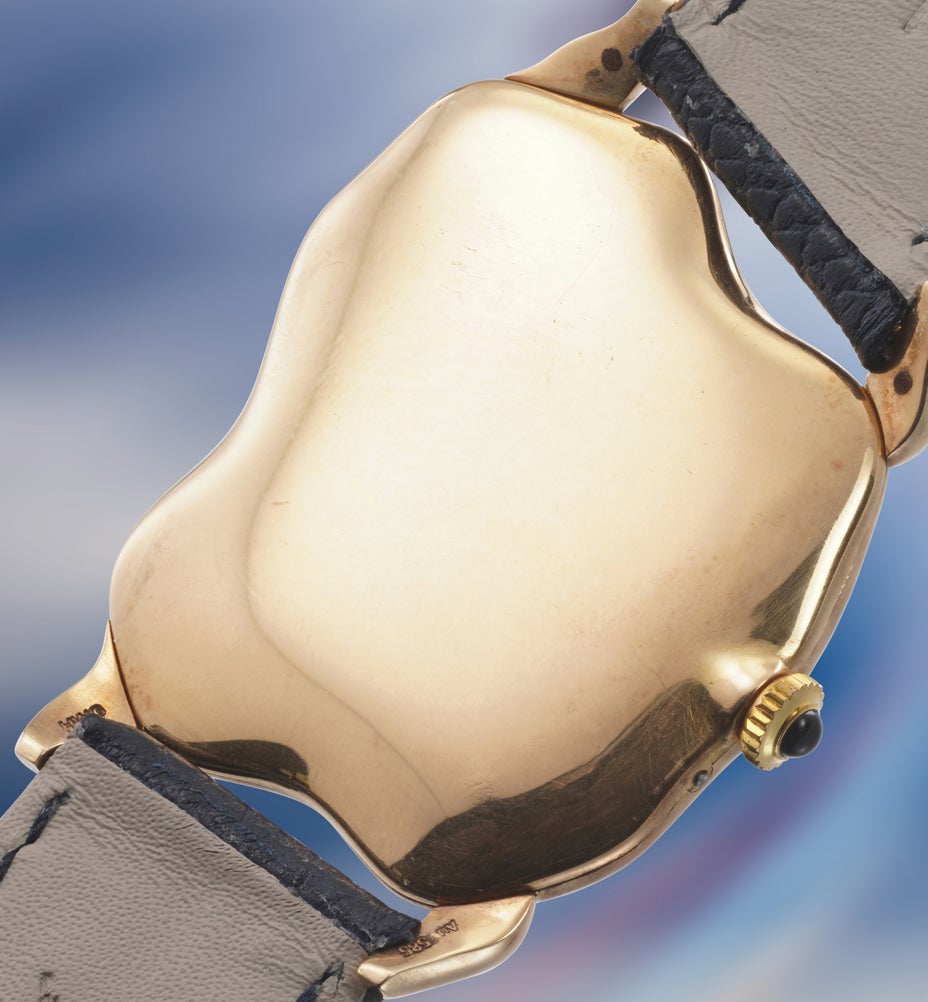
Case, dial, movement and buckle signed
Full-Cataloguing
Good to Know:
- Regulator style display with day and moonphase indication
- Enamel dial
- Most probably unique
Dino and Roberto Falcone were a Milanese father-and-son team of watch- and casemakers who produced a small number of highly unusual watches during the early 1980s. Their work is characterised by asymmetrical cases, unconventional displays and irregularly shaped details, with clear references to Salvador Dalí’s The Persistence of Memory. Created at a time when mechanical watchmaking was facing significant challenges from quartz technology, their approach was notably experimental.
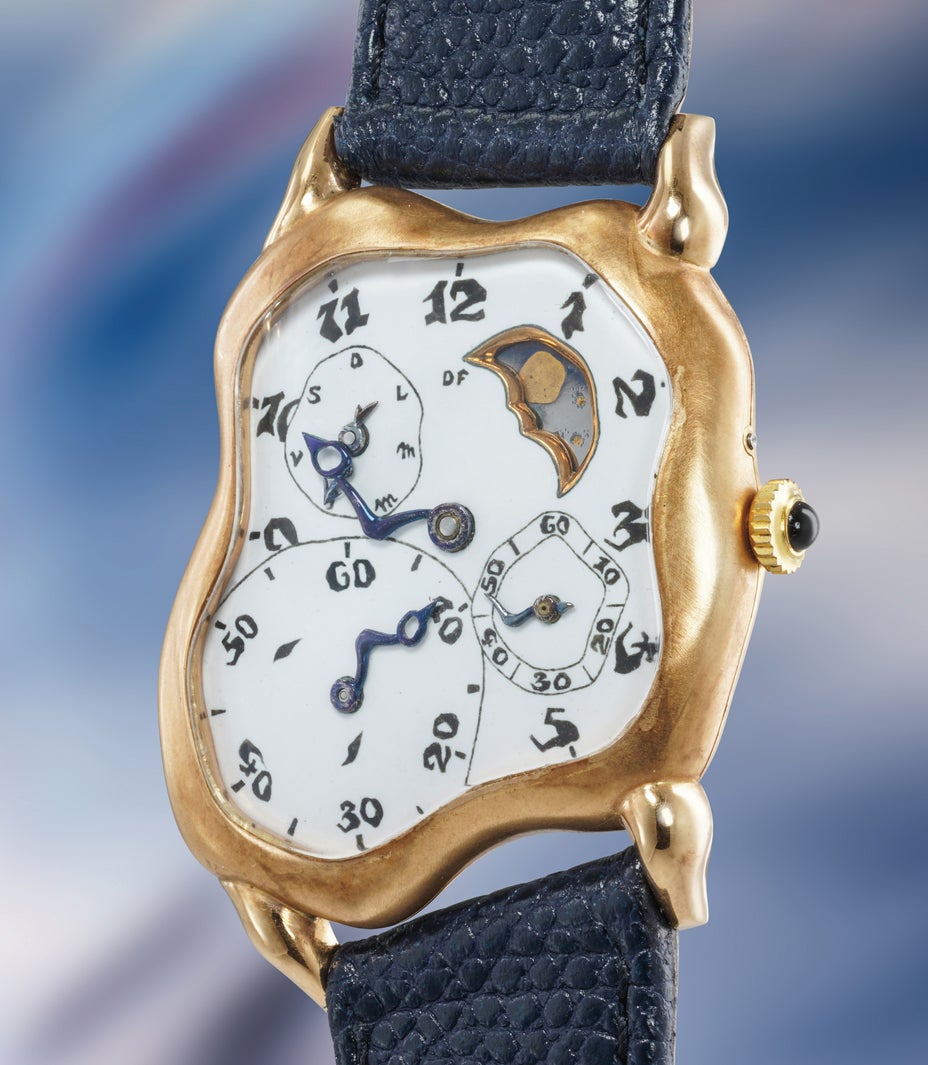
The present watch, numbered 1A, is a particularly interesting example of their work. Cased in 18K pink gold features a white enamel dial with an unusual arrangement of indications. The time is displayed in a regulator style with the hours read via a large subdial on the lower left side of the dial whilst the minutes are read via the central hand. The seconds are indicated on the lower right side, the day of the week on the top left and moonphases on the top right. Rather than following conventional geometry, each element has been given its own distinctive shape: the moon-phase aperture follows a gently curved, irregular outline, while the all the other indications are similarly unconventional.
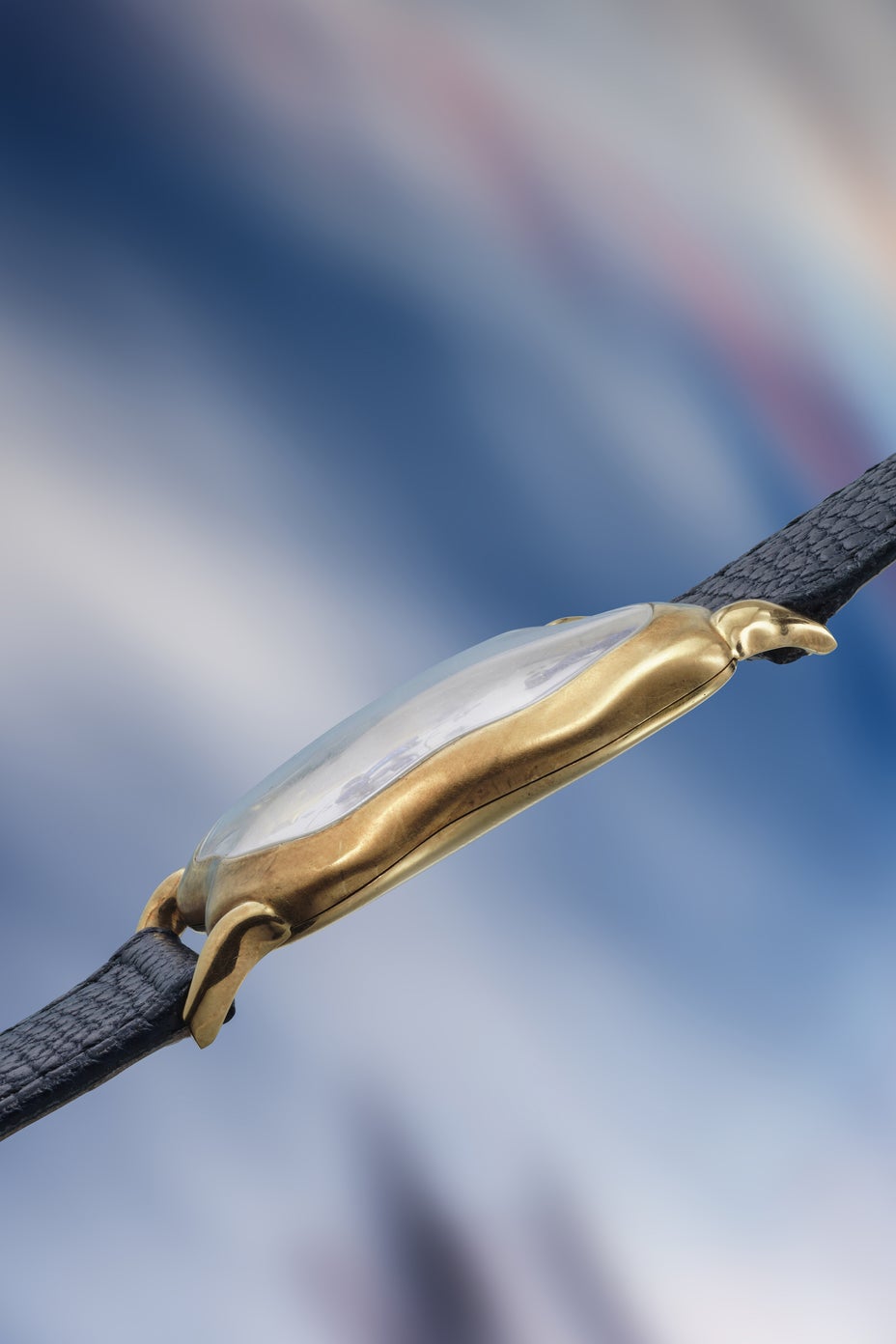
The design extends to the case and hands. The lugs are characteristically twisted, giving the case a fluid appearance, while the blued-steel hands feature the distinctive bent form seen on other known Falcone watches. A corrector for the moon phase is discreetly positioned in the case band. The watch is powered by a manually wound ETA calibre 7001, providing a relatively conventional mechanical foundation for an otherwise highly individualistic design.
Very few examples of the Falcone's work are known today, and the circumstances of their production remain poorly documented. Given the rarity of these watches and the individuality of their designs, the present example offers a particularly unusual insight into the experimental side of Italian watchmaking in the early 1980s.
- Regulator style display with day and moonphase indication
- Enamel dial
- Most probably unique
Dino and Roberto Falcone were a Milanese father-and-son team of watch- and casemakers who produced a small number of highly unusual watches during the early 1980s. Their work is characterised by asymmetrical cases, unconventional displays and irregularly shaped details, with clear references to Salvador Dalí’s The Persistence of Memory. Created at a time when mechanical watchmaking was facing significant challenges from quartz technology, their approach was notably experimental.
The present watch, numbered 1A, is a particularly interesting example of their work. Cased in 18K pink gold features a white enamel dial with an unusual arrangement of indications. The time is displayed in a regulator style with the hours read via a large subdial on the lower left side of the dial whilst the minutes are read via the central hand. The seconds are indicated on the lower right side, the day of the week on the top left and moonphases on the top right. Rather than following conventional geometry, each element has been given its own distinctive shape: the moon-phase aperture follows a gently curved, irregular outline, while the all the other indications are similarly unconventional.
The design extends to the case and hands. The lugs are characteristically twisted, giving the case a fluid appearance, while the blued-steel hands feature the distinctive bent form seen on other known Falcone watches. A corrector for the moon phase is discreetly positioned in the case band. The watch is powered by a manually wound ETA calibre 7001, providing a relatively conventional mechanical foundation for an otherwise highly individualistic design.
Very few examples of the Falcone's work are known today, and the circumstances of their production remain poorly documented. Given the rarity of these watches and the individuality of their designs, the present example offers a particularly unusual insight into the experimental side of Italian watchmaking in the early 1980s.