
127
Ed Ruscha
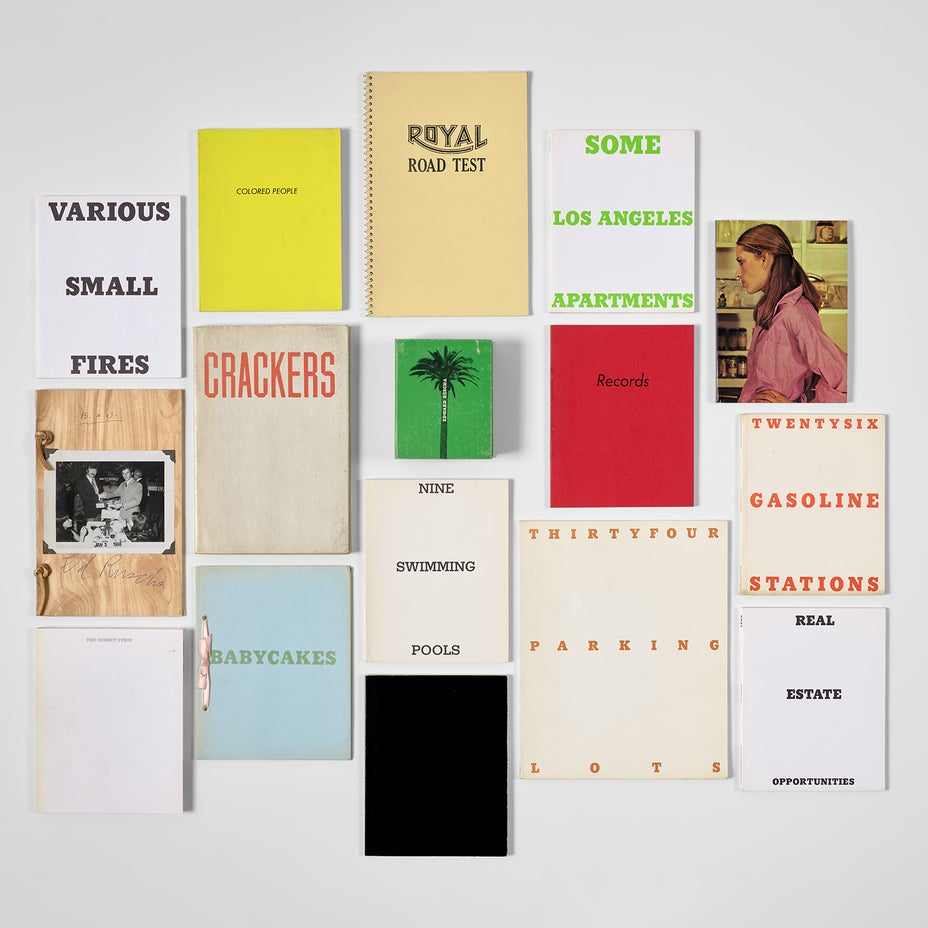
Selection of 16 Artist Books (E. B1-8, B10-13, B15-17, M25)
- Estimate
- $8,000 - 12,000
$7,620
Lot Details
16 artists' books, four with the original glassine dust jackets, one with the original slipcase.
1963-1972
smallest 4 1/2 x 3 5/8 x 1 3/8 in. (11.4 x 9.2 x 3.5 cm)
largest 10 x 8 x 1/4 in. (25.4 x 20.3 x .6 cm)
Two signed, one numbered, all from the first, second or third editions of varying sizes, nine published by the artist, five published by Heavy Industry Publications, Hollywood, one published by Multiples, Inc., New York and one published by The Minneapolis Institute of Art.
Specialist
Full-Cataloguing
Catalogue Essay
Including: Twentysix Gasoline Stations; Various Small Fires and Milk; Some Los Angeles Apartments; Every Building on The Sunset Strip; Thirtyfour Parking Lots in Los Angeles; Royal Road Test; Business Cards; Nine Swimming Pools and a Broken Glass; Crackers; Babycakes with Weights; Real Estate Opportunities; A Few Palm Trees; Records; Colored People; Hard Light and Edward Ruscha (Ed-Werd Rew-Shay) Young Artist.
Literature
Ed Ruscha
American | 1937Quintessentially American, Ed Ruscha is an L.A.-based artist whose art, like California itself, is both geographically rooted and a metaphor for an American state of mind. Ruscha is a deft creator of photography, film, painting, drawing, prints and artist books, whose works are simultaneously unexpected and familiar, both ironic and sincere.
His most iconic works are at turns poetic and deadpan, epigrammatic text with nods to advertising copy, juxtaposed with imagery that is either cinematic and sublime or seemingly wry documentary. Whether the subject is his iconic Standard Gas Station or the Hollywood Sign, a parking lot or highway, his works are a distillation of American idealism, echoing the expansive Western landscape and optimism unique to postwar America.
Browse ArtistHis most iconic works are at turns poetic and deadpan, epigrammatic text with nods to advertising copy, juxtaposed with imagery that is either cinematic and sublime or seemingly wry documentary. Whether the subject is his iconic Standard Gas Station or the Hollywood Sign, a parking lot or highway, his works are a distillation of American idealism, echoing the expansive Western landscape and optimism unique to postwar America.