75
Eberhard
Ref. 11706
Scafograf 300
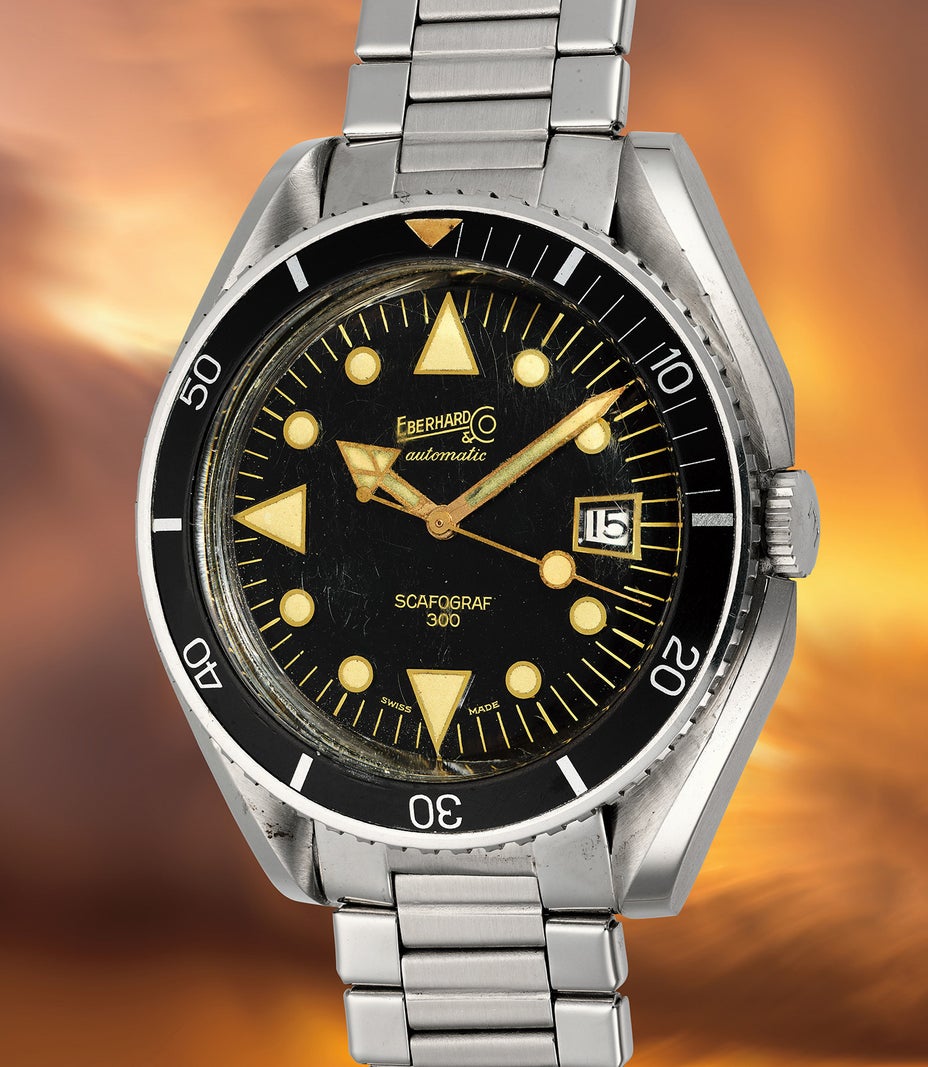
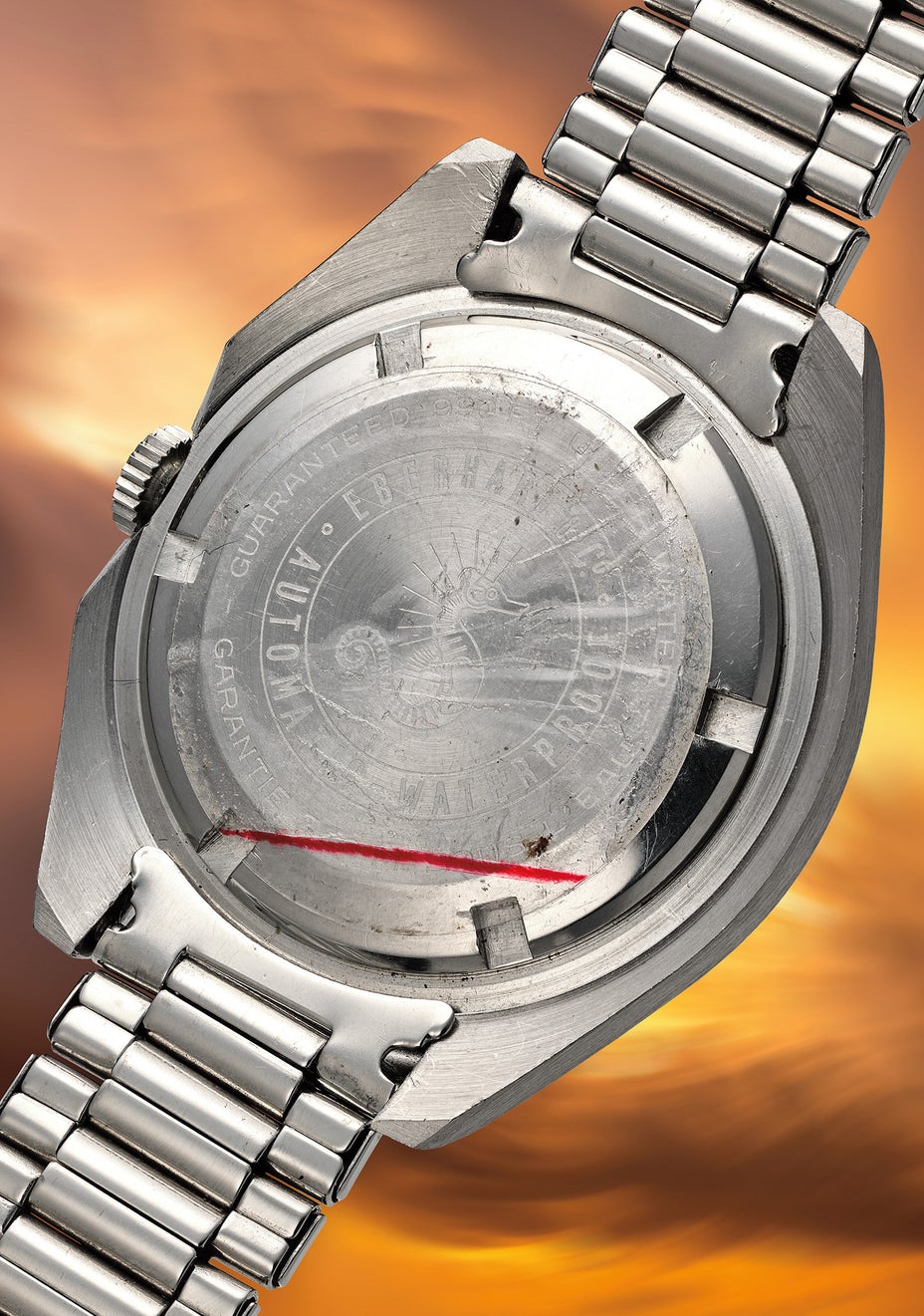
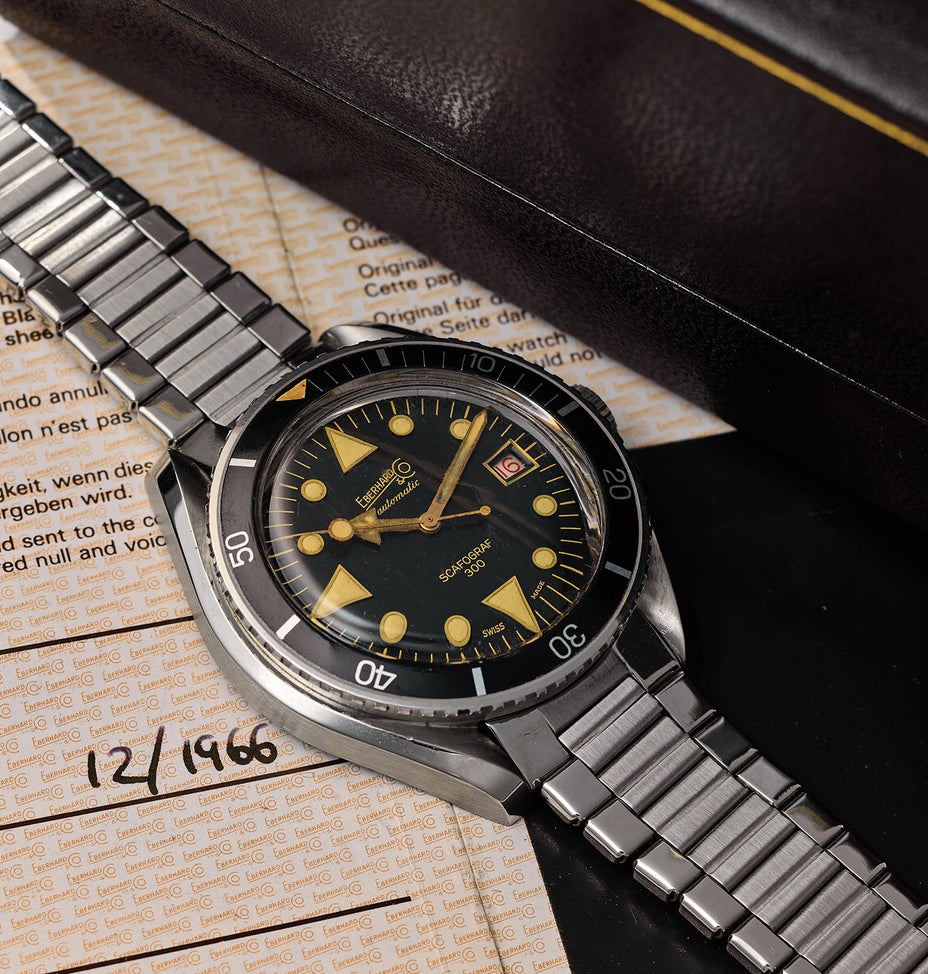
An extremely rare and well-preserved stainless steel diver’s watch with roulette date, rotating bezel, bracelet, guarantee, and presentation box
Full-Cataloguing
After the introduction of the Scafograf 100 in the late 1950s, Eberhard realized that to compete with the dive watches of Rolex, Omega, and Jaeger-LeCoultre, they had to incorporate a rotating bezel to use as a countdown timer for diving. The Scafograf 200 arrived shortly thereafter with an upsized 39mm case. Further developments were made in the Scafograf 300, most significantly a larger, 42mm case and an asymmetric date window.
Drawing heavy design cues from the Omega Seamaster, the Scafograf 300 features a case made by Huguenin Frères and twisted lyre-shaped lugs. The ladder bracelet also closely resembles that of early Omega. The whimsical and bold layout of the dial, however, reflects that of the earlier Scafografs, with oversized triangle and dot indexes, an oversized arrow-shaped hour marker, roulette date wheel, and gilt surrounds for the indexes and date window.
A stunningly well-preserved example, it is further set apart with the accompaniment of its original guarantee paper dating to 1966 and fitted presentation box. Hardly ever seen offered for sale, at auction or otherwise, this horological rare gem comes from the collection of an important American collector.
Eberhard
Swiss | 1887From its earliest days, Eberhard & Co. has sought to bring innovation and precision to watchmaking. As early as the 1890s, the firm introduced a patented setting mechanism to its pocket watches, and in 1905 they introduced a digital system for reading the hours and minutes on a wristwatch. Throughout the firm's long history, they have produced high-quality chronograph watches, introducing their first chronograph wristwatch in 1919. Highly sought-after by collectors, Eberhard's first split-seconds chronograph appeared in 1939. Another key model is the Scafograph 100, an extremely rare diving model introduced in the 1950s. In 2001, Eberhard & Co. made history with their Chrono 4 model, the first chronograph wristwatch with counters horizontally arranged in one row.