24
Ebel
Ref. 8136901
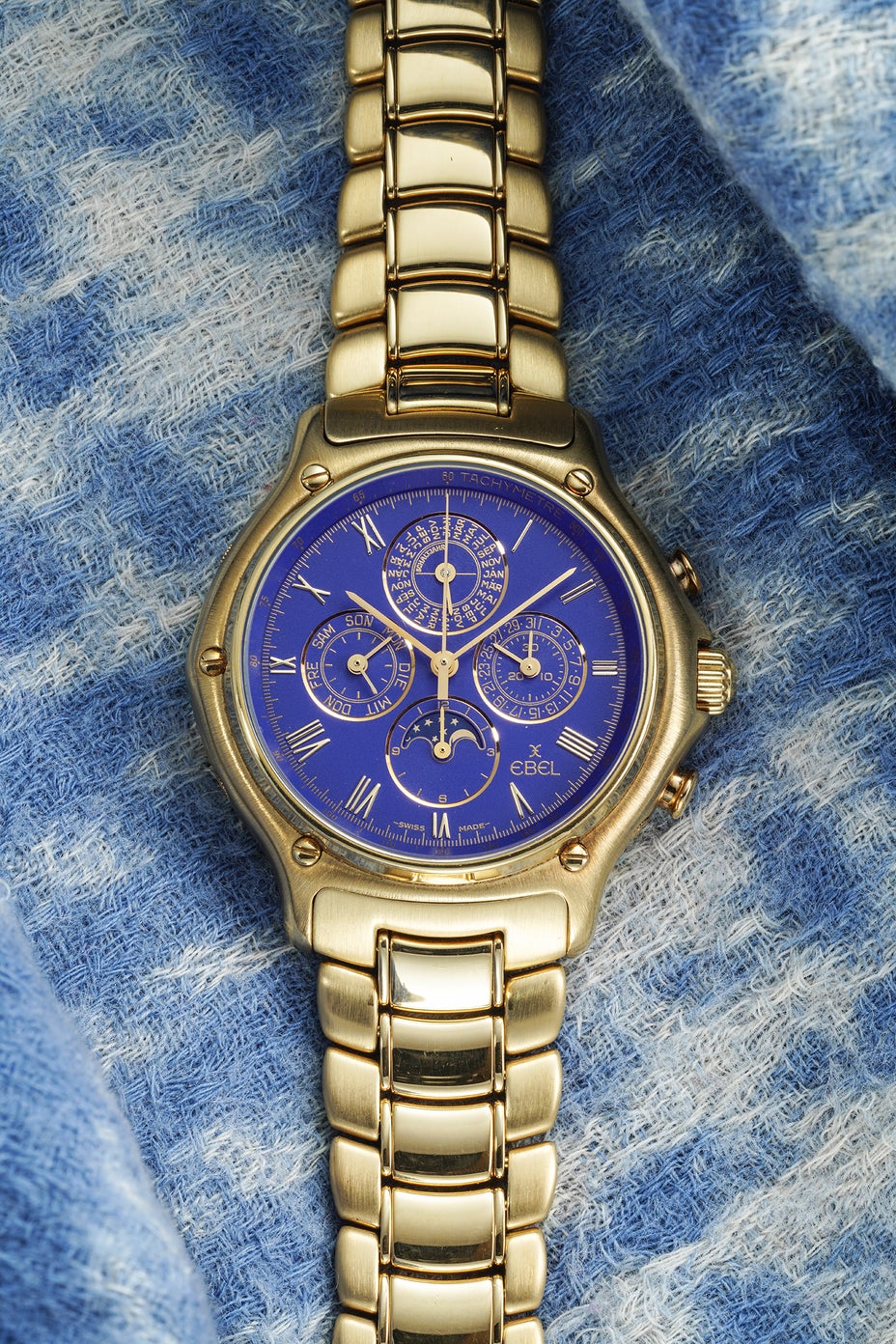
A lovely and heavy yellow gold automatic perpetual calendar chronograph wristwatch with blue dial and bracelet
Estimate
CHF6,000–12,000
€6,400–12,700
$6,700–13,400
Sold For
CHF21,590
Manufacturer
Ebel
Year
Circa 1990
Reference No
8136901
Case No
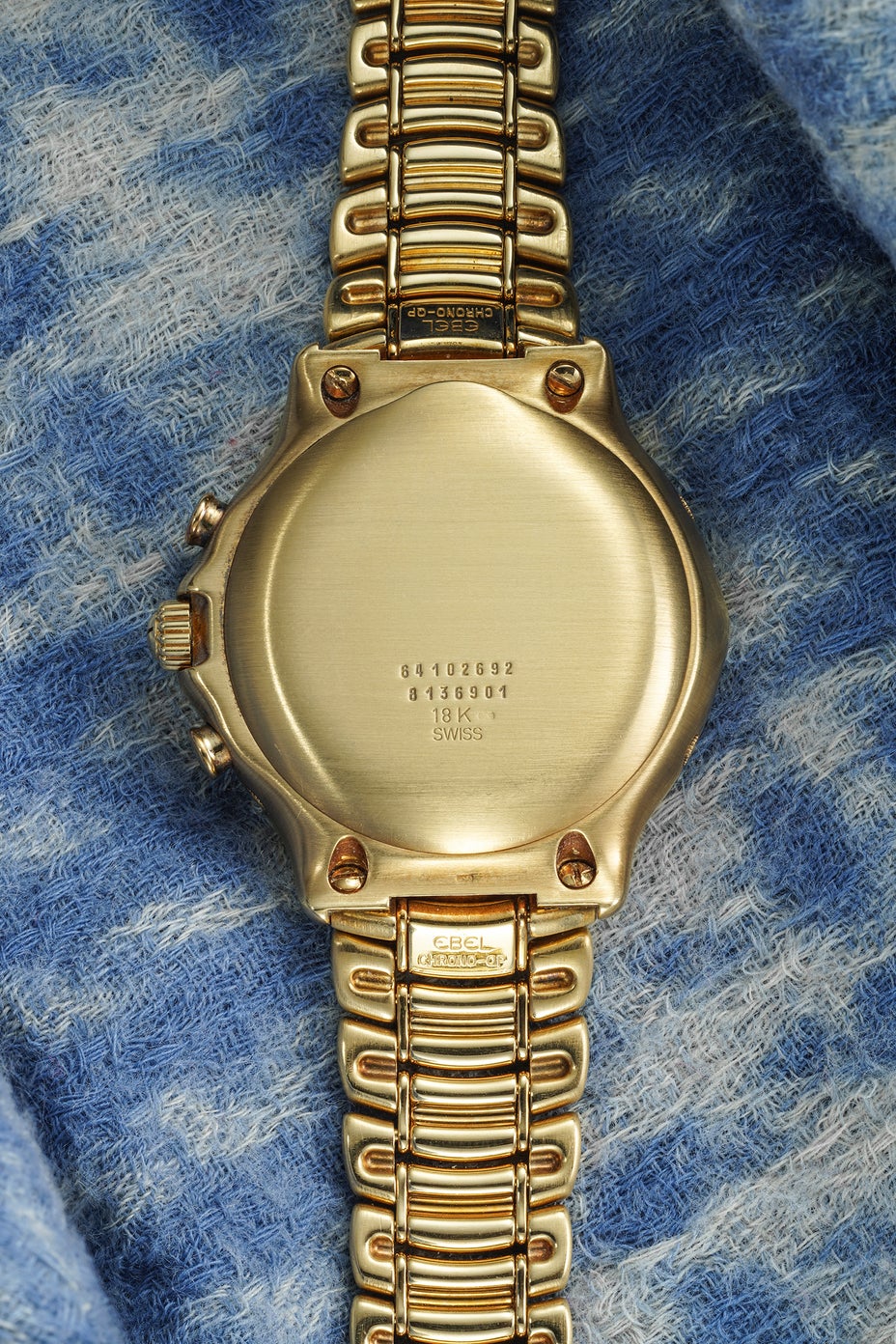
64102692
Material
18k yellow gold
Calibre
Automatic, cal. 136
Bracelet/Strap
18k yellow gold Ebel bracelet, max length 200mm
Clasp/Buckle
18k yellow gold Ebel deployant clasp
Dimensions
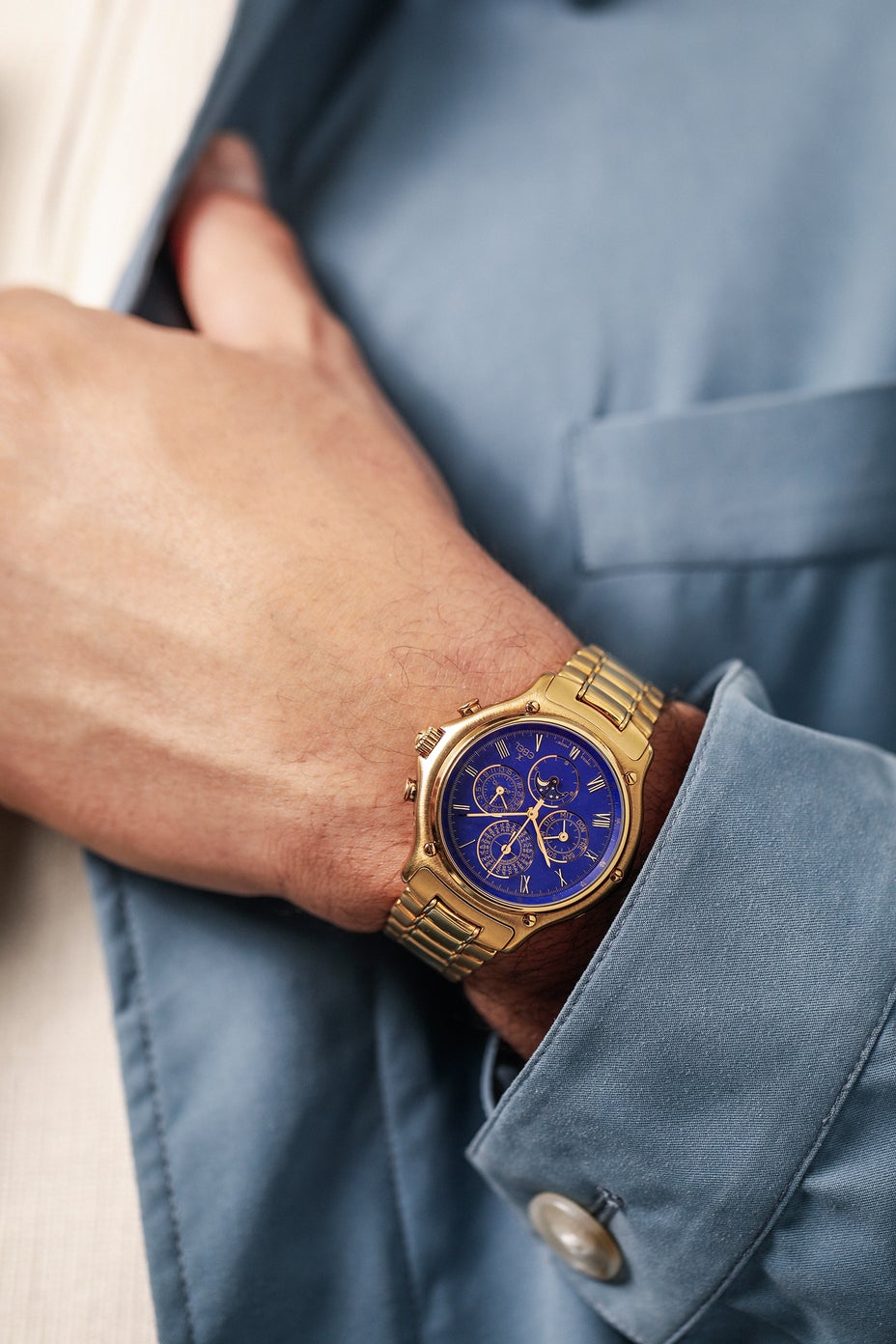
40mm diameter
Full-Cataloguing
- In 1985, Ebel introduced its first automatic perpetual calendar chronograph, built on the renowned Zenith El Primero movement. This remarkable achievement likely made it the first self-winding, high-frequency perpetual calendar chronograph wristwatch to come to market.
- The Ebel Perpetual Calendar Chronograph presented here boasts an 18k yellow gold case paired with an attractive and rare blue dial featuring applied gilt Roman numeral hour markers. Adding to its rarity, the watch is accompanied by an original Ebel-signed link bracelet crafted from solid 18k yellow gold.
- Ebel’s link bracelets, such as the one featured here, stand among the most intricate designs in the history of Swiss watchmaking. These bracelets were exceptionally costly to produce, often surpassing the value of the precious metal watch itself. As a result, it is far more common to find these watches fitted with integrated leather straps rather than their original bracelets.
- According to our research, this is only the second example with a blue dial to appear at an international auction.
- The Ebel Perpetual Calendar Chronograph presented here boasts an 18k yellow gold case paired with an attractive and rare blue dial featuring applied gilt Roman numeral hour markers. Adding to its rarity, the watch is accompanied by an original Ebel-signed link bracelet crafted from solid 18k yellow gold.
- Ebel’s link bracelets, such as the one featured here, stand among the most intricate designs in the history of Swiss watchmaking. These bracelets were exceptionally costly to produce, often surpassing the value of the precious metal watch itself. As a result, it is far more common to find these watches fitted with integrated leather straps rather than their original bracelets.
- According to our research, this is only the second example with a blue dial to appear at an international auction.