136
Charles Moore
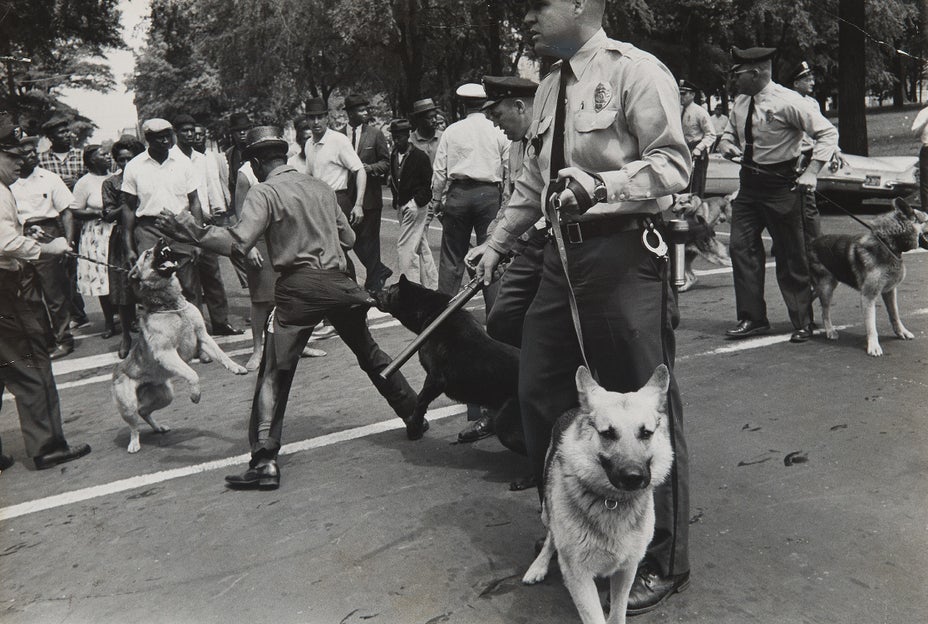
Dogs used by Birmingham, Ala. Cops to quell Negro Race Riots
Estimate
$15,000–25,000
Sold For
$62,500
1963
Gelatin silver print.
9 x 13 in. (22.9 x 33 cm)
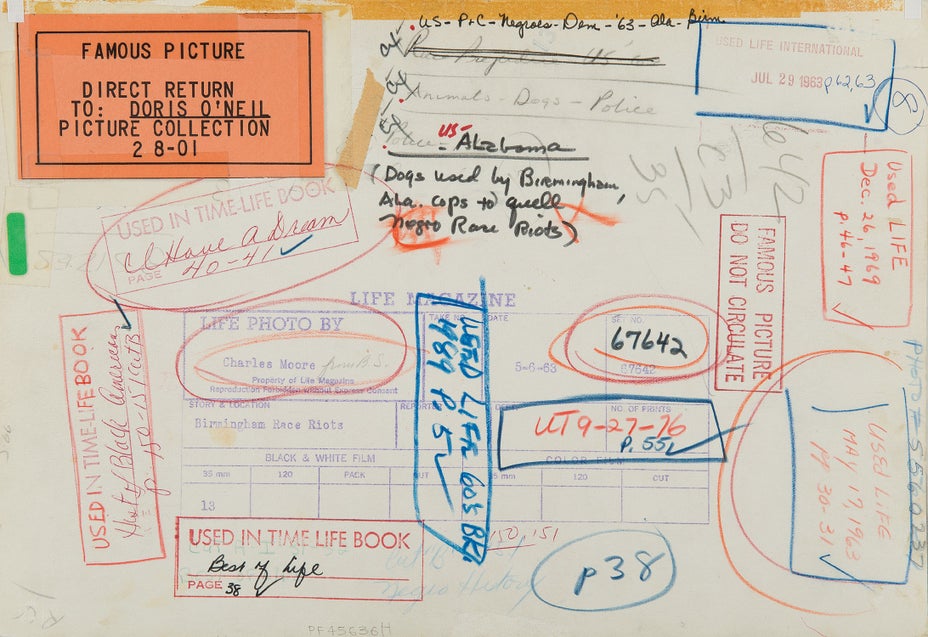
'LIFE Photo by Charles Moore' credit reproduction limitation stamp, extensively annotated with publication usage information in unidentified hands in ink, crayon and pencil, and with 'Famous Picture' label and various Time, LIFE and other stamps, all on the verso.
Full-Cataloguing
The power of photography is most evident when it is used as a tool to bear witness to social injustice. This photograph, taken by Charles Moore in Birmingham, Alabama in 1963, shows a group of police officers whose dogs are seen attacking an African-American protester during the Birmingham race riots. With its display of the disproportionate violence by law enforcement against the isolated demonstrator, this image is a sobering representation of the entire American civil rights movement.
Born in Alabama in 1931, Moore was raised with a sincere empathy for the racial struggles of the African-American population. His photographs documenting some of the most important events in the late 1950s and 1960s were published in local newspapers as well as LIFE magazine, where he worked as a contract photographer, and helped inform the country of the real-world implications of segregation and the dangerous efforts to undo the racial imbalance of the past century.
The cultural significance of this image cannot be overstated. The notations and stamps on the reverse of the print document an extensive publication history including, most notably, its use in LIFE in both 1963 and 1968. In 1964, Andy Warhol appropriated the image for his painting Race Riot, a seminal work within his Death and Disasters series, further solidifying its place within the cultural and art historical discourse.
Born in Alabama in 1931, Moore was raised with a sincere empathy for the racial struggles of the African-American population. His photographs documenting some of the most important events in the late 1950s and 1960s were published in local newspapers as well as LIFE magazine, where he worked as a contract photographer, and helped inform the country of the real-world implications of segregation and the dangerous efforts to undo the racial imbalance of the past century.
The cultural significance of this image cannot be overstated. The notations and stamps on the reverse of the print document an extensive publication history including, most notably, its use in LIFE in both 1963 and 1968. In 1964, Andy Warhol appropriated the image for his painting Race Riot, a seminal work within his Death and Disasters series, further solidifying its place within the cultural and art historical discourse.