88
Cartier
"Baseball"
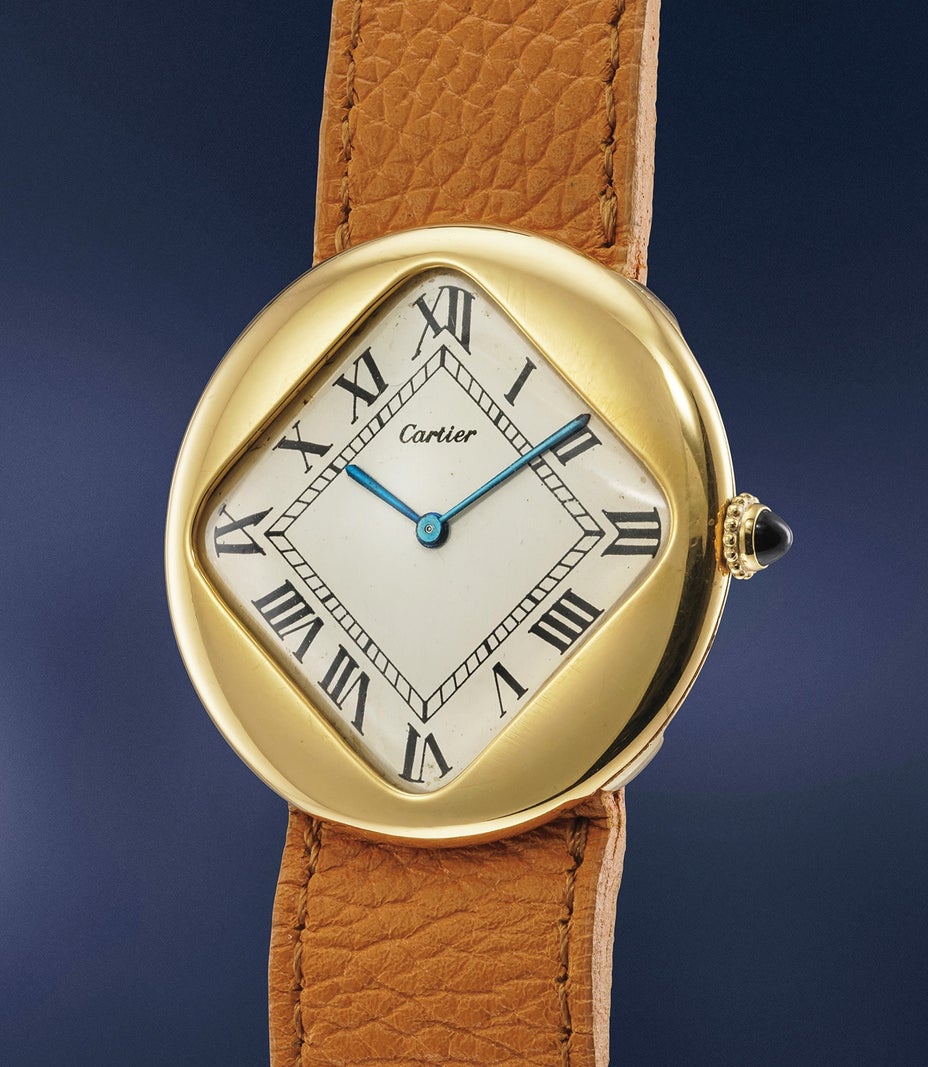
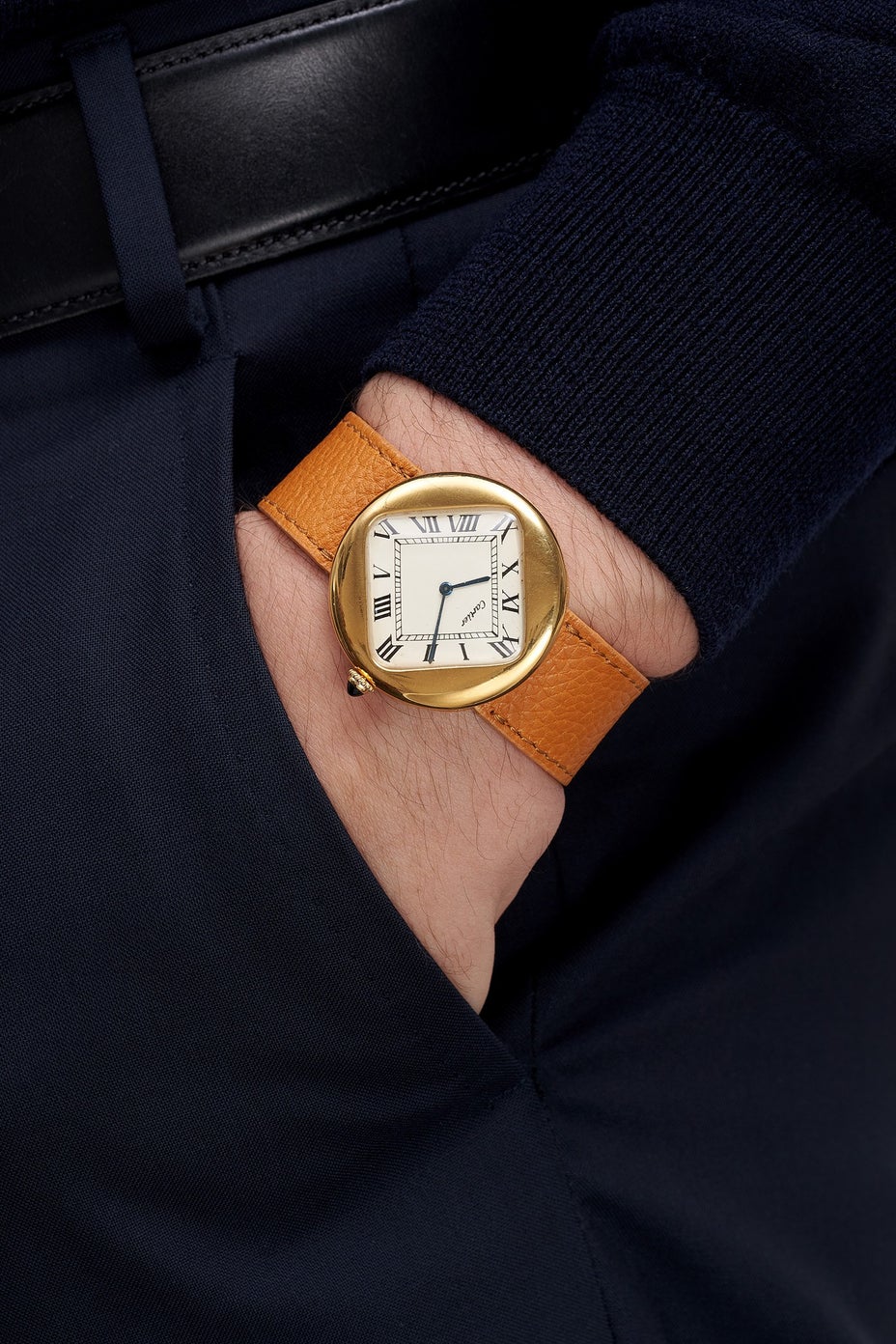
An extremely rare, attractive and unusual yellow gold wristwatch, retailed by Cartier London
Full-Cataloguing
London was undoubtedly one the epicentres of this change, and thus it is no surprise that Cartier London created during those years some of the most impressive, creative and iconic designs of its multi-century history. The present watch - nicknamed “The Pebble" or "Baseball” due to its appearance - is one such creation. Deceptively simple, the entire design is centred around the two most “pure” geometrical shapes: the circle (case shape) and the square (dial shape). The contrast of the circular case with the angular dial grants an enormous aesthetic impact to the ensemble: the fact that Cartier managed to achieve such a momentous effect with such a simple design is testament to the incredible design proficiency of the brand.
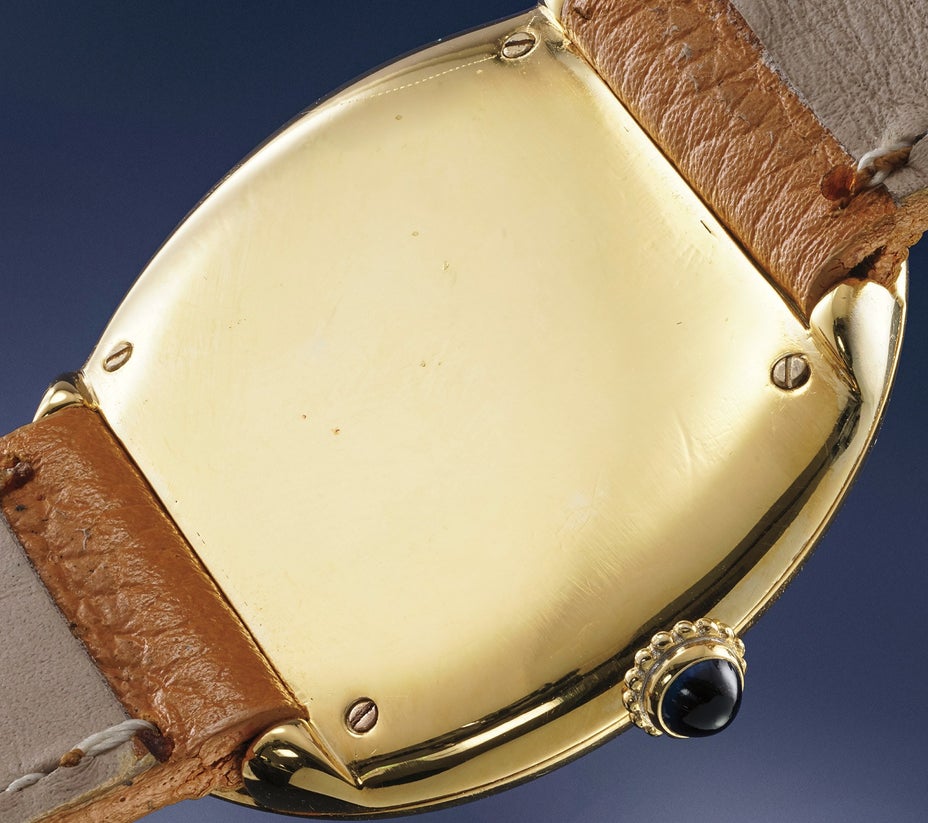
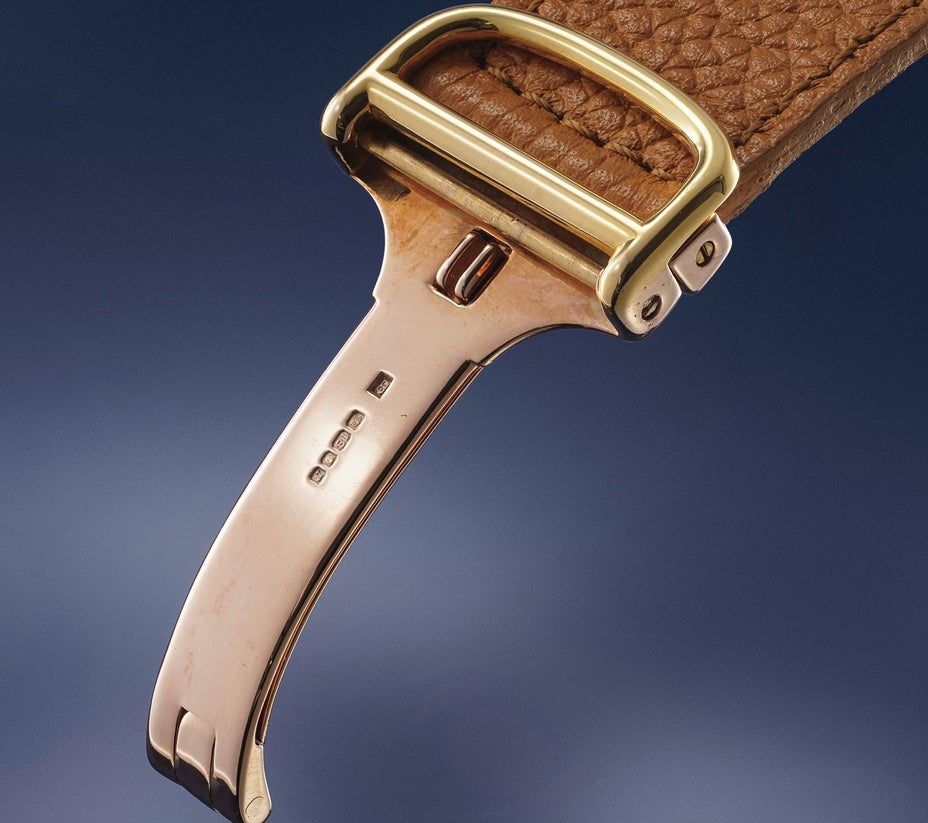
Of particular note is the originality of the timepiece; the number 1402 is stamped both on the case and on the clasp, showing that the watch remained with its original buckle throughout its whole life. Furthermore, there are English hallmarks for 1972 on the clasp, as well as the "JC" stamp for Jacques Cartier.
Research suggests that around 6 examples were made, underscoring the rarity of the present timepiece. This model is furthermore present in Cartier's heritage collection, proof of its importance within the history of the brand.
Cartier
FrenchWith the Constitution of 1848 came a new standard for luxury in France. Founded one year prior by Louis-Francois Cartier, the house of Cartier was one of the first to use platinum in jewelry making. This incredibly expensive material became the stepping-stone for Cartier to experiment in form, mechanisms and attitude. It helped men move from pocket watches to wristwatches, effectively making the watch much more functional and prominent in a man's overall wardrobe.
Cartier did not only touch on functionality. Inspired by a commissioned painting by George Barbier featuring a black panther at the feet of an elegantly bejeweled woman, Cartier began incorporating wild animals in his designs—most notably, Cartier Panthère rings, bangle bracelets and watches. Yet it wasn't until the late 1960s that the house of Cartier debuted their iconic yellow and rose gold LOVE collection, which includes the famous bracelet that only a special screwdriver can open.