
1008Σ︎
Cartier
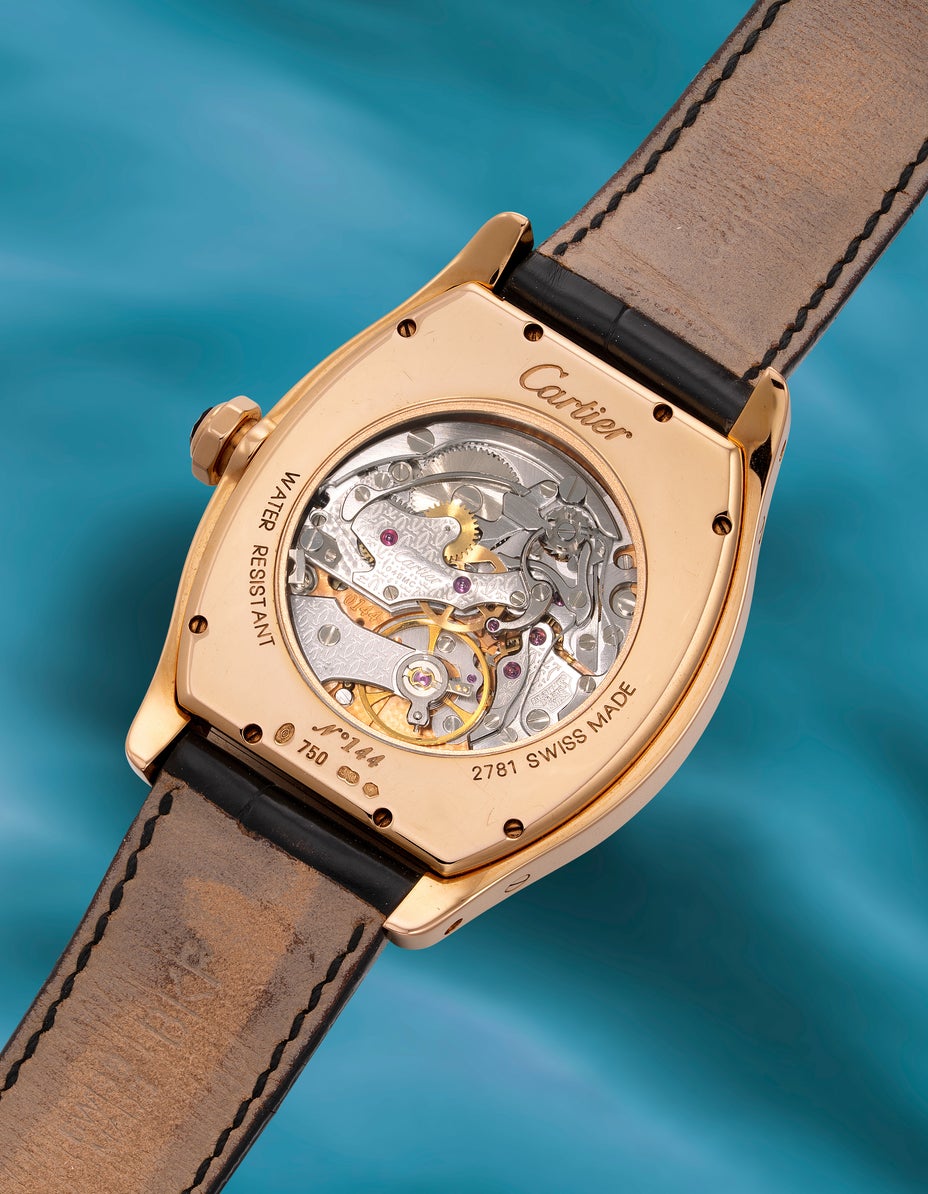
Ref. 2781
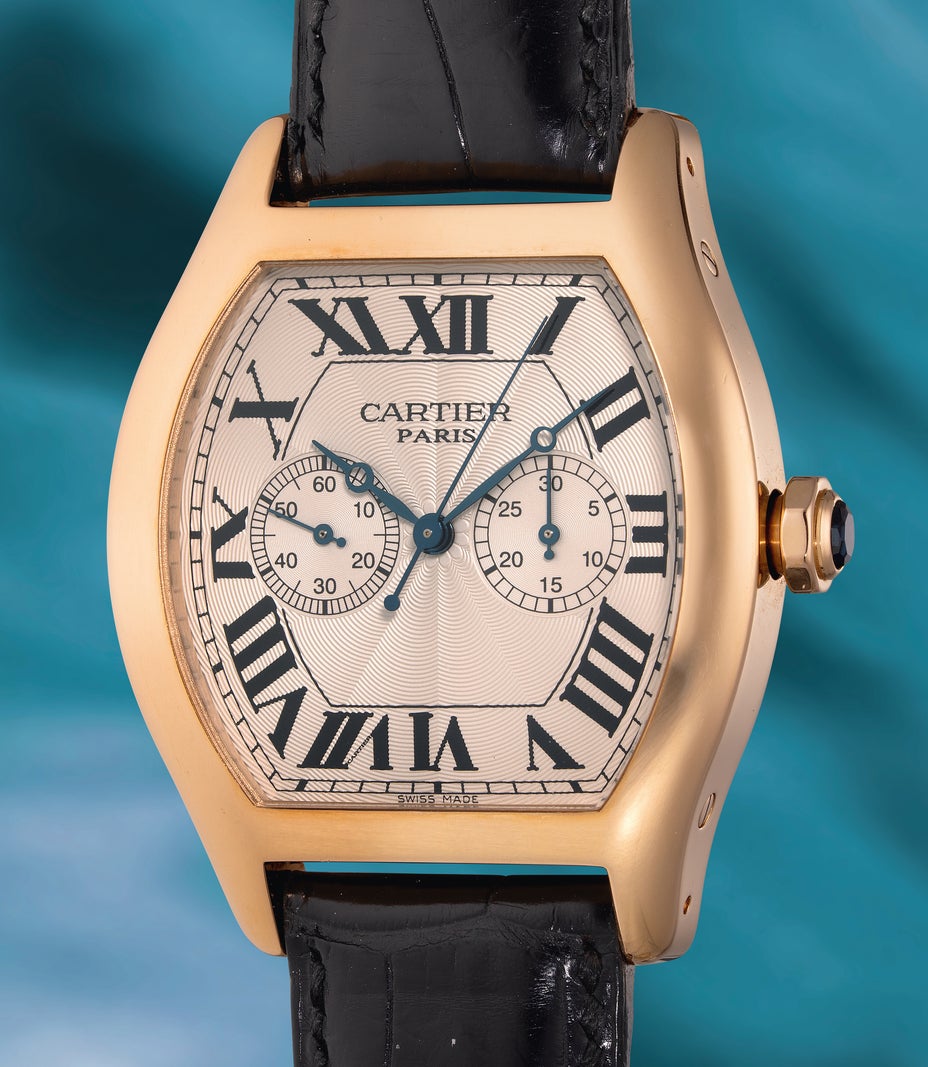
Tortue Monopoussoir CPCP
A fine and rare pink gold tortue-shaped single-button chronograph wristwatch
Full-Cataloguing
- Highly sought-after CPCP collection
- Tortue case with single-button chronograph
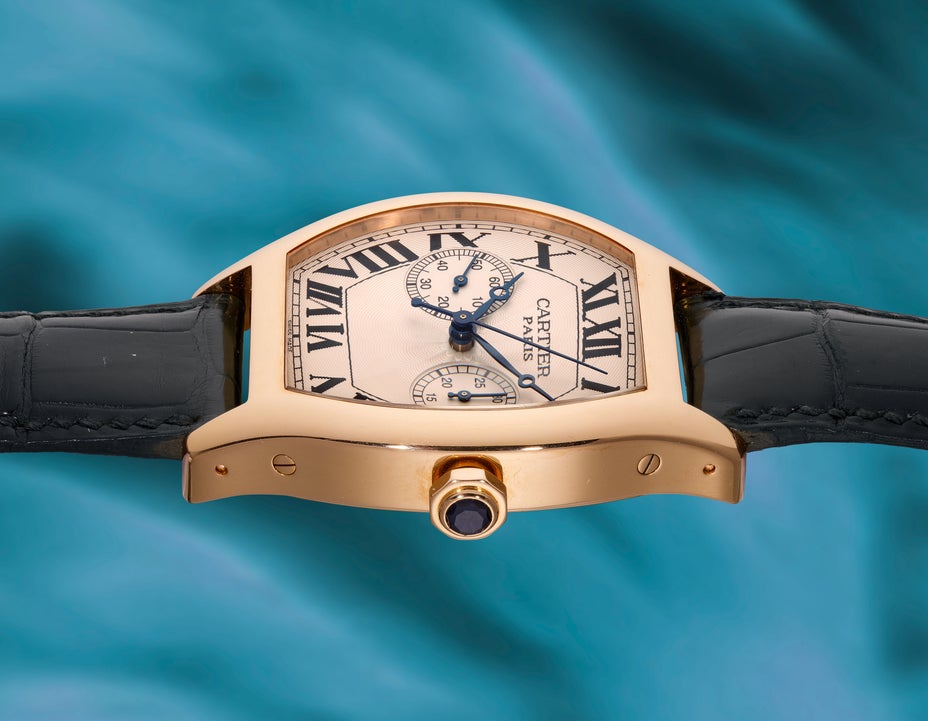
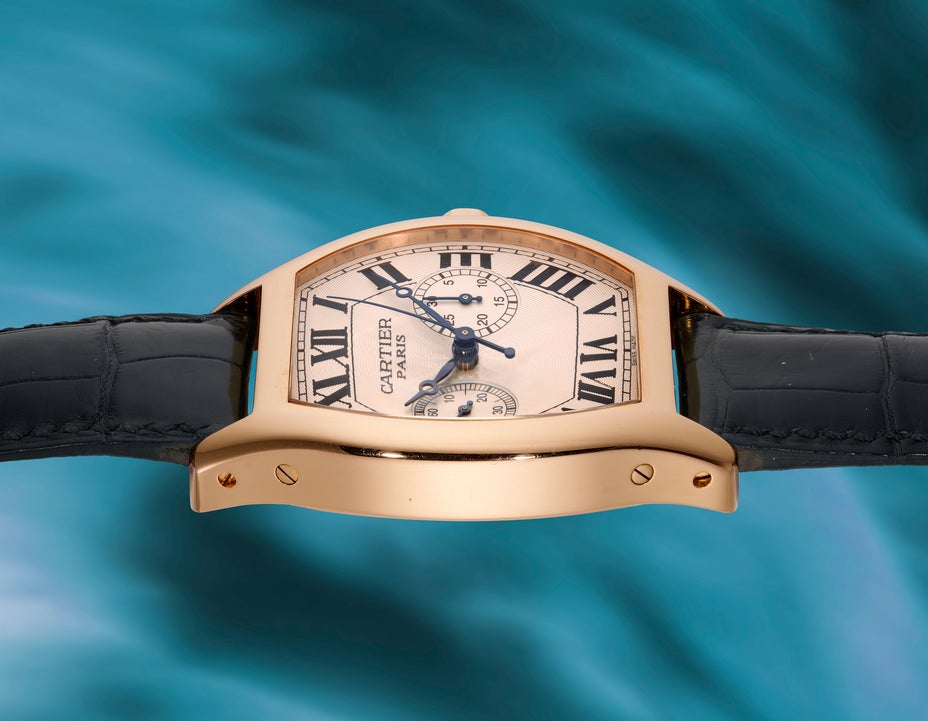
- Well-preserved 18K pink gold case
In 1912, Cartier unveiled its third major watch design: the Tortue, taking inspiration from the graceful profile of a tortoise shell. While initial iterations were simple time-only models, the single-pusher chronograph version debuted in 1928 and was later revived in 1999 as part of the Collection Privée Cartier Paris (CPCP) to celebrate the maison's historic horological heritage.
Dating to circa 2000s, this reference from the CPCP series encapsulates Cartier's design language, featuring a silvered guilloché dial centered with a signature rosette pattern, crisp Roman numerals and blued-steel hands. Cased in 18K pink gold, the tonneau-shaped case stays true to vintage proportions while housing a mechanical monopusher chronograph movement—operated via a single pusher integrated into the sapphire-set crown to start, stop and reset the mechanism.
Offered in overall excellent condition, this Tortue Monopoussoir CPCP unites Cartier’s archival shape-making with traditional complications, offering collectors a refined example from one of the maison's most celebrated modern production eras.
Cartier
FrenchWith the Constitution of 1848 came a new standard for luxury in France. Founded one year prior by Louis-Francois Cartier, the house of Cartier was one of the first to use platinum in jewelry making. This incredibly expensive material became the stepping-stone for Cartier to experiment in form, mechanisms and attitude. It helped men move from pocket watches to wristwatches, effectively making the watch much more functional and prominent in a man's overall wardrobe.
Cartier did not only touch on functionality. Inspired by a commissioned painting by George Barbier featuring a black panther at the feet of an elegantly bejeweled woman, Cartier began incorporating wild animals in his designs—most notably, Cartier Panthère rings, bangle bracelets and watches. Yet it wasn't until the late 1960s that the house of Cartier debuted their iconic yellow and rose gold LOVE collection, which includes the famous bracelet that only a special screwdriver can open.