117Σ︎
Cartier
"Double Case"
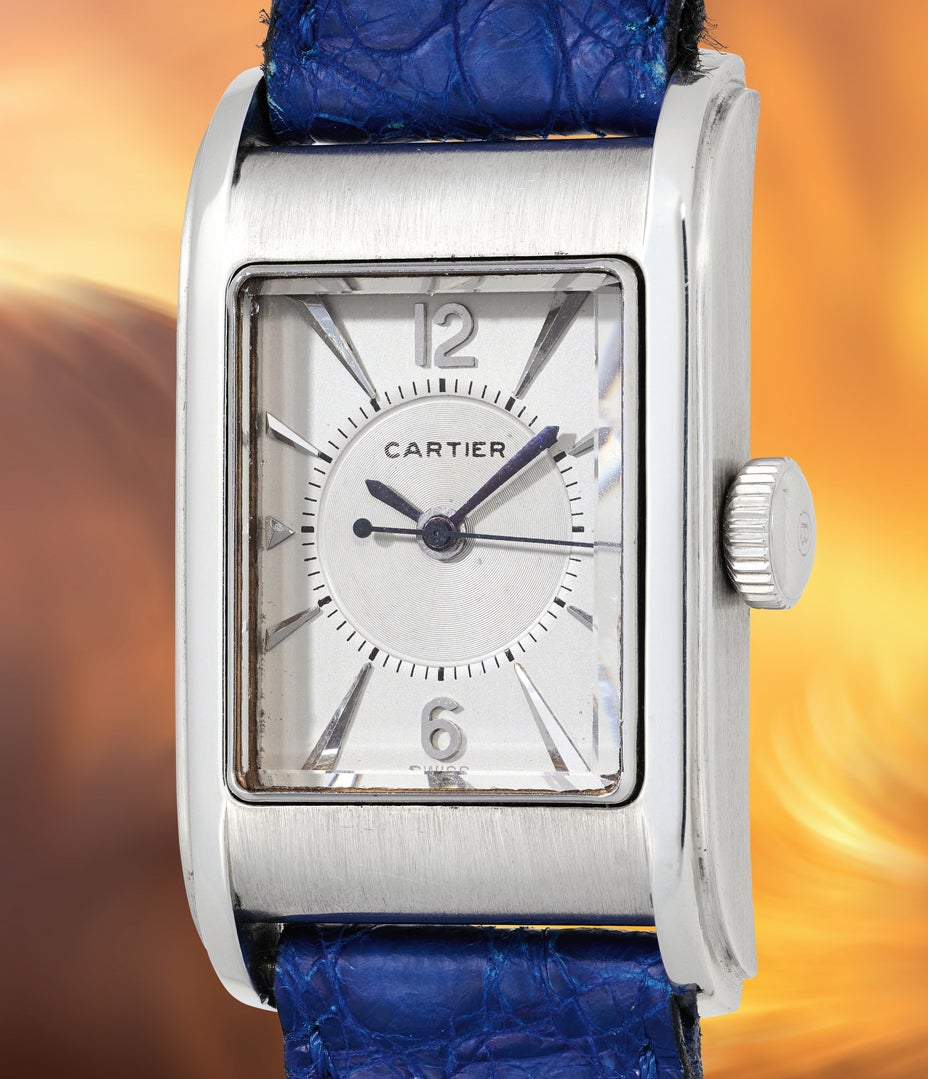
A rare and unusual stainless steel rectangular water-resistant wristwatch with center seconds and patented case construction
Full-Cataloguing
• Patented water-resistant rectangular case construction
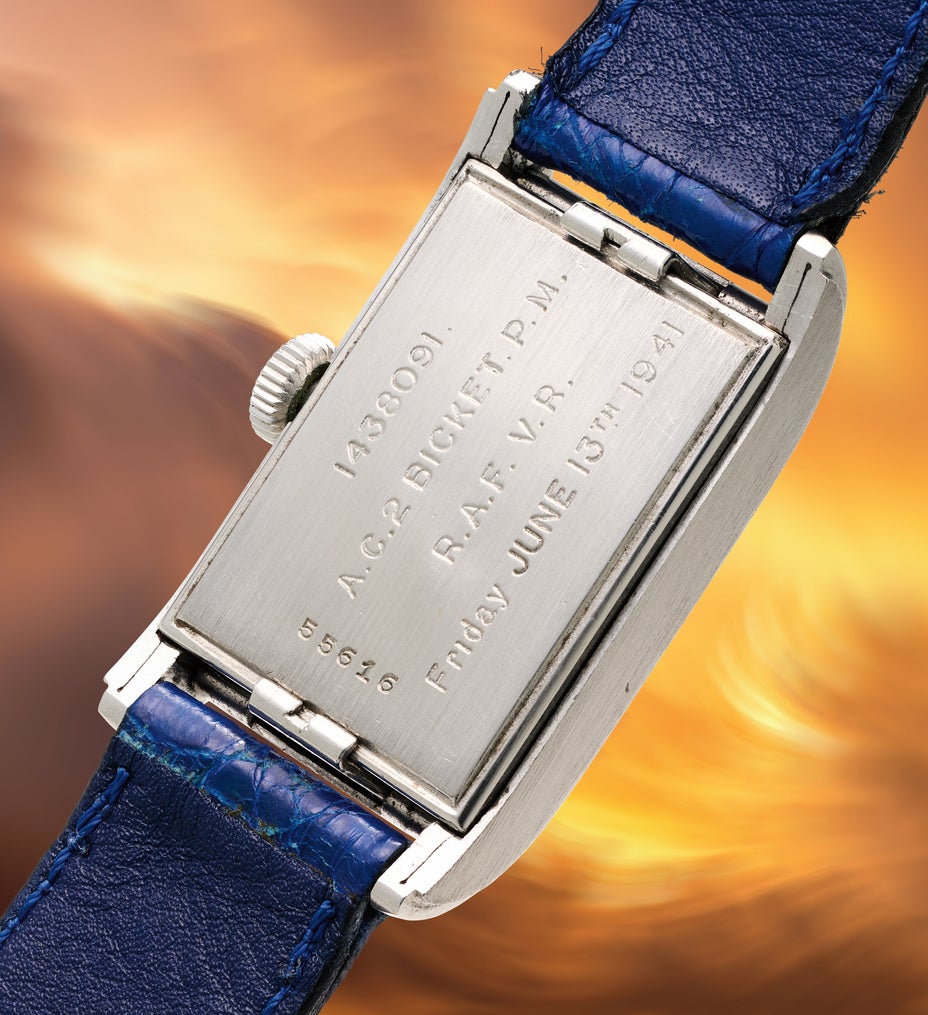
• Caseback engraved to A.C.2 P. M. Bicket of the Royal Air Force Volunteer Reserve, dated June 13th, 1941
• Attractive silvered dial with oversized Arabic numerals and center-seconds
While Cartier is celebrated for defining the shaped wristwatch through creations such as the Tank, Cintrée and Tortue, the Maison also explored increasingly practical forms of watchmaking during the 1930s. Among the most intriguing were its rectangular water-resistant wristwatches, whose angular cases presented considerably greater technical challenges to seal than their conventional round counterparts.
The present example is an exceptionally unusual expression of this pursuit. Executed in Staybrite stainless steel, its rectangular case incorporates a patented water-resistant construction, with the interior caseback bearing corresponding Swiss, British, American and German patent numbers. Its handsome two-tone silvered dial is equally distinctive, featuring oversized Arabic numerals at 12 and 6 o’clock, faceted hour markers and subsidiary seconds.
Adding considerably to its character is the engraved caseback, reading “1438091 / A.C.2 BICKET. P.M. / R.A.F.V.R. / Friday JUNE 13TH 1941.” The inscription identifies its former owner as Aircraftman Second Class P. M. Bicket of the Royal Air Force Volunteer Reserve, providing a fascinating connection to wartime Britain and establishing the watch’s ownership by June 1941.
Combining Cartier’s mastery of the rectangular form with a technically inventive water-resistant case, stainless steel construction and compelling wartime provenance, the present watch is a wonderfully unusual and historically evocative example of the Maison’s early wristwatch production.
Cartier
FrenchWith the Constitution of 1848 came a new standard for luxury in France. Founded one year prior by Louis-Francois Cartier, the house of Cartier was one of the first to use platinum in jewelry making. This incredibly expensive material became the stepping-stone for Cartier to experiment in form, mechanisms and attitude. It helped men move from pocket watches to wristwatches, effectively making the watch much more functional and prominent in a man's overall wardrobe.
Cartier did not only touch on functionality. Inspired by a commissioned painting by George Barbier featuring a black panther at the feet of an elegantly bejeweled woman, Cartier began incorporating wild animals in his designs—most notably, Cartier Panthère rings, bangle bracelets and watches. Yet it wasn't until the late 1960s that the house of Cartier debuted their iconic yellow and rose gold LOVE collection, which includes the famous bracelet that only a special screwdriver can open.