30∞︎
Cartier
Model A “King Farouk I”
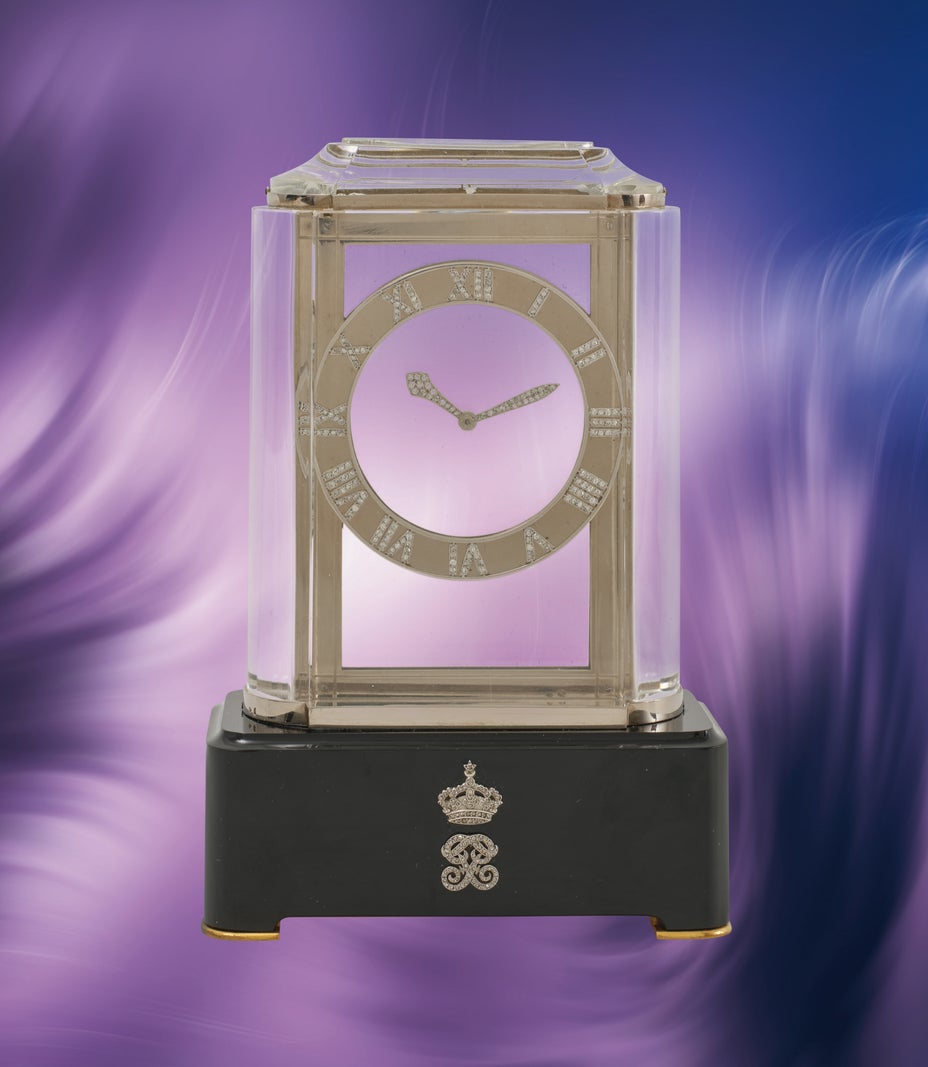
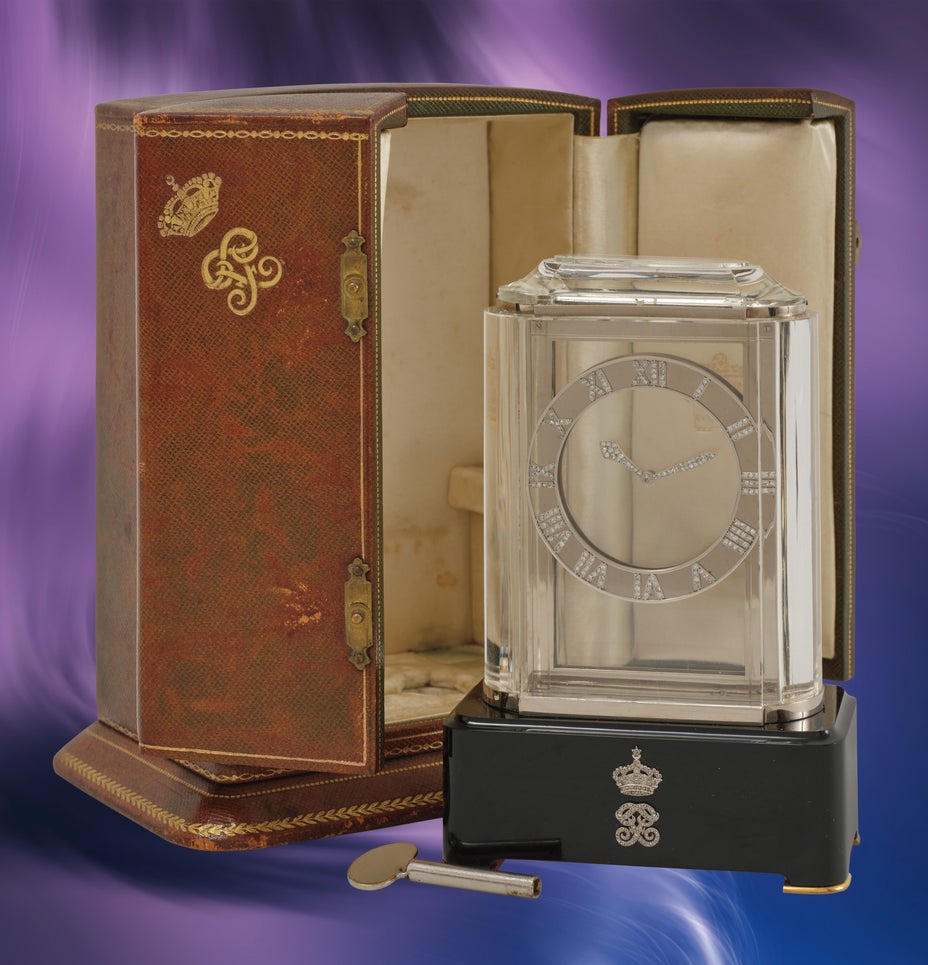
A unique, exceptionally important, and historically significant rock crystal, platinum, black onyx, and diamond-set Model A Mystery Clock, accompanied by its original presentation case and key, commissioned for King Farouk I of Egypt
Full-Cataloguing
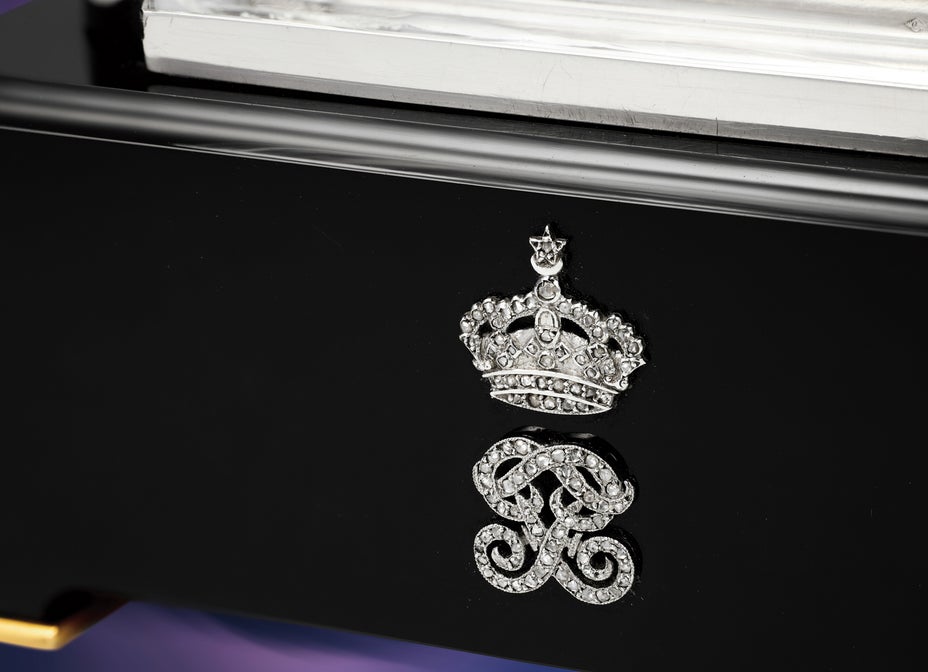
• Commissioned in 1936 for King Farouk I of Egypt with his diamond crowned monogram
• An exceptionally rare and well-documented royal Cartier Model A Mystery Clock
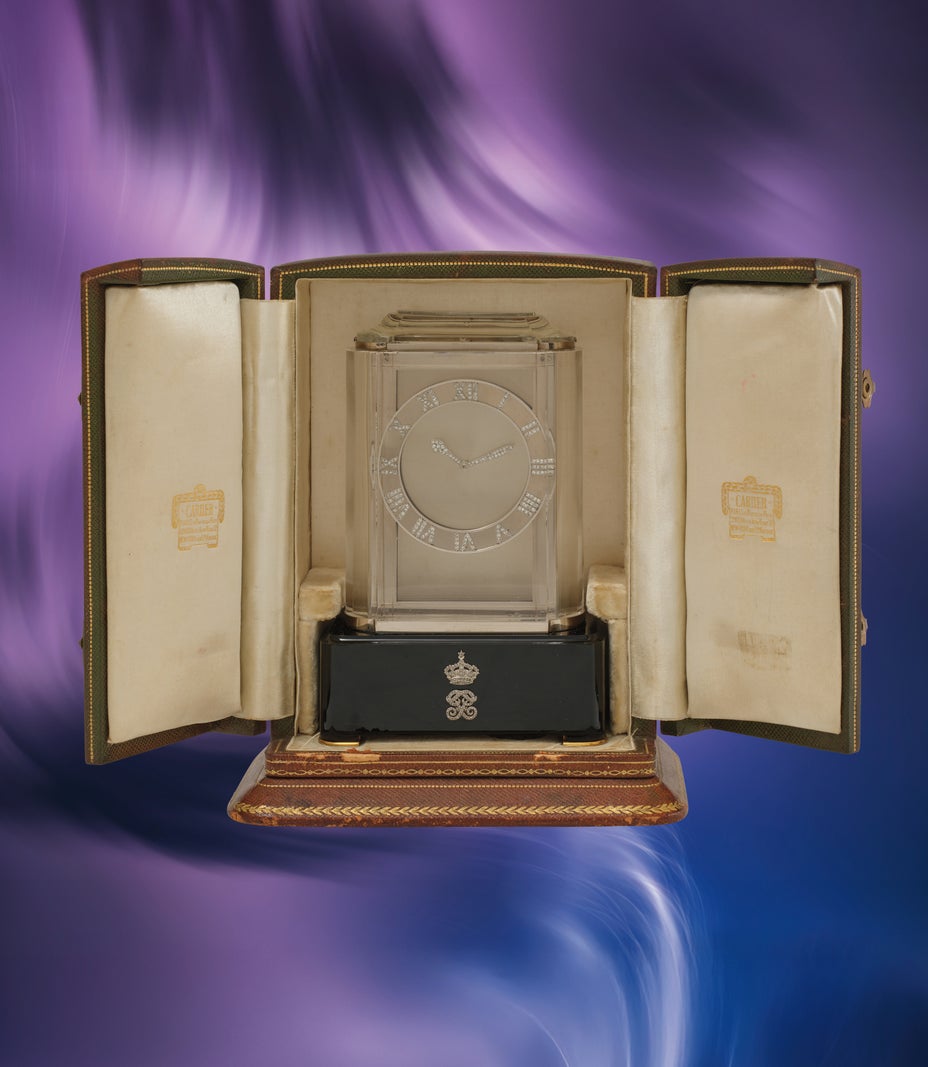
• Accompanied by its original royal presentation case bearing Farouk’s crown and monogram, and winding key
The art of illusion has fascinated generations. We remain spellbound by the magician who deceives the eye, witnessing the seemingly impossible while knowing that, somewhere beyond sight, lies an ingenious explanation.
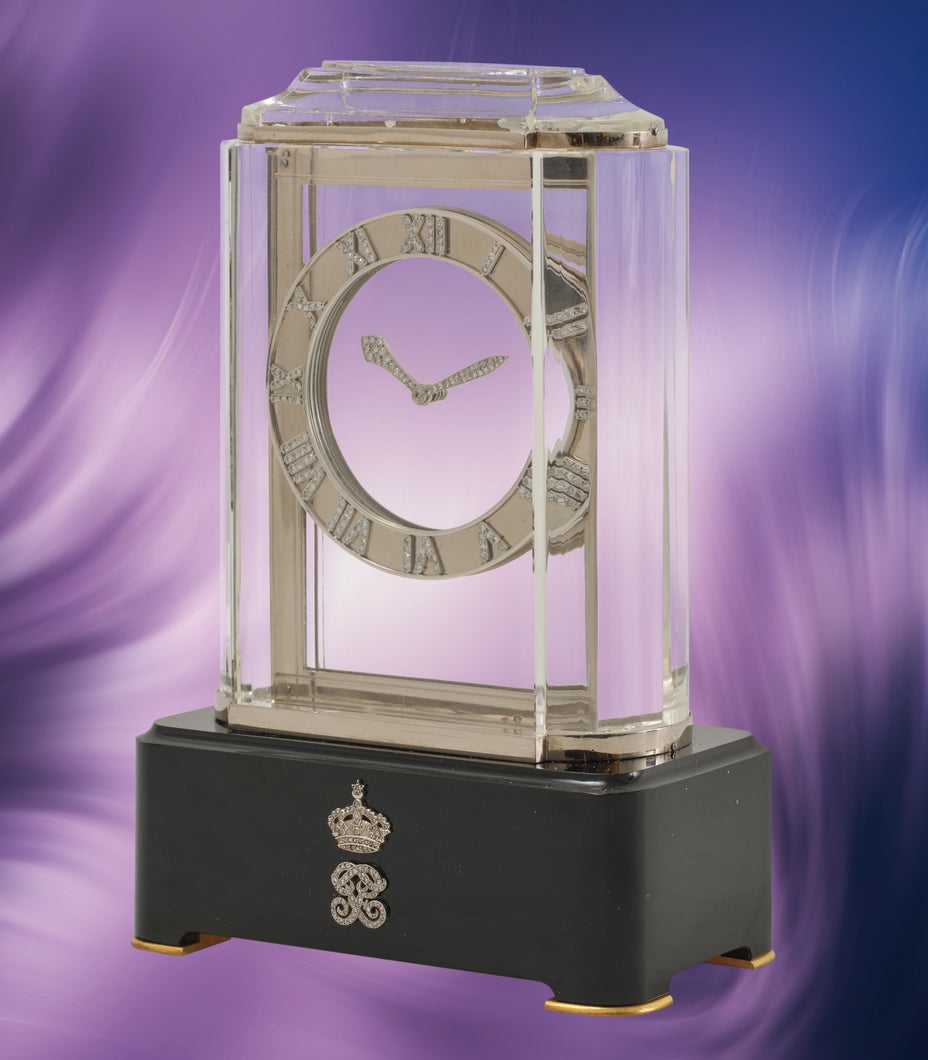
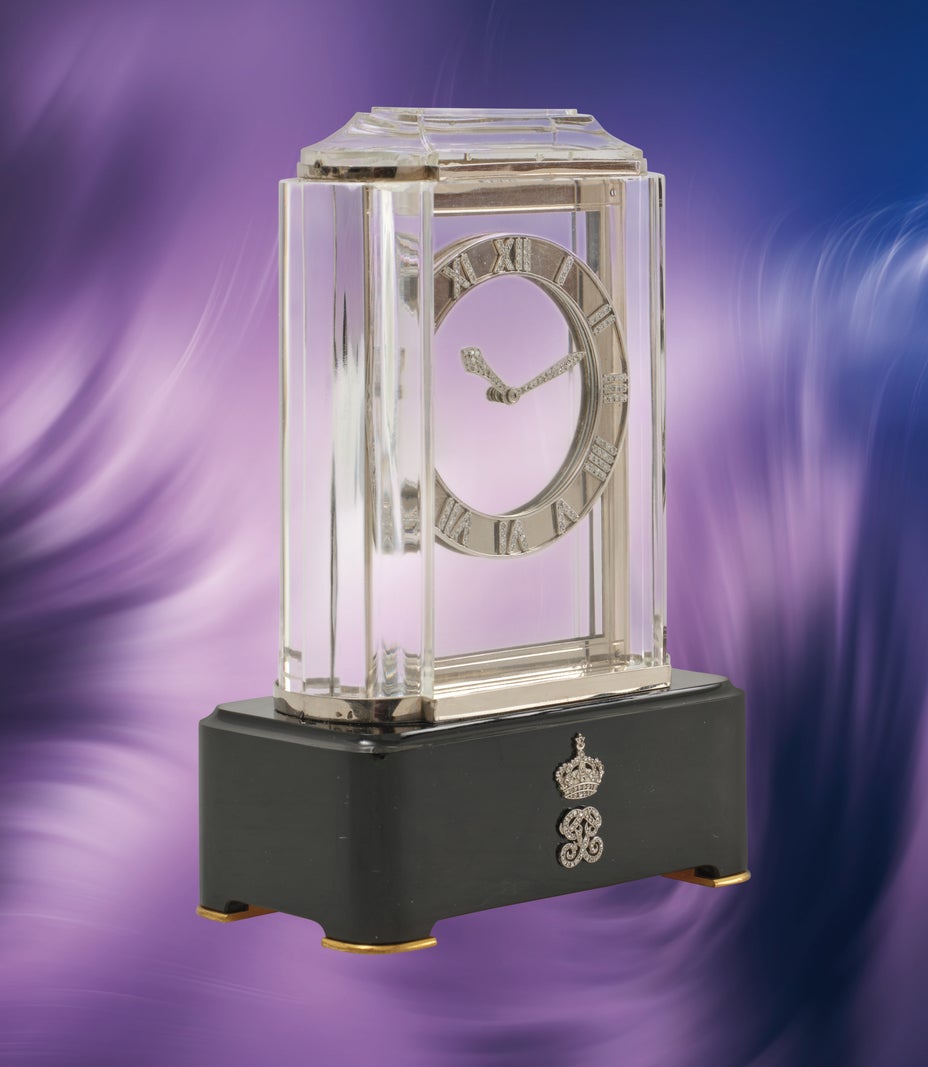
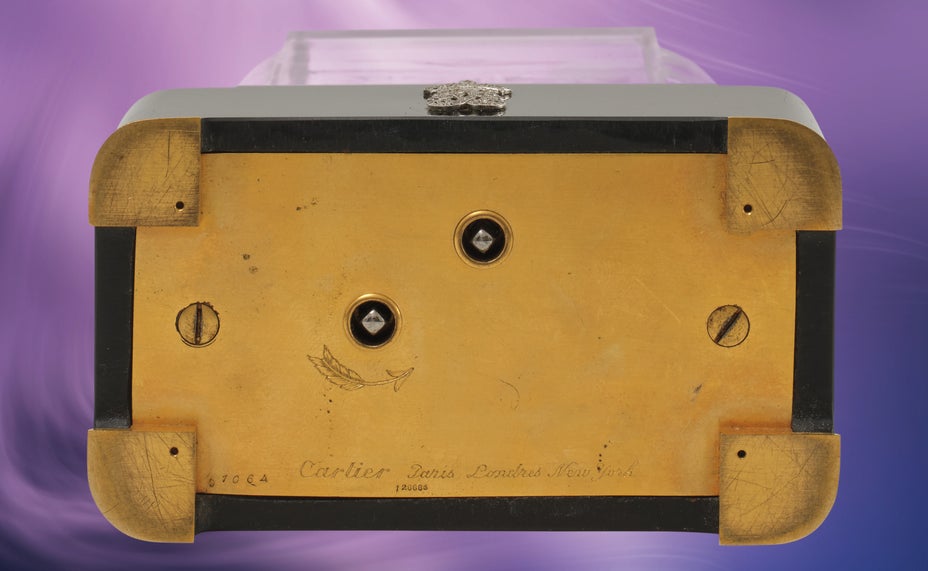
Among Cartier’s most celebrated creations, the Mystery Clock is perhaps the purest expression of this fascination. Conceived with master clockmaker Maurice Coüet and inspired by the nineteenth-century magician and horologist Jean-Eugène Robert-Houdin, its ingenious construction conceals any visible connection between the movement and the hands. Mounted upon transparent discs driven by a mechanism hidden within the base, the hands appear to float freely within rock crystal—an illusion that has captivated collectors for more than a century.
The present Model A is exceptional not only for its craftsmanship, but for the remarkable identity it has retained for nearly ninety years.
Commissioned from Cartier Paris in 1936 and delivered the following year, it was created for King Farouk I of Egypt, one of the twentieth century’s most discerning royal collectors. Farouk assembled an extraordinary collection of watches, clocks, automata and objets d’art, encompassing historic masterpieces alongside highly personalized commissions from the greatest makers of his era. His collection reflected not merely extraordinary means, but a genuine fascination with horology and a desire to acquire the rare, complicated and exceptional.
The present clock embodies this philosophy beautifully.
Cartier adopted an unusually restrained and deliberately masculine composition of transparent rock crystal, platinum, and black onyx, allowing its diamond-set Roman numerals and seemingly suspended hands to take center stage. Set prominently into the onyx base are the Egyptian Royal Crown and King Farouk’s intertwined “F” monogram in platinum and diamonds, transforming an already extraordinary Cartier creation into an unmistakably personal royal commission.
A fascinating account published by the Los Angeles Times in 1991 offers further insight into its creation. Ralph Destino, then chairman of Cartier, recalled that the onyx base of another Mystery Clock made for Farouk had originally been conceived in Cartier’s characteristically restrained manner. According to Destino, Farouk requested that his initials be added, resulting in a prominent diamond-set “F.” Destino concluded the anecdote memorably: “If you’re the king, you’re the boss.”
Remarkably, the original fitted presentation case also survives. Its exterior bears the same Egyptian Royal Crown and intertwined Farouk monogram in gilt, reinforcing that clock and case were conceived as a unified royal ensemble. The original winding key further accompanies the clock today.
Few objects preserve their history with such clarity. Created for King Farouk, later dispersed from the Egyptian Royal Collection and documented across generations, the present Mystery Clock is an important example of Cartier’s Art Deco clockmaking and a surviving object from one of the twentieth century’s notable royal collections.
Its presentation at Phillips in Association with Bacs & Russo also continues our history with important early Cartier clocks. In recent years, Phillips has offered the rediscovered La Pendule Magnétique “Water Clock,” the 1924 Portico Mystery Clock No. 3, and Cartier’s first Model A Mystery Clock of 1912, acquired by J.P. Morgan Jr. in 1913.
King Farouk’s Model A Mystery Clock now joins this pantheon of ultimate Cartier clocks entrusted to us. Combining Cartier craftsmanship, royal provenance, contemporary documentation and remarkable completeness, it represents an important surviving chapter in both Cartier’s history and that of the Egyptian Royal Collection. Phillips is thrilled to present this immensely important, royal clock at auction, nearly ninety years after its creation, for its next custodian.
Cartier
FrenchWith the Constitution of 1848 came a new standard for luxury in France. Founded one year prior by Louis-Francois Cartier, the house of Cartier was one of the first to use platinum in jewelry making. This incredibly expensive material became the stepping-stone for Cartier to experiment in form, mechanisms and attitude. It helped men move from pocket watches to wristwatches, effectively making the watch much more functional and prominent in a man's overall wardrobe.
Cartier did not only touch on functionality. Inspired by a commissioned painting by George Barbier featuring a black panther at the feet of an elegantly bejeweled woman, Cartier began incorporating wild animals in his designs—most notably, Cartier Panthère rings, bangle bracelets and watches. Yet it wasn't until the late 1960s that the house of Cartier debuted their iconic yellow and rose gold LOVE collection, which includes the famous bracelet that only a special screwdriver can open.