906
Cartier
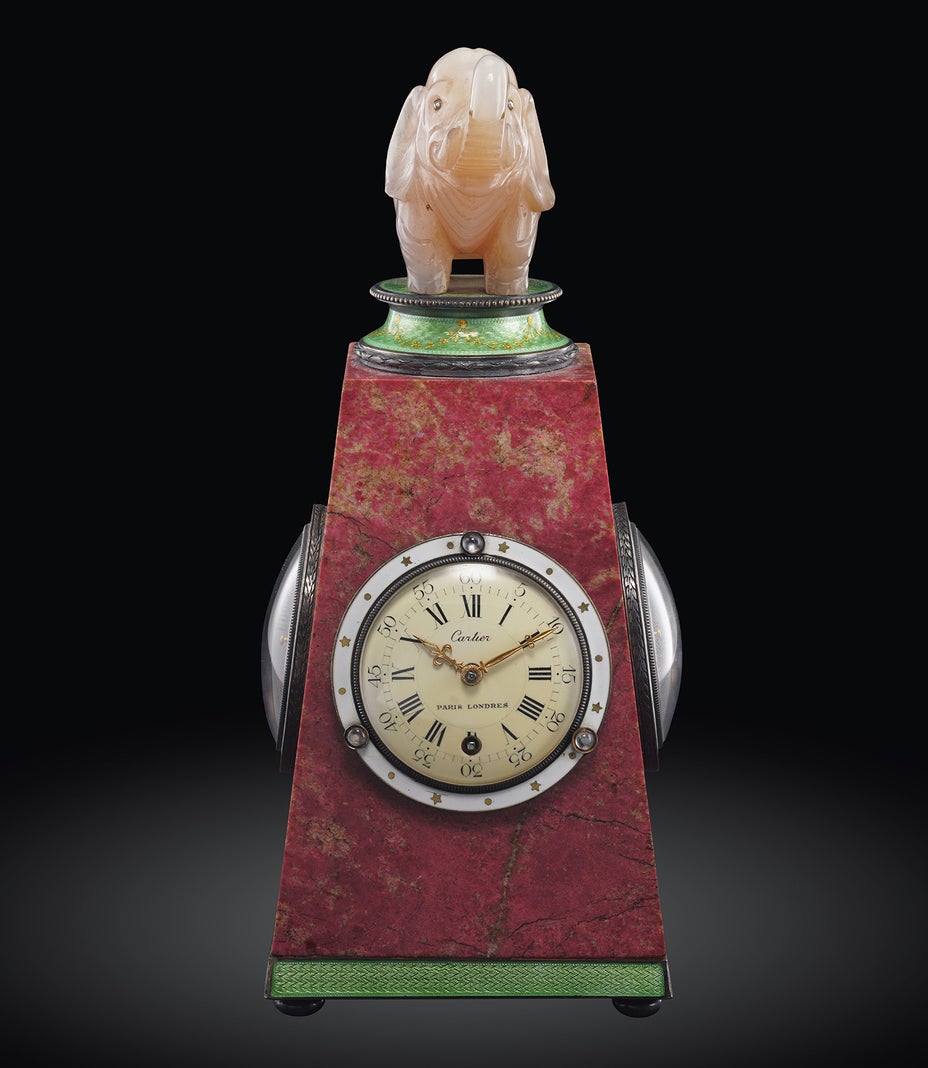
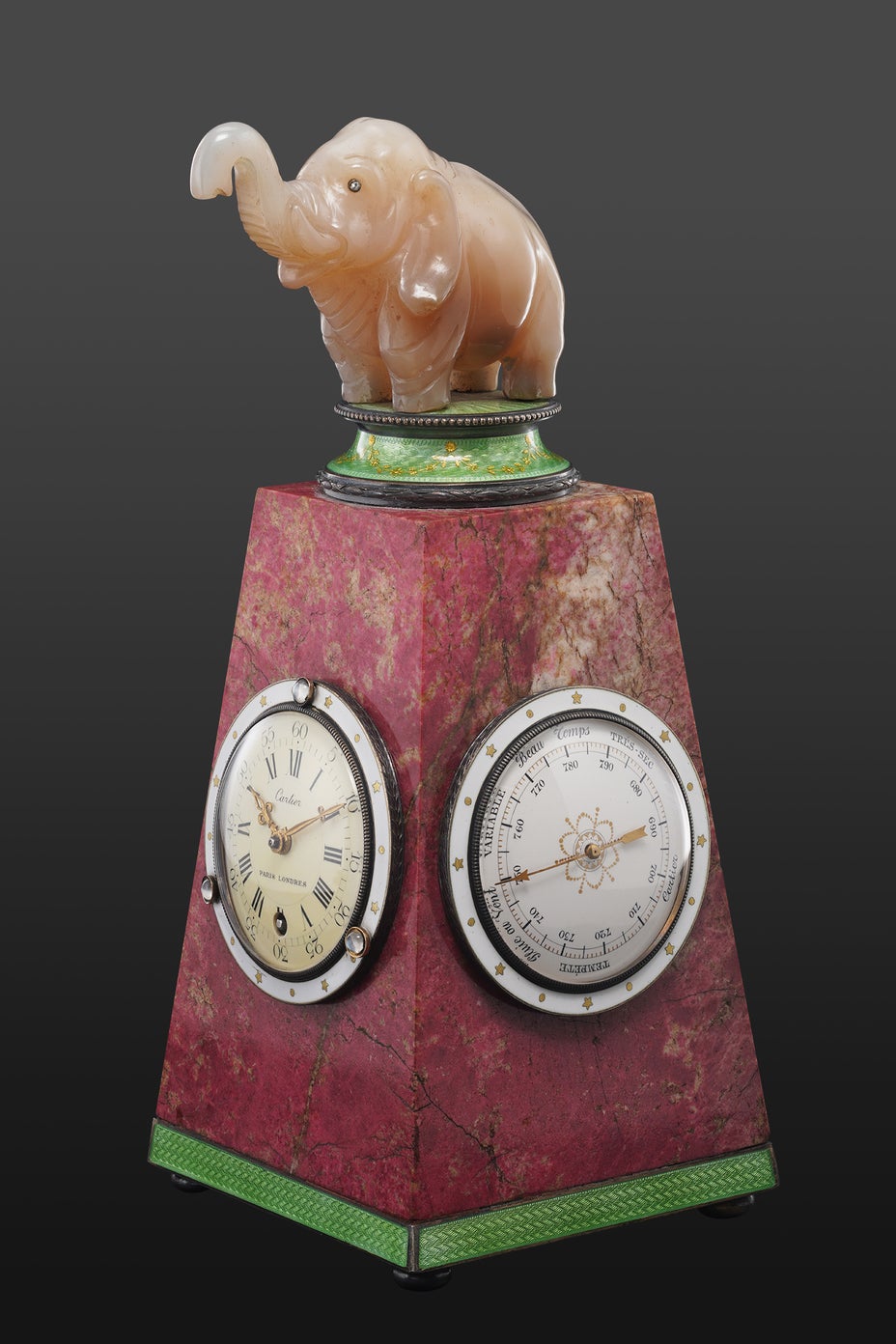
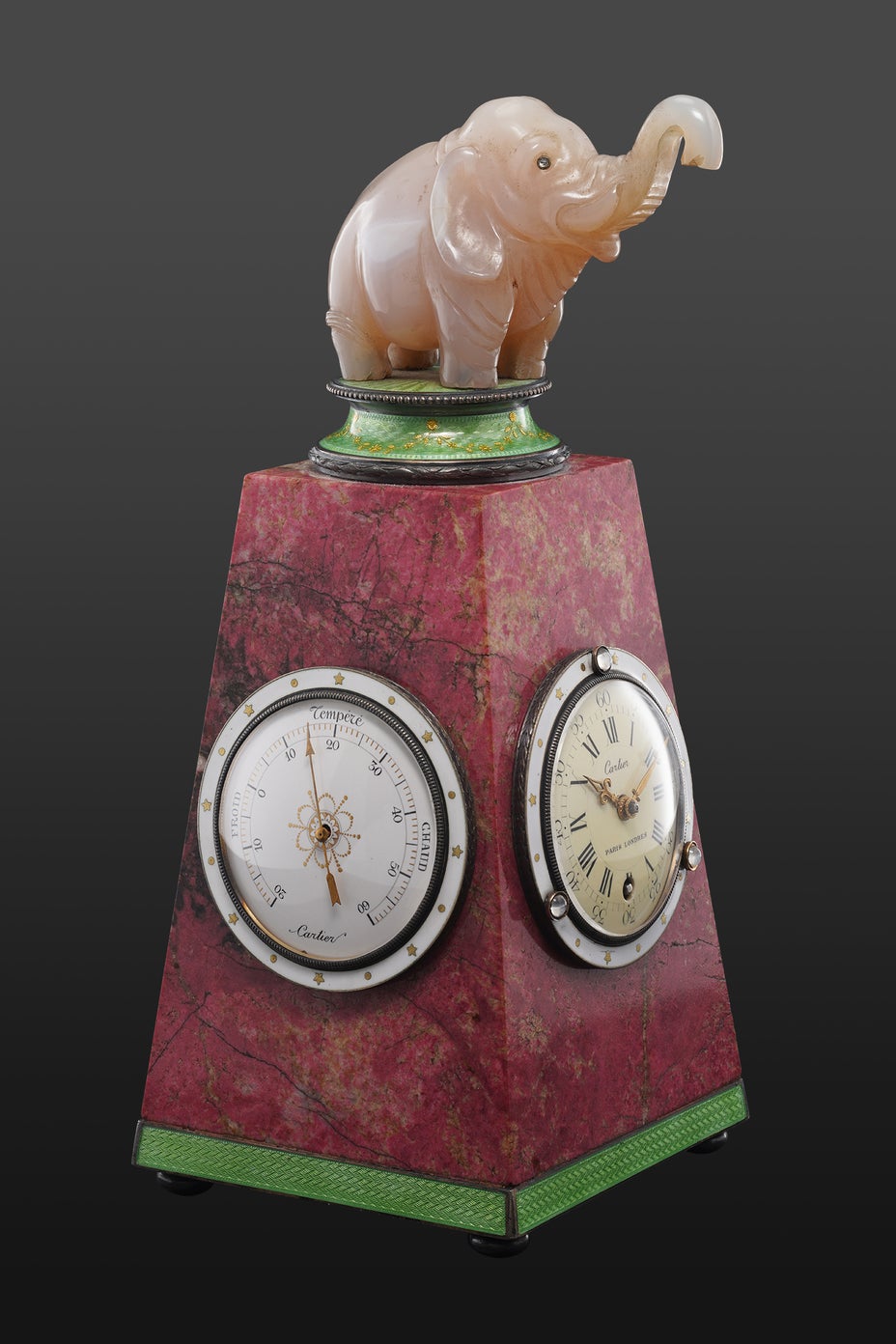
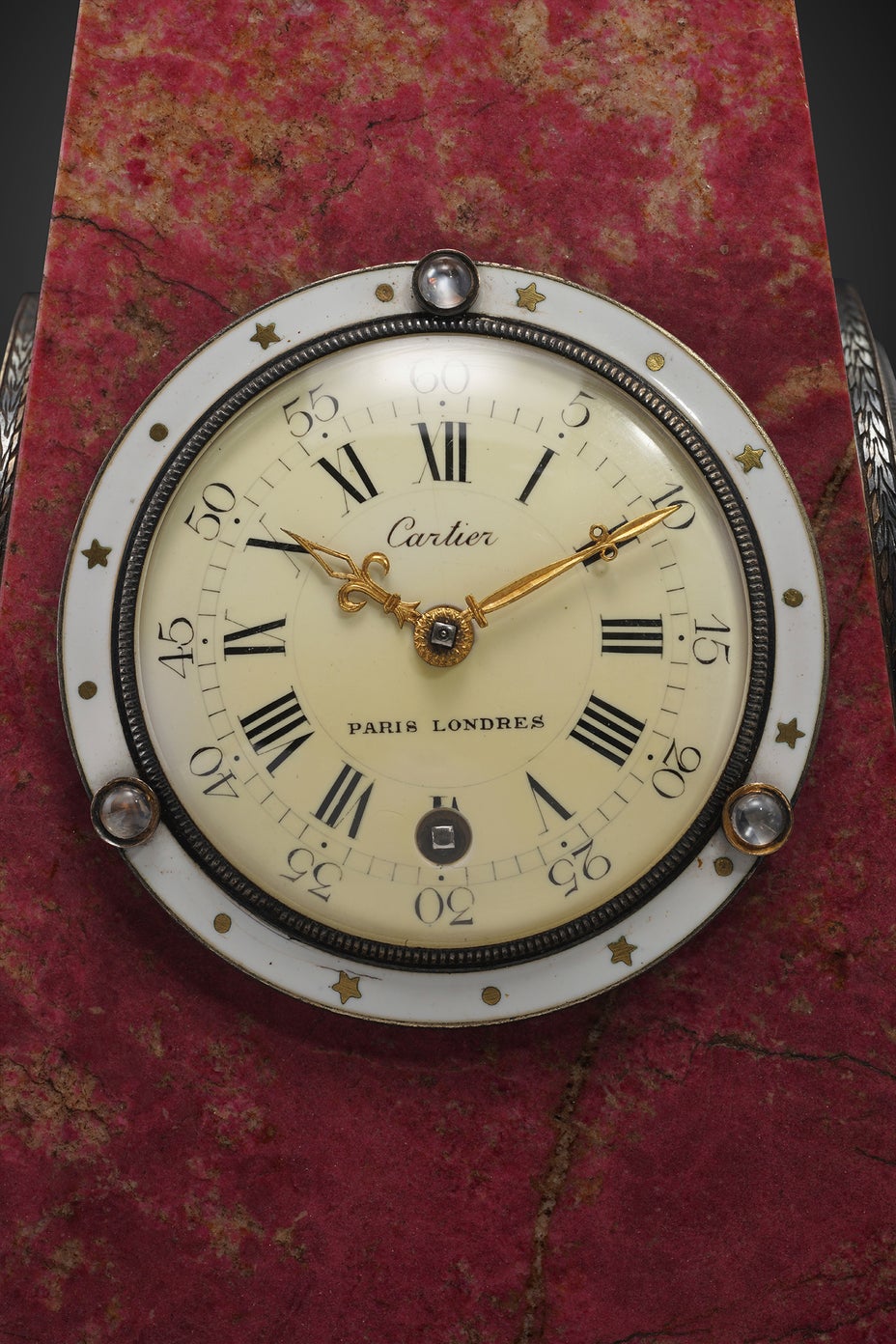
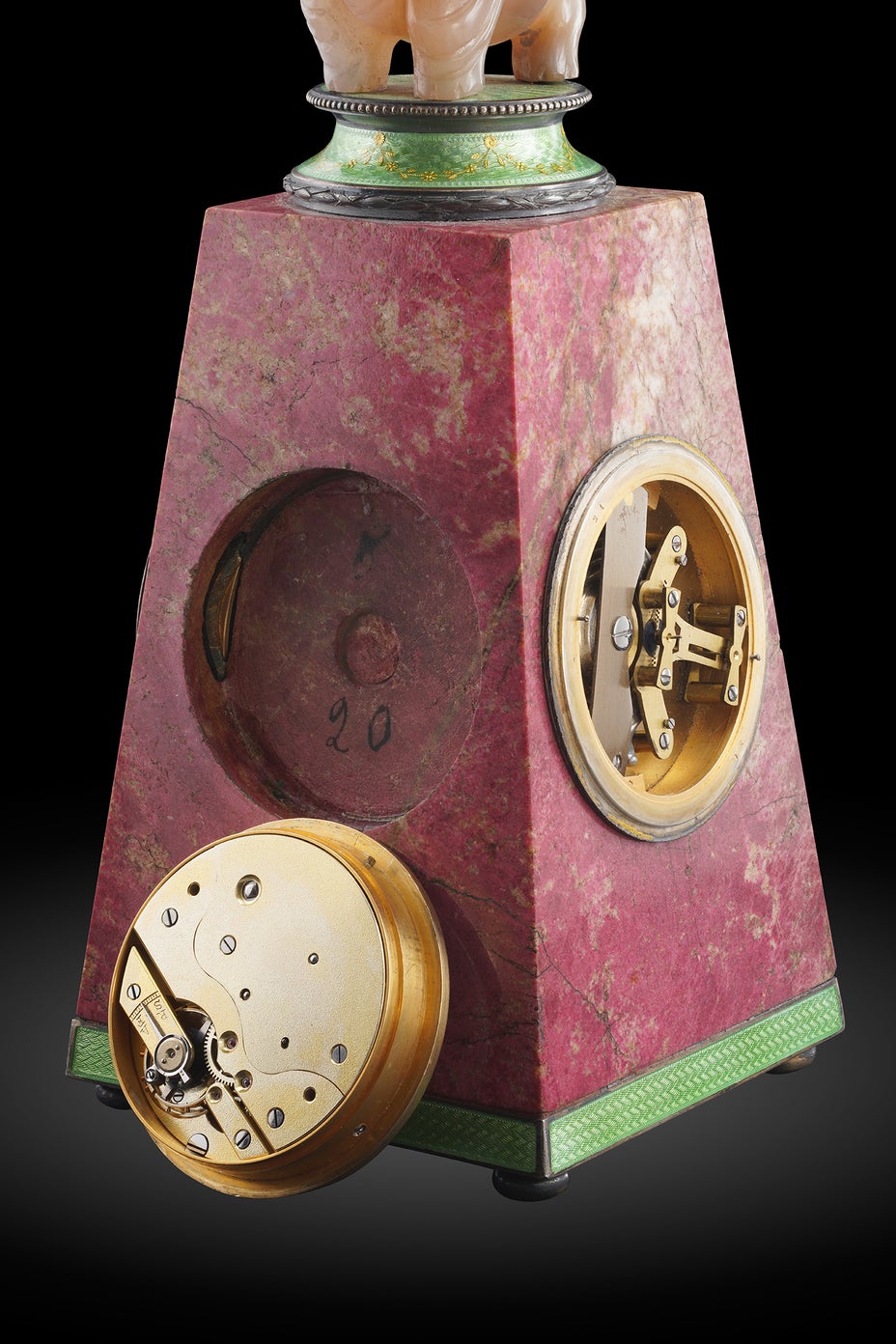
An imposing, unique and impressive pink marble, agate and enamel table clock with barometer, thermometer, key and presentation box
Full-Cataloguing
It was soon after Fabergé’s debut at the Paris Exposition Universelle in 1900 that Cartier created pieces inspired by the Russian jeweler. Cartier’s creations during the Belle Époque are characterized by the use of guilloché enamel, rose-cut diamonds, millegrain finishing, and the use of garland and floral motifs. Cartier used a secret method to acquire a shimmering and translucent effect on its enamel masterpieces, one that involved 5 or 6 layers of enamel, chosen from a palette of over 144 shades.
At the same time, Cartier’s intriguing table clocks were among the most favored of the Edwardian period. Encouraged by Louis Cartier’s personal passion for timepieces, the House of Cartier raised the art of clockmaking to new heights of design and ingenuity.
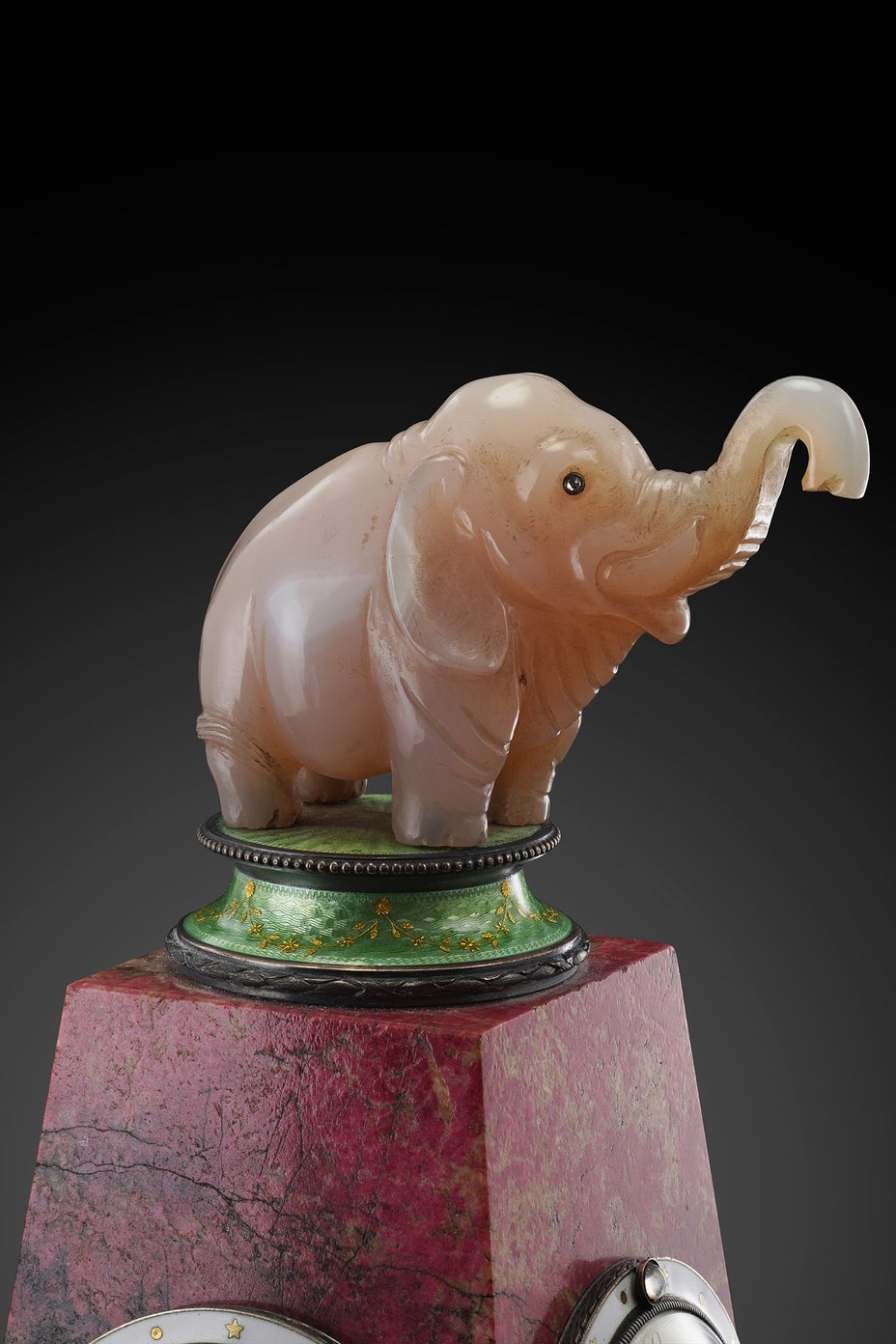
The carved stone creature, seated on top of a clock, became one of Cartier’s most endearing decorative devices, with the elephant being one of the most popular animals in Cartier’s menagerie. In tune with the "Garland Style," the Louis XVI style was favored during this production period. Marble eggs, urns, pillars, or pyramids were lavished with guilloché enamel and decorative design. Here, Cartier has imagined this style in a clock with a barometer and thermometer on a pink marble stand. The elephant is furthermore rendered in pale grey agate, standing on a plinth of bright, silky green enamel, typical of Cartier enameling of the period.
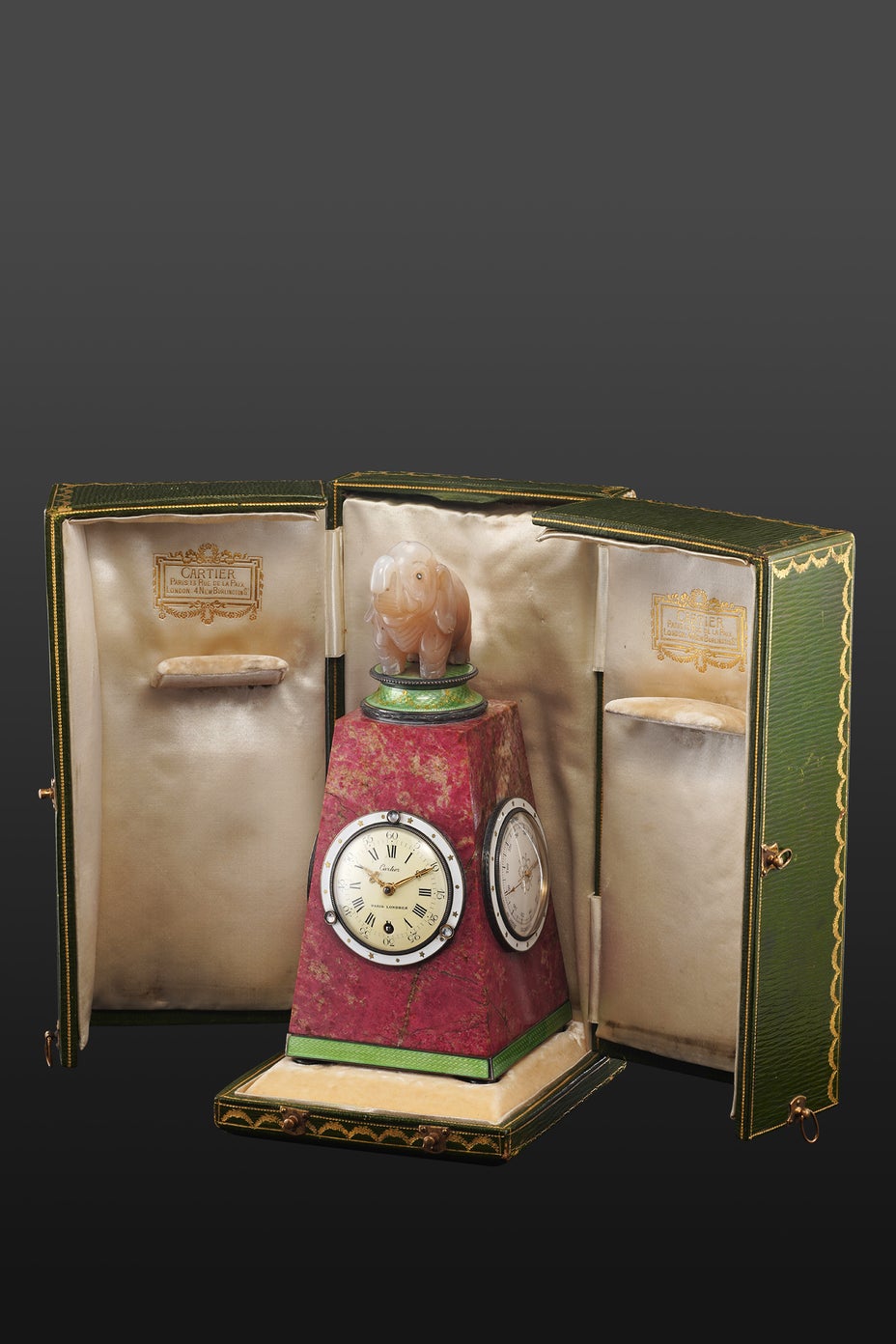
Most interestingly, sold from Cartier Paris, the clock is housed in its original green fitted presentation box with its Cartier Paris logo. Cartier had only used this color in the early 20th century; they would eventually change to their now-iconic red-colored boxes after the mid-1910s. Furthermore, the dial of the clock also has the inscription in French Paris Londres.
With its imposing size and exquisite craftsmanship, this clock is an exceptionally rare and priceless masterpiece, with an undeniable connection to the Russian influence that permeated much of European design in the early 20th century. Given the unique combination of materials, the intricate design, and the historical context, this clock is unlike any other. Its rarity is compounded by the fact that similar works, especially those with this level of craftsmanship and such a profound cultural cross-influence, are virtually impossible to find. Having appeared only once before on the auction market, in 1992, there is no guarantee that another piece of this caliber will ever again emerge.
Cartier
FrenchWith the Constitution of 1848 came a new standard for luxury in France. Founded one year prior by Louis-Francois Cartier, the house of Cartier was one of the first to use platinum in jewelry making. This incredibly expensive material became the stepping-stone for Cartier to experiment in form, mechanisms and attitude. It helped men move from pocket watches to wristwatches, effectively making the watch much more functional and prominent in a man's overall wardrobe.
Cartier did not only touch on functionality. Inspired by a commissioned painting by George Barbier featuring a black panther at the feet of an elegantly bejeweled woman, Cartier began incorporating wild animals in his designs—most notably, Cartier Panthère rings, bangle bracelets and watches. Yet it wasn't until the late 1960s that the house of Cartier debuted their iconic yellow and rose gold LOVE collection, which includes the famous bracelet that only a special screwdriver can open.