160
Cartier
Tank Cintrée "Mid size"
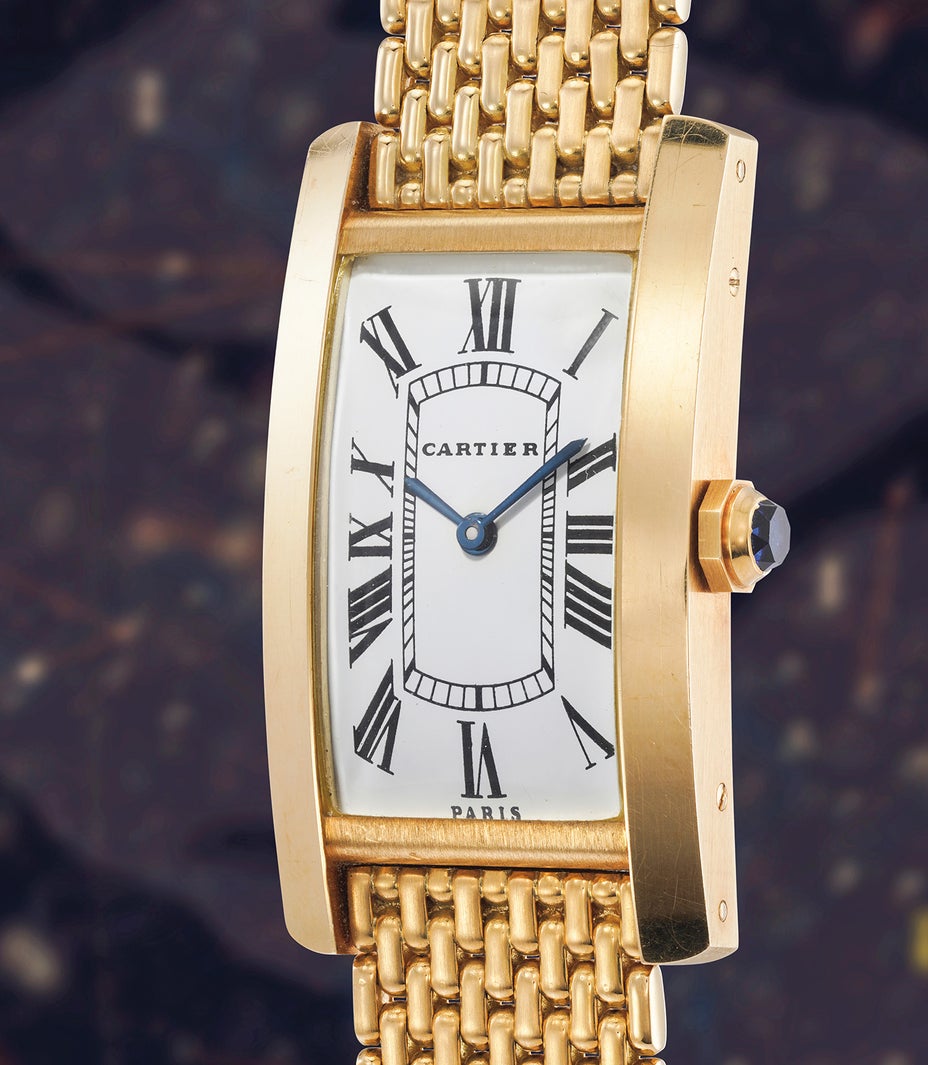
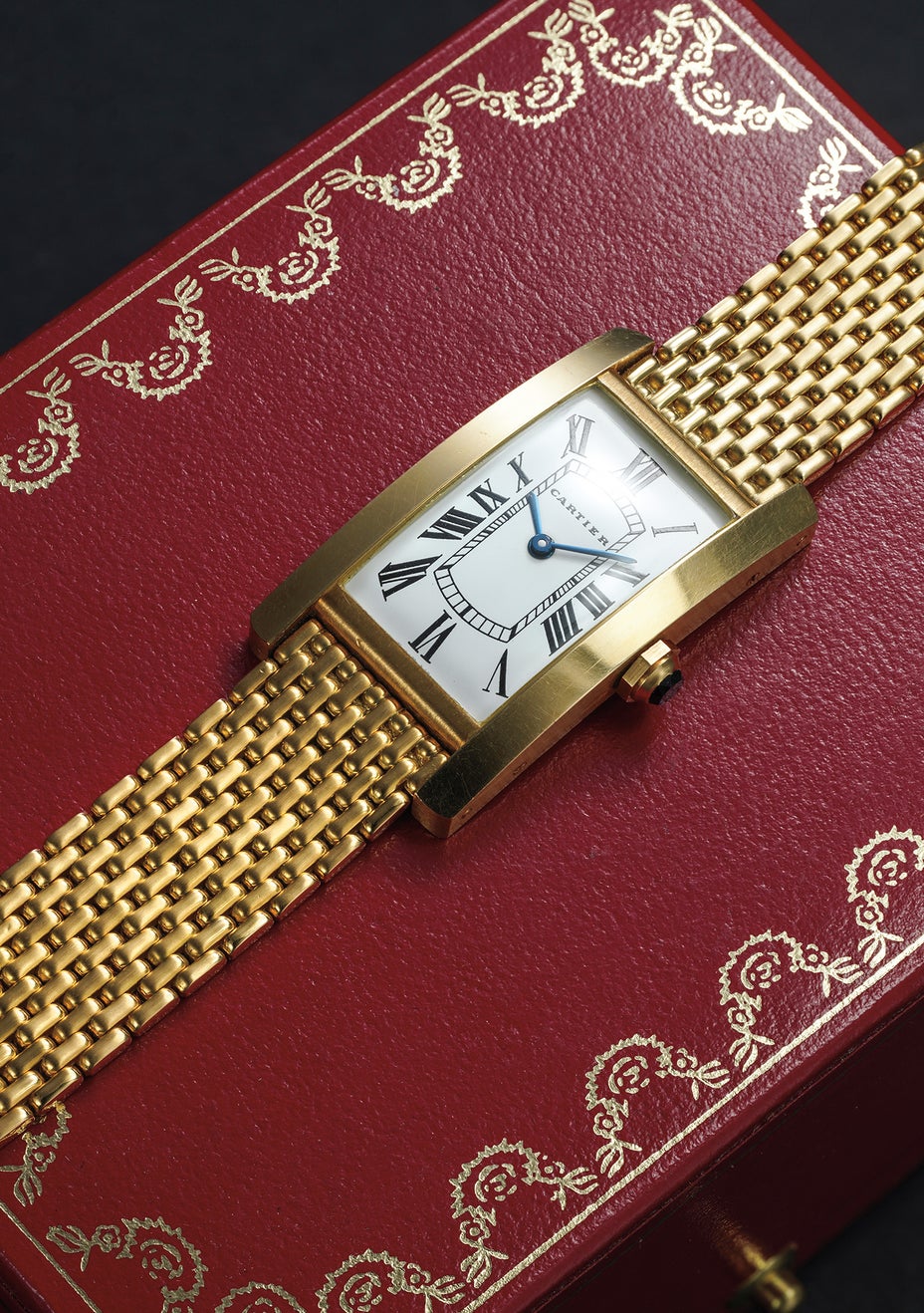
An elegant and rare yellow gold curved wristwatch with bracelet and presentation box
Full-Cataloguing
The design of the Cintrée was heavily influenced by the cultural and artistic dynamism of the Roaring 20's, or the "années folles" in France. This was a time of economic prosperity and social transformation, where Art Deco principles flourished, and old conventions were cast aside in favor of bold, modern aesthetics. The Cintrée’s dramatic, curved lines embodied the glamour and exuberance of the era, offering a wrist-hugging design that was both comfortable and avant-garde compared to the rudimentary round or square watches of the time.
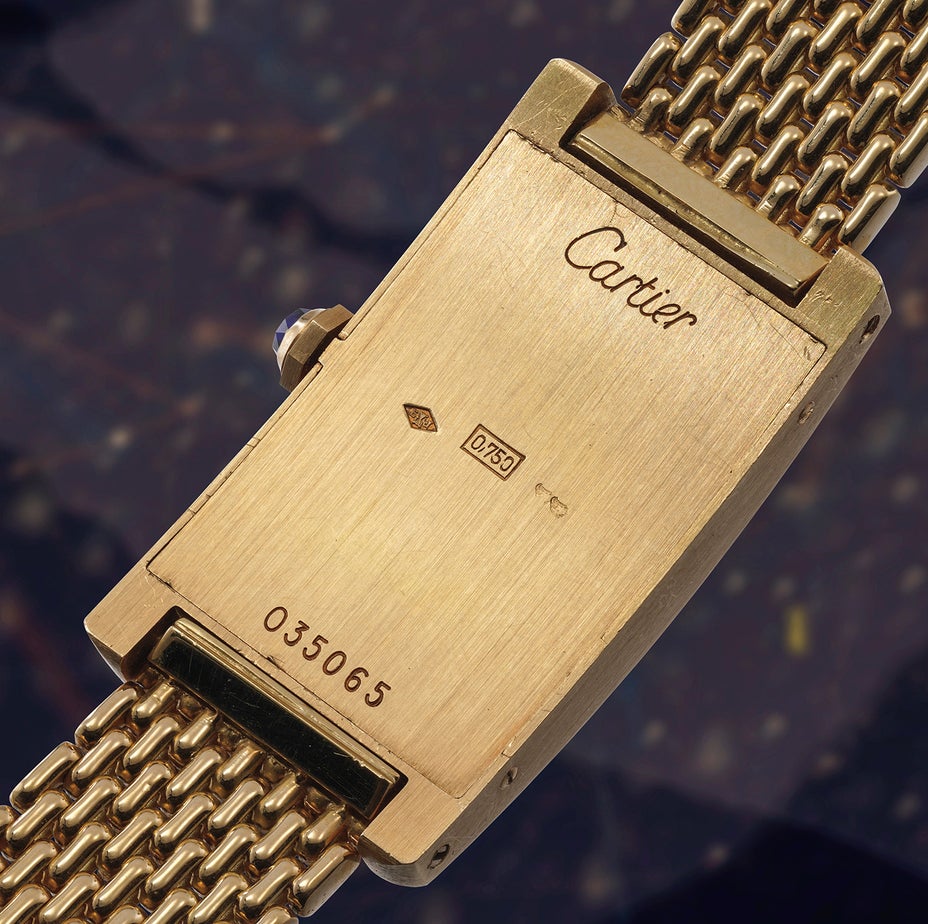
The present example, a rare mid-size iteration from circa 1980, measures 36mm in length and features a stunning yellow gold brick-link bracelet that elegantly hugs the wrist. The dial, signed "Cartier Paris," showcases a refined chemin de fer minute track and Roman numeral hour markers, exuding a "Daliesque" charm. French "double eagle" hallmarks on the caseback further confirm the piece’s origin, adding to its allure. This exceptional Tank Cintrée is a testament to Cartier’s ability to blend timeless elegance with bold innovation, making it a true collector’s treasure.
Cartier
FrenchWith the Constitution of 1848 came a new standard for luxury in France. Founded one year prior by Louis-Francois Cartier, the house of Cartier was one of the first to use platinum in jewelry making. This incredibly expensive material became the stepping-stone for Cartier to experiment in form, mechanisms and attitude. It helped men move from pocket watches to wristwatches, effectively making the watch much more functional and prominent in a man's overall wardrobe.
Cartier did not only touch on functionality. Inspired by a commissioned painting by George Barbier featuring a black panther at the feet of an elegantly bejeweled woman, Cartier began incorporating wild animals in his designs—most notably, Cartier Panthère rings, bangle bracelets and watches. Yet it wasn't until the late 1960s that the house of Cartier debuted their iconic yellow and rose gold LOVE collection, which includes the famous bracelet that only a special screwdriver can open.