155
Brice Marden
Homage to Art 12
Full-Cataloguing
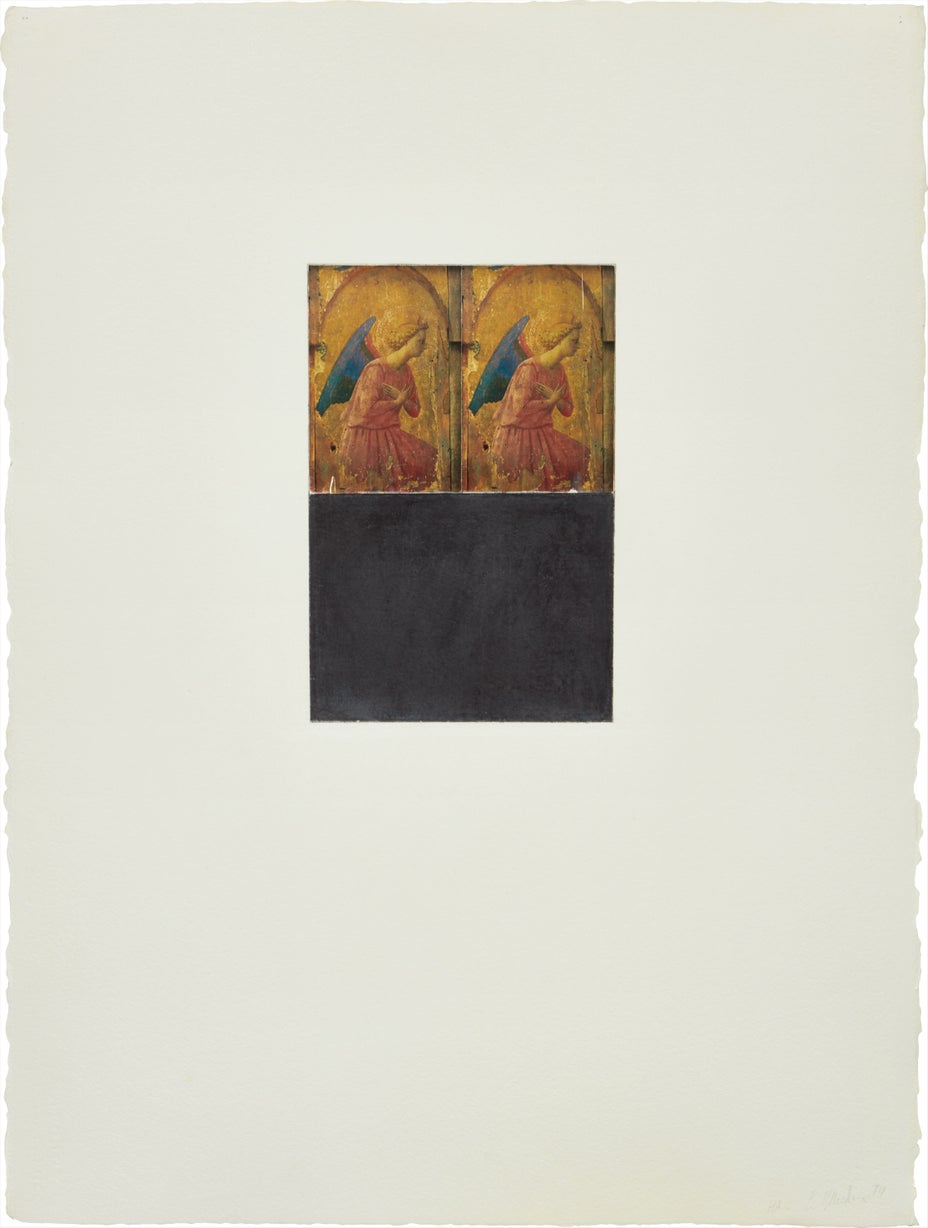
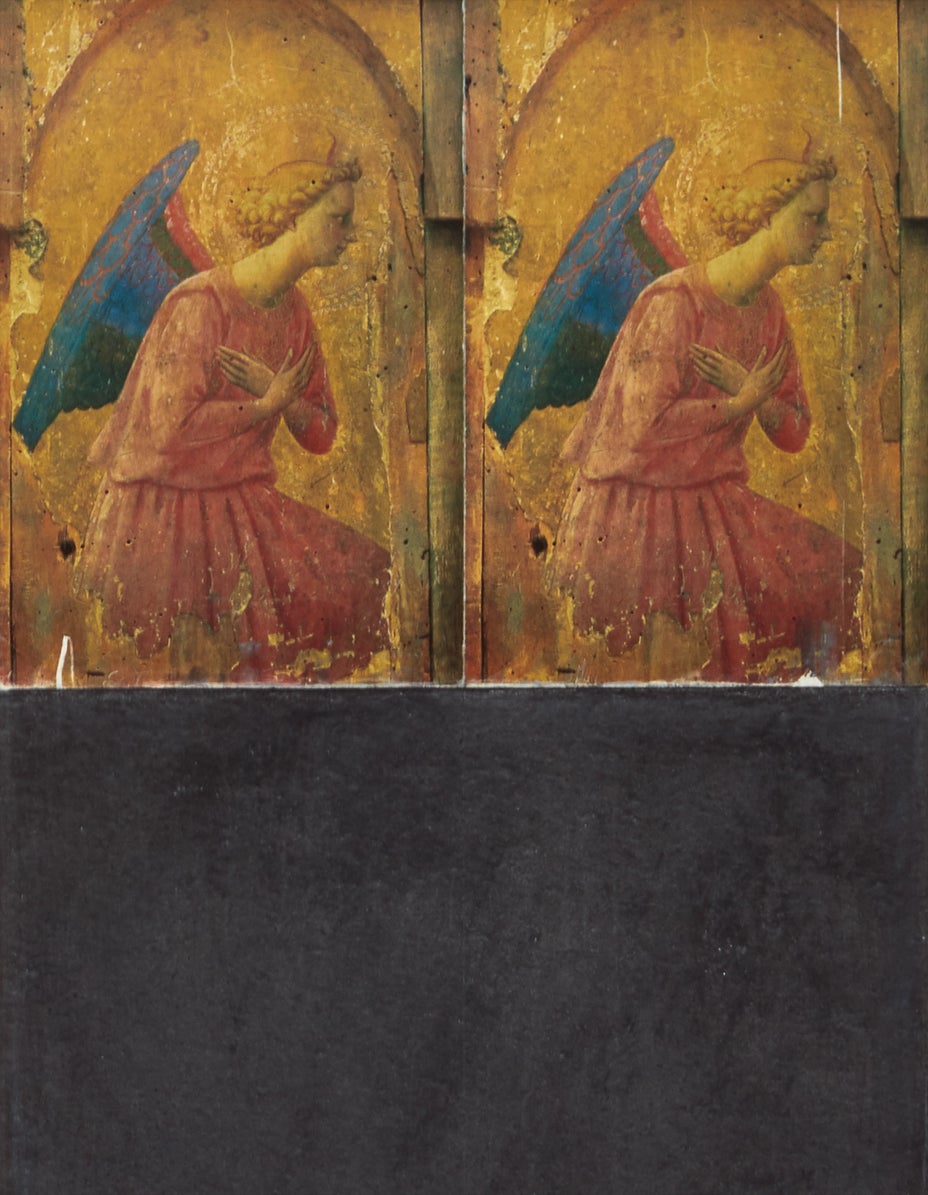
While the true source imagery in Marden’s Homage to Art 12 originates from the famed Renaissance artist’s triptych painted in the mid-1500s for the church of San Domenico in Fiesole, the physical source is a found object—the museum postcard. In utilizing the technique of collage with found images, Marden emphasizes the planarity of the work. By placing the postcards in the upper center of the composition and bordering them perpendicularly with his heavy application of graphite, Marden recalls his earlier drawings of orderly grids from the 1960s and 1970s. And yet in appropriating recognizable imagery, Marden uniquely combines the nostalgic past in the found object with the present in the physicality of the artist’s hand. As Klaus Kertess espouses of the Homage to Art works, “Photo-reproductive memory mirrors drawn memory” (Klaus Kertess, Brice Marden: Paintings and Drawings, New York, 1992, p. 39). Previously housed in the esteemed collection of Dominque de Menil of Houston, the present lot is, as such, both an homage to art of the distant past and also to Marden’s contemporary voice, founded upon planarity, materiality and evidently, upon collective human memory.
Brice Marden
American | 1938Born in Bronxville and working between New York City, Tivoli, New York, and Hydra, Greece, Brice Marden developed a unique style that departs from his Abstract Expressionist and Minimalist contemporaries. Drawing from his personal experiences and global travels, Marden’s works demonstrate a gestural and organic emotion channeled through the power of color. By the late 1960s, Marden received international recognition as the master of the monochrome panel and, in the late 1970s, began exploring the relationship between horizontal and vertical planes. His practice is deeply informed by his knowledge of classical architecture, world religion, ancient history, and spirituality. Elected to the American Academy of Arts and Letters in 1998, Marden is represented in notable institutional collections including the Whitney Museum of Art, New York, Philadelphia Museum of Art, Stedelijk Museum, Amsterdam, and Centre Georges Pompidou, Paris.