

23
Breguet
Régulateur À Tourbillon
An extremely fine, rare, and important two-tone white and pink gold keyless one minute tourbillon open-face pocket watch with Guillaume balance and power reserve
- Estimate
- $80,000 - 160,000
$222,250
Lot Details
- Manufacturer
- Breguet
- Year
- 1959
- Case No
- B 3357
- Model Name
- Régulateur À Tourbillon
- Material
- 18K white gold and pink gold
- Calibre
- Manual, cal. 19”’ by Victorin Piguet, jewelled
- Dimensions
- 51mm Diameter
- Signed
- Case, dial and movement signed
- Accessories
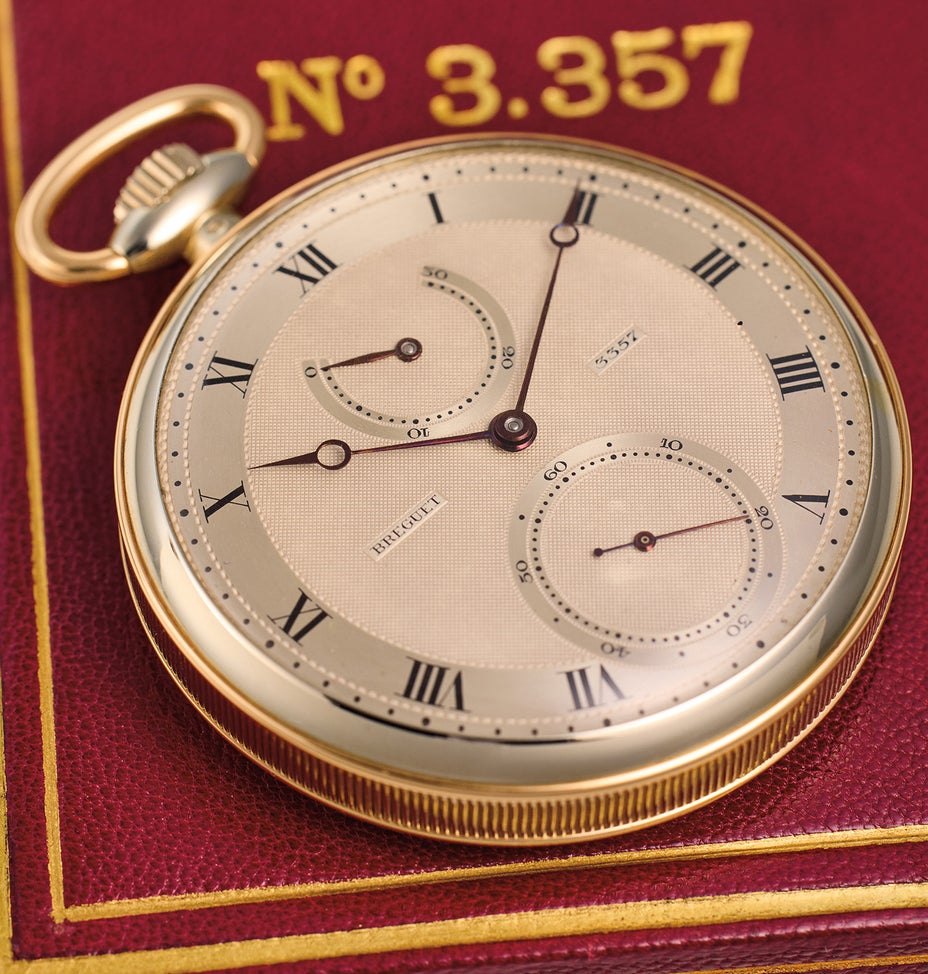
- Accompanied by Breguet presentation box marked No. 3357
Full-Cataloguing
Catalogue Essay
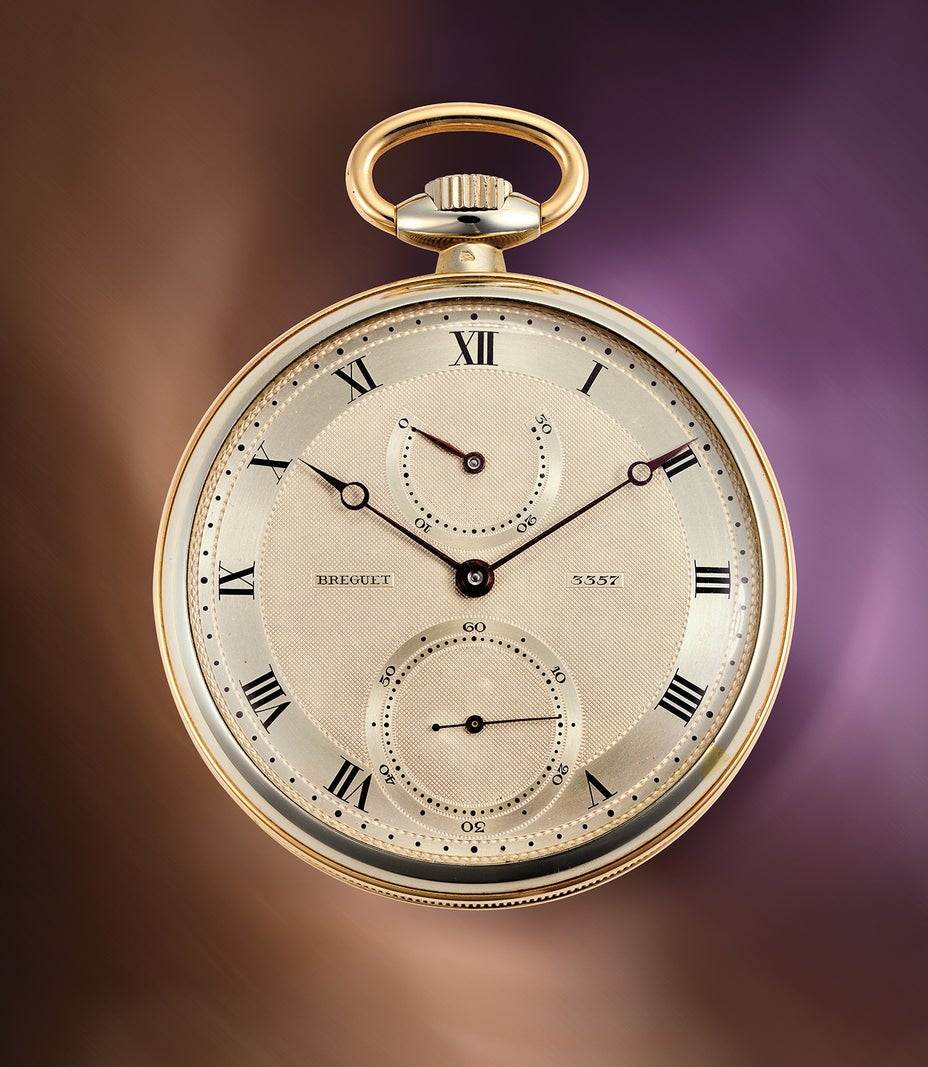
The present timepiece, Breguet No. 3357, stands as a remarkable testament to the maison's enduring commitment to horological excellence. Sold on 22 November 1959 for 900,000 old Francs, this openface pocket chronometer seamlessly marries technical innovation with refined aesthetics, embodying the pinnacle of early 20th-century watchmaking.
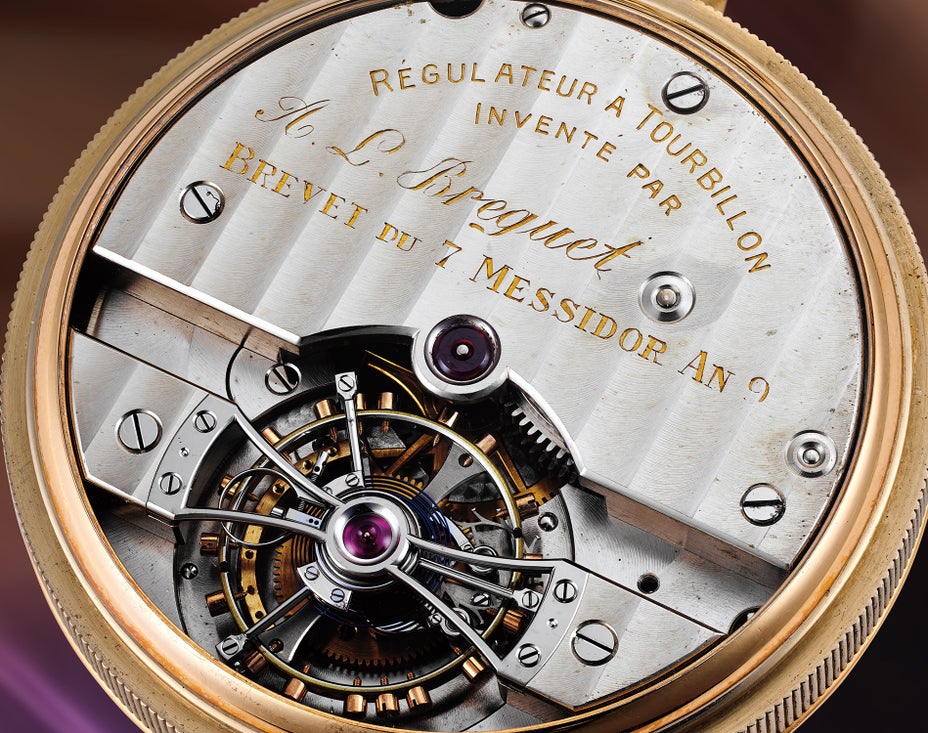
At its heart lies a highest quality, Victorin Piguet caliber 19''' half-plate nickel-finished jewelled lever movement, designed for highest precision. The movement features a large, meticulously polished, steel three-arm tourbillon cage, the work of Fritz A. Robert-Charrue, and a Guillaume balance wheel, renowned for its exceptional thermal stability. Robert-Charrue, a protégé of the esteemed Jämes Pellaton, was celebrated for his contributions to tourbillon design, including the creation of one of the smallest tourbillon watches ever made.
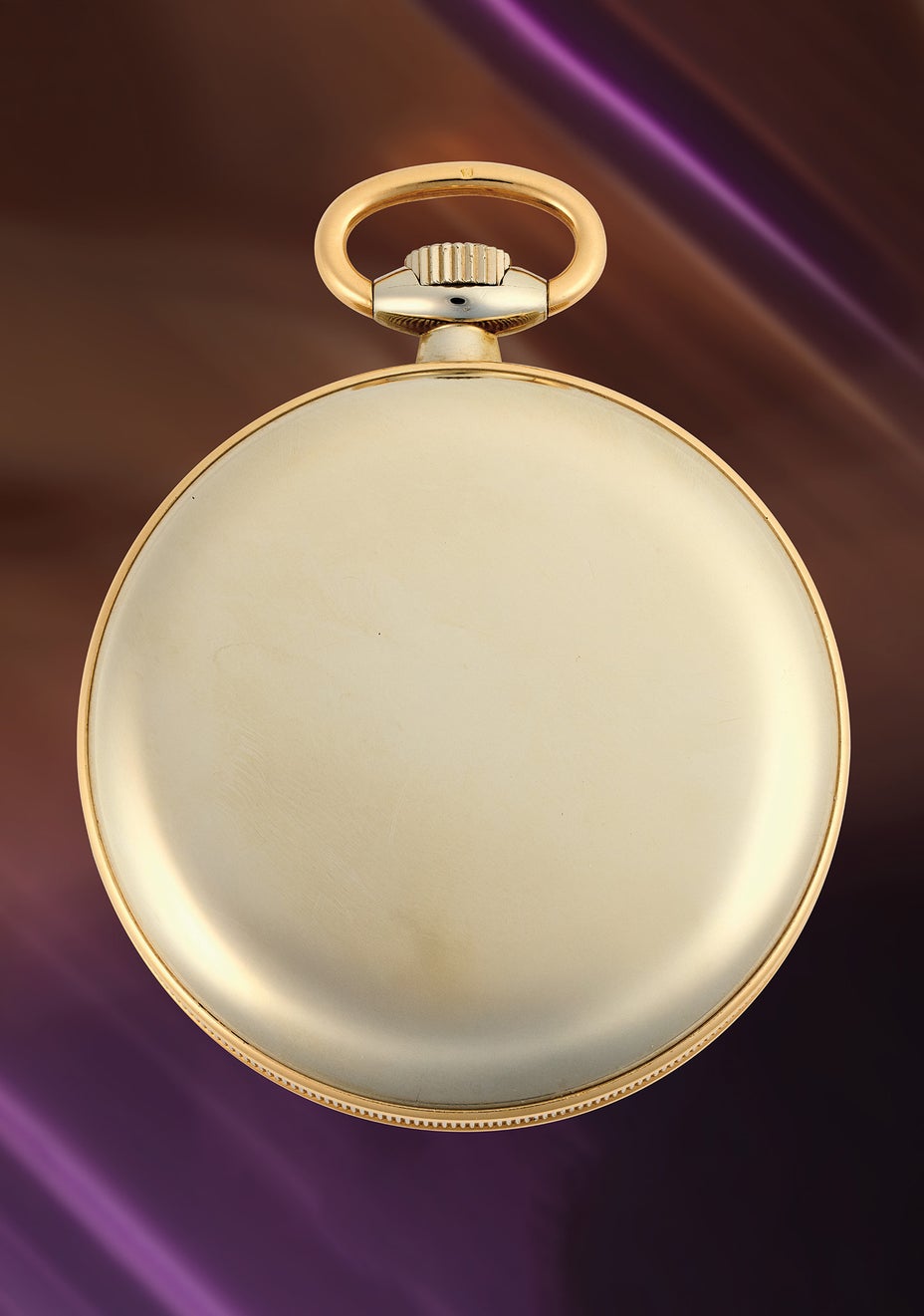
The engine-turned silver dial presents Roman numerals on a blank chapter ring, complemented by gold Breguet hands. An aperture reveals the power reserve, while constant seconds are displayed, underscoring the watch's precision timekeeping purpose. The circular white and pink gold case, measuring 51 mm in diameter, features a ribbed central band, white gold bezel with pink gold rim, and a sapphire crystal case back with pink gold bezel, allowing an unobstructed view of the movement.
According to Breguet's archives, No. 3357 was sold to Mr. Louis Harrison Dulles Jr. Louis Harrison Dulles Jr. (1899–1971) was the son of the American diplomat and Secretary of State John Foster Dulles and the nephew of CIA Director Allen Dulles, placing him within one of the most influential families in mid-20th-century American foreign policy.
Dulles is prominently mentioned in the tome, “Breguet - Watchmakers since 1775” by Emmanuel Breguet: “The firm's clientele was now distributed geographically as far as Japan and the United States and included such striking figures as the Maharajah of Kapurthala, Prince Mirza of Persia, King Fouad I of Egypt and the American L.H. Dulles".
A passionate and discerning watch collector whose enduring relationship with Breguet reflected both his refined taste and deep appreciation for mechanical excellence. A regular client of the maison during the early 20th century, Dulles was known for his keen interest in technical innovation, particularly in high-precision chronometry and tourbillon mechanisms. Louis Jr.'s patronage of Breguet reflects a deep appreciation for horological craftsmanship and precision, aligning with the family's legacy of engagement in international affairs and high standards of excellence. His collection and relationship with Breguet underscore the intersection of personal passion and the broader cultural and political milieu of his time. His correspondence with the firm reveals a man of intellectual curiosity and horological connoisseurship—one who did not merely acquire timepieces, but studied them with fervor. Dulles’s commissions from Breguet were often bespoke, emphasizing both accuracy and aesthetic harmony, and today serve as a testament to a collector who viewed watches not only as instruments of time, but as embodiments of art, science, and human ingenuity.
The present timepiece is exactly as such, and a significant example of Breguet's rare tourbillon chronometers from the early 20th century. Its provenance, technical mastery, and aesthetic refinement render it a compelling acquisition for collectors and connoisseurs alike.
At its heart lies a highest quality, Victorin Piguet caliber 19''' half-plate nickel-finished jewelled lever movement, designed for highest precision. The movement features a large, meticulously polished, steel three-arm tourbillon cage, the work of Fritz A. Robert-Charrue, and a Guillaume balance wheel, renowned for its exceptional thermal stability. Robert-Charrue, a protégé of the esteemed Jämes Pellaton, was celebrated for his contributions to tourbillon design, including the creation of one of the smallest tourbillon watches ever made.
The engine-turned silver dial presents Roman numerals on a blank chapter ring, complemented by gold Breguet hands. An aperture reveals the power reserve, while constant seconds are displayed, underscoring the watch's precision timekeeping purpose. The circular white and pink gold case, measuring 51 mm in diameter, features a ribbed central band, white gold bezel with pink gold rim, and a sapphire crystal case back with pink gold bezel, allowing an unobstructed view of the movement.
According to Breguet's archives, No. 3357 was sold to Mr. Louis Harrison Dulles Jr. Louis Harrison Dulles Jr. (1899–1971) was the son of the American diplomat and Secretary of State John Foster Dulles and the nephew of CIA Director Allen Dulles, placing him within one of the most influential families in mid-20th-century American foreign policy.
Dulles is prominently mentioned in the tome, “Breguet - Watchmakers since 1775” by Emmanuel Breguet: “The firm's clientele was now distributed geographically as far as Japan and the United States and included such striking figures as the Maharajah of Kapurthala, Prince Mirza of Persia, King Fouad I of Egypt and the American L.H. Dulles".
A passionate and discerning watch collector whose enduring relationship with Breguet reflected both his refined taste and deep appreciation for mechanical excellence. A regular client of the maison during the early 20th century, Dulles was known for his keen interest in technical innovation, particularly in high-precision chronometry and tourbillon mechanisms. Louis Jr.'s patronage of Breguet reflects a deep appreciation for horological craftsmanship and precision, aligning with the family's legacy of engagement in international affairs and high standards of excellence. His collection and relationship with Breguet underscore the intersection of personal passion and the broader cultural and political milieu of his time. His correspondence with the firm reveals a man of intellectual curiosity and horological connoisseurship—one who did not merely acquire timepieces, but studied them with fervor. Dulles’s commissions from Breguet were often bespoke, emphasizing both accuracy and aesthetic harmony, and today serve as a testament to a collector who viewed watches not only as instruments of time, but as embodiments of art, science, and human ingenuity.
The present timepiece is exactly as such, and a significant example of Breguet's rare tourbillon chronometers from the early 20th century. Its provenance, technical mastery, and aesthetic refinement render it a compelling acquisition for collectors and connoisseurs alike.
Breguet
Swiss | 1775 Established in 1775 by Abraham Louis Breguet, widely considered the greatest watchmaker of all time, the storied brand continues to thrive in the modern era, creating exceptional high-end watches as the Swatch Group's premier prestige brand. Some of the most important and lasting inventions in watchmaking are attributed to Abraham Louis Breguet, including the tourbillon, shock resistance and the use of hammers and gongs employed in nearly all minute repeating watches made since.
Eighteenth and nineteenth century Breguet pocketwatches are especially sought-after by collectors, and many of them were made for the elite of European society, including Napoléon and Marie Antoinette. Key wristwatches from the twentieth century include oversized dress watches, two-register chronographs, triple calendars and Type XX aviator's chronographs made for the French military and civilians.
Browse MakerEighteenth and nineteenth century Breguet pocketwatches are especially sought-after by collectors, and many of them were made for the elite of European society, including Napoléon and Marie Antoinette. Key wristwatches from the twentieth century include oversized dress watches, two-register chronographs, triple calendars and Type XX aviator's chronographs made for the French military and civilians.