1095
Bovet
“Bouquets de Chine”
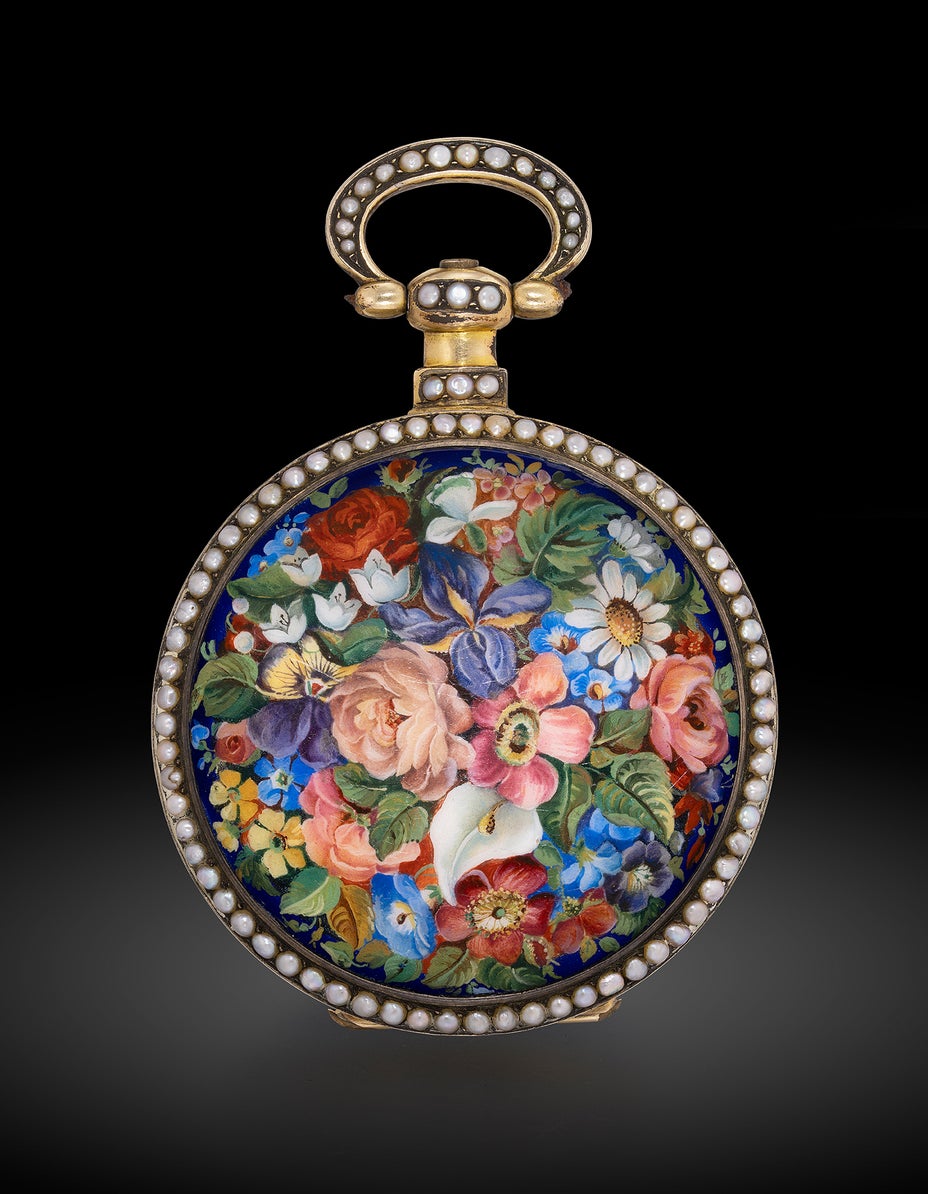
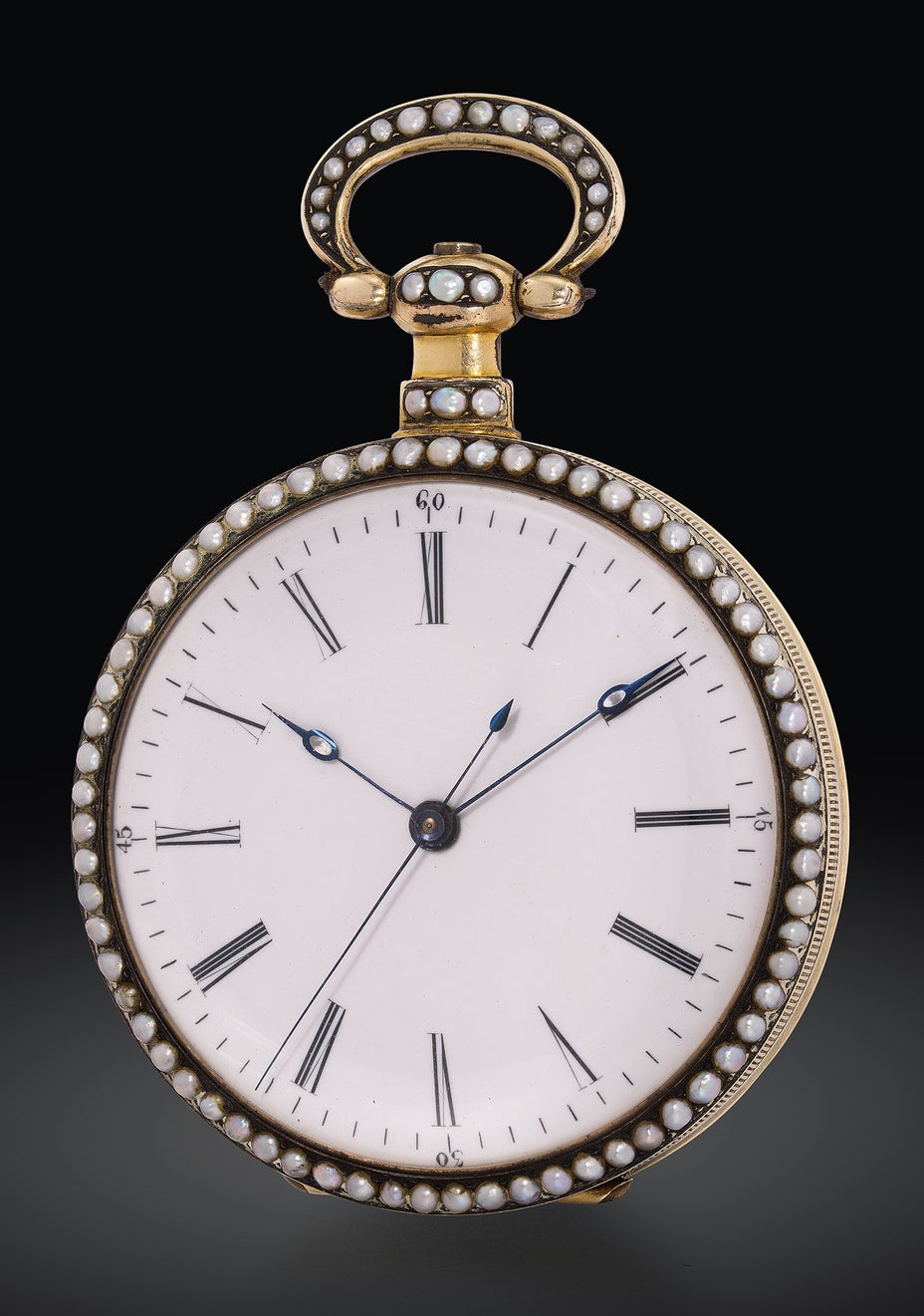
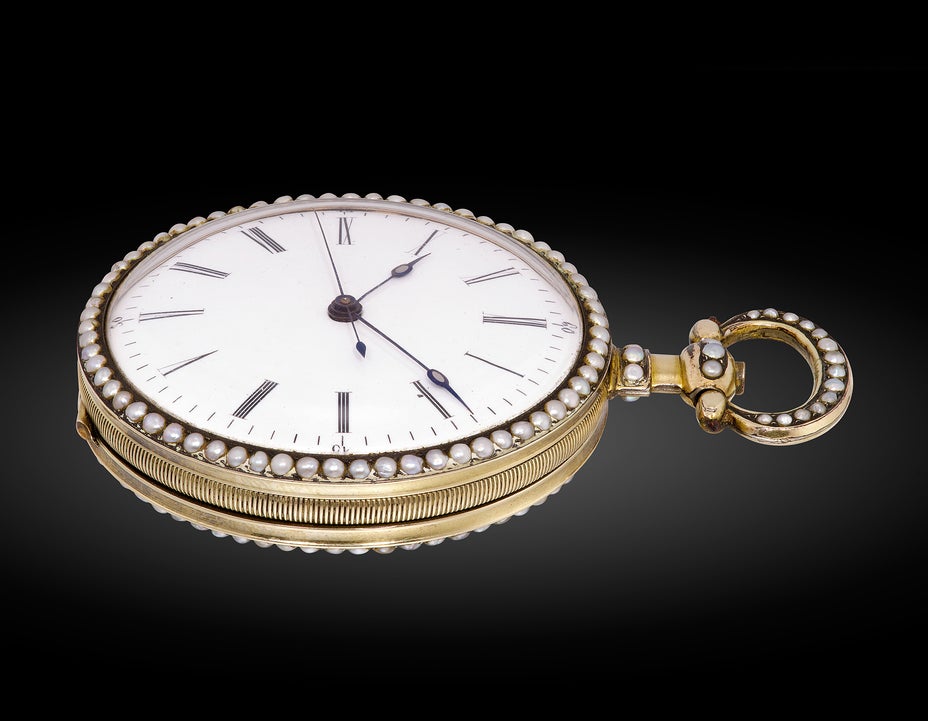
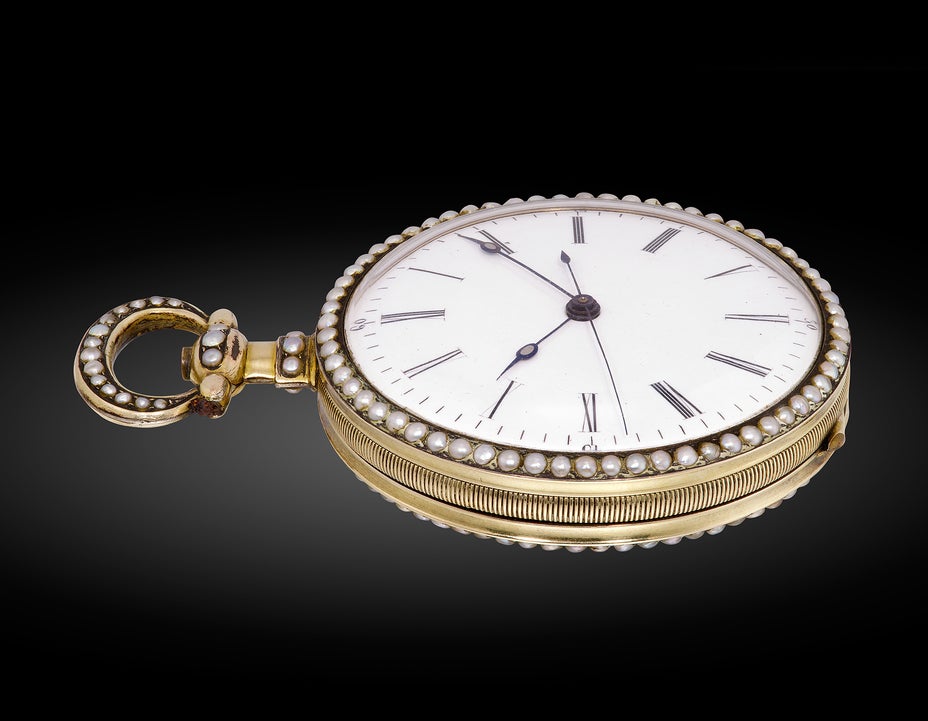
A highly rare and attractive pearl-set gilt-silver openface Empire-styled pocket watch with white enamel dial, center seconds, Jacot duplex escapement, polychrome enamel painting depicting bouquets de Chine, made for the Chinese Market
Full-Cataloguing
This exquisite timepiece features the "Jacot Duplex" or "Chinese Duplex" escapement, a remarkable innovation introduced around 1830 by Charles Edouard Jacot, who traveled between La Chaux-de-Fonds and New York. Renowned for his contributions to escapement design, Jacot’s modified duplex escapement includes a jumping seconds hand, particularly favored in watches tailored for the Chinese market. T.P. Camerer Cuss, in The Country Life Book of Watches, notes that this refined escapement allows for an illusion of precision akin to that of a regulator, achieving a remarkable oscillation rate of 14,400 vibrations per hour, functioning as a triple dead beat escapement derived from the duplex mechanism.
Jacot’s ingenuity extended to registering twelve American patents during his time in the United States, enhancing watch construction with designs like the "star wheel duplex" escapement. Given its intricate craftsmanship and historical significance, this timepiece holds considerable collectibility for enthusiasts and connoisseurs alike.
Bovet
Swiss | 1822The firm Bovet 1822 has a rich, centuries-long history beginning when Edouard Bovet sold four decorative pocket watches in Canton Asia for what would today equal $1 million. By 1822, Edouard, with his brothers, registered the company in London, which at the time was an important center for watches and clocks. That same year, they moved their manufacturing center to the Swiss municipality Fleurier. Bovet became known for their highly decorative pocket watches for the Chinese market. Their richly engraved movements were so important to the watch that Bovet created the concept of the transparent watch back so owners could see the beauty of the movement. Bovet's oversized chronograph wristwatches, such as the Mono Rattrapante chronograph, are especially sought-after. Today, the firm continues their tradition of exquisitely enameled watches.