37
Audemars Piguet
Ref. 5552BA
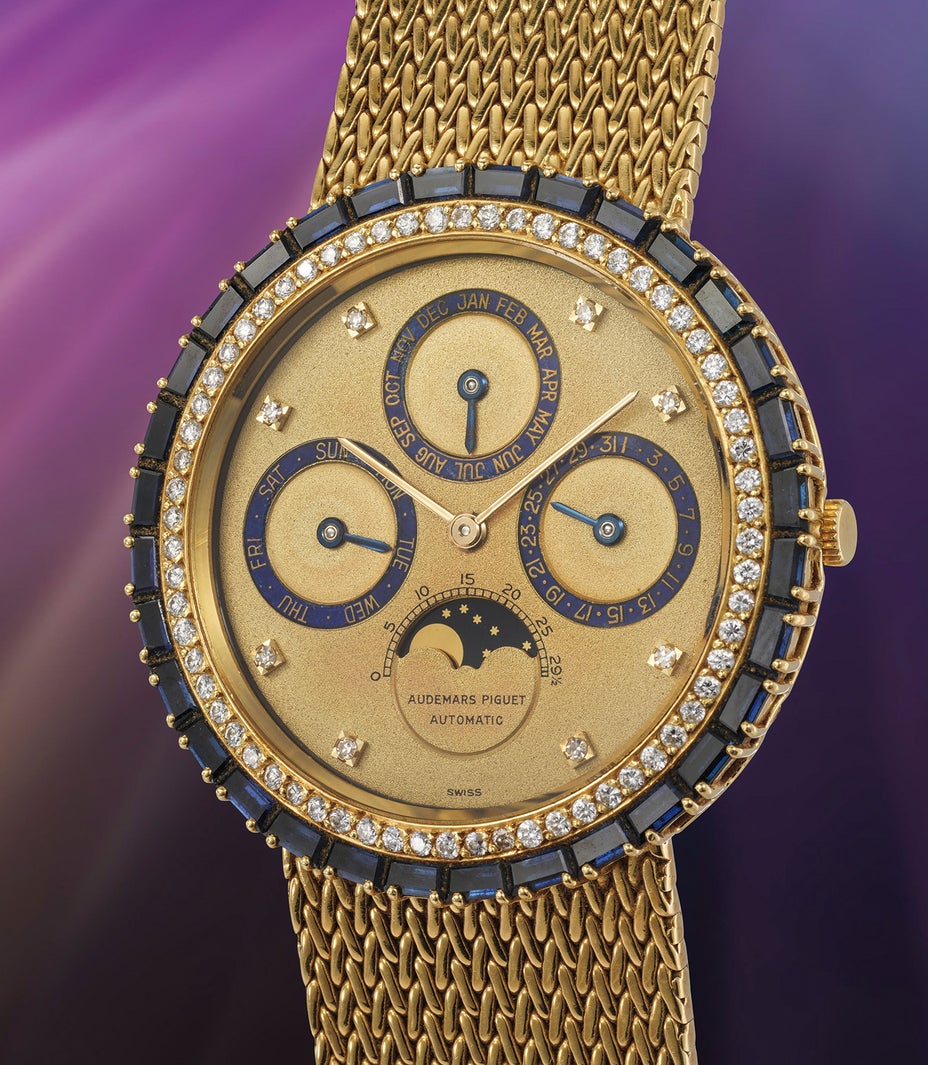
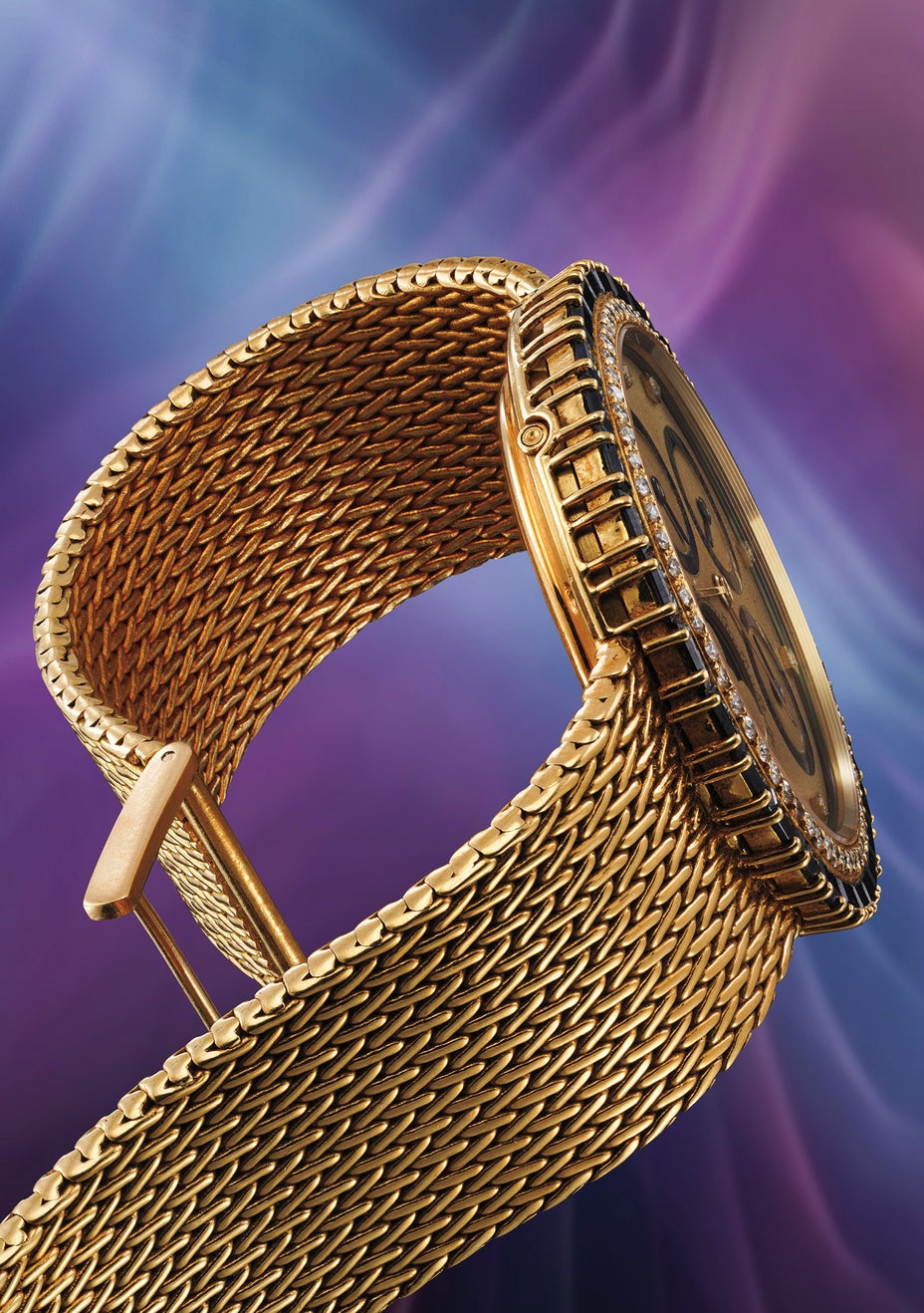
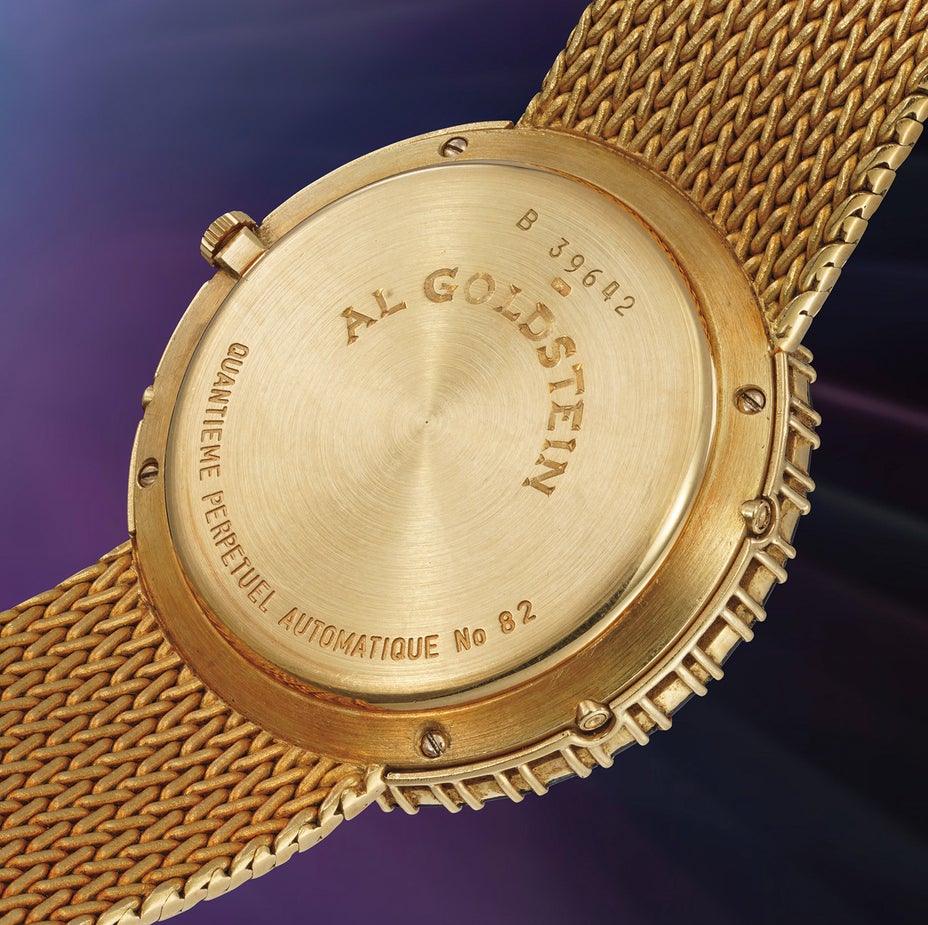
An extremely uncommon, highly impressive and very well-preserved yellow gold automatic perpetual calendar wristwatch with moonphases, diamond and sapphire-set bezel and integrated bracelet
Full-Cataloguing
The rebirth of luxury mechanical watchmaking in the 1980s is one of the two possible reactions to the quartz crisis. The other was trying to compete on accuracy and price whith quartz watches, and not many companies who tried this approach are still around to tell us how it went - which tells us how it went.
Those who deemed making cheaper watches was not a viable solution to the crisis turned to the opposite spectrum of the market: luxury watchmaking.
The present piece can be considered one of the best examples of this reactionary path: not only is it an automatic wristwatch fitted with a perpetual calendar - a feat that in the 1980s, when the model was conceived, had been accomplished by only a handful of companies - but it furthermore features a diamond and sapphire, the latter even baguette-cut!, set bezel and diamond hour markers. It can be safely considered one of the ultimate examples of luxury watchmaking experimentalism of the time. The production cost (and retail price) of the watch must have been astronomical, as the solutions employed - both technical and aesthetic - were novel and thus most likely not yet economically refined in their execution.
Conceptually, it meant a paradigm-shift was happening in the industry: long gone were the times when a complicated dress watch for man had to be slim subdued and minute. The 1980s completed the process which had begun in the 1970s, with a revolution in composition, tastes and preferences of the society at large. For the first time in the history of watchmaking, a man’s automatic perpetual calendar could be fitted with a double circle of gemstones to the bezel, and diamond indexes to boot!
As we are now reaping the benefits of that small cultural revolution with a true blossoming of the appreciation of contemporary bejewelled, highly complicated timepieces, the present watch is inevitably to be considered an icon of watch collecting, one of the cornerstones upon which modern watchmaking trends have been built.
Audemars Piguet
Swiss | 1881A specialist in the manufacture of complications since it was established in 1881, Audemars Piguet never ceases to impress with a rich history of creating bold, even audacious, timepieces underpinned by traditional watchmaking at its finest. This Le Brassus-based Swiss manufacturer is one of only two major manufacturers still owned by the founding family. Since its earliest days, AP is considered a leader in the field of minute repeaters and grande complication pocket and wristwatches. The brand is devoted to preserving the history of watchmaking in the Vallée de Joux, showcased at their superb museum in Le Brassus.
Today, the brand is best known for its Royal Oak models, a revolutionary luxury sports watch launched in 1972. Other key models include early minute repeating wristwatches, vintage chronograph wristwatches, such as the oversized reference 5020, perpetual calendar watches and the Royal Oak Offshore, first introduced in 1993.