172
KAWS
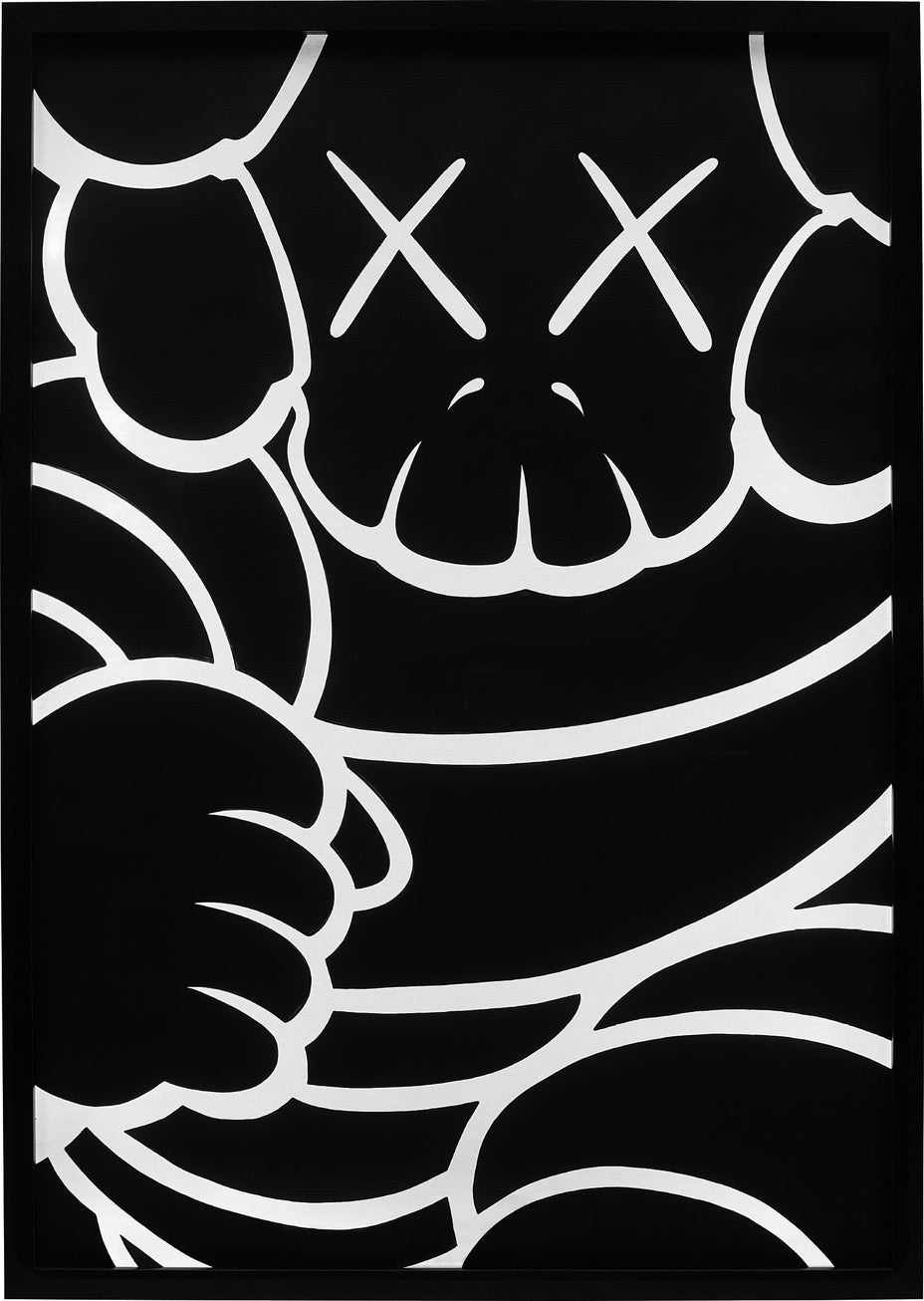
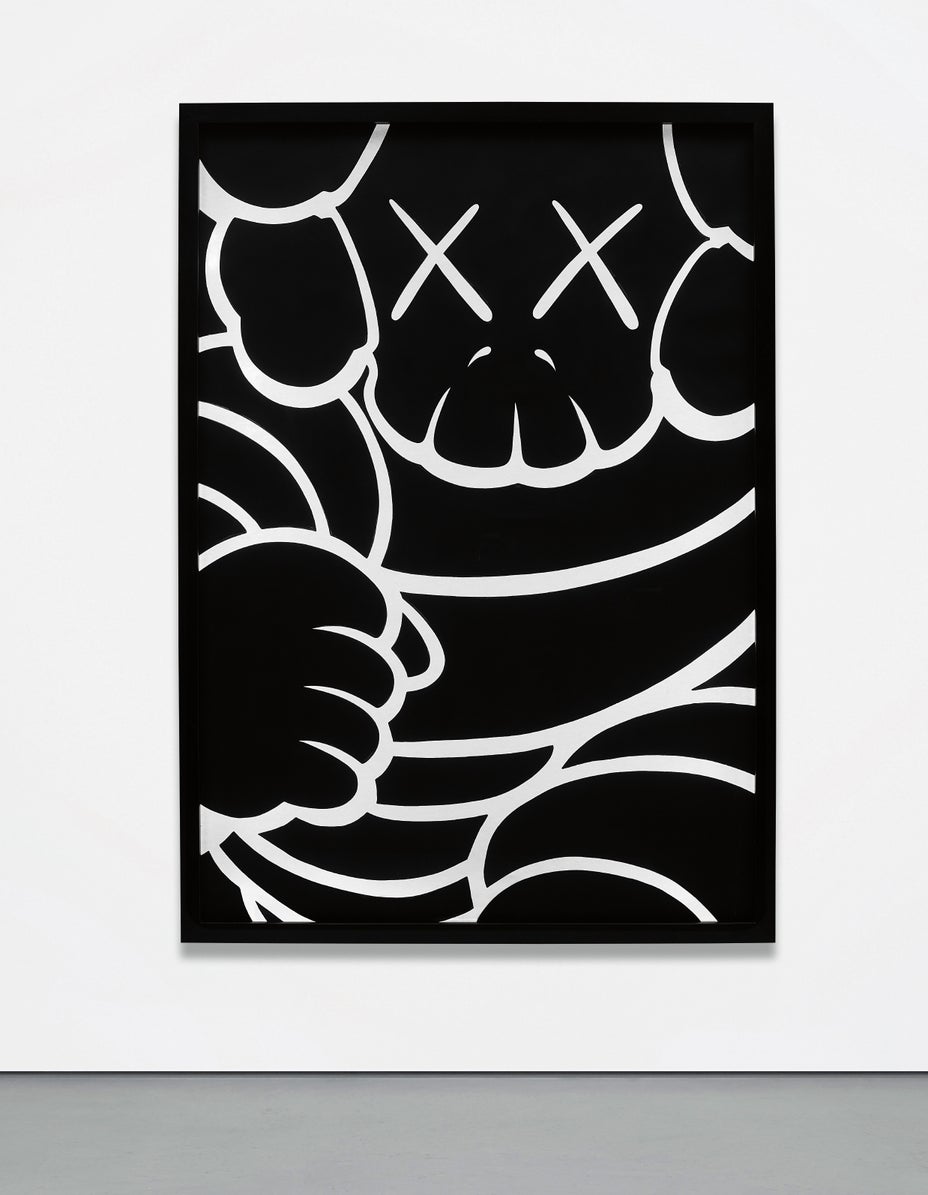
Running Chum - Bus Stop
Full-Cataloguing
Reinterpreting iconic figures from popular culture is KAWS’ internationally recognised trademark. Traversing the space between fine art and commerce, the Brooklyn based artist appropriates familiar imagery from mass media and transforms them in his distinctively cartoonish style. Infiltrating public spaces, the artist presented other works from the rare and distinct Chum series on bus stops. KAWS’ notorious visual identity adopts the subliminal powers of advertising, assimilating its effective permeation of imagery in the public consciousness. Rooted in his earlier artistic explorations into the visual syntax of street art, inspired by the culture of downtown Manhattan and the mediation of commercialised aesthetics, Running Chum, with its monochrome graphics and boldly abstracted composition, exemplifies KAWS’ iconic style. Inspired by his on-going fascination with graphic design and graffiti, and inherently informed by the works of Pop artists such as Claes Oldenburg, Tom Wesselmann and Takashi Murukami, KAWS firmly asserts his position within the trajectory of and artistic tradition that toys with the visual vocabulary of popular culture. The accessible multiplicity of KAWS’ oeuvre is prevalent not only in the global contemporary art market, but also in the realm of fashion and commercial industry, and his manipulation of the current pervasiveness of consumerist imagery has established his reputation worldwide.
The present work exemplifies the artist’s belief in the assimilation of fine art and commercialism: ‘For KAWS, a source found in high art does not translate as a more valuable source than one from the mass media’ (Mónica Ramírez-Montagut, ‘KAWS: Seeing You Seeing Yourself’ in Ian Luna & Lauren A. Gould ed., KAWS, New York, 2010, p. 135). The artist’s ground-breaking re-imagination of figures such as Chum, immaculately rendered in his characteristically clean cut, graphic use of line and glossy finish, successfully elevates the imagery of popular culture to the level of high art in the public sphere in a fascinating reciprocal dialogue.
KAWS
American | 1974To understand the work of KAWS is to understand his roots in the skateboard and graffiti crews of New York City. Brian Donnelly chose KAWS as his moniker to tag city streets beginning in the 1990s, and quickly became a celebrated standout in the scene. Having swapped spray paint for explorations in fine art spanning sculpture, painting and collage, KAWS has maintained a fascination with classic cartoons, including Garfield, SpongeBob SquarePants and The Simpsons, and reconfigured familiar subjects into a world of fantasy.
Perhaps he is most known for his larger-than-life fiberglass sculptures that supplant the body of Mickey Mouse onto KAWS' own imagined creatures, often with 'x'-ed out eyes or ultra-animated features. However, KAWS also works frequently in neon and vivid paint, adding animation and depth to contemporary paintings filled with approachable imagination. There is mass appeal to KAWS, who exhibits globally and most frequently in Asia, Europe and the United States.