ULTIMATE MAGNUM
15
Cristina de Middel
The Afronauts
Estimate
£30,000–50,000
Sold For
£30,000
2012
Unique chromogenic triptych, each flush-mounted.
Each image: 100 x 100 cm (39 3/8 x 39 3/8 in.)
Each frame: 104 x 104 cm (40 7/8 x 40 7/8 in.)
Each frame: 104 x 104 cm (40 7/8 x 40 7/8 in.)
Each signed in ink, printed title, date and number AP2 on the accompanying Certificate of Authenticity.
This triptych is unique. Each print is AP2 from the sold-out edition of 5 + 2 APs. Each image is sold out in all sizes and editions.
This triptych is unique. Each print is AP2 from the sold-out edition of 5 + 2 APs. Each image is sold out in all sizes and editions.
Full-Cataloguing
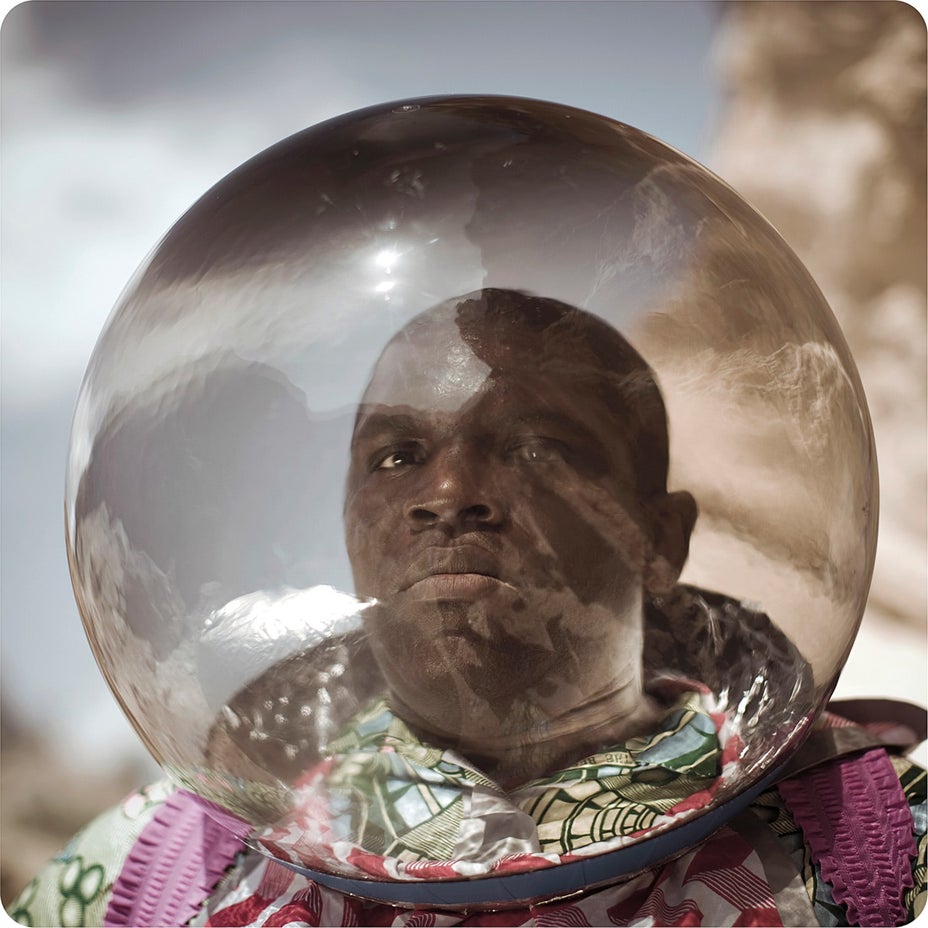
After a 10-year career as a photojournalist, Cristina de Middel began researching stories that are fictional but believed as real and ones that are real but unbelievable. This led her to the 1964 Zambian Space Programme and its attempt to send Africa’s first astronauts to the moon. The Afronauts explores the true story of Edward Mukuka Nkoloso, a Zambian science teacher, who during the height of the space race decided to train the first African crew to travel to the moon and then to Mars via catapult. Mukuka chose to send a woman, two cats and a missionary, and they underwent specific ‘training’ at his secret HQ near Lusaka.
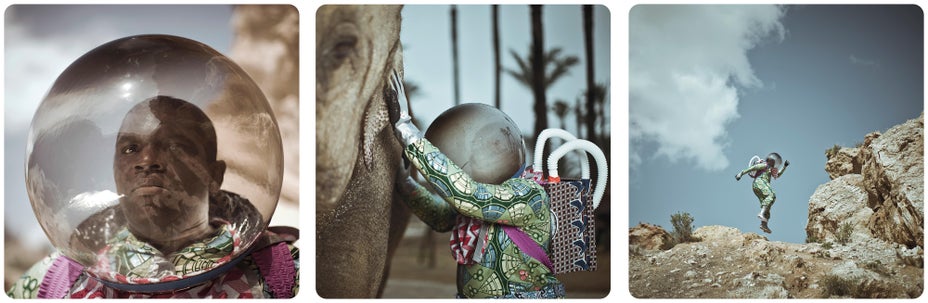
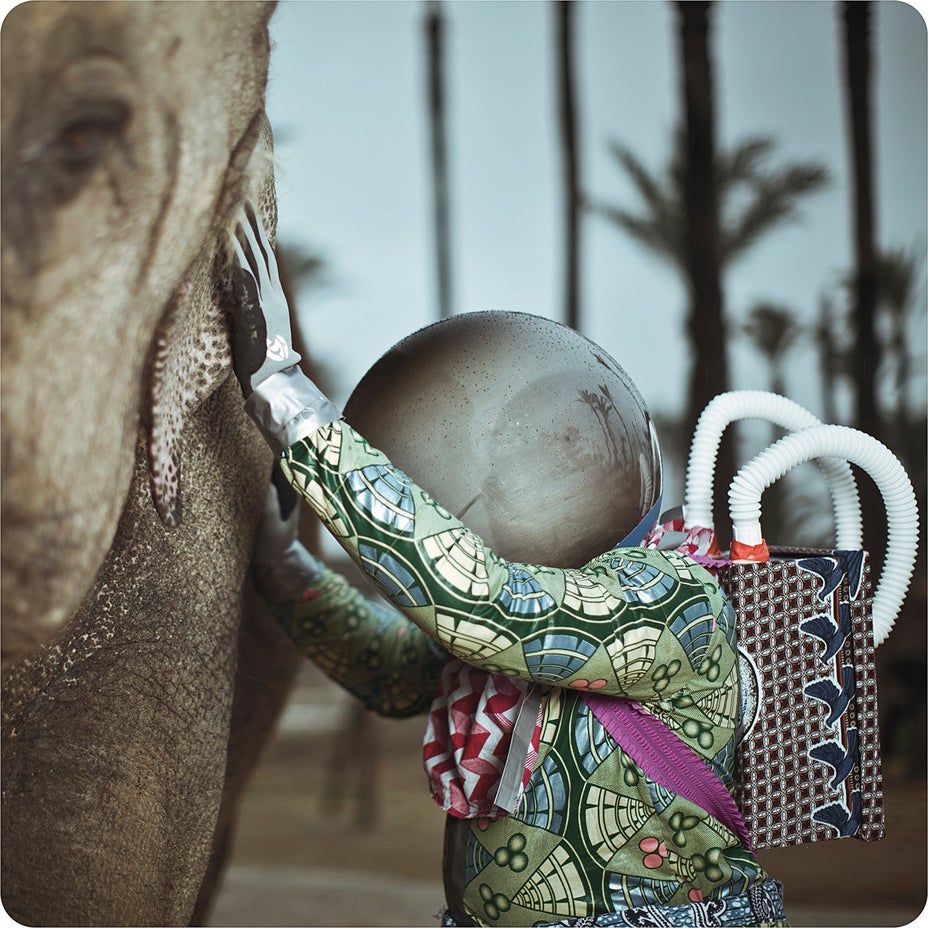
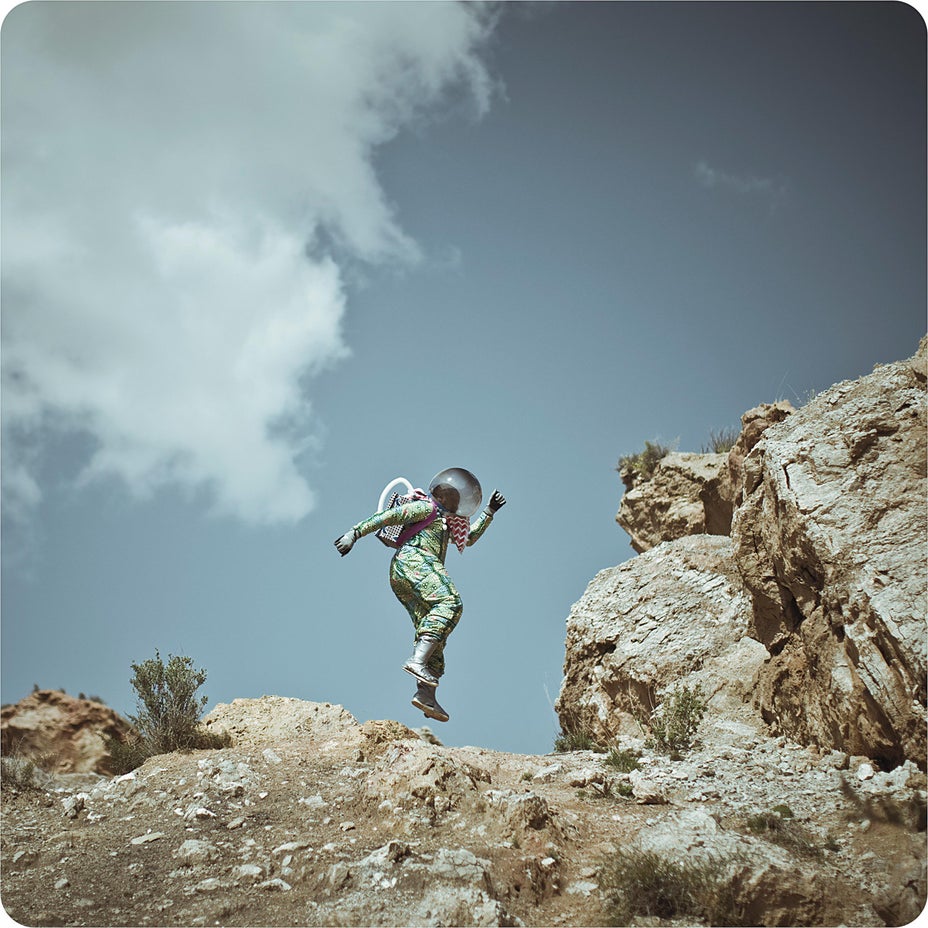
Approaching the project like a director would a film, de Middel staged re-enactments of how she thought this strange moment in Zambian history might have taken place. She scouted locations in her own native Alicante (having never been to Zambia), used found props, such as streetlamps for helmets, hired actors and made costumes. The costumes were inspired by clichéd outfits from space programmes at the time but used African fabrics with their bright colours and designs. In this unique triptych, we see the afronaut exploring this world that de Middel has created.
We see his face as he imagines this brave new world, him leaping up the rocks in training for whatever lies ahead. The images themselves, both in colour and shape, mirror the format of 1960s television. Seeing these images side by side, the viewer is transported to another world. The Afronauts documents an impossible fantasy and in doing so challenges the traditional depiction of the African continent.
Approaching the project like a director would a film, de Middel staged re-enactments of how she thought this strange moment in Zambian history might have taken place. She scouted locations in her own native Alicante (having never been to Zambia), used found props, such as streetlamps for helmets, hired actors and made costumes. The costumes were inspired by clichéd outfits from space programmes at the time but used African fabrics with their bright colours and designs. In this unique triptych, we see the afronaut exploring this world that de Middel has created.
We see his face as he imagines this brave new world, him leaping up the rocks in training for whatever lies ahead. The images themselves, both in colour and shape, mirror the format of 1960s television. Seeing these images side by side, the viewer is transported to another world. The Afronauts documents an impossible fantasy and in doing so challenges the traditional depiction of the African continent.