613
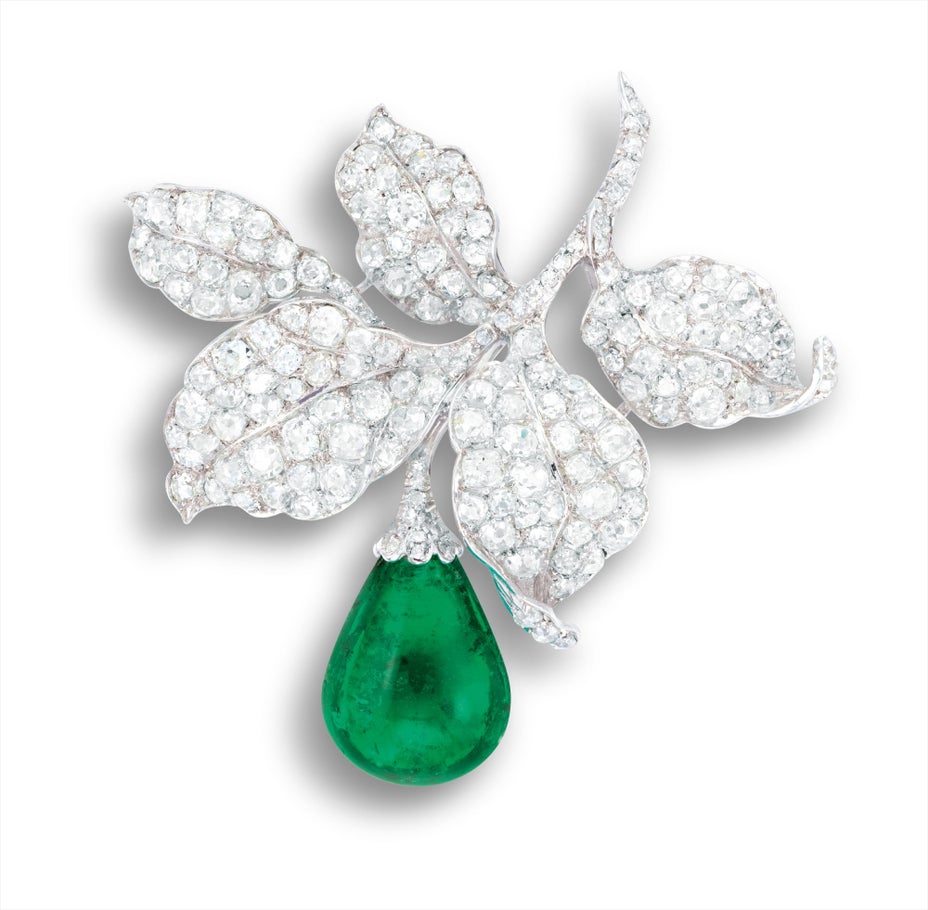
An Emerald and Diamond Brooch, Circa 1910
Estimate
HK$700,000–850,000
€84,300–102,000
$90,000–110,000
One emerald drop, 19.11 carats,<em> measuring approximately 10.99-14.98 x 21.65mm</em>Old-cut diamonds on leaves, totalling approximately 15.00 caratsPlatinum<em>With a fitted box</em>(19.11-carat Emerald) <em>SSEF report, dated 17 Nov 2016, Colombia, indications of clarity modification, minor amount of oil in fissures at the time of testing.</em>
Full-Cataloguing
Emerald from the beryl family is almost always heavily included in nature. Very rarely would a rough be found where not the slightest 'help' is needed to make it saleable. It is estimated that approximately 90% of the emeralds in the market today, most of which are high quality specimens, have undergone certain degree of clarity enhancement. The process, which involves filling the fissures with fillers such as natural oil, is a widely acceptable practice known as 'oiling' in the trade. Reference of oiling of emeralds was made no later than the 14th century, hundreds of years before emeralds were first introduced to aristocrats and emperors in Europe.
A good filling substance should have a similar refractive index to beryl, as well as durable and easy to restore, examples of such are Cedartree and linseed oil. These substances are generally described as 'traditional' fillers and are used historically to enhance the clarity of emeralds set in vintage and antique jewellery.
A good filling substance should have a similar refractive index to beryl, as well as durable and easy to restore, examples of such are Cedartree and linseed oil. These substances are generally described as 'traditional' fillers and are used historically to enhance the clarity of emeralds set in vintage and antique jewellery.