607
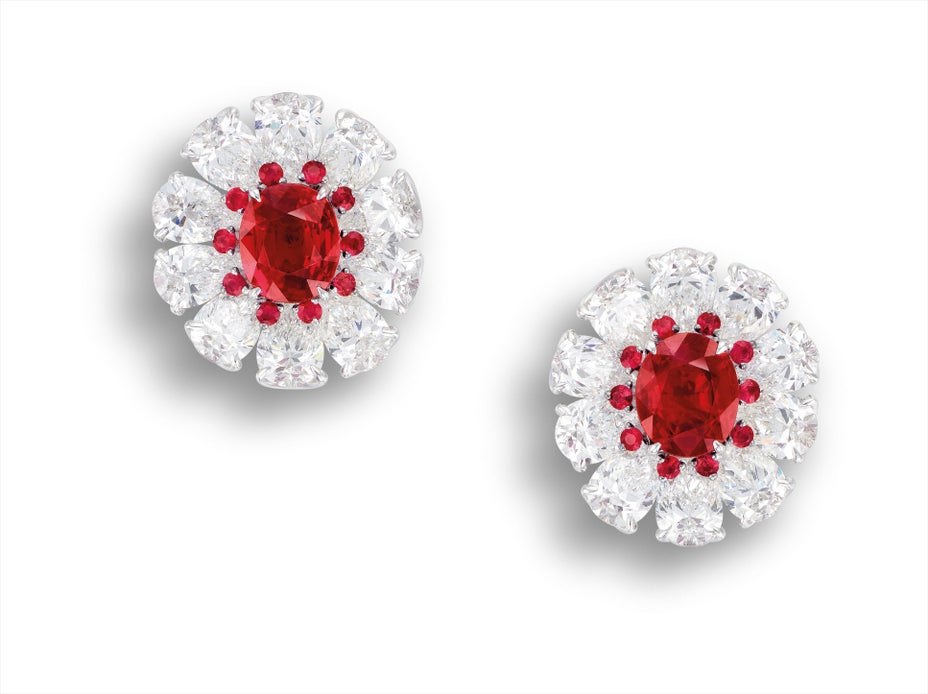
A Pair of Ruby and Diamond Earrings
Estimate
HK$1,300,000–1,500,000
€157,000–181,000
$165,000–190,000
Two cushion-shaped rubies, 2.08 and 2.01 caratsTwenty pear-shaped diamonds in the surround, totalling 9.50 carats
Circular-cut rubies18 karat white gold(2.08- and 2.01-carat Rubies) <em>Two Gübelin reports, numbered 13105304 and 13105306, dated 28 October 2013, Burma, no indications of heating, pigeon blood red.</em>
(Diamonds) <em>Twenty GIA reports, 0.36 to 0.56 carat, D to F colour, VVS1 to VS2 clarity.</em>
Full-Cataloguing
Traditionally, ‘pigeon’s blood’ is a term used by the local Burmese to describe the finest hue in a ruby. Some would say it is the colour of a fresh pomegranate seed, others a drop of blood from an artery on a highly polished silver plate. Another interpretation refers this colour to the center of a live pigeon’s eye, more specifically, a passenger pigeon’s eye. Burmese gemmologist Han Htun wrote, “A very wise old miner once told me that when you look a white pigeon in the eye you will see a distinct red color. This is “pigeon’s blood,” not the colour of the blood of the animal.” There is, however, a more scientific way to explain this vivid red found only in the best Mogok rubies.
Ruby is composed mainly of aluminium oxide, which is colourless in its purest form. The colour red itself comes from the element chromium that gives ruby its red body colour. What sets a pigeon’s blood ruby apart is the fluorescence effect --- the gem takes in blue and green light and emits red. This red glow helps to mask the darker extinction areas on a ruby and further enhance the redness of the stone, affording it the attractive saturated crimson colour that is comparable to an inextinguishable flame burning from within a ruby.
Ruby is composed mainly of aluminium oxide, which is colourless in its purest form. The colour red itself comes from the element chromium that gives ruby its red body colour. What sets a pigeon’s blood ruby apart is the fluorescence effect --- the gem takes in blue and green light and emits red. This red glow helps to mask the darker extinction areas on a ruby and further enhance the redness of the stone, affording it the attractive saturated crimson colour that is comparable to an inextinguishable flame burning from within a ruby.