Article | Fp Journe Early Collaborations Phillips Geneva Watch Auction Xxiv November 2026
Behind Other Names: François-Paul Journe’s Early Collaborations
Before launching his own brand, the Frenchman developed clocks and watch mechanisms for the likes of Breguet, Chaumet, Cartier, and Piaget. We trace this early work behind the scenes through to Harry Winston’s Opus One, which openly credited Journe as its co-creator.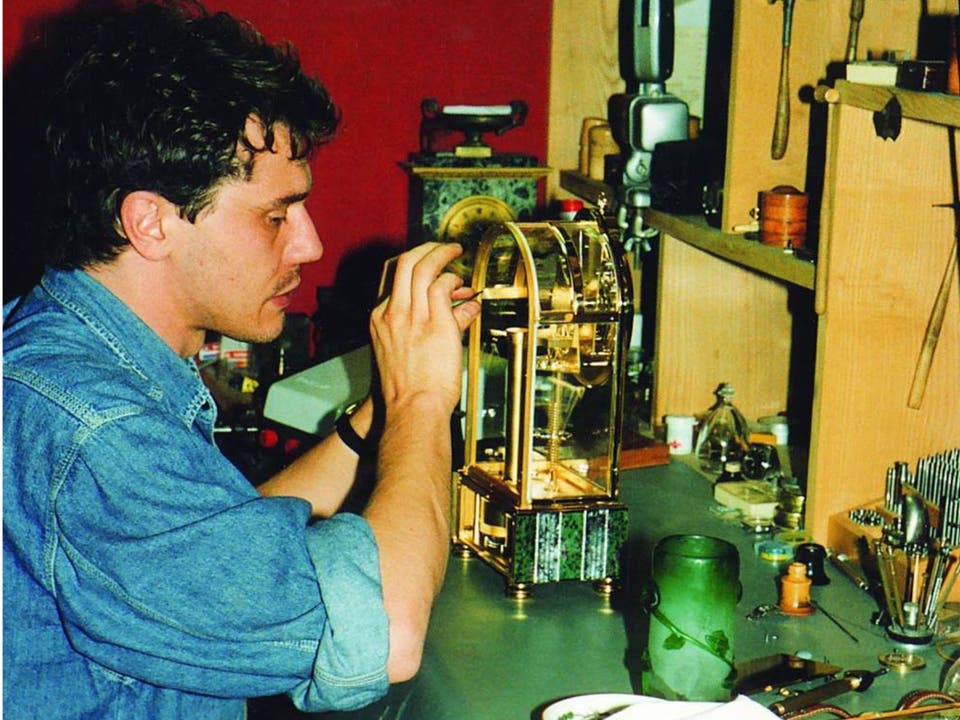
Phillips in Association with Bacs & Russo is delighted to present The Geneva Watch Auction: XXIV, a live auction taking place on 7–8 November 2026 at the Hotel President in Geneva. Featuring more than 220 exceptional luxury timepieces from leading makers including Patek Philippe, Rolex, Audemars Piguet, Cartier, and F.P. Journe, the sale features the Cartier Tortue Monopoussoir, Chaumet Les Pléiades, and Harry Winston Opus One Tourbillon covered in this story.
You can spend quite a while looking at the Chaumet Les Pléiades without thinking of François-Paul Journe. Its rounded gold case and two apertures displaying the hours and minutes offer plenty to take in. The name on it is that of a Parisian jeweler. But the mechanism that makes the hour jump was developed by Journe, several years before he launched his own brand.
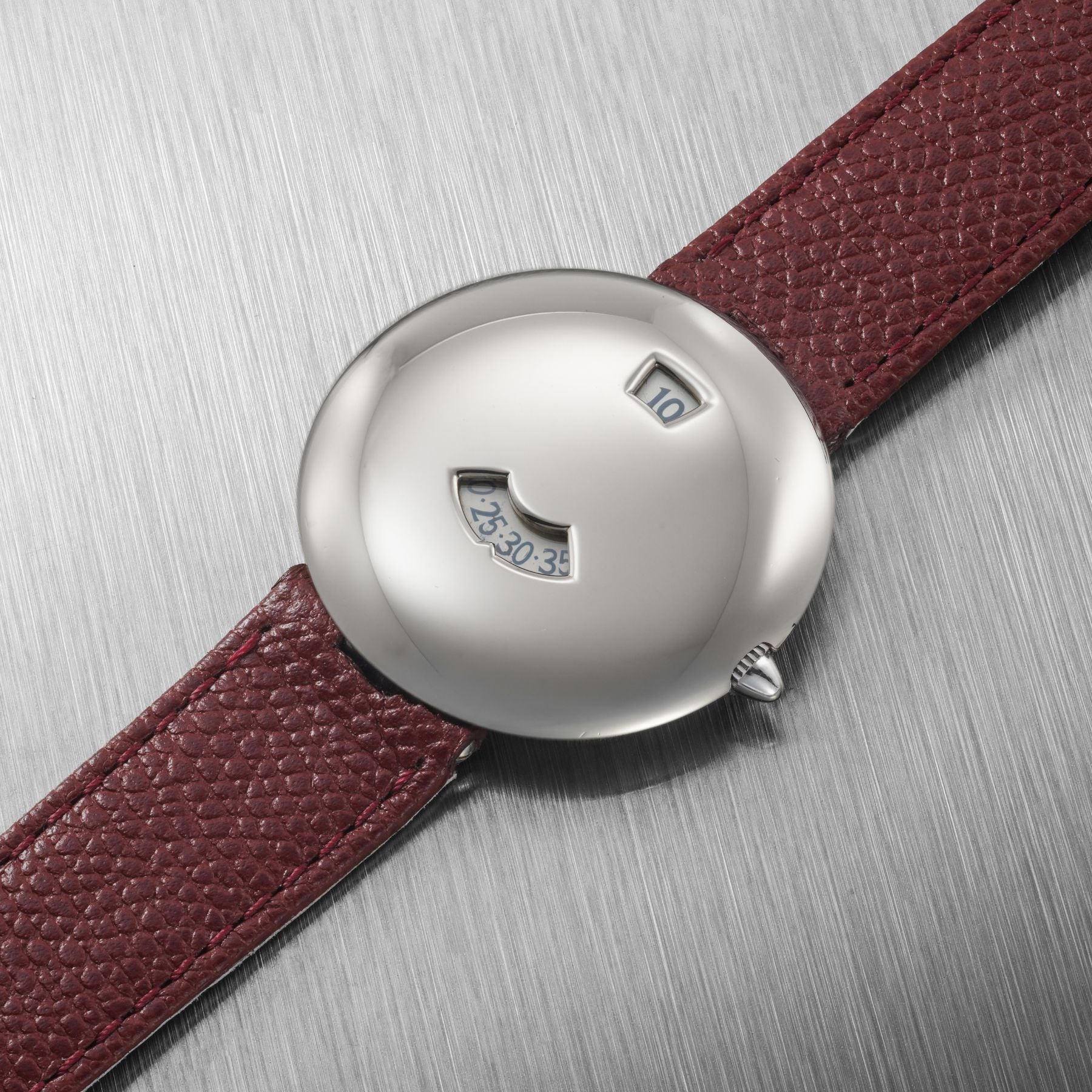
Lot 115: A 1992 Chaumet Les Pléiades Ref. 10A in 18k white gold, with a movement developed by F.P. Journe, included in The Geneva Watch Auction XXIV. Estimate: CHF 15,000–30,000
That division of labor was familiar territory for the French watchmaker. Through the 1980s and 1990s, established maisons commissioned clocks and wristwatch mechanisms from him. Journe sometimes worked alone, sometimes with collaborators who would later become well-known independents themselves.
Three watches included in The Geneva Watch Auction: XXIV offer a way into that wider history. To find its beginnings, though, we need to go back to Paris, London, and a clock that winds a watch.
Clocks Before Watches
Journe’s connection with Asprey stretched back to a planetarium dated 1979, commissioned through the Paris workshops of P-G Brun, for which he conceived the mechanism. The London house would later provide an opportunity to revisit an invention of Abraham-Louis Breguet: the Sympathique.
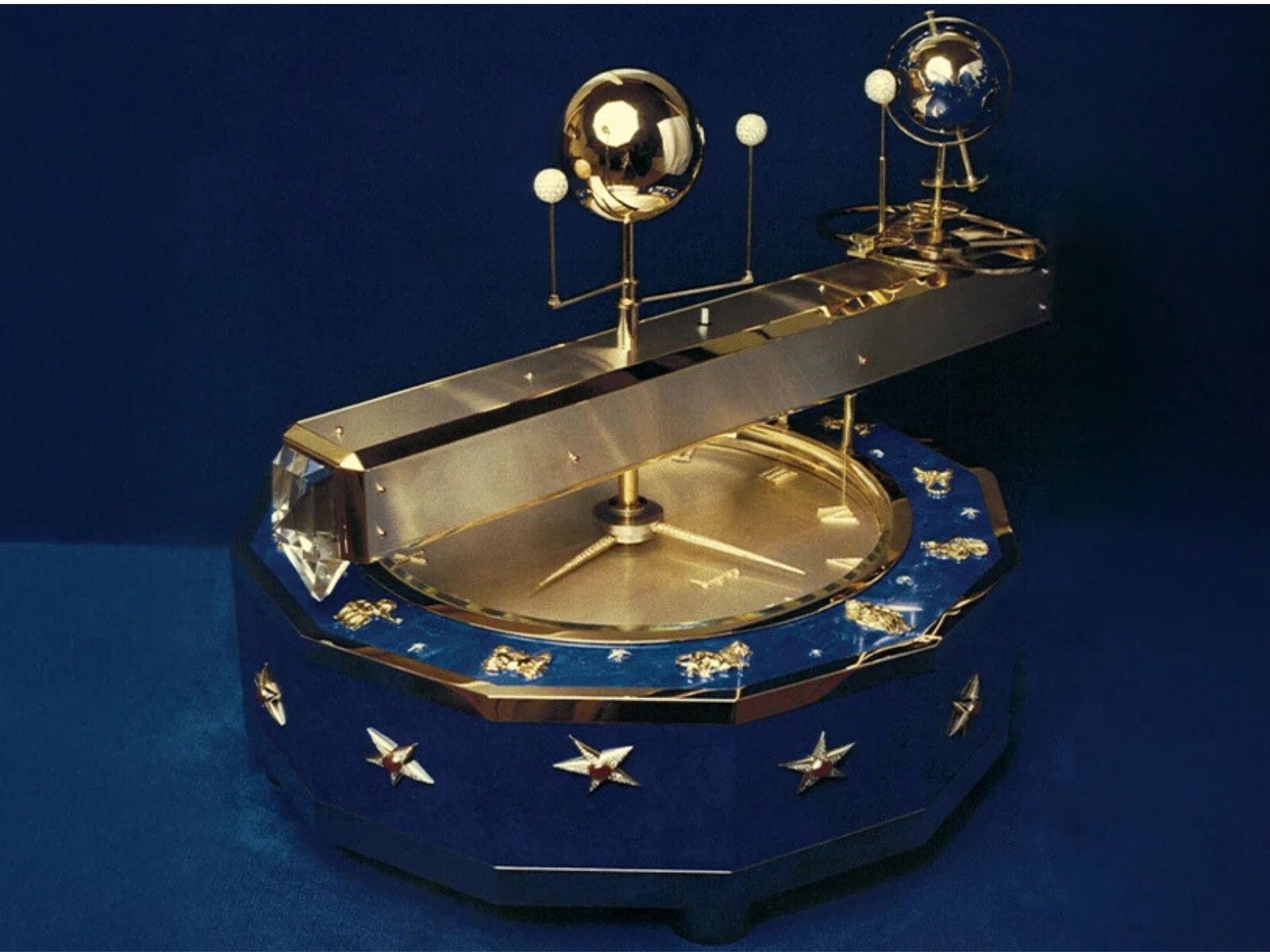
Asprey planetarium, 1979, with a mechanism conceived by François-Paul Journe at age 22, commissioned through the Paris workshops of P-G Brun. F.P.Journe
Think of a precision clock that is able to look after a portable watch while its owner is not wearing it. The watch rests in a cradle on top, where the two mechanisms connect. Depending on the historical example, Breguet’s clocks could set the watch’s time, regulate its rate, or wind it. Journe’s version for Asprey would wind the accompanying pocket watch and synchronize its hands with the clock. Lift it out, and the watch runs independently again.
Working out of his Paris atelier, Journe initially drew a clock clad in pink coral for the company chairman, John Asprey. Then, three days before presenting it, he woke in the night with a worry: “What if he doesn’t like pink?”
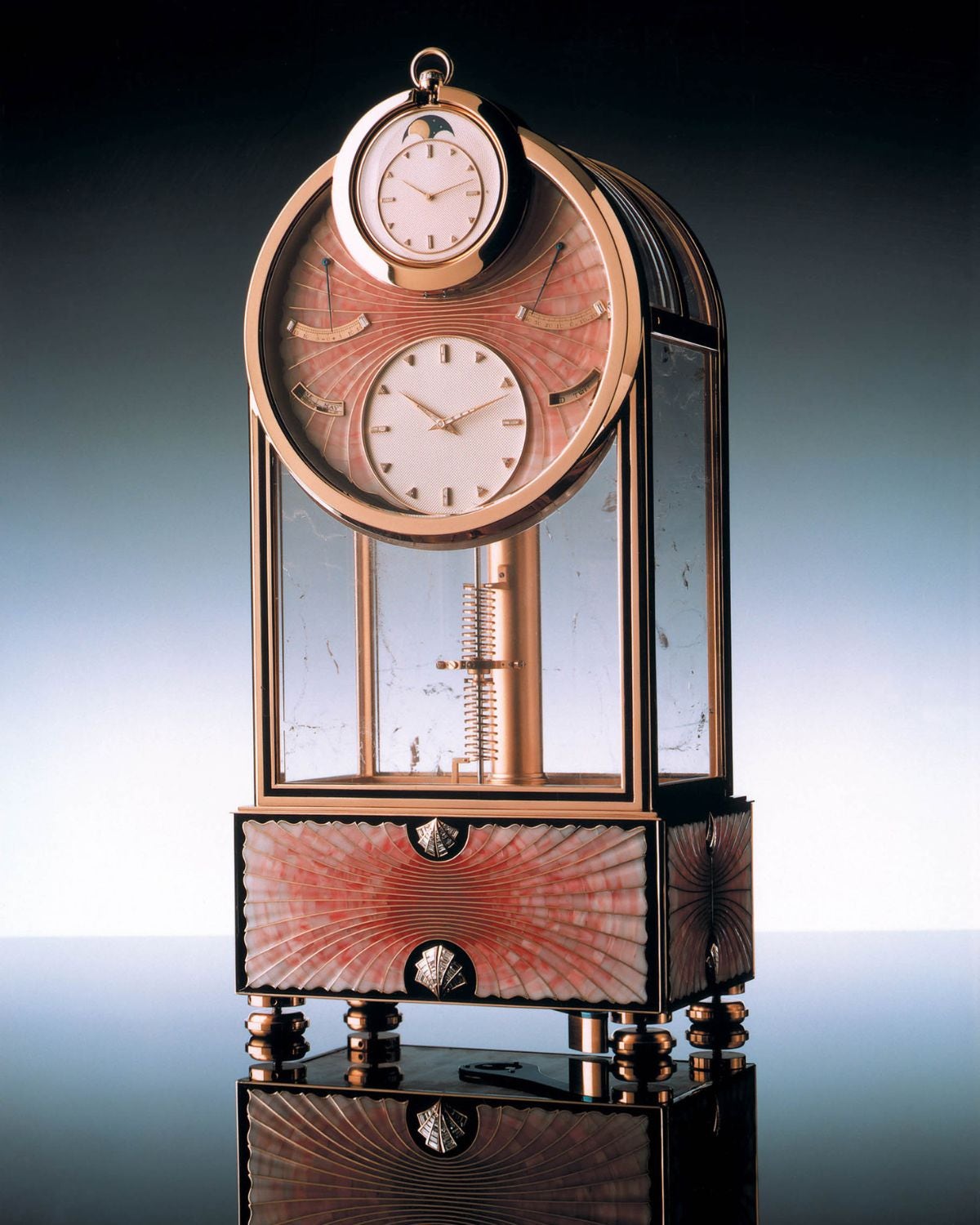
Asprey Sympathique clock and accompanying pocket watch, dated 1988, with mechanisms by François-Paul Journe and decorative exteriors by jeweler Gilles Royaux. F.P.Journe
A second design, in jade, provided an alternative. Asprey bought both. As the watchmaker recalled in an interview, that meant considerably more work than expected. A third clock, in the mineral zoisite, followed. Journe’s friend, the Paris jeweler Gilles Royaux, handled the decorative case and its brass frame; the watchmaker made the mechanisms.
“I followed the same fundamental principle Breguet invented, but I completely redesigned the winding mechanism,” Journe explained. The clocks were substantial timekeepers in their own right, with an eight-day power reserve and a remontoir d’égalité.
This constant-force device uses a small spring, periodically recharged by the mainspring, to deliver consistent energy to the escapement as the clock unwinds. Journe would also use the principle in wristwatches under his own name, including the Tourbillon Souverain.
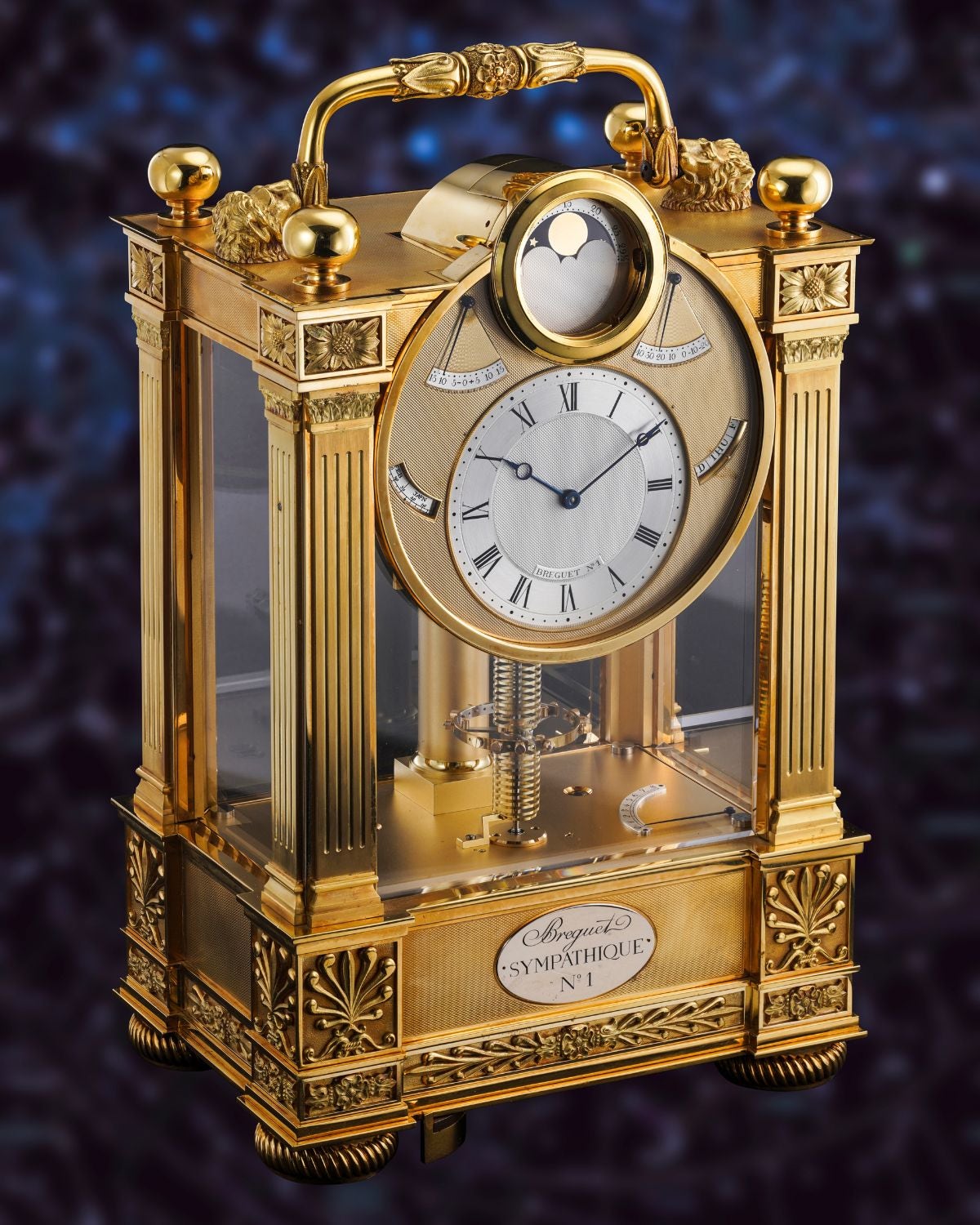
Breguet Sympathique No. 1, completed in 1991 by François-Paul Journe and the THA team.
Such commissions formed part of Journe’s work before the establishment of Techniques Horlogères Appliquées, or THA, in Sainte-Croix, Switzerland, in 1989. Denis Flageollet helped set up the workshops and technical support; Vianney Halter joined the team too. Funding the enterprise required a personal sacrifice. In the 2026 F.P.Journal, Journe recalled selling a timepiece by the 18th-century London-based watchmaker Josiah Emery to finance THA.
The Breguet Sympathique No. 1, completed in 1991, extended the concept to a wristwatch. Placed in its cradle on the gold clock, the watch could be wound and set automatically. Pierre-André Grimm, Flageollet, and Halter contributed under Journe’s guidance. Among their tasks was making gold hairsprings, something their colleague Journe had already done, but they had yet to attempt.
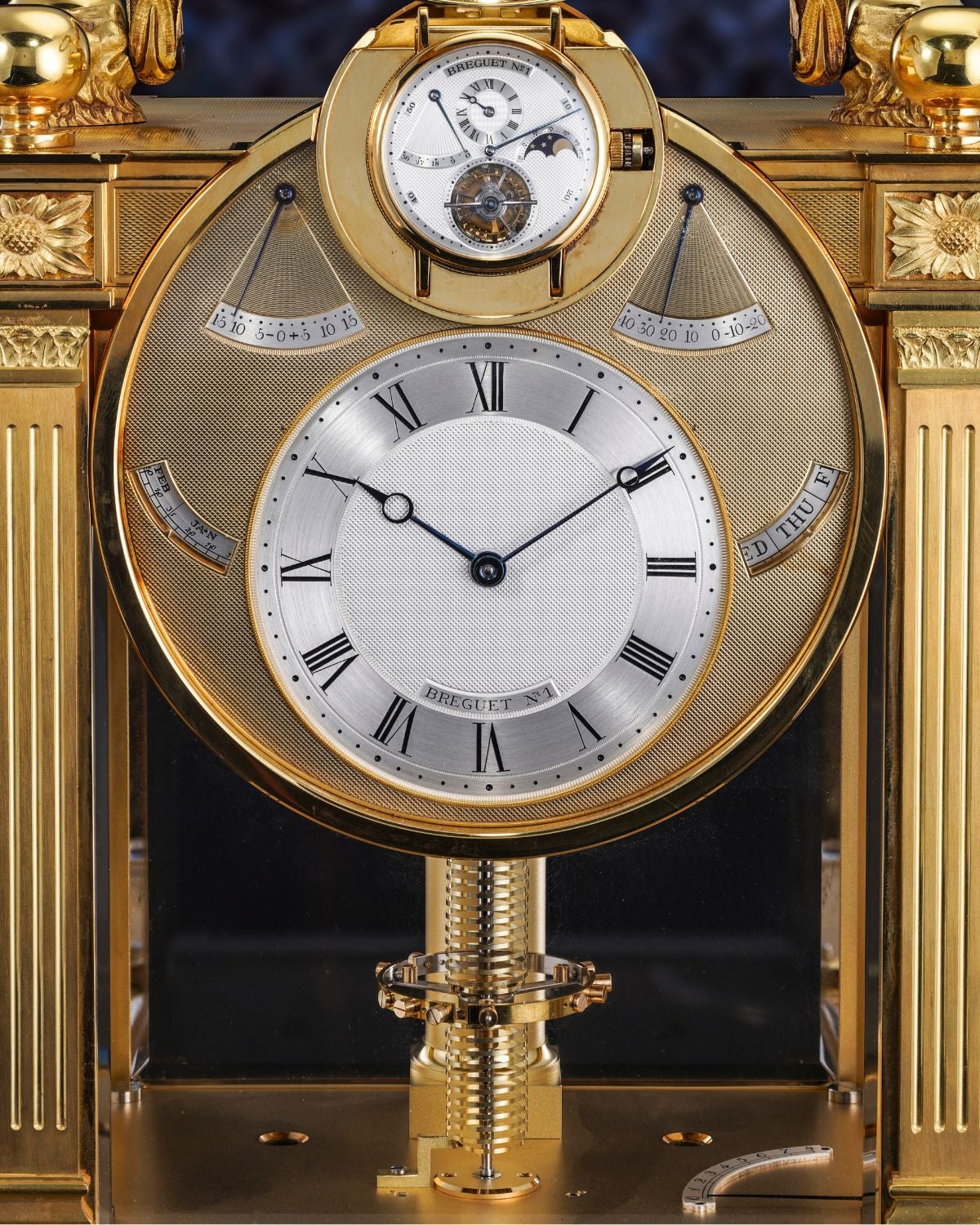
Breguet Sympathique No. 1, completed in 1991 by François-Paul Journe and the THA team, shown with its accompanying wristwatch.
Decades later, Journe had been trying to locate the clock for his collection of earlier work. In 2025, a call from Aurel Bacs brought him to Phillips, where it awaited him. That May, the watchmaker bought it at auction for CHF 5.505 million, including fees.
An Offer Declined
THA also brought opportunities that exceeded its capacity. At Basel in 1991, Günter Blümlein, the executive behind IWC, Jaeger-LeCoultre, and A. Lange & Söhne, repeatedly visited Journe’s prototype tourbillon wristwatch, 11/91, on the AHCI stand.
The encounter made an impression. Arriving late for lunch with Franck Muller afterward, Journe explained: “I’ve just met God.”

Günter Blümlein, who approached François-Paul Journe about producing a tourbillon series for IWC’s 125th anniversary.
Blümlein wanted a series for IWC’s 125th anniversary. According to Journe’s account in the 2025 F.P.Journal, THA could make 50 pieces a year – insufficient even for IWC’s Hong Kong market. The proposal was declined. Journe later reflected that accepting it would have changed the course of the watches that eventually bore his own name.
The Jumping Hour
For Chaumet’s Les Pléiades, introduced in 1992, Journe worked on a different scale. Unlike the Sympathique’s clock and accompanying watch, this commission involved adapting an existing automatic caliber, the ETA 2892-2, with a jump-hour mechanism.
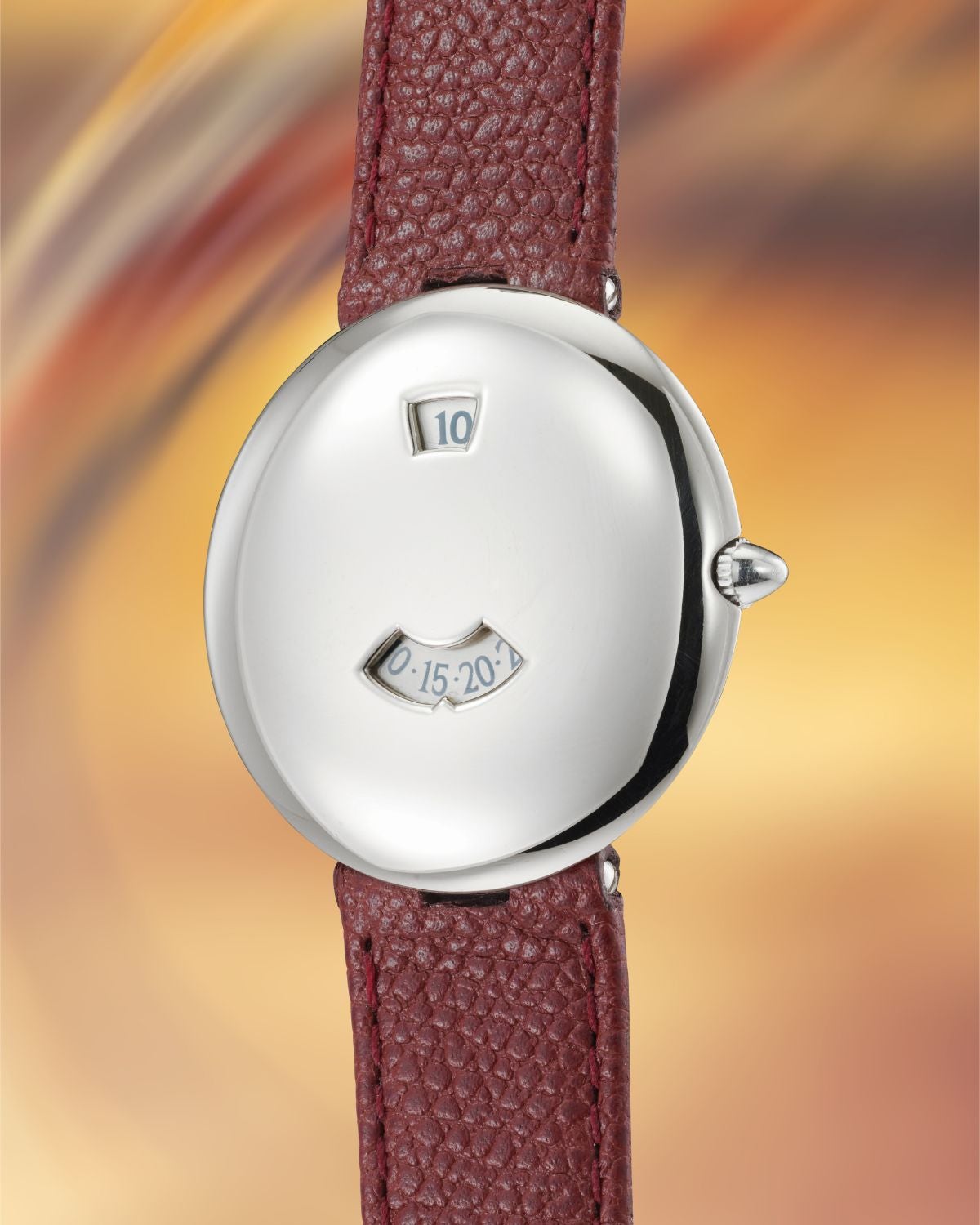
Lot 115: A 1992 Chaumet Les Pléiades Ref. 10A in 18k white gold, with a movement developed by F.P. Journe, included in The Geneva Watch Auction XXIV. Estimate: CHF 15,000–30,000
The display used two windows: numerals on discs showed progressively advancing minutes and an hour that changed in a jump. Mechanical displays of this kind were already well established. What makes the Chaumet relevant here is the watchmaker behind its mechanism, working beneath a Parisian jeweler’s name.
Lot 115 is a Ref. 10A from 1992. Its polished, 36mm white gold case has the rounded profile of a flying saucer, with no visible lugs and the strap emerging from beneath it. Hands and a ring of hour markers have disappeared; the two windows do the job instead.
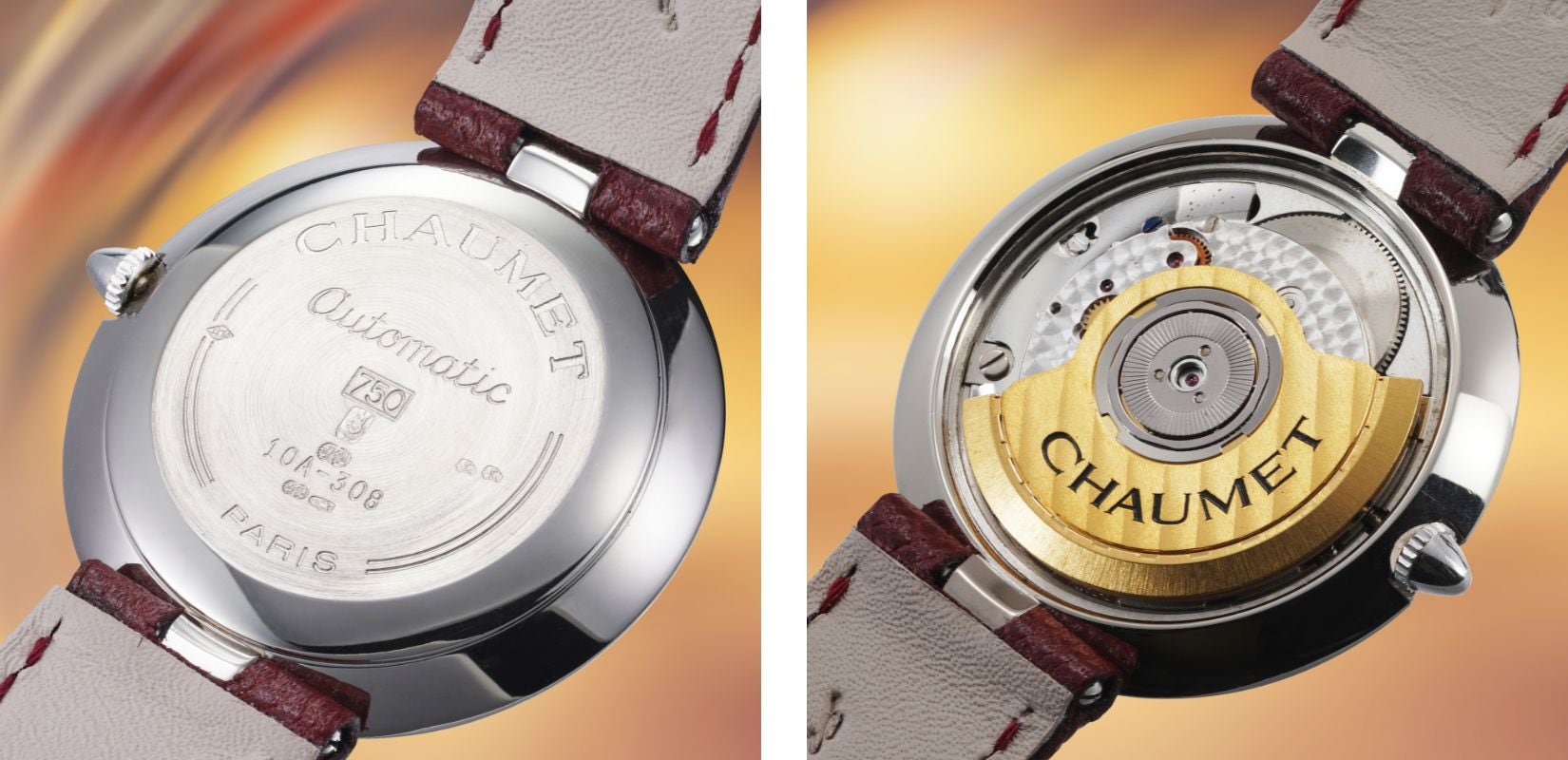
Lot 115: A 1992 Chaumet Les Pléiades Ref. 10A in 18k white gold, with a movement developed by F.P. Journe, included in The Geneva Watch Auction XXIV. Estimate: CHF 15,000–30,000
Jumping indications would reappear in Journe’s own Vagabondage collection. The Les Pléiades offers an earlier example of that interest, developed for another house.
Striking for Piaget
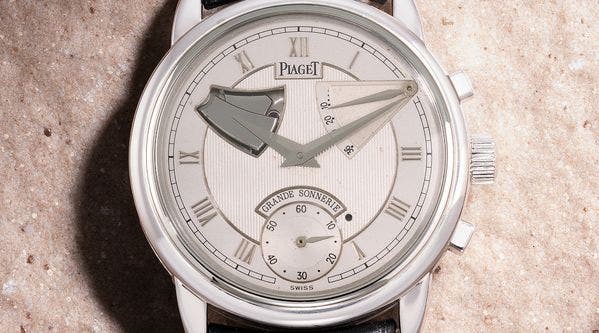
Piaget’s commission began, according to Journe, with a labeling error. A book published by the company in 1993 showed a minute repeater captioned “Grande Sonnerie.” Its marketing department decided to commission the complication it had described. Journe won the tender.
In his interview in the 2023 F.P.Journal, the watchmaker dates the development work to 1996. The resulting Gouverneur Grande Sonnerie combined automatic striking with a minute repeater in a 37mm case.
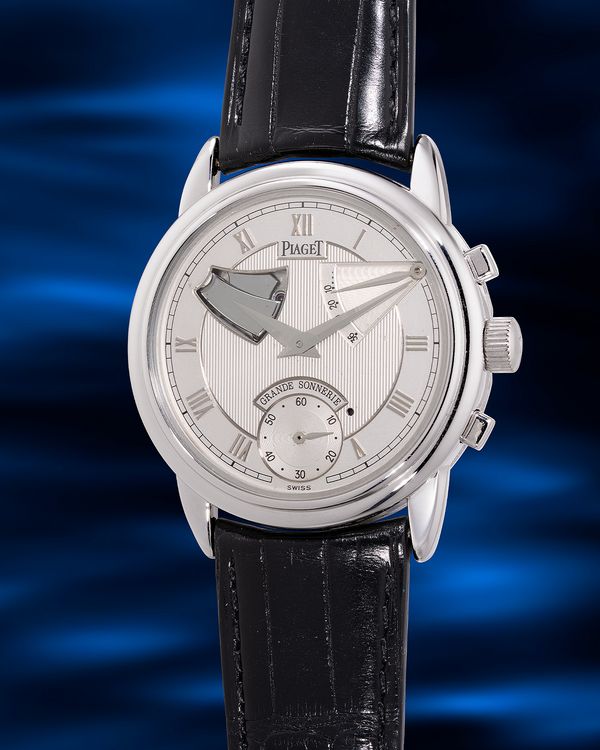
A circa 1997 Piaget Gouverneur Grande Sonnerie in 18k white gold, with a movement developed by François-Paul Journe.
In grande sonnerie mode, the watch strikes the hours and, at each quarter, repeats the hours before sounding the quarters. Petite sonnerie omits that repetition of the hours at the quarters. The repeater allows the owner to summon the hours, quarters, and remaining minutes on demand.
The manually wound caliber 1996P used two barrels and measured 6.7mm thick. An opening in the dial exposed the striking hammers. Journe explicitly identifies their position as a precursor to his own Sonnerie Souveraine.
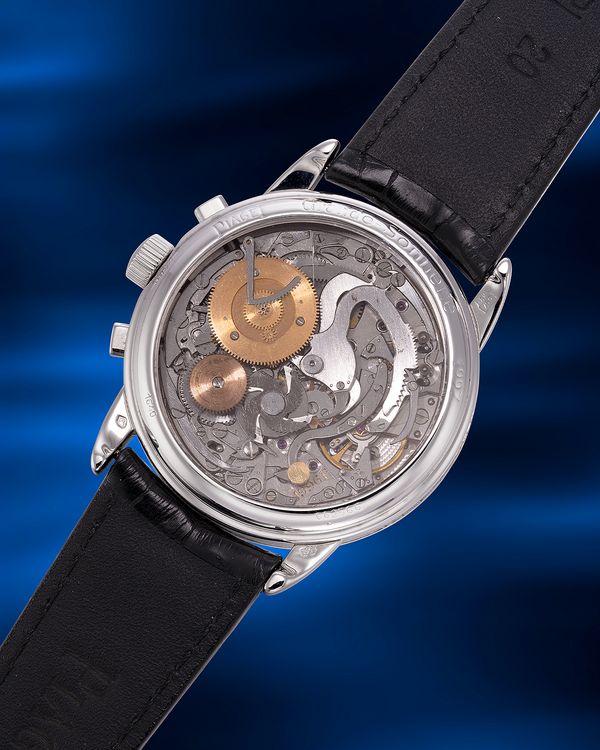
A circa 1997 Piaget Gouverneur Grande Sonnerie in 18k white gold, with a movement developed by François-Paul Journe.
The Piaget Gouverneur also taught him about the problems of putting such a mechanism in customers’ hands. Its winding system operated in both directions, and, by his account, owners damaged it through incorrect use.
For the Sonnerie Souveraine, introduced in 2006, a single mainspring powered both timekeeping and striking. The crown wound like that of a conventional watch, and protective mechanisms prevented operations that could cause damage.
The experience Journe had acquired on a commission had carried into a watch under his own name – including lessons learned after it left the workshop.
A Chronograph Returns
The Cartier Tortue Monopoussoir grew out of an existing relationship with THA, which had already made mystery clocks and watches for the maison. Journe’s THA colleague Denis Flageollet remembers that the suggestion to revive the single-button chronograph came from their team. “We gave them the idea to remake the chrono-monopoussoir Tortue,” he told Phillips.

Denis Flageollet. De Bethune
Cartier introduced the Tortue shape in 1912 and made a monopusher chronograph in 1928. The modern version joined Collection Privée Cartier Paris, the late-1990s program that revisited the company’s historical designs with particular attention to their movements.
Journe and Flageollet developed the manually wound caliber 045MC. Halter often receives credit alongside them because of his association with THA, but Flageollet does not recall his participation and believes he had already left.
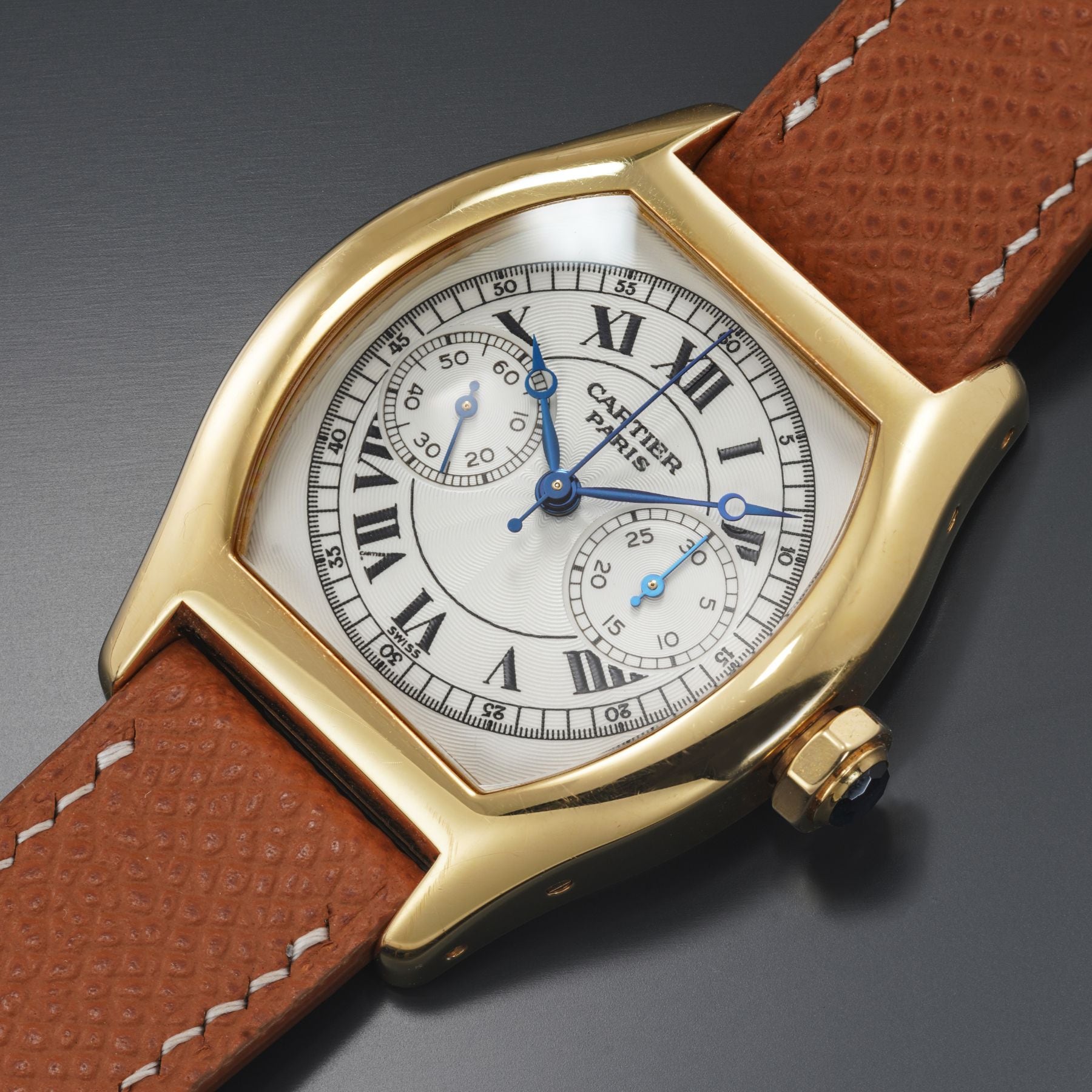
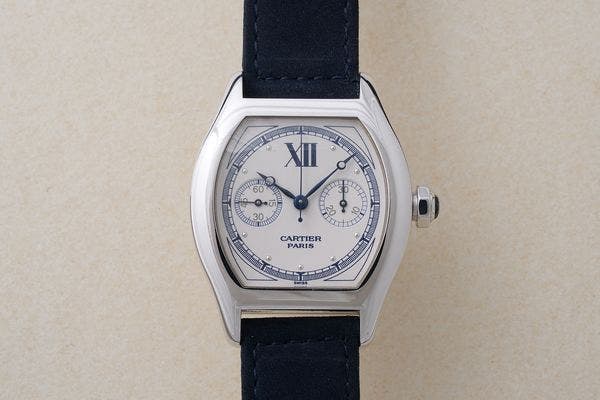
Lot 83: A circa 2000 Cartier Tortue Monopoussoir CPCP Ref. 2356E in 18k yellow gold, included in The Geneva Watch Auction XXIV. Estimate: CHF 20,000–40,000
A button integrated into the crown starts, stops, and resets the chronograph in sequence. Its column wheel coordinates those operations. Two counters display elapsed minutes and running seconds; the central chronograph hand measures elapsed seconds.
Developing the movement was relatively straightforward, Flageollet recalls. More troublesome was agreeing on a casing arrangement with Cartier’s technicians while preserving the spirit of the original. Too much protective engineering risked, in his words, “creating a monster!”
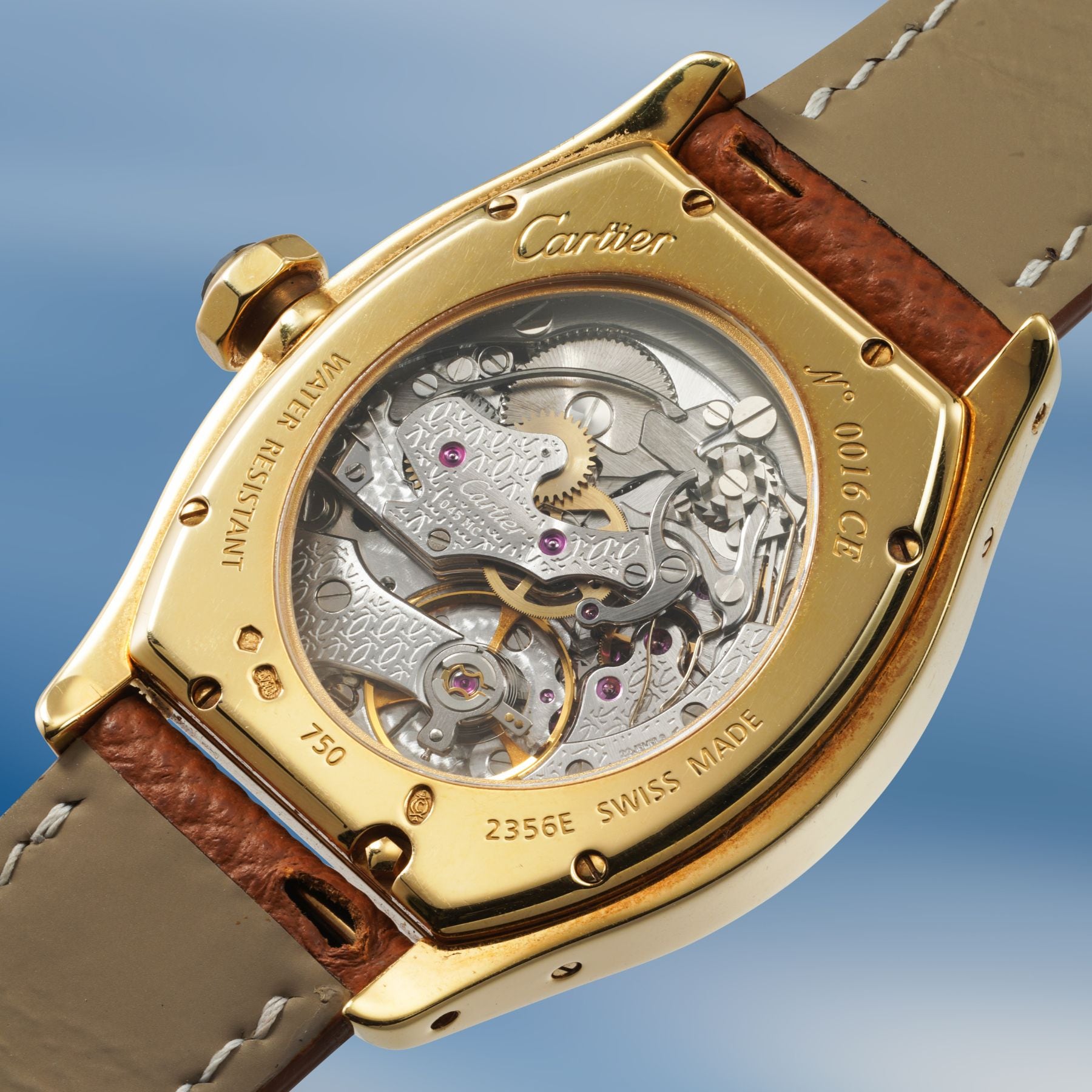
Lot 83: A circa 2000 Cartier Tortue Monopoussoir CPCP Ref. 2356E in 18k yellow gold, included in The Geneva Watch Auction XXIV. Estimate: CHF 20,000–40,000
Lot 83, a circa 2000 yellow gold Ref. 2356E, carries the early Mk I movement. Its curved case measures 34mm across and 43mm long. With the button inside the crown, there are no separate pushers interrupting the outline.
The chronograph construction had a subsequent life in adapted forms, including De Bethune’s early DB1 and DB8 and, much later, the Angelus Chronographe Médical × Massena LAB. Flageollet emphasized that the DB8 movement was not exactly the same: it was an arrangement he knew and trusted, adapted for a different display.
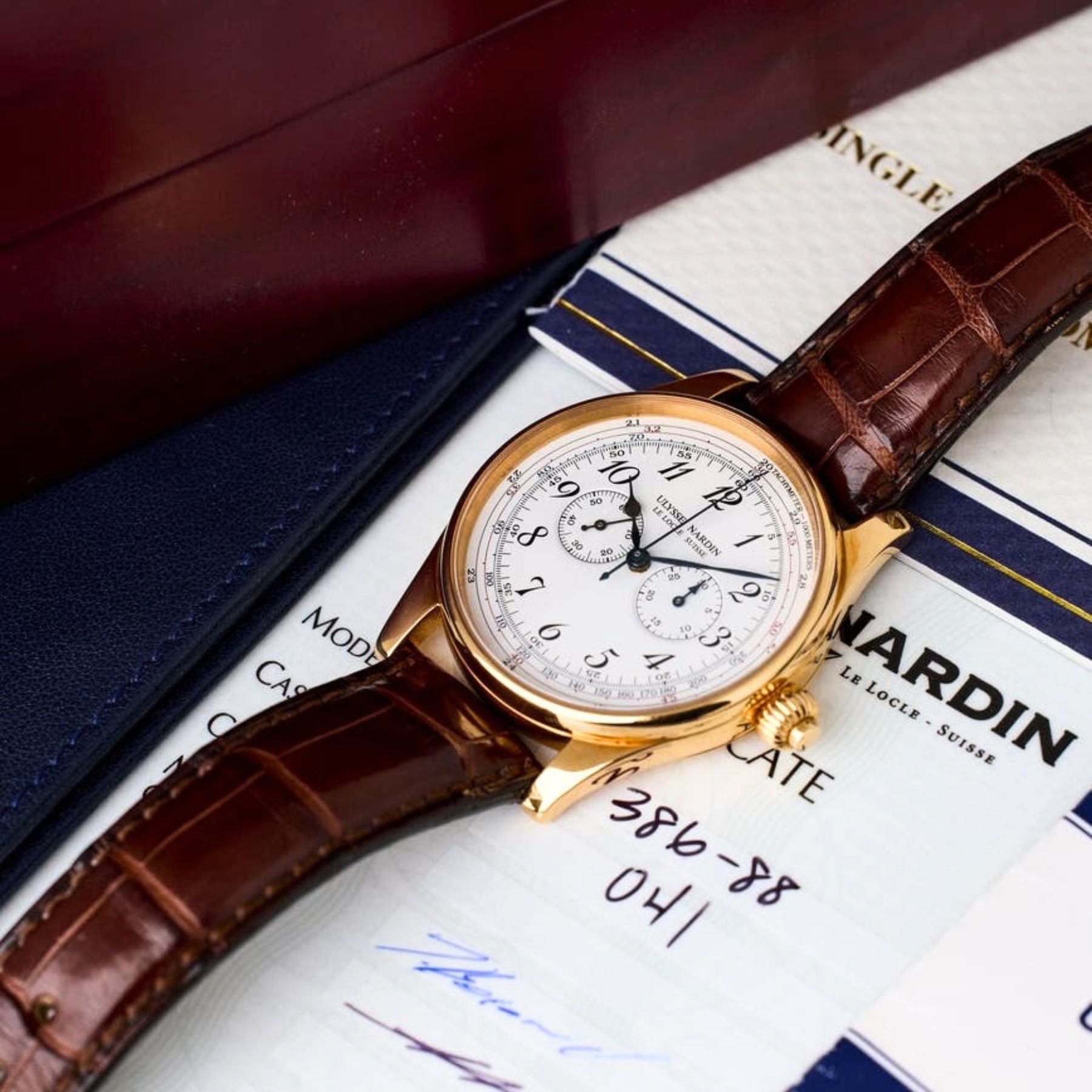
Ulysse Nardin Monopusher Chronograph Ref. 386-88 with Caliber UN-38.
Journe continued working on monopusher chronographs after leaving THA. In a 2003 interview with ThePuristS, the watchmaker described developing a new monopusher for Ulysse Nardin, then passing the rights to the movement manufacturer Jaquet because he was too busy to follow the project through. His account appears to refer to Caliber UN-38, used in watches including Ulysse Nardin’s Monopusher Chronograph Ref. 386-88.
Sharing the Signature
Working for other houses also meant handing over decisions about how a mechanism would be produced and used. In the same 2003 interview, Journe recalled having little control over the implementation of his creations.
By 1999, the Marseille native was presenting watches under his own brand, F.P.Journe. A collaboration with Harry Winston followed. For the inaugural Opus project in 2001 – led by Max Büsser, managing director of the New York jeweler’s watch division – the independent maker’s identity was part of the proposition from the start.
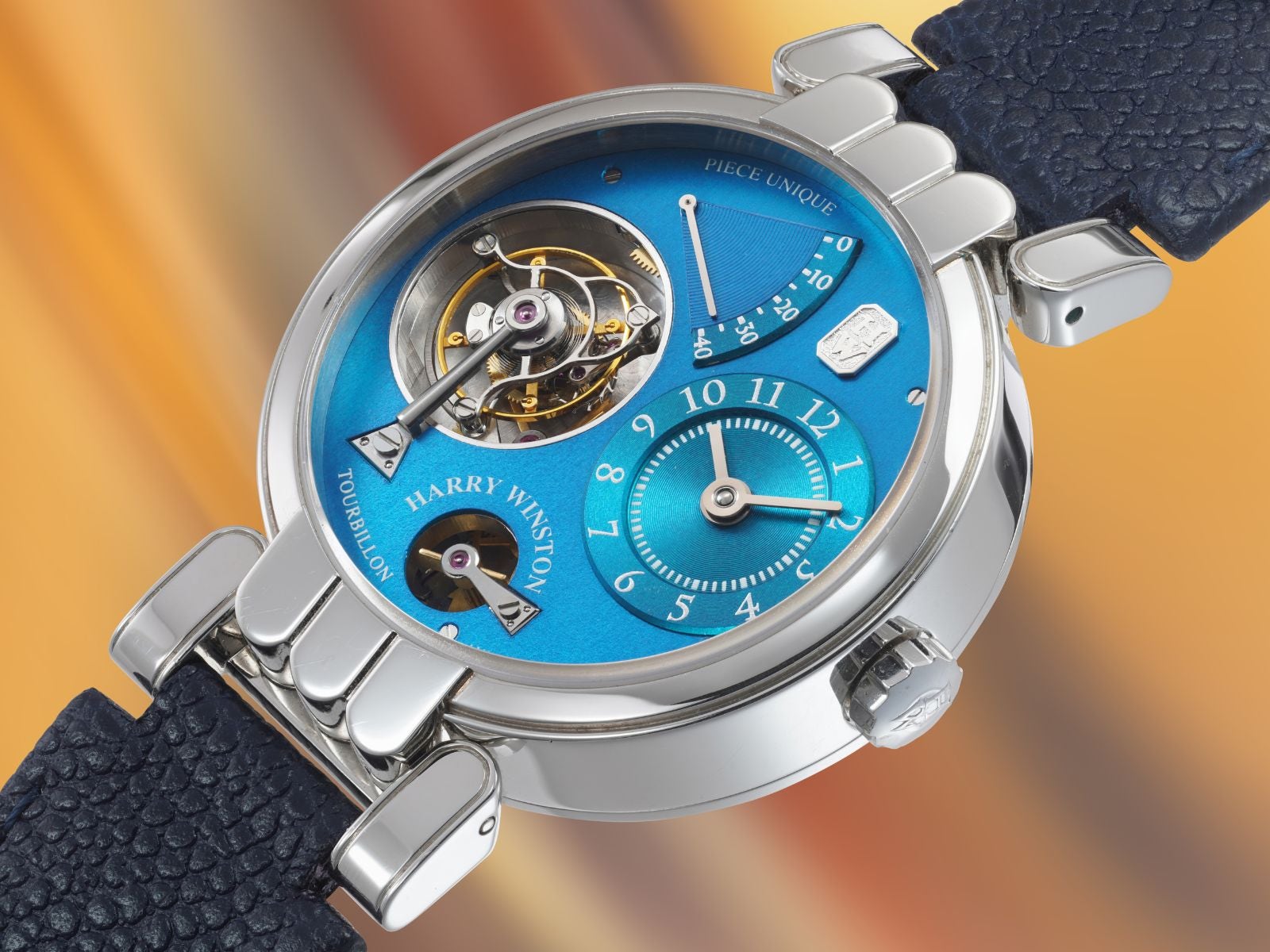
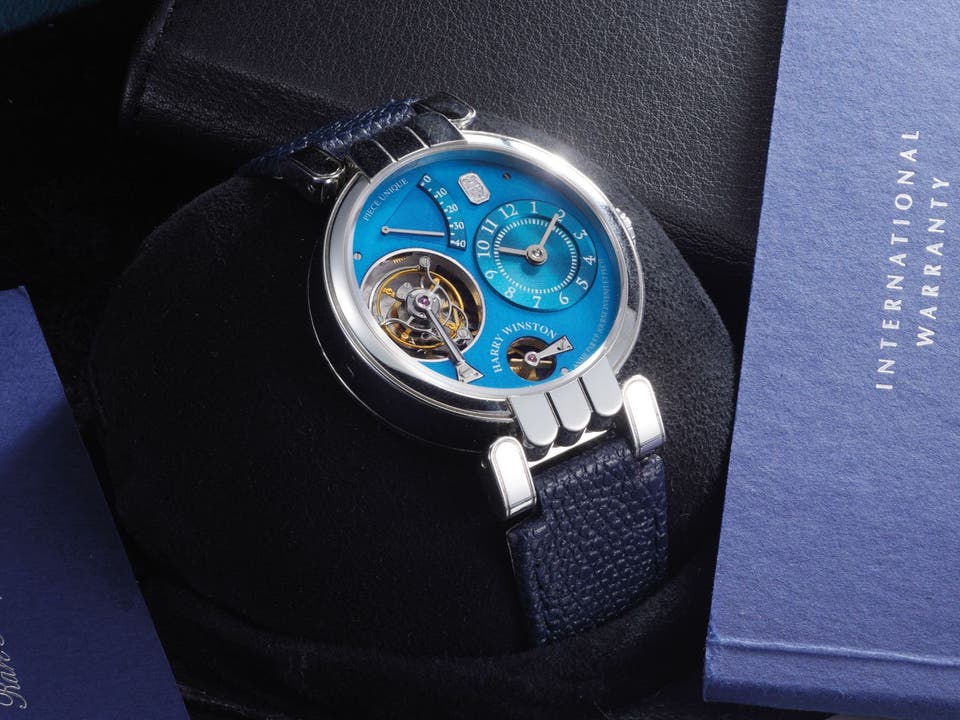
Lot 107: A 2001 Harry Winston and F.P. Journe Opus One Tourbillon Ref. 200/MTFPJ38P in platinum, included in The Geneva Watch Auction XXIV. Estimate: CHF 400,000–800,000
“I agreed to the proposal to work with Harry Winston since there are many parallels between our work ethic and creativity… This proved an extremely beautiful encounter,” Journe recalled.
Opus One used movements from three existing Journe models: the Tourbillon Souverain, with its remontoir d’égalité; the Chronomètre à Résonance; and the automatic Octa Réserve de Marche, with a large date and five-day power reserve. Harry Winston imagined new cases and dial treatments for those mechanisms.
Six examples of each were made. Lot 107 is the platinum tourbillon Ref. 200/MTFPJ38P with turquoise dial. Inside its 38mm Harry Winston case is Journe’s manually wound caliber 1498, pairing a tourbillon with a remontoir, the constant-force device encountered earlier in Journe’s work on Sympathique clocks.
Turn the watch over and the signatures on the movement and caseback credit both Harry Winston and F.P. Journe.
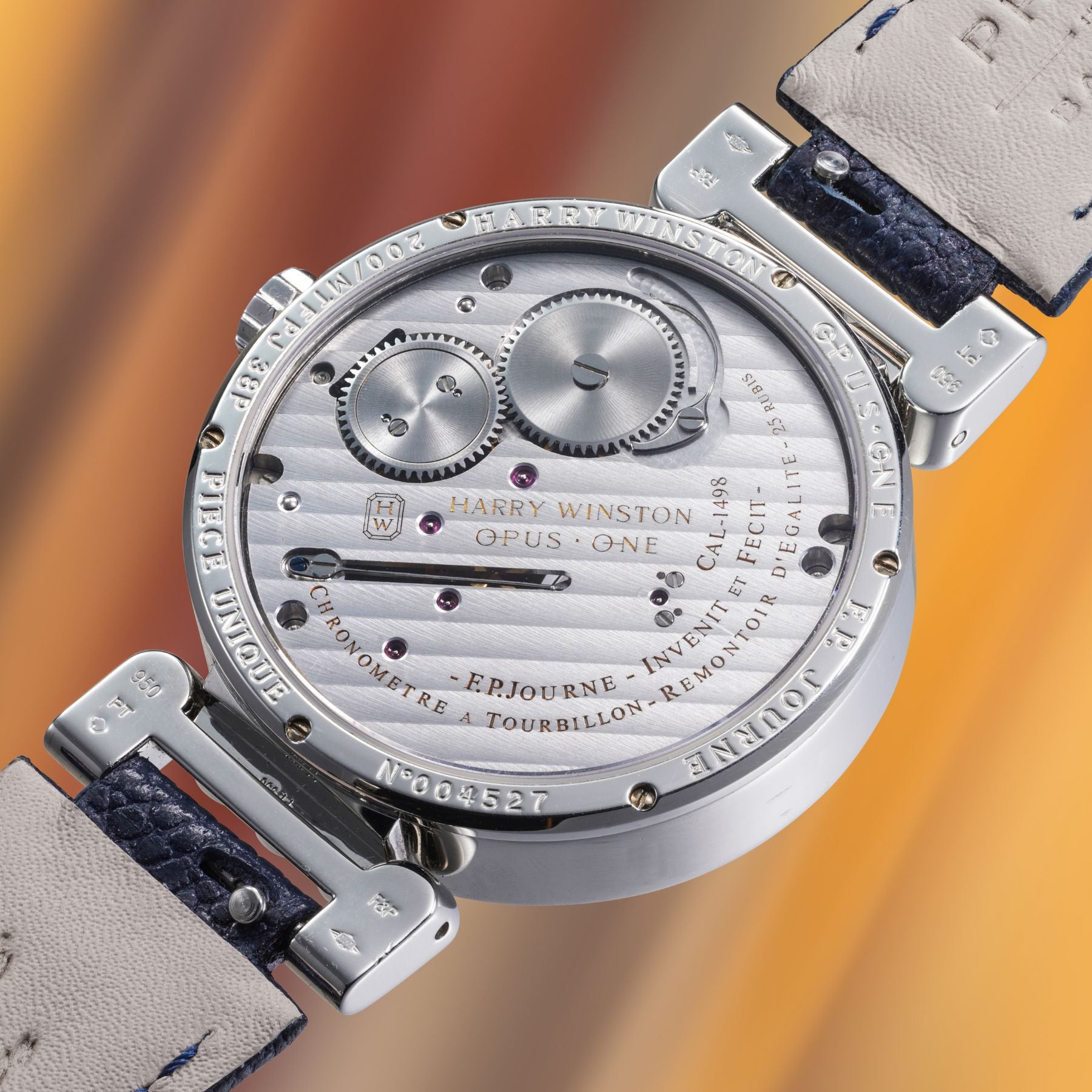
Lot 107: A 2001 Harry Winston and F.P. Journe Opus One Tourbillon Ref. 200/MTFPJ38P in platinum, included in The Geneva Watch Auction XXIV. Estimate: CHF 400,000–800,000
A clock that winds a watch, the jumping numerals of a Chaumet, the hammers of a Piaget, the single-button chronograph of a Cartier, the movements of Harry Winston’s first Opus: each belongs to its commissioning maison’s story… but also to François-Paul Journe’s. His own brand gave collectors a name to follow; these earlier collaborations give them more places to look.
You can learn more, place a bid, and view the entire Geneva Watch Auction: XXIV catalog here.