Article | Philippe Dufour Duality Auction
What Makes Philippe Dufour's Duality So Important
Our first live auctions of fall 2024 season, PHILLIPS RELOADED: The Rebirth of Mechanical Watchmaking, 1980-1999, and the Geneva Watch Auction: XX, take place on November 8, 9, and 10, at the Hotel President, at Quai Wilson 47, in central Geneva. The auctions include more than 195 of the world's fin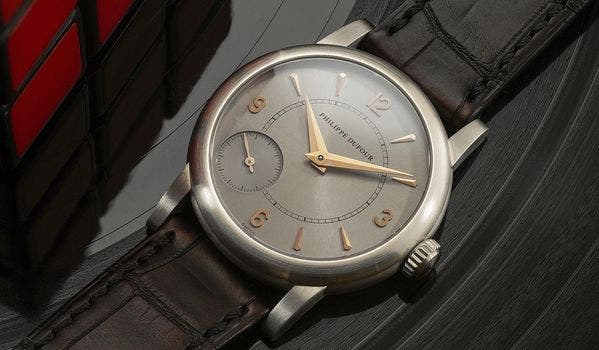
Our first live auctions of fall 2024 season, PHILLIPS RELOADED: The Rebirth of Mechanical Watchmaking, 1980-1999, and the Geneva Watch Auction: XX, take place on November 8, 9, and 10, at the Hotel President, at Quai Wilson 47, in central Geneva. The auctions include more than 195 of the world's finest watches – and though we are loath to boast, we truly think they're some of the best catalogs we've ever put together. We'll be highlighting a number of the most interesting lots and stories featured in the sales over the next month, including the watch highlighted in this article.
The Duality was the last great innovation of the 20th century. Made in 1996, it was the very first dual escapement wristwatch, and the most compact version of a complex mechanism which had troubled watchmakers during two centuries before.
Dufour was born in 1948, in Le Sentier, a village in the Vallée de Joux. Like many boys who grew up in the region, he decided to pursue watchmaking and enrolled in the local technical school before joining Jaeger-LeCoultre, the town's main employer. Dufour set up his own brand in 1987 after spending a couple of years restoring pieces. His first movement was nothing less than a Grande Sonnerie, which he pitched to Audemars Piguet. The manufacturer ordered five and cased them in pocket watches that would eventually bear its name.
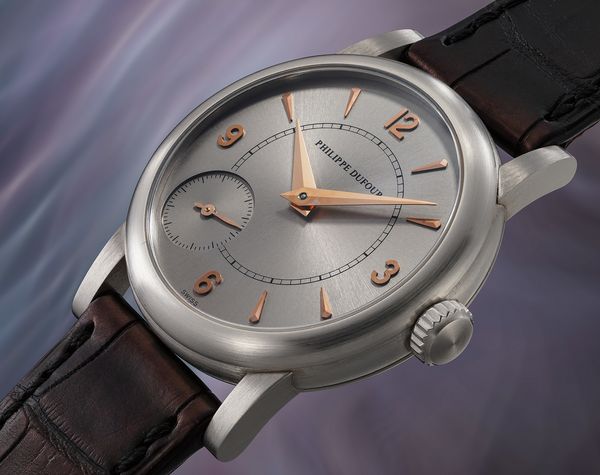
Lot 65: A 2014 Philippe Dufour Duality, previously unknown, No. 10, in platinum. Estimate: 800,000 - 1,600,000
Two and a half years later, Dufour unveiled a more compact version, officially the world's first Grande Sonnerie wristwatch. This time, it was his name on the dial, and the watch launched his career when it was presented at Baselworld. It was soon followed by another important feat in miniaturization.
Having proven himself a master of high-complications, Dufour's next move was to focus on precision horology. Double regulator watches presented an interesting challenge. The idea that a watch could achieve better timekeeping by averaging down the rate differentials between two independently operating balances had been explored. But only very large examples had ever been made because of the complexity of their mechanism. The Vallée de Joux had produced the most successful attempt when, in the 1930s, students of the school Dufour later attended made a small batch of double regulator pocket watches.
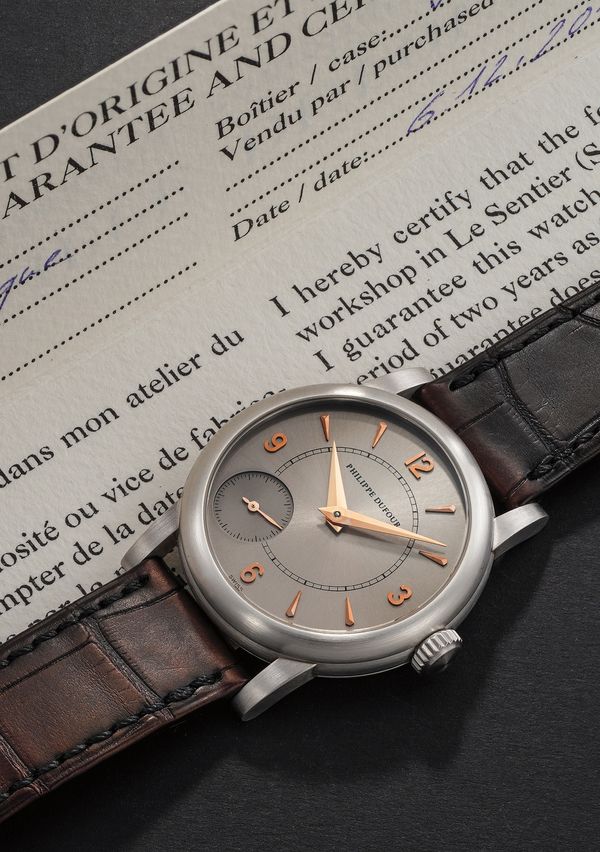
Lot 65: A 2014 Philippe Dufour Duality, previously unknown, No. 10, in platinum. Estimate: 800,000 - 1,600,000
Having two balances connected in this way enables greater accuracy as it allows the balances to average out their rates. If one runs slightly faster and the other a bit slower, the rate variations would cancel each other out. Furthermore, this system produces less variation across all different positions.
Dufour's inspiration for the Duality came from a school watch with double balance wheel featured in the Time Museum's catalog – and coincidentally, corresponding to the same school that Dufour graduated from, the Vallée de Joux Watchmaking School. This watch had a single gear train delivering power to two balance wheels through a differential.
After having miniaturized the Grande & Petite Sonnerie movement to fit inside a wristwatch, Dufour tackled the task of shrinking the differential into a caliber that could be housed within a wristwatch. The final result was nothing short of extraordinary, as he managed to shrink the differential mechanism to the size of a matchstick head, allowing the movement to feature two large balances beating in unison.
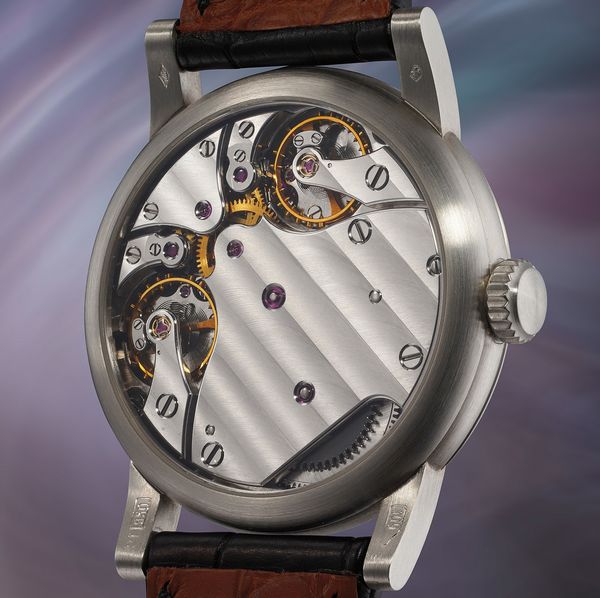
Lot 65: A 2014 Philippe Dufour Duality, previously unknown, No. 10, in platinum. Estimate: 800,000 - 1,600,000
The Duality was originally planned as a series of 25 watches, but Dufour ended it prematurely because of the popularity of another of the atelier's watches, the Simplicity. Dufour felt he couldn't split his time equally to both projects and put the Duality on pause after only nine models (more on that below).
The brilliance of Dufour's work is that every component is conceived by one person, with intimate knowledge of its final position on the dial in relation to other elements. The markers and hands for example, are cut from the same metal, and finished using the same time-honored techniques.
The minute track is simple but it occupies a central position which allows for a clear read of the time. Some tension is created by the intersection of a seconds sub-dial at eight o'clock, distinguished by a circular grain finish, but there is also a hint that the movement's architecture is atypical.
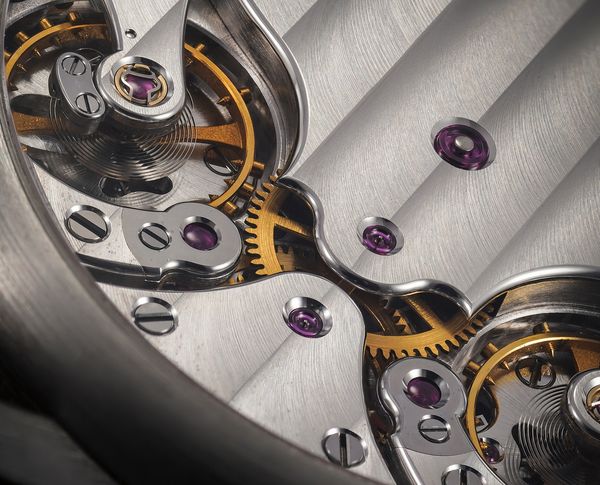
Lot 65: A 2014 Philippe Dufour Duality, previously unknown, No. 10, in platinum. Estimate: 800,000 - 1,600,000
Philippe Dufour's movements are among the finest in the world. Not only is the symmetrical construction of the movement naturally pleasing to the eye, but the movement is then finished using an array of decorative techniques, including Geneva stripping, chamfering, black polishing and hand-engraving.
Dufour never returned to the bench for the Duality. The owners' club became unexpectedly exclusive after the ninth model was delivered and that makes its membership even more desirable.
For decades it was believed that Philippe Dufour had made only 9 Duality models, the present unique example is the scholarship-changing, unknown 10th example.
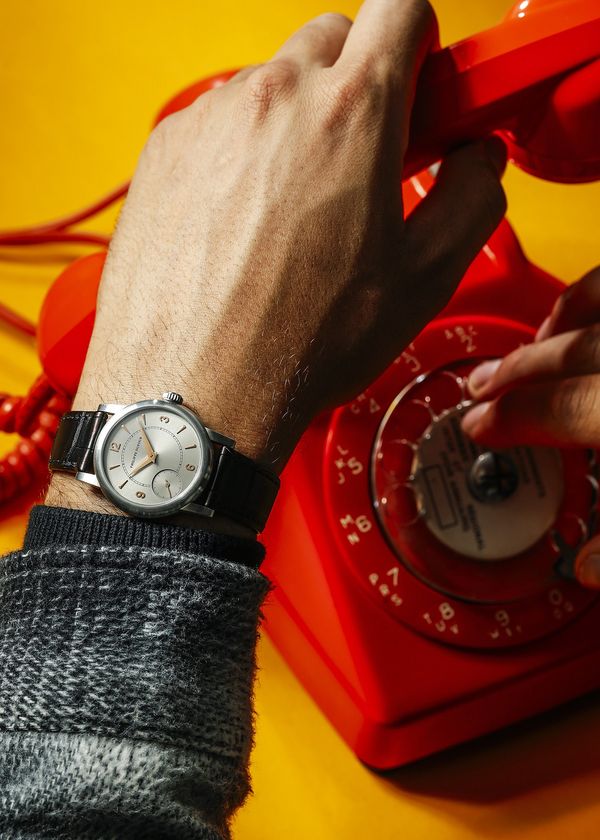
Lot 65: A 2014 Philippe Dufour Duality, previously unknown, No. 10, in platinum. Estimate: 800,000 - 1,600,000
Delivered in 2014 (close to a decade after it was ordered) the watch was made for one of Dufour’s most important and long standing collectors who had not managed to secure a Duality and for whom Dufour accepted to make a tenth and final piece but this time in a unique configuration of fully brushed platinum case, grey dial, pink gold indexes and hands and a movement finished to the nth degree in pure Dufour style but devoid of any engraving or inscription. The Certificate of Origin confirms the unique status of the watch.
Phillips has been entrusted with the sale of three Duality wristwatches in the past, and this fourth example, unseen by the public until now, is an important addition to the scholarship of Philippe Dufour.
You can learn more, place a bid, and view the entire Phillips RELOADED catalog right here.
About Phillips In Association With Bacs & Russo
The team of specialists at PHILLIPS Watches is dedicated to an uncompromised approach to quality, transparency, and client service. Phillips in Association with Bacs & Russo holds the world record for the most successful watch auction, with its Geneva Watch Auction: XIV having realized $74.5 million in 2021. Over the course of 2021 and 2022, the company sold 100% of the watches offered, a first in the industry, resulting in the highest annual total in history across all the auction houses at $227 million.
Recommended Reading
An In-Depth Collectors’ Guide To The Patek Philippe Chronograph Ref. 5070
Patek Philippe’s TV-Shaped Ref. 5020 Is A Genuine ‘90s Deep-Cut