

重要韓國私人收藏
1013
Jaeger-LeCoultre
Atmos Marqueterie “Gustav Klimt”
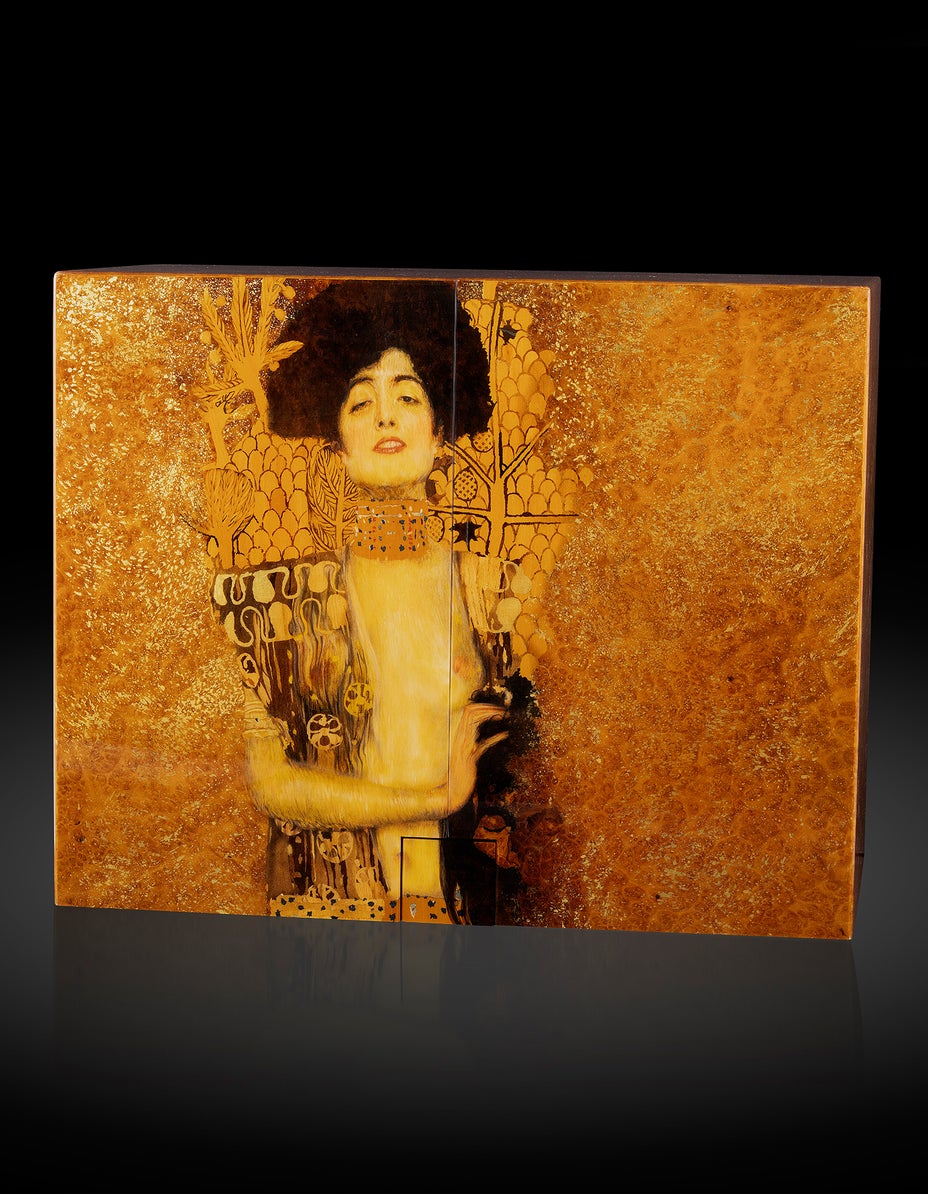
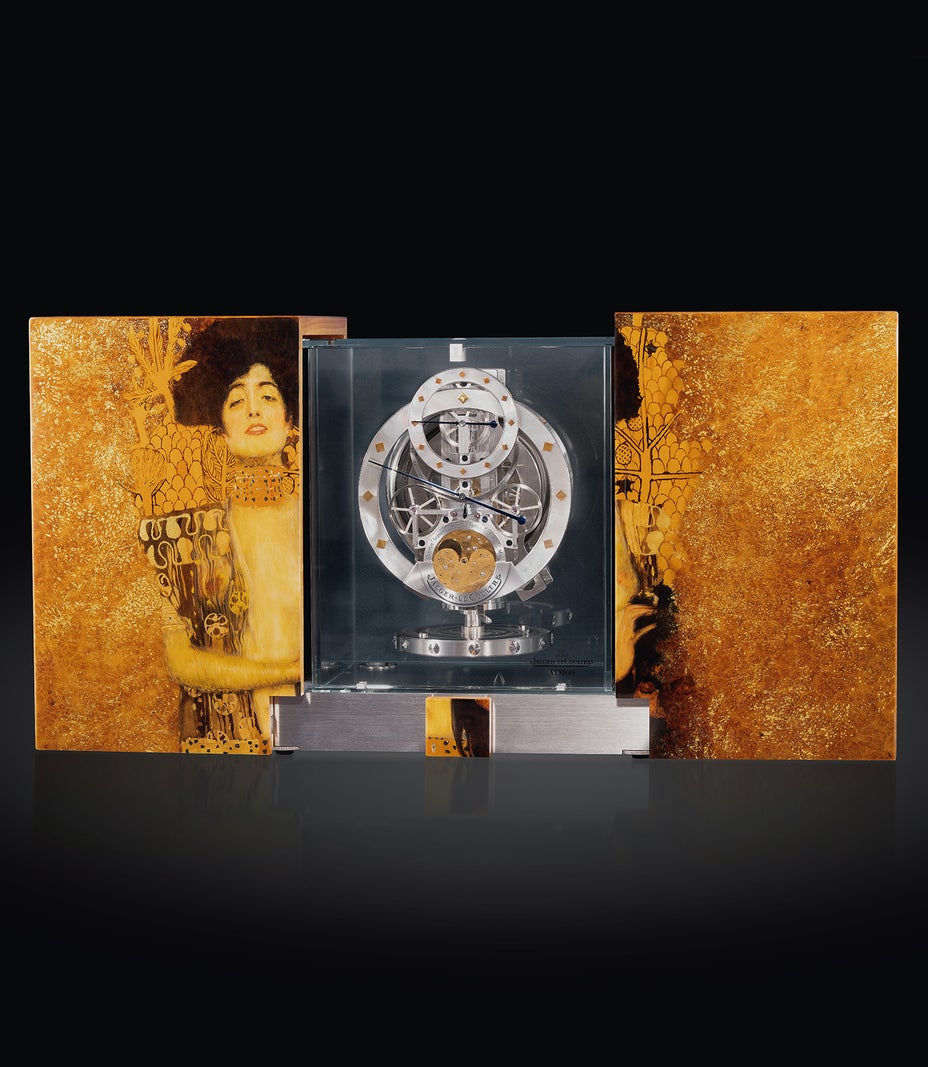
積家,「Atmos Marqueterie “Gustav Klimt”」 型號,極度精美罕有,限量版手工細木鑲鑽及黃色藍寶石玻璃空氣座鐘,備珠母貝錶盤、24小時、月份、月相顯示,特為紀念發明空氣座鐘80週年限量發行10枚,編號6號,約2008年製。
- 估價
- HK$780,000 - 1,560,000€86,300 - 173,000$100,000 - 200,000
HK$1,270,000
拍品詳情
- 製造商
- Jaeger-LeCoultre
- 年份
- Circa 2008
- 機芯編號
- 748’450
- 錶殼號碼
- 6/10
- 型號名稱
- Atmos Marqueterie “Gustav Klimt”
- 材料
- Wood, gold leaves, yellow sapphire, diamonds, mother-of-pearl and glass
- 機芯
- Wound by changes in the temperature, cal. 582, 30 jewels
- 尺寸
- 32cm length x 17cm width x 25.5cm height
- 簽名
- Case, dial and movement signed
- 配件
- Accompanied by outer packaging.
專家
完整圖錄內容
圖錄文章
In 1928, engineer Jean‑Léon Reutter developed a revolutionary clock mechanism capable of living quite literally “on air.” Placed into production by Jaeger‑LeCoultre in the 1930s, the Atmos quickly became a design icon, running from the smallest variations in atmospheric temperature. Nicknamed the “President’s Clock,” it was long adopted as the official diplomatic gift of the Swiss Confederation.
To mark the 80th anniversary of the Atmos in 2008, Jaeger‑LeCoultre unveiled an extraordinary creation at the Salon International de la Haute Horlogerie: the Atmos Marqueterie “Gustav Klimt,” produced in only ten examples worldwide. This series elevated the Atmos from technical marvel to artistic masterpiece, uniting precision horology with the decorative arts in homage to one of the greatest masters of Art Nouveau.
The cabinet that encases the atmos clock recreates Gustav Klimt’s famed Judith I (1901). This striking artwork portrays the biblical figure Judith triumphantly holding the head of Holofernes, whom she has just beheaded. The theme of this dramatic event has been frequently represented in art since the Renaissance. Klimt's friend and perhaps lover, the Viennese socialite Adele Bloch-Bauer, serves as the subject of this captivating work. It epitomises Klimt’s opulent fusion of portraiture, mosaic, and gilding. Translating its shimmering surface into wood and gold demanded extraordinary virtuosity. French marqueteur Jérôme Boutteçon achieved it by assembling more than 1,200 individual fragments of rare woods—amboyna burl, lemonwood, satinwood, tulipwood, and others—many gilded with delicate layers of gold leaf. The resulting surface glows with iridescent depth, perfectly echoing Klimt’s mosaic brilliance.
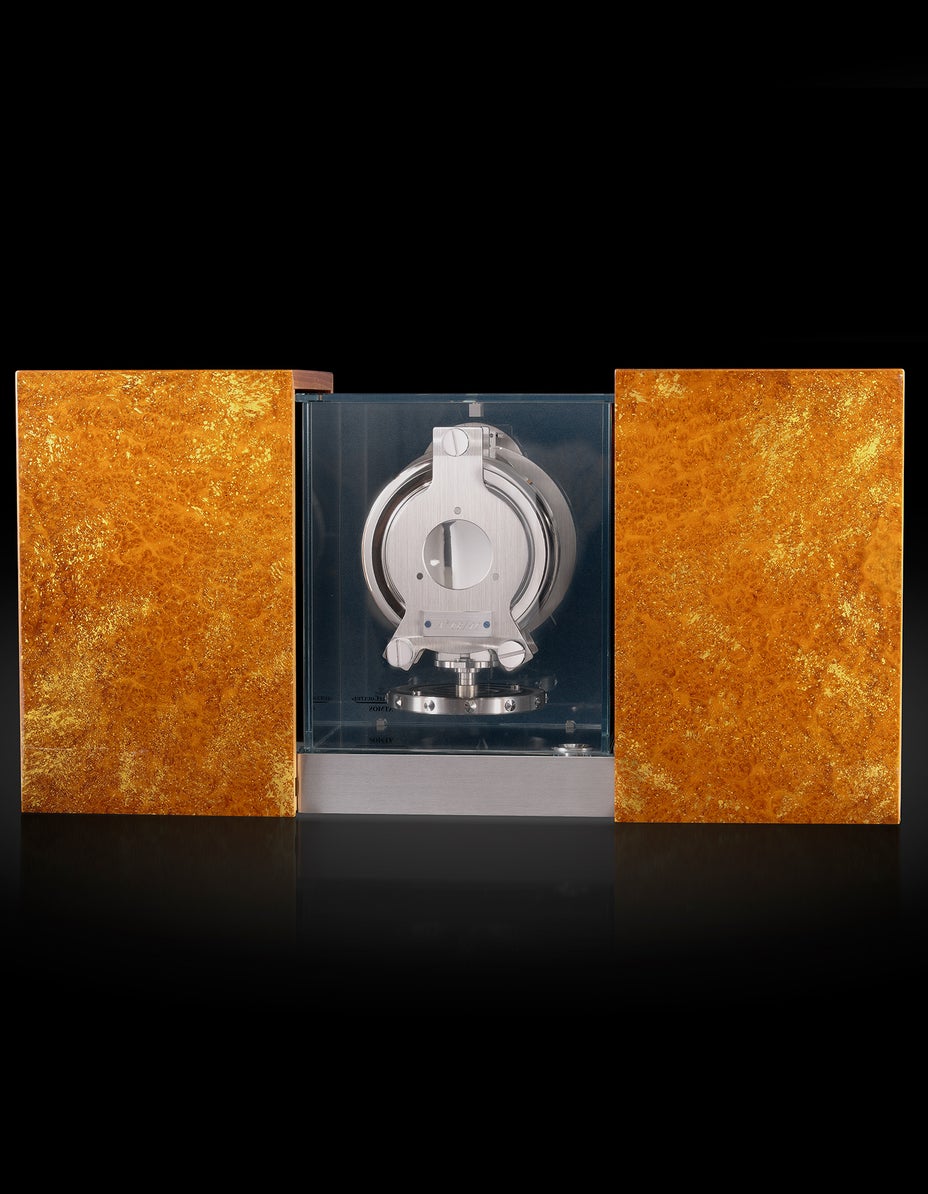
A hidden button opens the cabinet to reveal the Atmos mechanism, safeguarded by rhodium‑plated crystal glass. The mother‑of‑pearl dial adopts a regulator display: hours at 12, the sweeping minutes at center, months and moon phases at 6. Ornamentation is of jewelled sophistication: a cushion‑cut yellow sapphire at 60 minutes mark, petrified wood indexes enrich the scale on the mother-of-pearl inlay, and a diamond‑set golden moon graces the lunar aperture. Blue‑varnished hands provide a refined finishing touch.
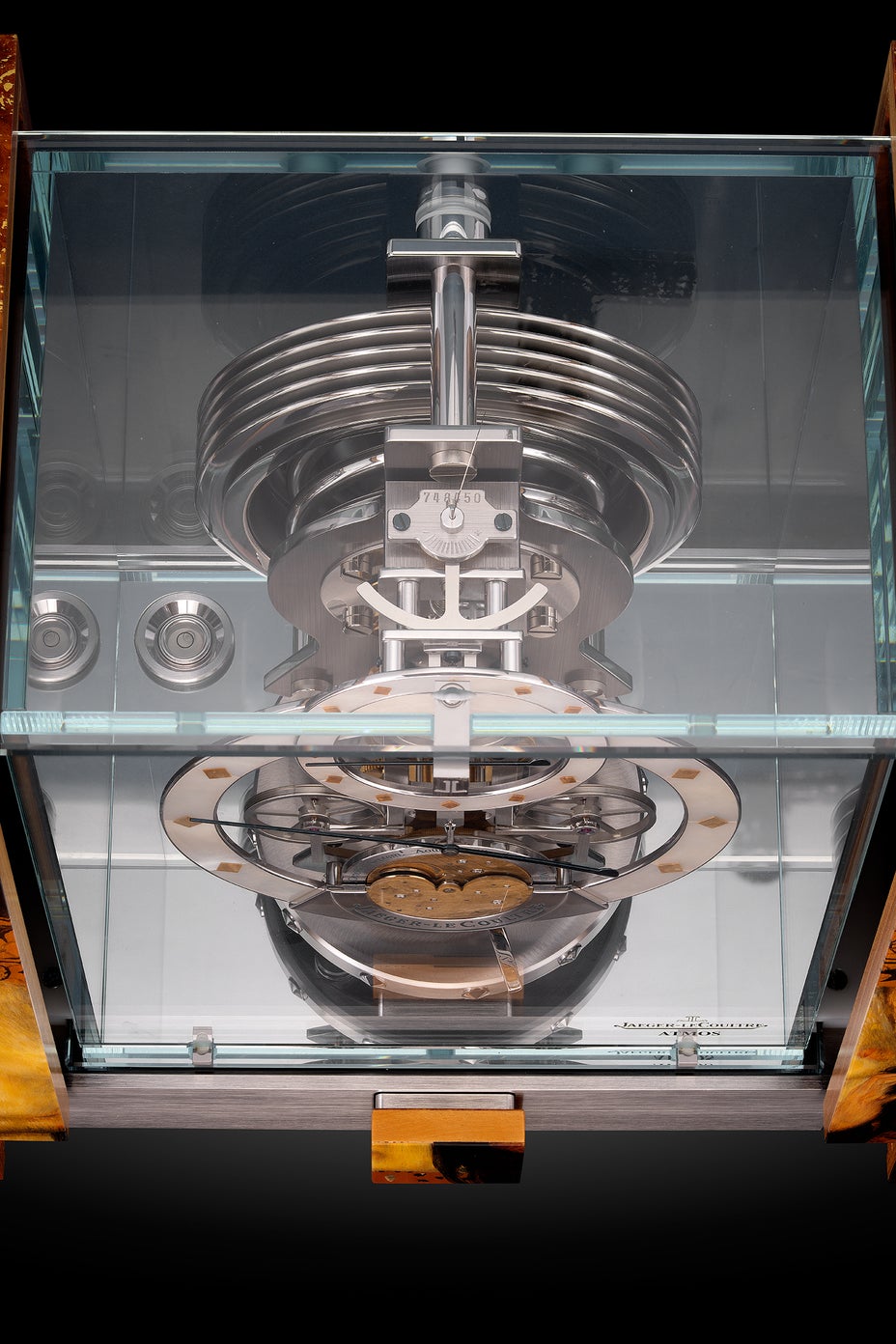
At the heart of the clock beats the Jaeger‑LeCoultre cal. 582, distinguished by its architectural elegance and mechanical poetry. Driven by a hermetically sealed capsule of gases that expand and contract with temperature changes, the mechanism winds the mainspring in a cycle of near‑perpetual motion. Its moon phases display is astonishingly precise: deviating by only one day in every 3,821 years.
The Atmos Marqueterie “Gustav Klimt” is more than a timekeeper: it is an artistic manifesto, a convergence of horology, craftsmanship, and fine art, echoing the same spirit of innovation that defined both Jaeger‑LeCoultre and Klimt. Preserved in exceptional condition, it is numbered 6 out of the limited edition of 10 pieces. With its spectacular marquetry cabinet and ingenious Atmos movement, this remarkable clock is a landmark in the history of Jaeger‑LeCoultre and a defining dialogue between horology and fine art.
To mark the 80th anniversary of the Atmos in 2008, Jaeger‑LeCoultre unveiled an extraordinary creation at the Salon International de la Haute Horlogerie: the Atmos Marqueterie “Gustav Klimt,” produced in only ten examples worldwide. This series elevated the Atmos from technical marvel to artistic masterpiece, uniting precision horology with the decorative arts in homage to one of the greatest masters of Art Nouveau.
The cabinet that encases the atmos clock recreates Gustav Klimt’s famed Judith I (1901). This striking artwork portrays the biblical figure Judith triumphantly holding the head of Holofernes, whom she has just beheaded. The theme of this dramatic event has been frequently represented in art since the Renaissance. Klimt's friend and perhaps lover, the Viennese socialite Adele Bloch-Bauer, serves as the subject of this captivating work. It epitomises Klimt’s opulent fusion of portraiture, mosaic, and gilding. Translating its shimmering surface into wood and gold demanded extraordinary virtuosity. French marqueteur Jérôme Boutteçon achieved it by assembling more than 1,200 individual fragments of rare woods—amboyna burl, lemonwood, satinwood, tulipwood, and others—many gilded with delicate layers of gold leaf. The resulting surface glows with iridescent depth, perfectly echoing Klimt’s mosaic brilliance.
A hidden button opens the cabinet to reveal the Atmos mechanism, safeguarded by rhodium‑plated crystal glass. The mother‑of‑pearl dial adopts a regulator display: hours at 12, the sweeping minutes at center, months and moon phases at 6. Ornamentation is of jewelled sophistication: a cushion‑cut yellow sapphire at 60 minutes mark, petrified wood indexes enrich the scale on the mother-of-pearl inlay, and a diamond‑set golden moon graces the lunar aperture. Blue‑varnished hands provide a refined finishing touch.
At the heart of the clock beats the Jaeger‑LeCoultre cal. 582, distinguished by its architectural elegance and mechanical poetry. Driven by a hermetically sealed capsule of gases that expand and contract with temperature changes, the mechanism winds the mainspring in a cycle of near‑perpetual motion. Its moon phases display is astonishingly precise: deviating by only one day in every 3,821 years.
The Atmos Marqueterie “Gustav Klimt” is more than a timekeeper: it is an artistic manifesto, a convergence of horology, craftsmanship, and fine art, echoing the same spirit of innovation that defined both Jaeger‑LeCoultre and Klimt. Preserved in exceptional condition, it is numbered 6 out of the limited edition of 10 pieces. With its spectacular marquetry cabinet and ingenious Atmos movement, this remarkable clock is a landmark in the history of Jaeger‑LeCoultre and a defining dialogue between horology and fine art.
Jaeger-LeCoultre
Swiss | 1833Not all companies in the watchmaking field have been able to stand the test of time quite like Jaeger LeCoultre, also known as the "watchmaker's watchmaker." Founded in 1833 by Antoine LeCoultre and originally named LeCoutre, the firm provided watchmaking's top brands, such as Patek Philippe, Vacheron Constantin and Audemars Piguet, the high-grade, unfinished mechanical movements with which they completed their watches.
In the early 1900s, Cartier's watch supplier Edmond Jaeger sought out LeCoultre's help in creating the world's thinnest watches. The collaboration resulted in the creation of Cartier's earliest Tank and Santos watches, all housed with LeCoultre movements. The duo decided to merge in 1937, and the firm officially became the Jaeger-LeCoultre brand by which collectors know and adore it today. Some of the firm's most significant and important timepieces include the Reverso, the Memovox, the Atmos clock and, among modern watches, their Master Complications.
瀏覽製造者In the early 1900s, Cartier's watch supplier Edmond Jaeger sought out LeCoultre's help in creating the world's thinnest watches. The collaboration resulted in the creation of Cartier's earliest Tank and Santos watches, all housed with LeCoultre movements. The duo decided to merge in 1937, and the firm officially became the Jaeger-LeCoultre brand by which collectors know and adore it today. Some of the firm's most significant and important timepieces include the Reverso, the Memovox, the Atmos clock and, among modern watches, their Master Complications.