56
Gerhard Richter
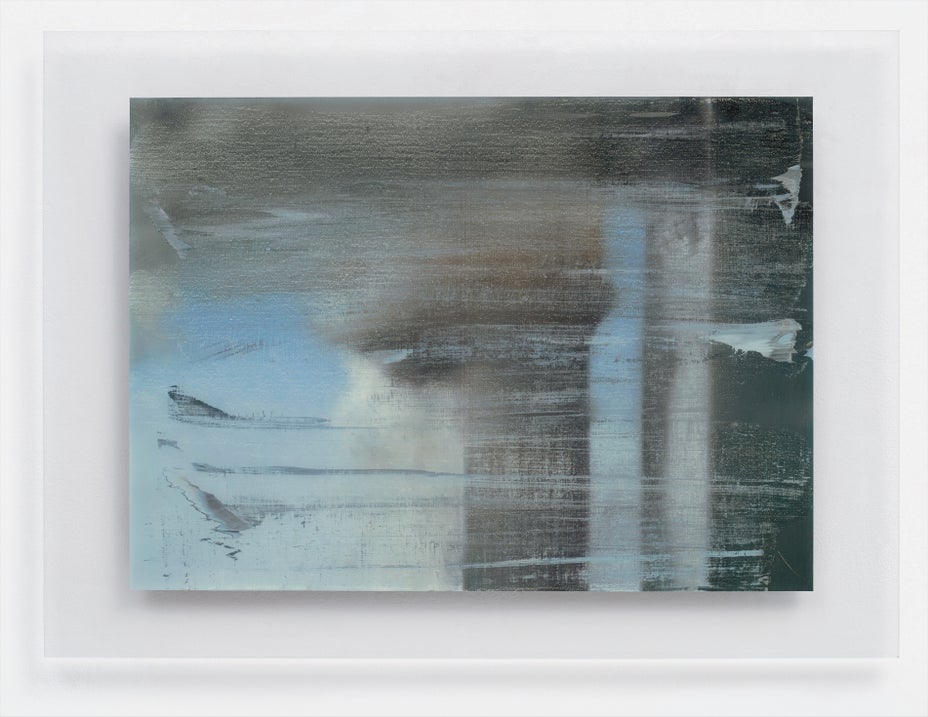
September
glass 66 x 90 cm (25 7/8 x 35 3/8 in.)
完整圖錄內容
The artist’s initial painted composition was delicately, realistically reproduced in colourful detail - as Richter described it, "with the garish explosion beneath the wonderful blue sky and the flying rubble." However, he found the painting unbearable in this form, too real and too close both pictorially and perhaps emotionally. He stated: "That couldn’t work; only when I destroyed it, so to speak, scratched it off, was it fit to be seen." By flaying the surface of the image, Richter disrupts the meticulous paintwork, rendering the trauma not only visible but palpable.
The image exists at the edge of being recognisable, at the liminal point where the information it contains could assemble into a number of known narratives, and the mind must work to create coherence from the ill-defined contours of form and blurred colour. A figment, or fraction of memory rather than a documentation of history, Richter’s September assembles the multitude of recorded and recycled mass media images from the viewer’s visual archive, with the glass plates recalling the digital and televisual mediums through which most of the world collectively witnessed this event. Yet by obscuring the image, Richter chooses to distance the viewer from this remembered visual record, deliberately opening gaps of meaning between us and the images we know so well.
Gerhard Richter
German | 1932Powerhouse painter Gerhard Richter has been a key player in defining the formal and ideological agenda for painting in contemporary art. His instantaneously recognizable canvases literally and figuratively blur the lines of representation and abstraction. Uninterested in classification, Richter skates between unorthodoxy and realism, much to the delight of institutions and the market alike.
Richter's color palette of potent hues is all substance and "no style," in the artist's own words. From career start in 1962, Richter developed both his photorealist and abstracted languages side-by-side, producing voraciously and evolving his artistic style in short intervals. Richter's illusory paintings find themselves on the walls of the world's most revered museums—for instance, London’s Tate Modern displays the Cage (1) – (6), 2006 paintings that were named after experimental composer John Cage and that inspired the balletic 'Rambert Event' hosted by Phillips Berkeley Square in 2016.