文章 | Modern Chronographs Phillips New York Fall 2026 Online Auction
The Art of the Modern Chronograph
Eight watches that show how watchmakers have pushed, adapted, and reimagined one of horology’s most useful complications over the past three decades.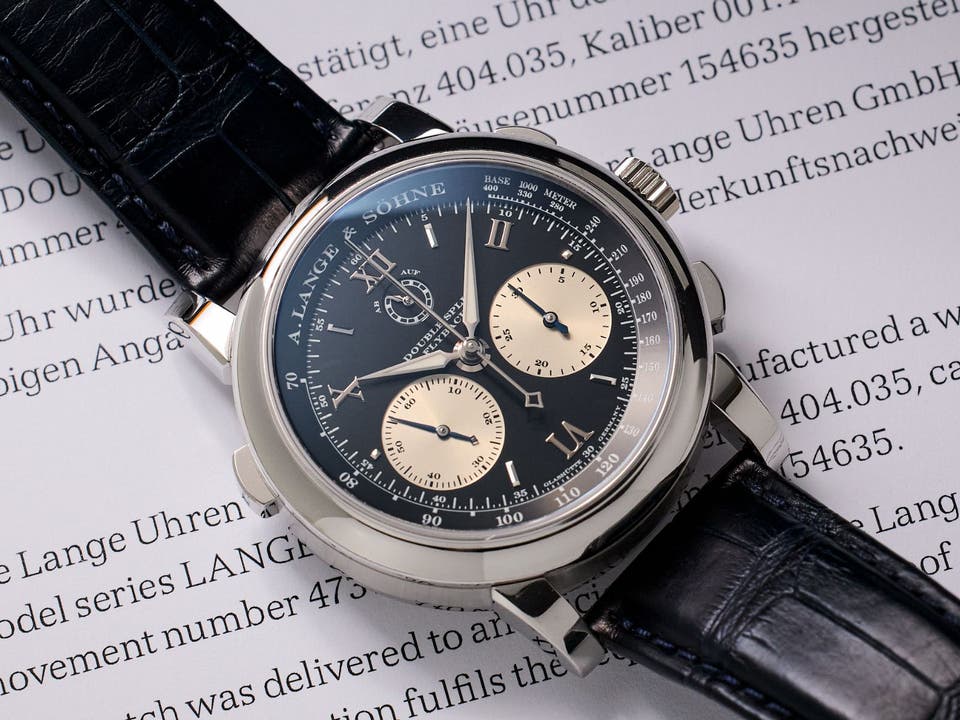
Phillips in Association with Bacs & Russo is delighted to present The New York Sessions, Fall 2026, an online auction running from 1–9 October. Featuring more than 80 exceptional timepieces from leading makers including Patek Philippe, Rolex, A. Lange & Söhne, Audemars Piguet, and F.P. Journe, the sale includes all the lots featured in this story.
Chronographs are omnipresent in modern watchmaking, but the complication itself is, of course, anything but new. Wristwatch chronographs first appeared over a hundred years ago, with many of their familiar forms and functions well established by the mid-20th century. But watchmakers have kept on finding new ways of approaching the seemingly straightforward business of measuring elapsed time.
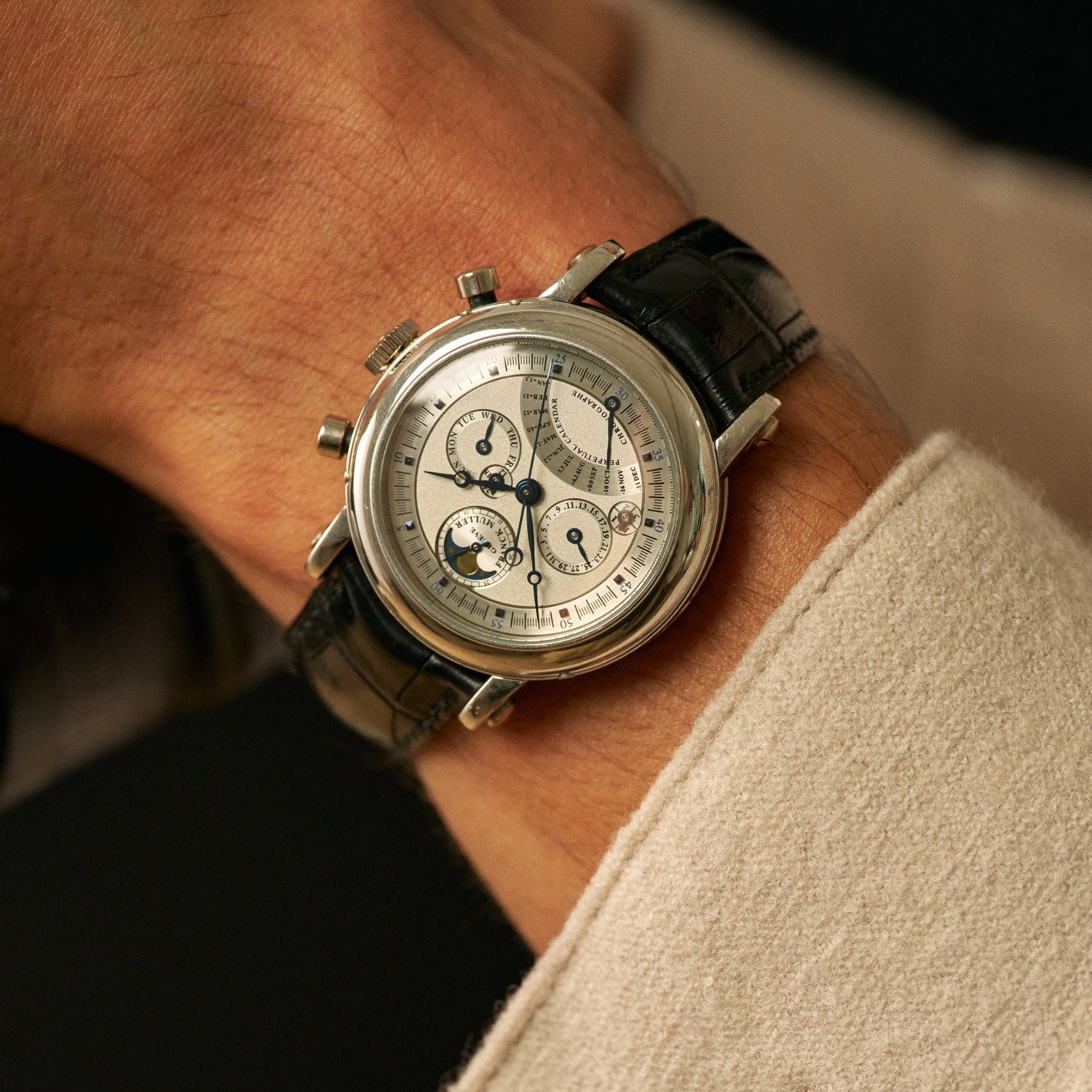
Lot 7: A 1996 Franck Muller Perpetual Calendar Retrograde Chronograph Ref. 7000 QPE in platinum, included in the Phillips New York Sessions, Fall 2026. Estimate: USD $8,000–16,000
At its simplest, a chronograph starts, stops, and resets an elapsed-time indication. Add a second seconds hand and it can compare two events. Add a flyback and one timing operation can be reset and restarted instantly. Increase the frequency and ever-smaller fractions of a second become readable. Some watchmakers have reconsidered how those intervals are displayed, how the mechanism is operated, what other complications can accompany it, and even what shape a chronograph should assume.
The following watches – all featured in The New York Sessions, Fall 2026 – offer eight different takes on the contemporary chronograph, from the automatic sports watch to the rattrapante, high-frequency timing, retrograde displays, and grand complications. Along the way, they reveal just how much scope remains within the art of the modern chronograph.
A Modern Benchmark
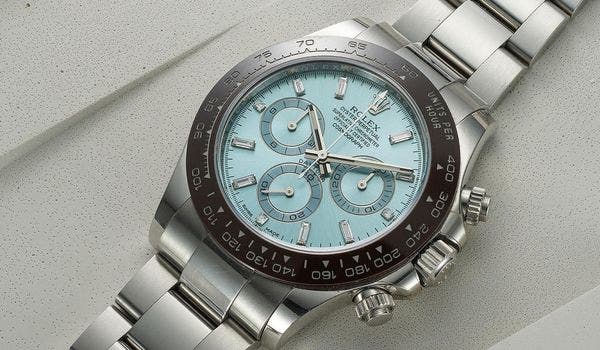
When Rolex introduced the Ref. 16520 in 1988, the hallowed Cosmograph Daytona became self-winding for the first time. Its starting point was Zenith’s high-frequency El Primero, but Rolex extensively modified the movement, reducing its frequency from 5Hz to 4Hz, removing the date and making numerous other changes before christening it Caliber 4030.
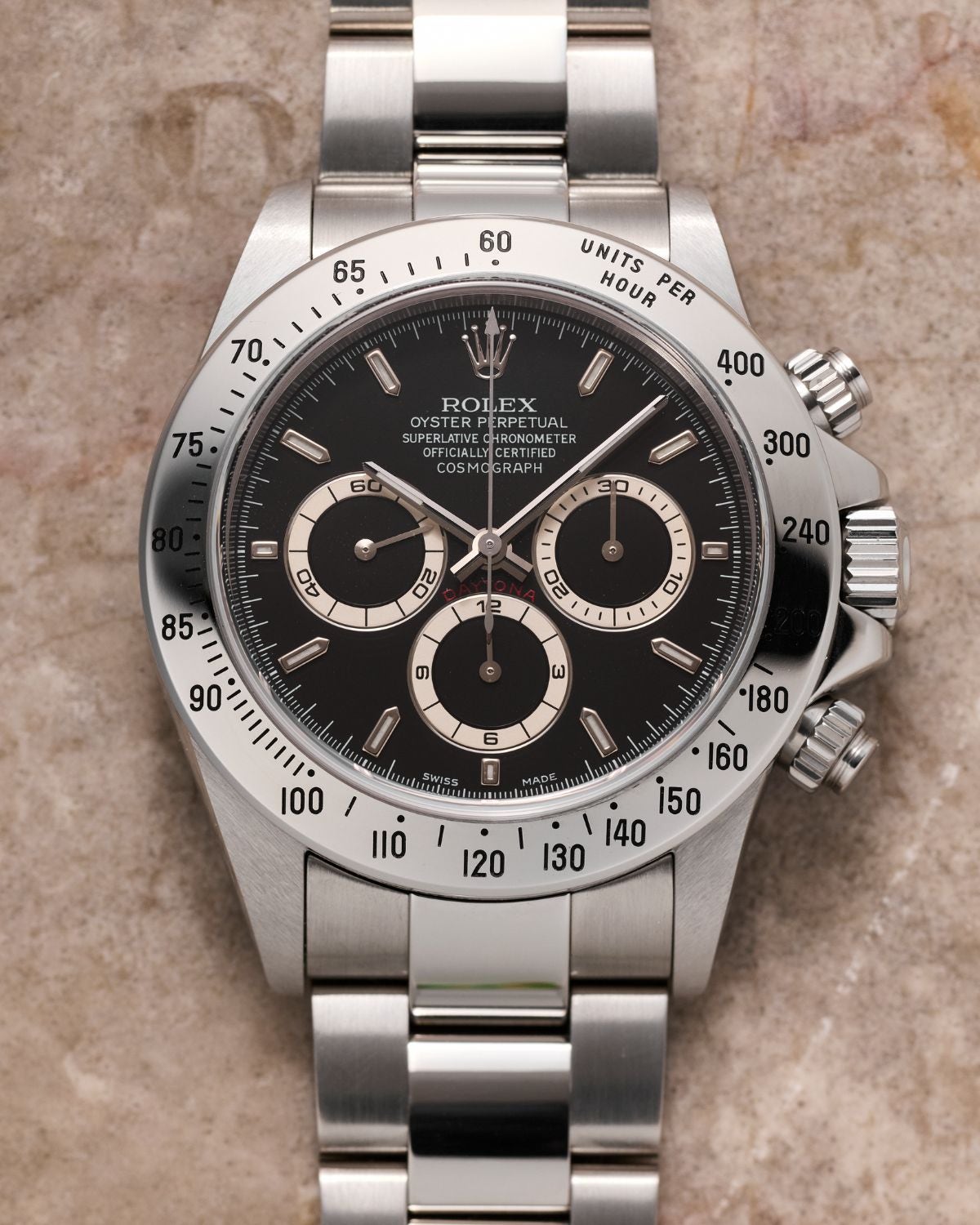
Lot 31: A circa 1998 Rolex Cosmograph Daytona Ref. 16520 in stainless steel, included in the Phillips New York Sessions, Fall 2026. Estimate: USD $20,000–40,000
The Ref. 16520 stayed in production until 2000, when Rolex introduced its first fully in-house Daytona movement. But by then, the so-called “Zenith Daytona” had helped establish the template for the modern automatic Daytona: a robust self-winding movement, tachymeter bezel, three-register dial, screw-down pushers, and 40mm Oyster case.
Complications Upon Complications
Franck Muller pushed the chronograph envelope a good deal during the 1990s. The Swiss watchmaker had established his reputation through complicated wristwatches, and this 1996 Ref. 7000 QPE is a potent distillation of that approach.
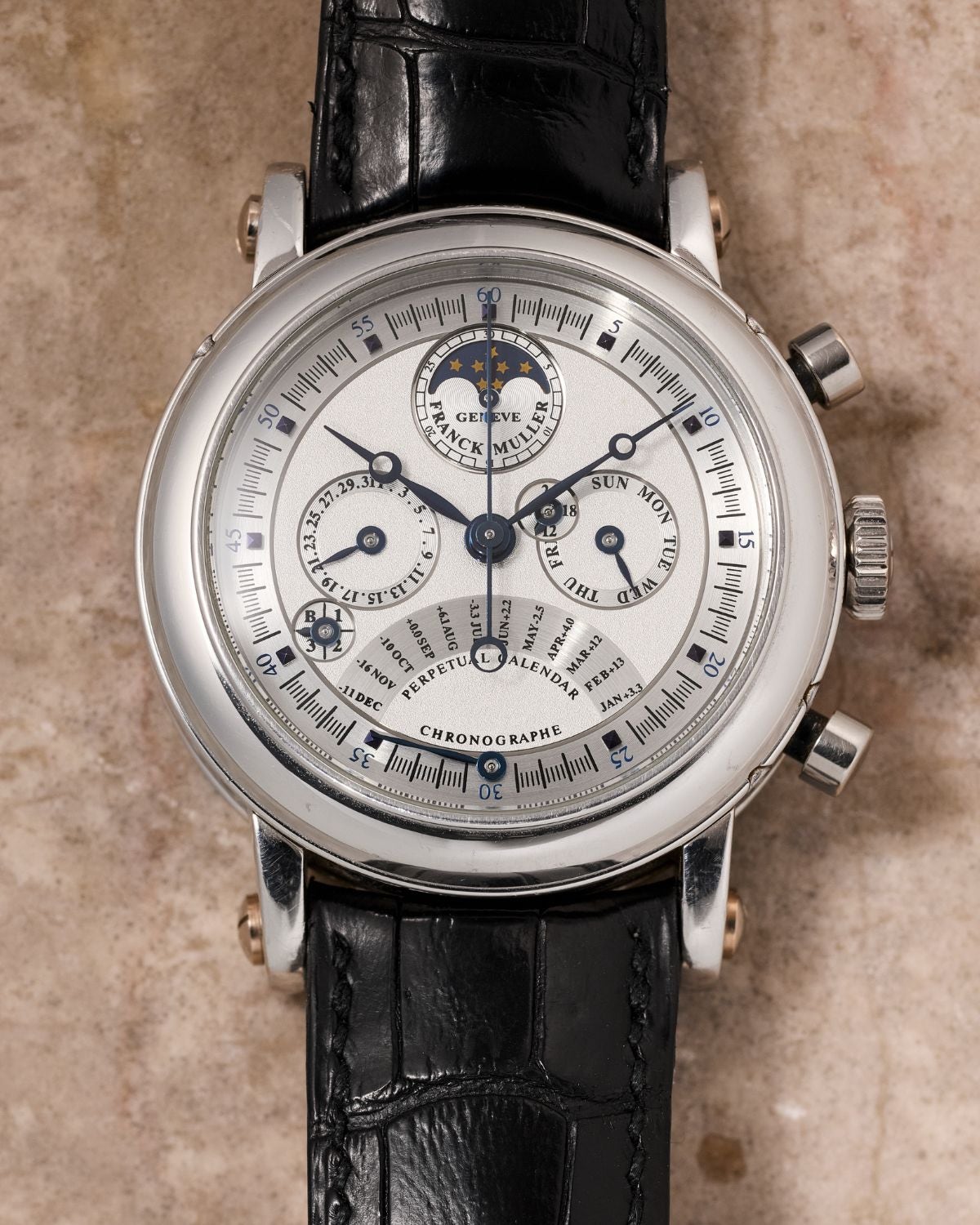
Lot 7: A 1996 Franck Muller Perpetual Calendar Retrograde Chronograph Ref. 7000 QPE in platinum, included in the Phillips New York Sessions, Fall 2026. Estimate: USD $8,000–16,000
Alongside its chronograph, this automatic watch incorporates a perpetual calendar, moon phases, equation of time, 24-hour indication, and retrograde month display. Some examples were even double-faced, with additional scales on the reverse. And all of this is impressively packed into a 39mm platinum case.
So, rather than making the chronograph the main event, Muller incorporated it into a much more complicated whole, showing how ambitious his work could be as his eponymous brand came to prominence under the “Master of Complications” banner.
Splitting the Minute
A traditional split-seconds chronograph allows two elapsed times with the same starting point to be compared, using a pair of superimposed chronograph seconds hands. But hey, why stop at the seconds? With the Double Split, unveiled by A. Lange & Söhne in 2004, the German brand extended the principle to the minutes.
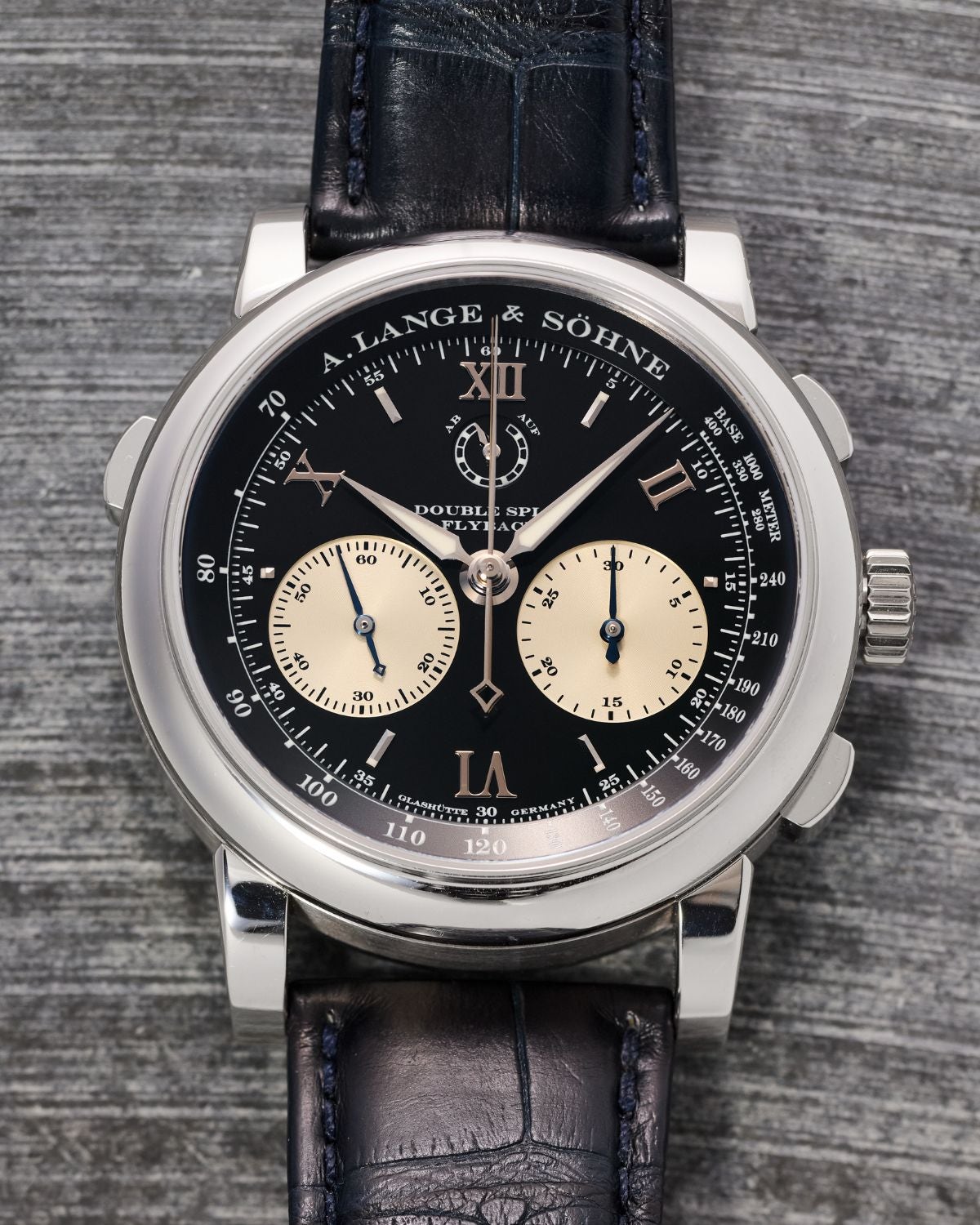
Lot 32: A circa 2024 A. Lange & Söhne Datograph Double Split Ref. 404.035 in platinum, included in the Phillips New York Sessions, Fall 2026. Estimate: USD $40,000–80,000
The watch, then, has two pairs of superimposed hands: central chronograph and rattrapante seconds hands, plus chronograph and rattrapante minute hands at 3 o’clock. This allows comparative elapsed times of up to 30 minutes rather than the 60-second limit imposed by a conventional rattrapante.
The manually wound, in-house Caliber L001.1 also incorporates a flyback function, meaning the chronograph minutes and seconds can be reset and immediately restarted while running.
A New Chapter
Patek Philippe's Ref. 5960 marked a major turning point when it arrived in 2006. Inside was Caliber CH 28-520 IRM QA 24H, the Geneva maison’s first self-winding chronograph movement developed and manufactured in-house, which also incorporated an annual calendar.
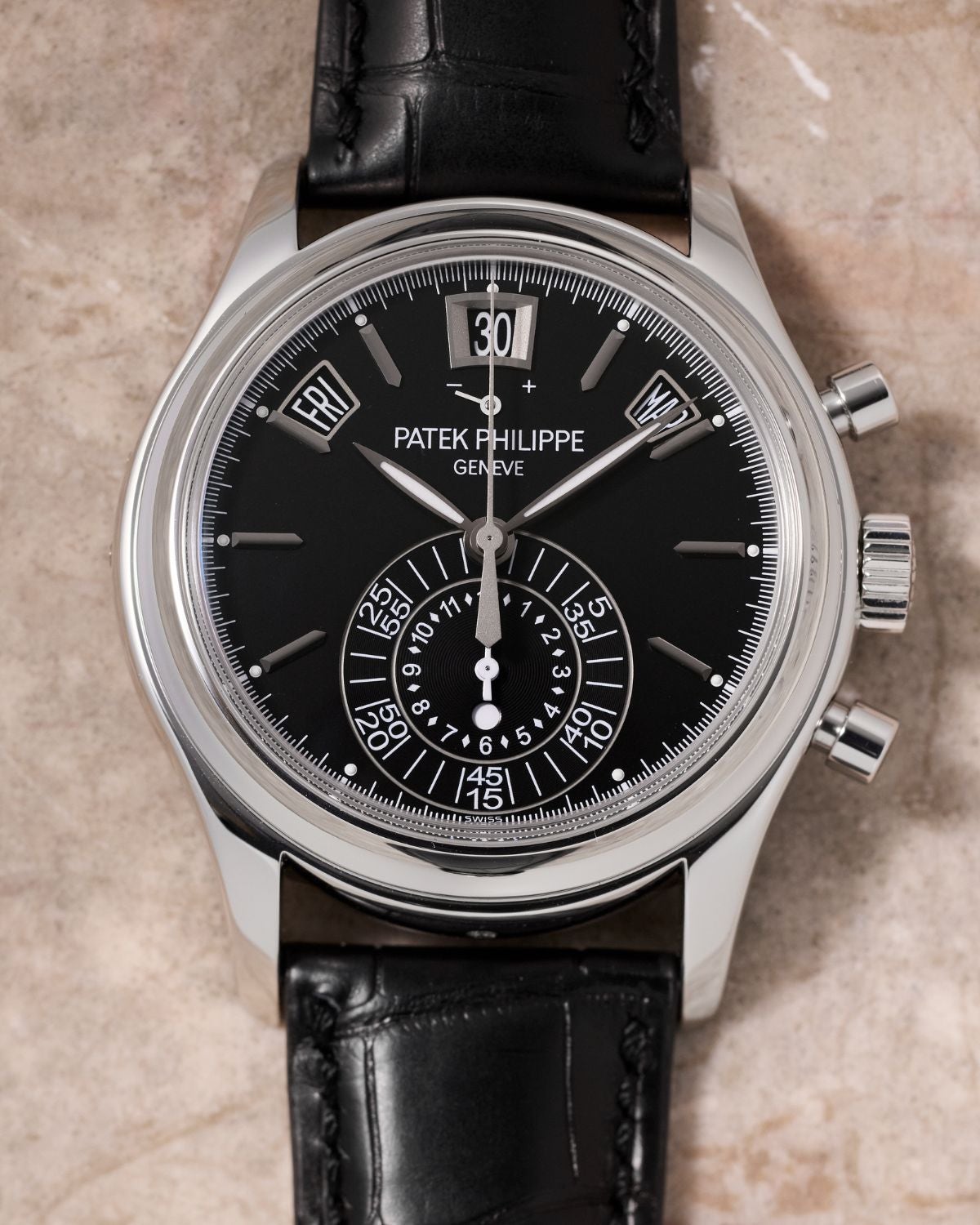
Lot 83: A circa 2014 Patek Philippe Ref. 5960P-016 in platinum, included in the Phillips New York Sessions, Fall 2026. Estimate: USD $26,000–52,000
Its chronograph display was distinctive too. Rather than spreading elapsed hours and minutes across separate registers, Patek combined them within a single “bull’s-eye” counter at 6 o’clock, leaving the upper half of the dial to the calendar apertures and power-reserve indication.
A vertical clutch allows the central chronograph seconds hand to run continuously without the usual concerns over wear associated with a lateral coupling. This circa 2014 Ref. 5960P-016, with its platinum case and black dial, comes from the final phase of the original 5960P.
Faster Thinking
Breguet's Type XXII is a study in what happens when you dramatically increase the speed of a mechanical chronograph. Introduced in 2010, the Ref. 3880 and its Caliber 589F brought a 10Hz – or 72,000 vibrations-per-hour – escapement to the long-running Type XX family.
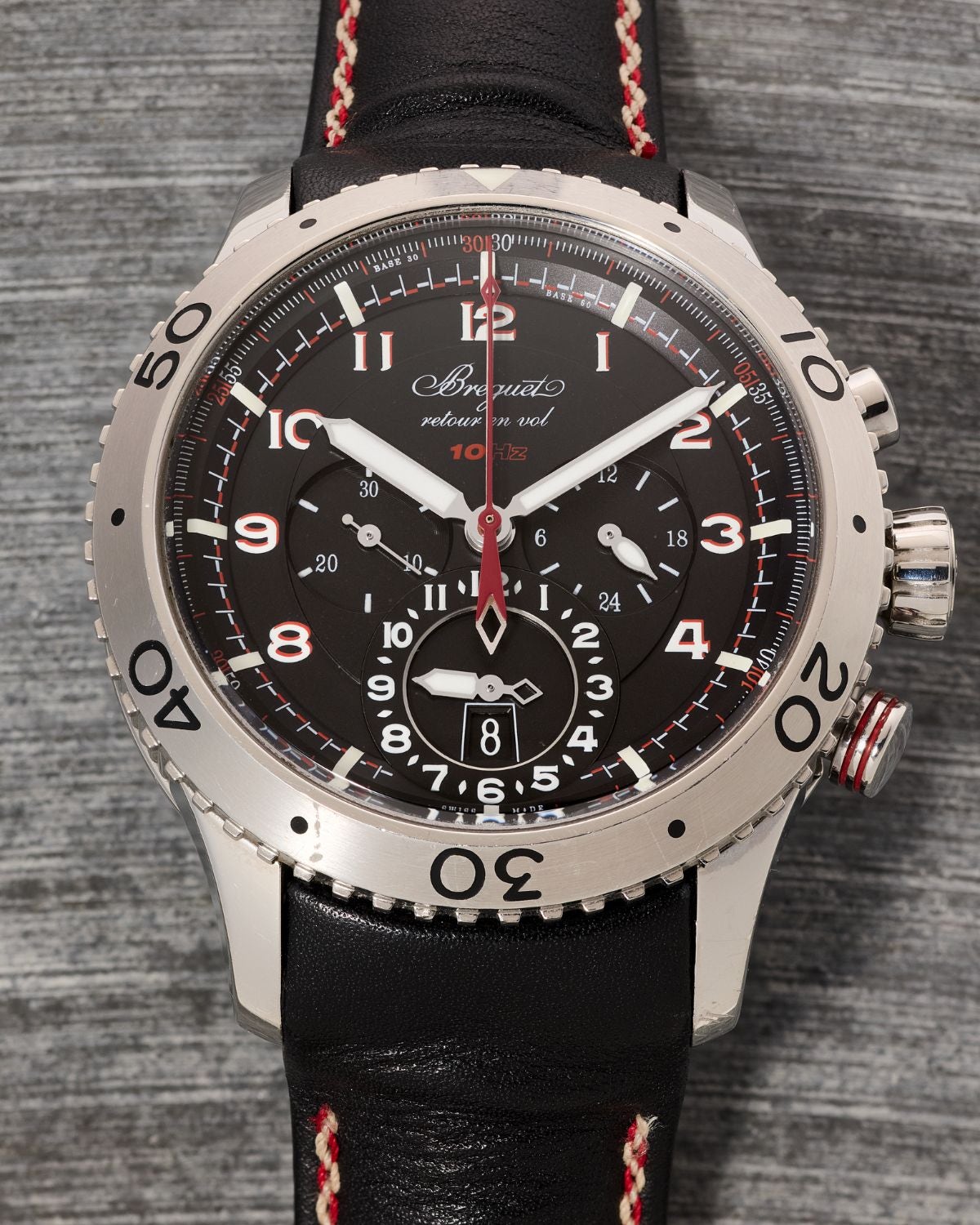
Lot 41: A circa 2012 Breguet Type XXII Retour en Vol 10 Hz Ref. 3880ST in stainless steel, included in the Phillips New York Sessions, Fall 2026. Estimate: USD $4,000–8,000
That high frequency allows the chronograph to measure twentieths of a second. Instead of racing around the dial once per minute, the central chronograph hand completes a revolution in 30 seconds, with the alternating red and white numerals around the flange helping the wearer read the result. There is a flyback function too, maintaining the Type XX's historic connection with aviation chronographs that could be reset and restarted with a single push.
A Hundredth Apart
François-Paul Journe approached short-interval timing from a different direction with the Centigraphe Souverain, launched in 2007. Rather than dramatically increasing the frequency of the escapement, its three-register display can record elapsed times from one hundredth of a second through to ten minutes, with each register operating on a different scale.
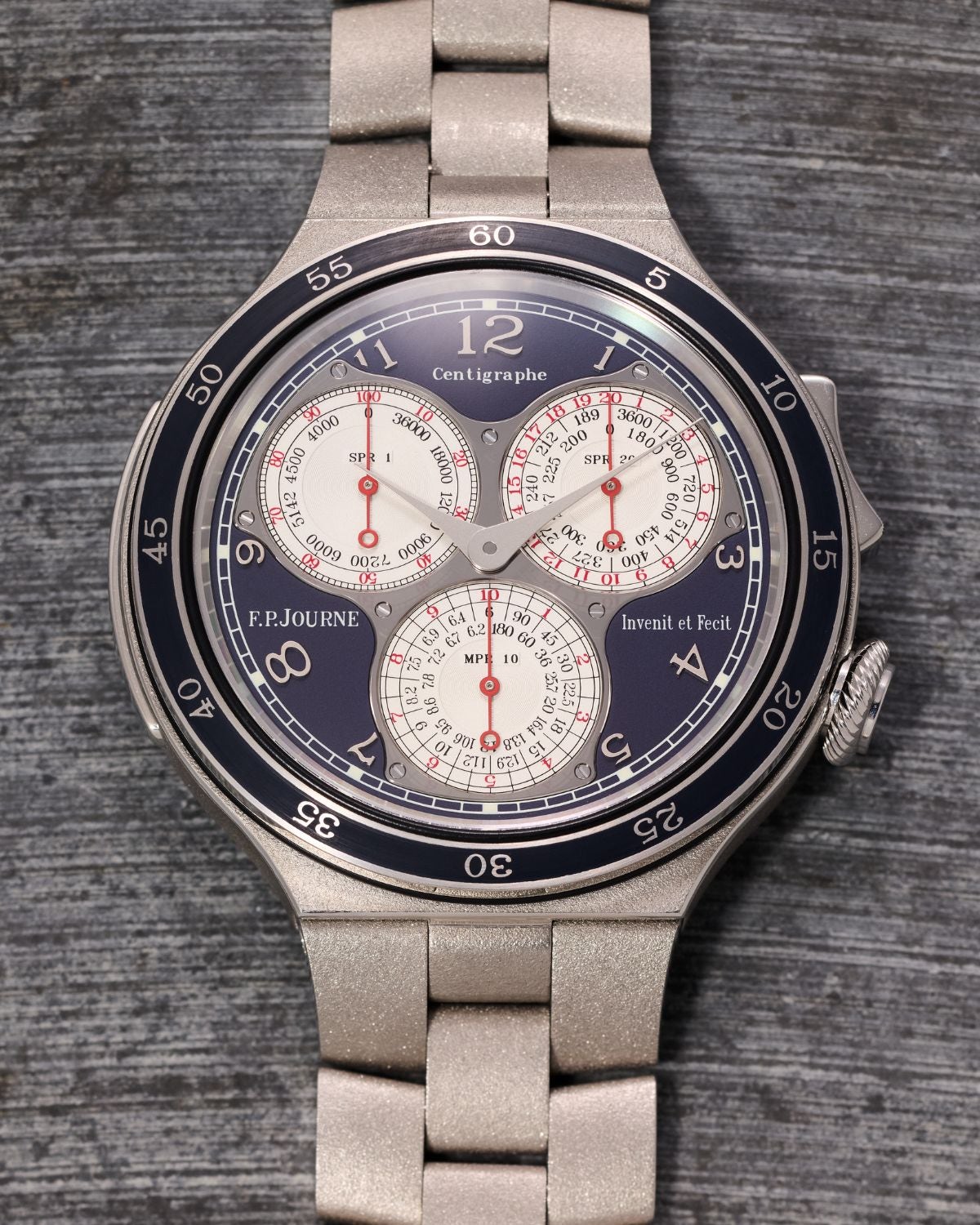
Lot 40: A 2025 F.P. Journe lineSport Centigraphe Souverain in platinum, included in the Phillips New York Sessions, Fall 2026. Estimate: USD $60,000–120,000
More uncommon still is how the chronograph is controlled: instead of conventional pushers, a patented rocker positioned at 2 o’clock starts, stops, and resets the mechanism.
The chronograph has its own separate gear train, driven directly from the mainspring barrel, helping prevent its operation from affecting the amplitude of the balance. Journe even devised a way for the central hand of the fastest register to make one complete revolution every second.
Two Faces
The rectangular Reverso presents an obvious challenge to a complication whose displays have historically been arranged around circular movements and dials. Jaeger-LeCoultre has nevertheless been putting chronographs into the swiveling case since the 1990s, beginning with the Reverso Chronographe Rétrograde of 1996.
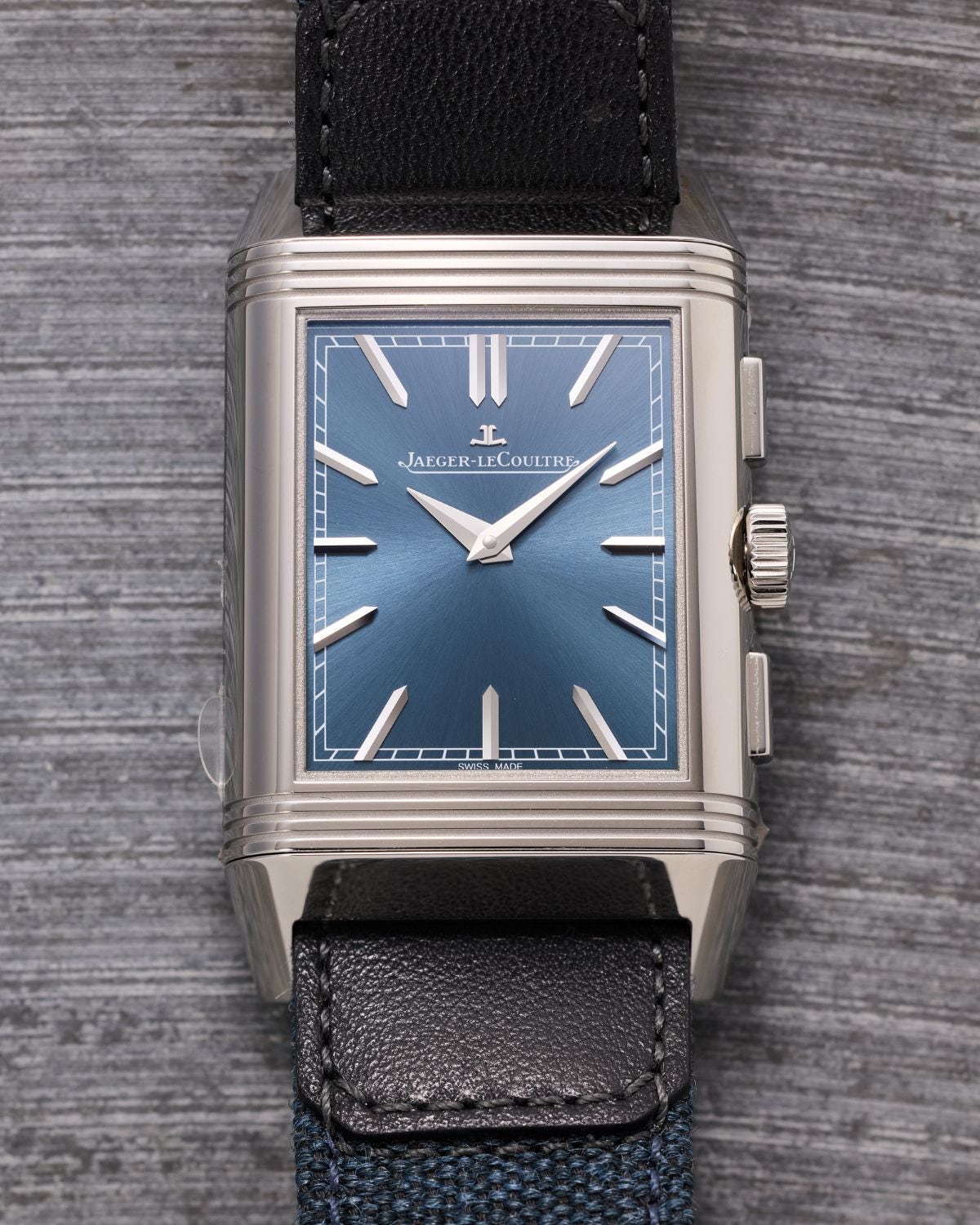
Lot 54: A circa 2023 Jaeger-LeCoultre Reverso Tribute Chronograph Ref. Q389848J in stainless steel, included in the Phillips New York Sessions, Fall 2026. Estimate: USD $10,000–20,000
The more recent Reverso Tribute Chronograph revisits that idea using the manually wound Caliber 860. One side presents a relatively pared-back blue-gray time display. But when you flip the case over, the chronograph reveals itself through an openworked second face, complete with central seconds and a retrograde 30-minute counter sweeping across an arc at 6 o’clock. The dramatic contrast between the two sides makes the chronograph here a veritable piece of theater.
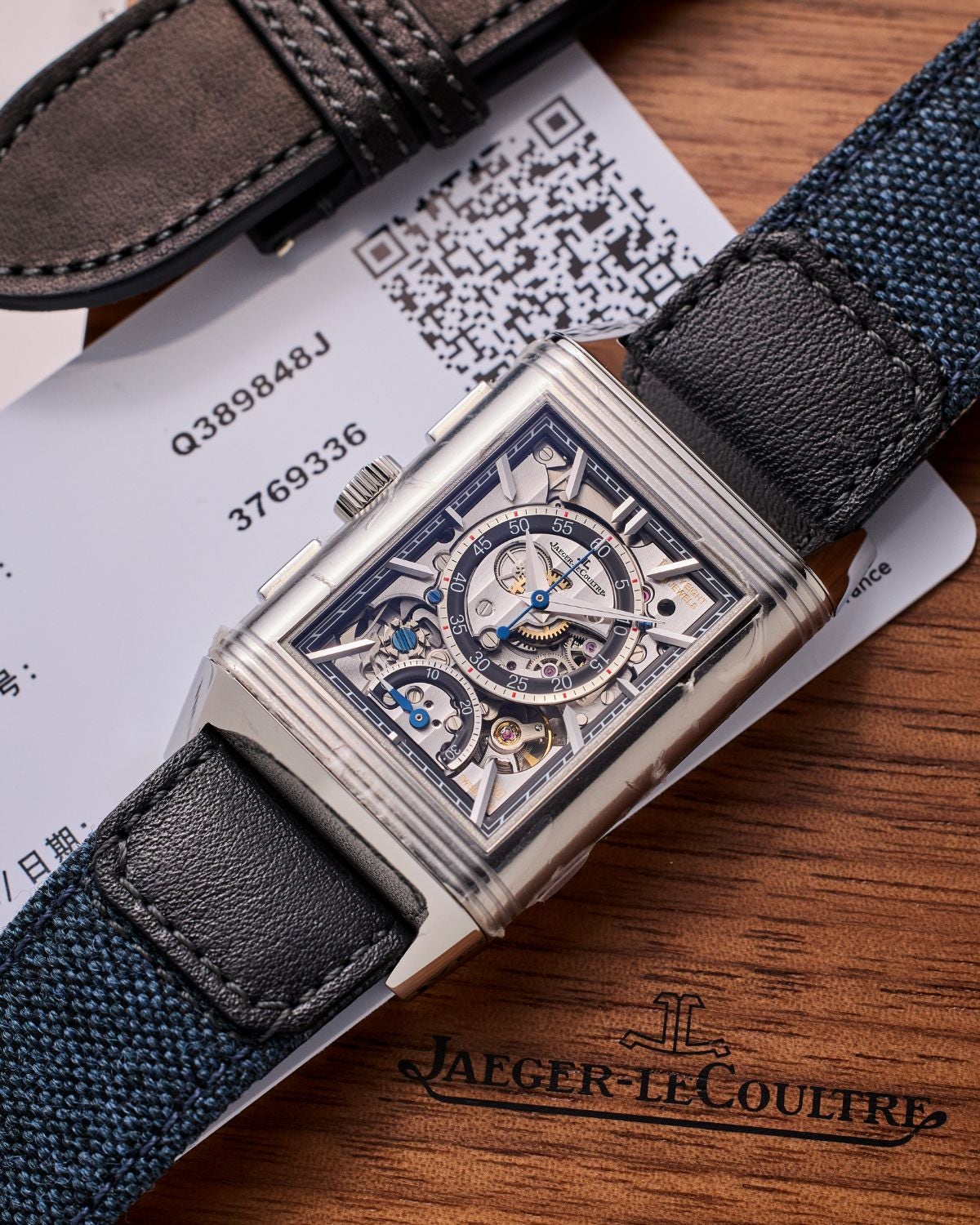
Lot 54: A circa 2023 Jaeger-LeCoultre Reverso Tribute Chronograph Ref. Q389848J in stainless steel, included in the Phillips New York Sessions, Fall 2026. Estimate: USD $10,000–20,000
Serious Wrist Presence
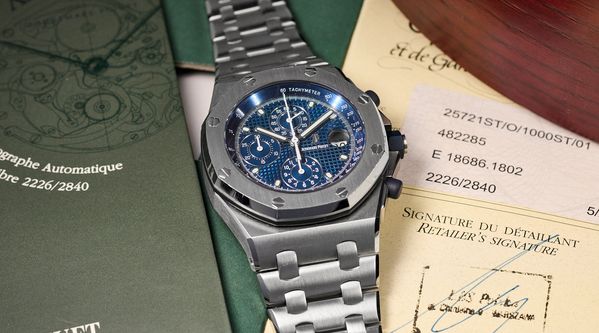
The Royal Oak Offshore has been associated with the chronograph for much of its life. First released in 1993 and designed by Emmanuel Gueit, the Offshore collection enlarged and toughened Gérald Genta's original Royal Oak concept, helping to establish the oversized luxury sports watch as a genre in its own right.
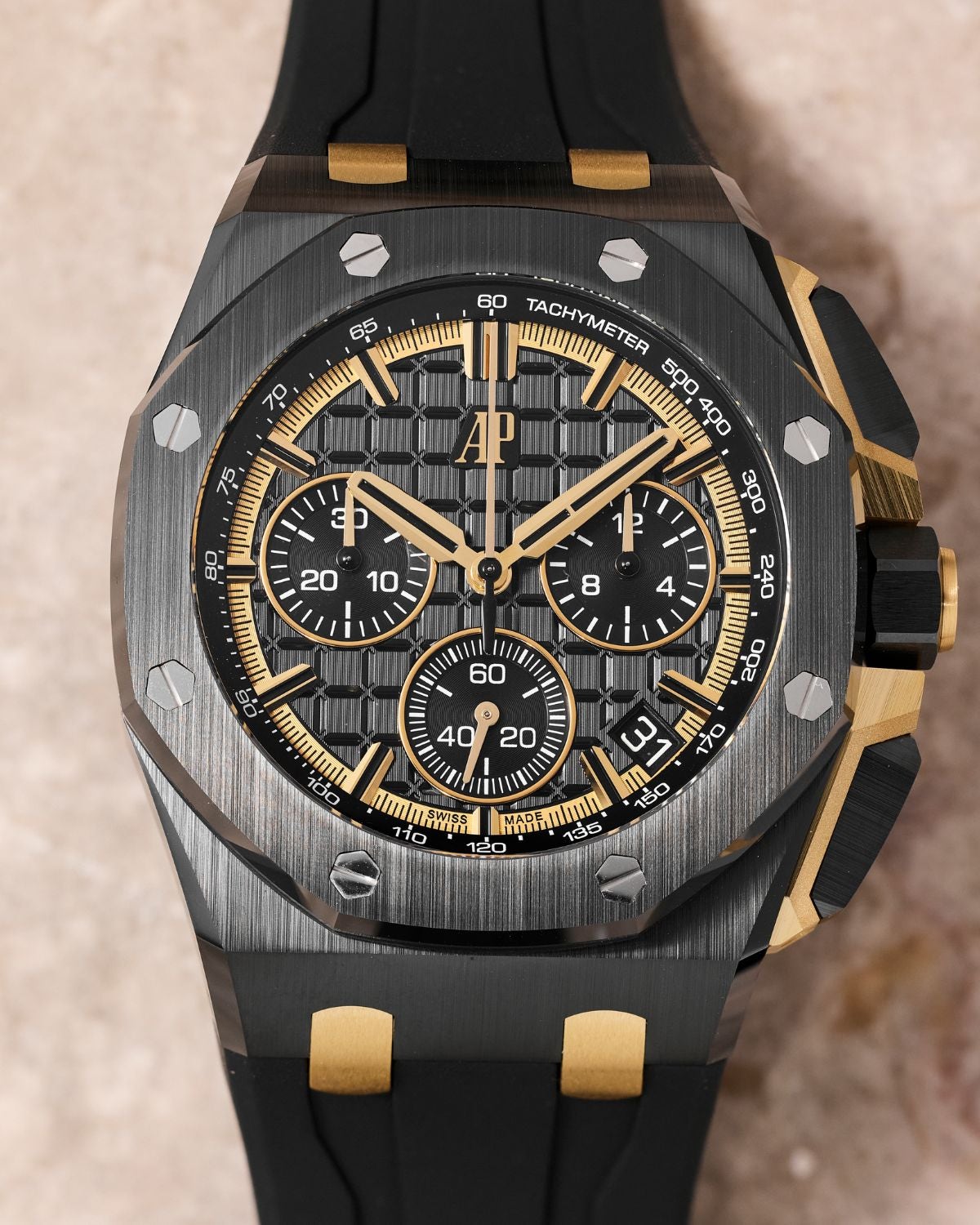
Lot 6: A circa 2022 Audemars Piguet Royal Oak Offshore Ref. 26420CE.00.A127CR.01 in 18k yellow gold and black ceramic, included in the Phillips New York Sessions, Fall 2026. Estimate: USD $26,000–52,000
Three decades later, the Ref. 26420CE builds on that proposition. Its 43mm case mixes black ceramic with 18k yellow gold, while inside, AP's automatic Caliber 4401 provides an integrated flyback chronograph controlled by a column wheel and vertical clutch.
The movement can be viewed through the sapphire display back, including its 22k pink gold winding rotor. It makes an apt final stop on our tour: over a century after the chronograph migrated to the wrist, there is clearly still plenty of room to rethink what it can measure, how it can work, how we read it, and what form it can take.
You can learn more, place a bid, and view the entire New York Sessions, Fall 2026, catalog here.