

65
Zenith
Ref. SP 1301
El Primero
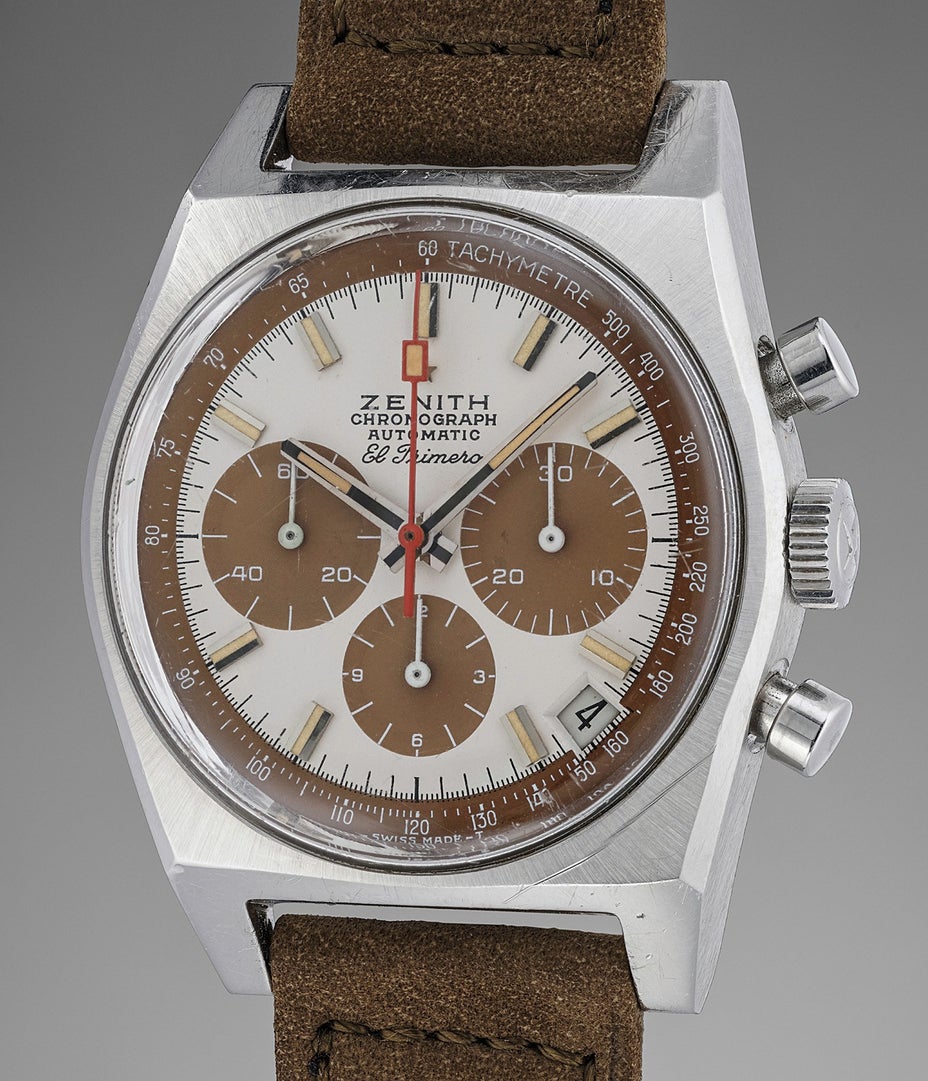
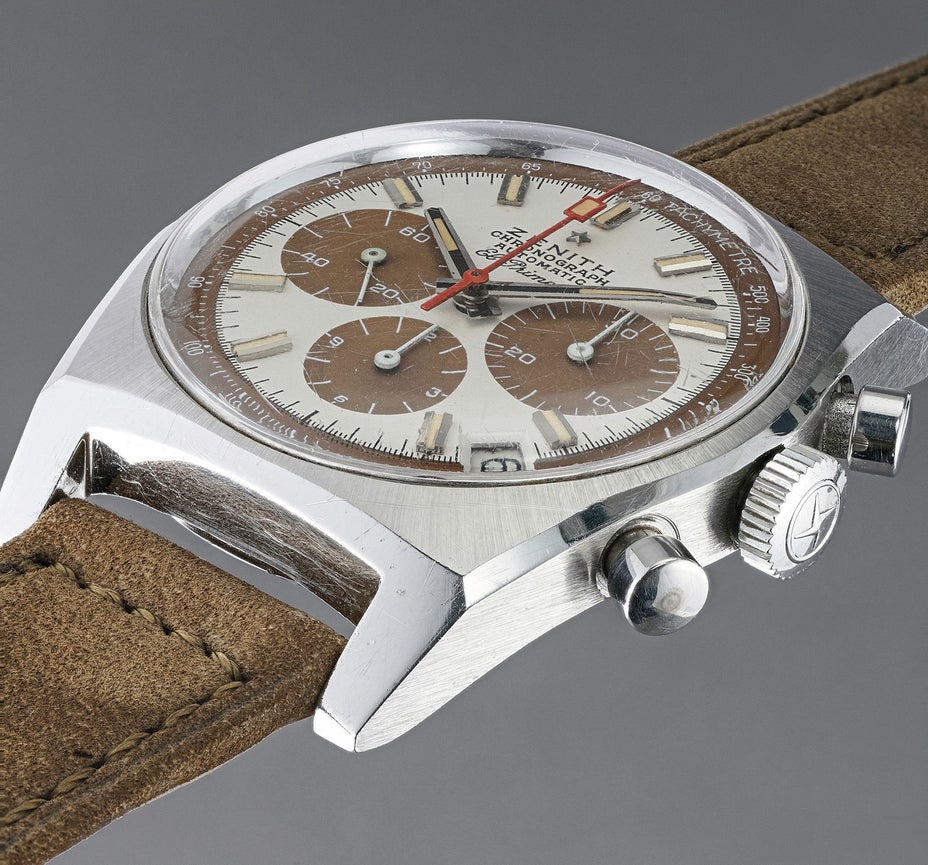
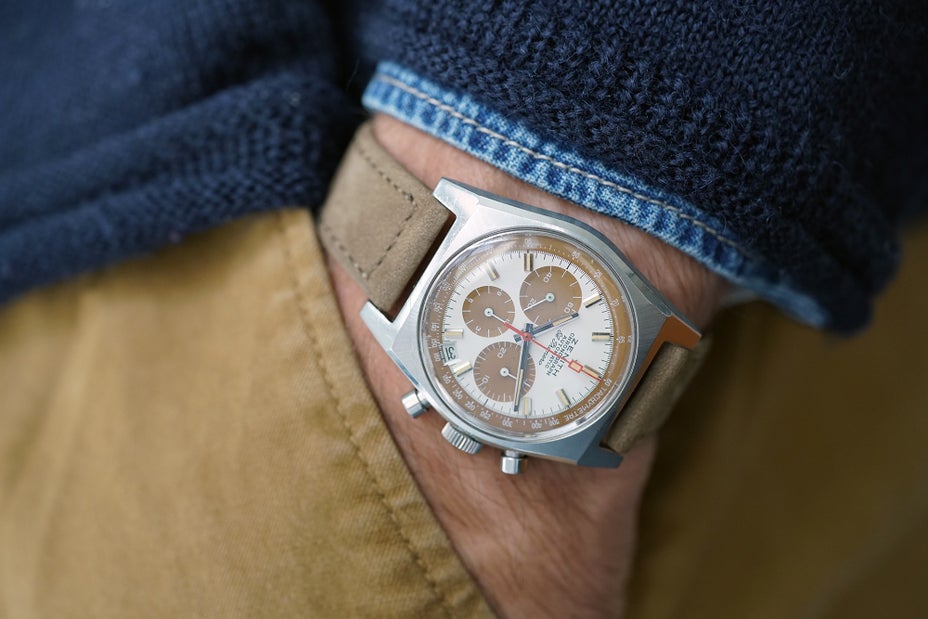
An extremely attractive and very rare stainless steel automatic chronograph wristwatch with date and brown tropical registers
- Estimate
- CHF4,000 - 6,000€3,500 - 5,300$4,100 - 6,100
CHF12,500
Lot Details
- Manufacturer
- Zenith
- Year
- Circa 1970
- Reference No
- SP 1301
- Case No
- 231E688
- Model Name
- El Primero
- Material
- Stainless steel
- Calibre
- Automatic, cal. 3019, 31 jewels
- Bracelet/Strap
- Leather strap
- Clasp/Buckle
- Stainless steel pin buckle
- Dimensions
- 37mm Diameter
- Signed
- Case, dial and movement signed
- Accessories
- Accompanied by Zenith presentation box
Specialist
Full-Cataloguing
Catalogue Essay
The name El Primero does not simply refer to a watch model, but also to its movement. Launched in 1969, the El Primero caliber was simply revolutionary. It was one of the very first automatic chronograph movements, furthermore designed as a whole rather than being an automatic movement with an added chronograph module. In addition, it vibrated at 36’000 VPH, an astoundingly high frequency for a mechanical watch which ensured superior timekeeping performance. So highly regarded were these El Primero movements that they would later be selected by Rolex as the base on which to develop the movement of the first automatic Daytona chronograph (reference 16520).
The present specimen is one of the earliest incarnations of this movement, dating to the 1970s. The case construction fully reflects the taste of the time, oriented on highly sculpted and angular designs. Such a construction can in this instance be fully appreciated thanks to the unpolished condition of this piece, allowing the beholder to admire every edge and facet in its original glory. The dial, however, is no less enthralling: the once-black outer track and subsidiary dials have evenly aged to an astoundingly charming cappuccino hue. Such a strong tropicalization not only highly enhances the aesthetic virtues of the piece, but it is furthermore an extremely rare occurrence and enormously enhances the appeal and collectability of this remarkable wristwatch.
Zenith
Swiss | 1865Since Zenith's beginnings, founder George Favre-Jacot sought to manufacture precision timepieces, realizing quality control was best maintained when production was housed under one roof. Zenith remains one of the few Swiss manufacturers to produce their own in-house movements to this day.
Today, the brand is best known for the "El Primero," the firm's most successful automatic chronograph movement. In an interesting twist of fate, the company that owned Zenith during the 1970s decided to move on to quartz movements and therefore sought to destroy the parts and tools necessary to make mechanical movements. One watchmaker realized this folly and hid the tools and parts before they were destroyed. In 1984, he returned them to Zenith so they could once again make the El Primero movement.
Browse MakerToday, the brand is best known for the "El Primero," the firm's most successful automatic chronograph movement. In an interesting twist of fate, the company that owned Zenith during the 1970s decided to move on to quartz movements and therefore sought to destroy the parts and tools necessary to make mechanical movements. One watchmaker realized this folly and hid the tools and parts before they were destroyed. In 1984, he returned them to Zenith so they could once again make the El Primero movement.