Priority Bidding is here! Secure a lower Buyer's Premium through 9 May. Learn More.
Property of a Lady

399▼︎

Van Cleef & Arpels

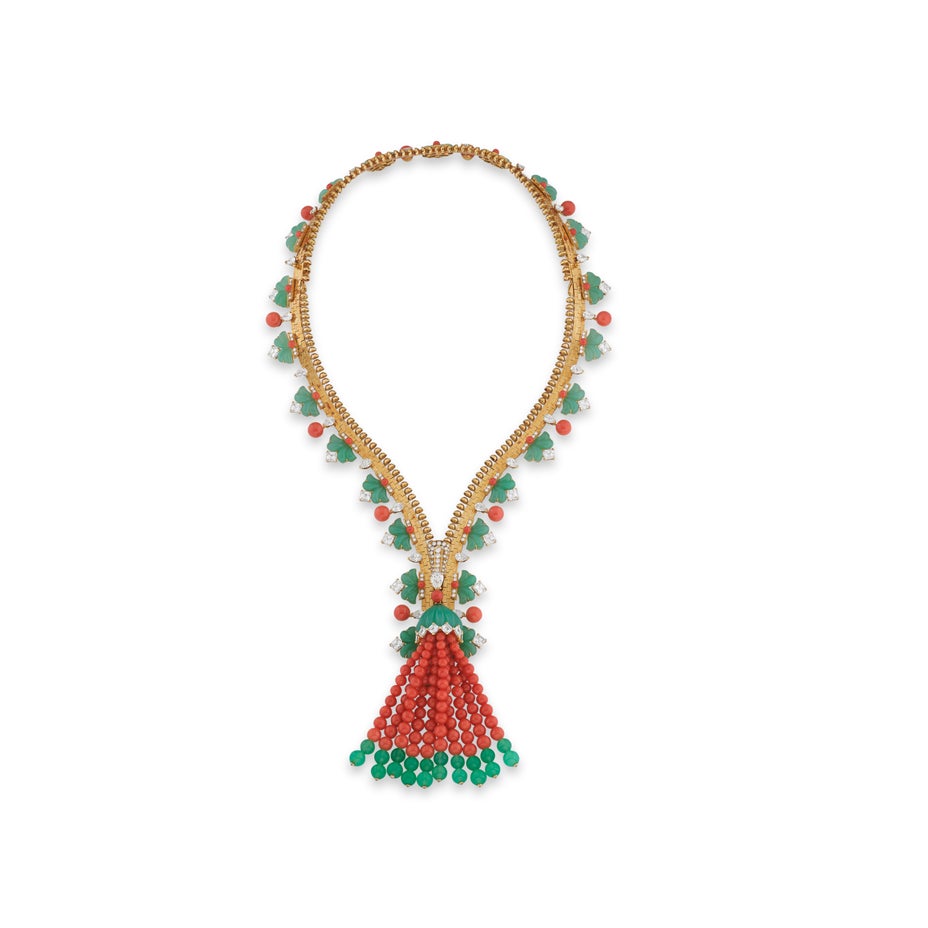
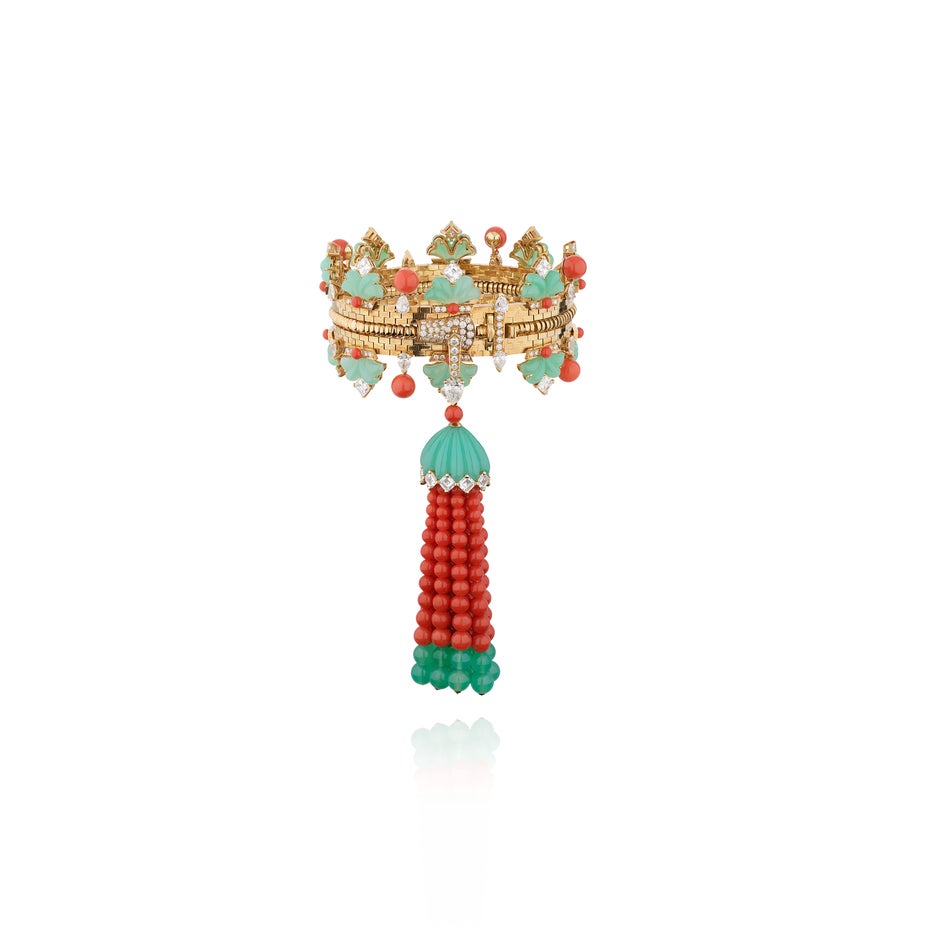
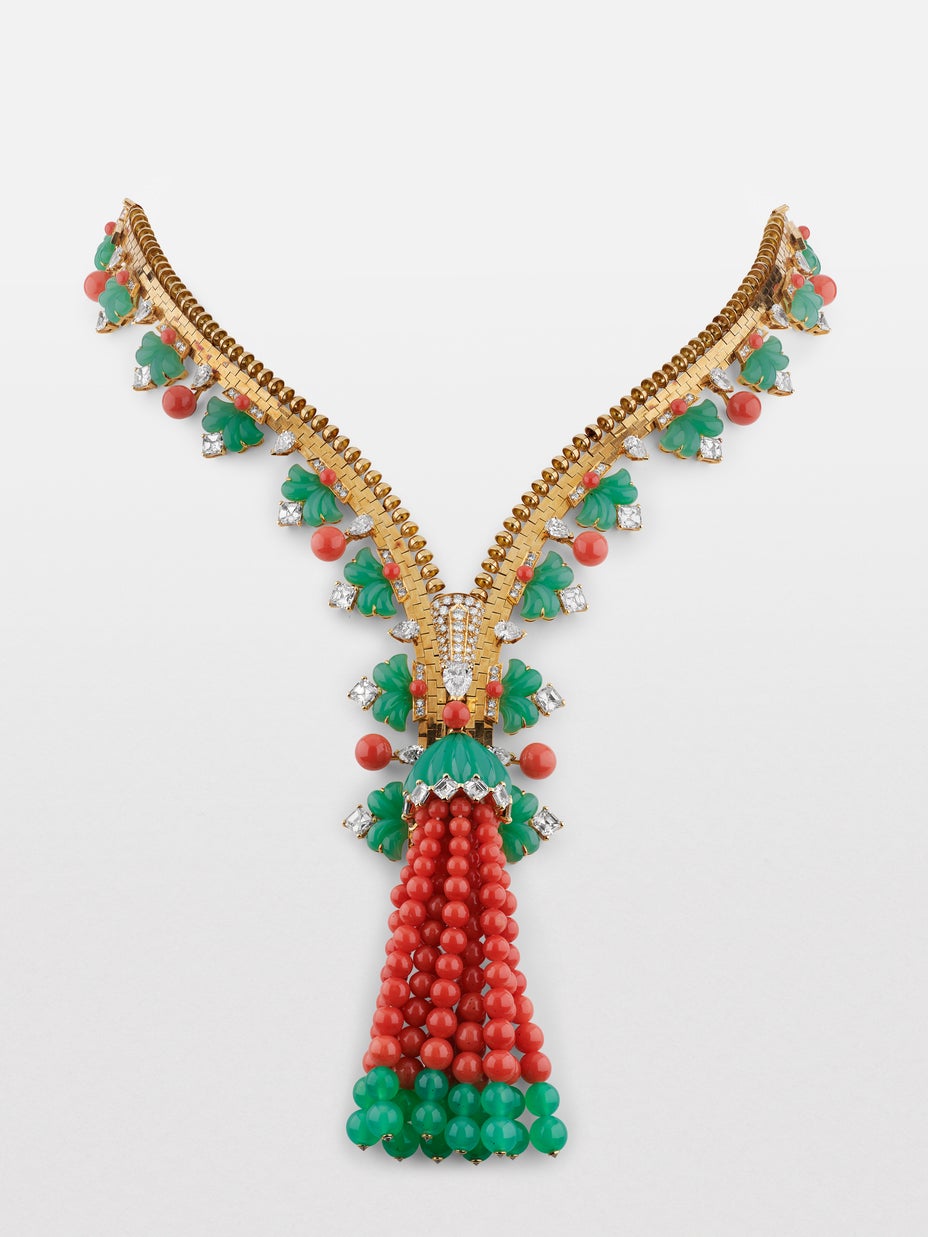
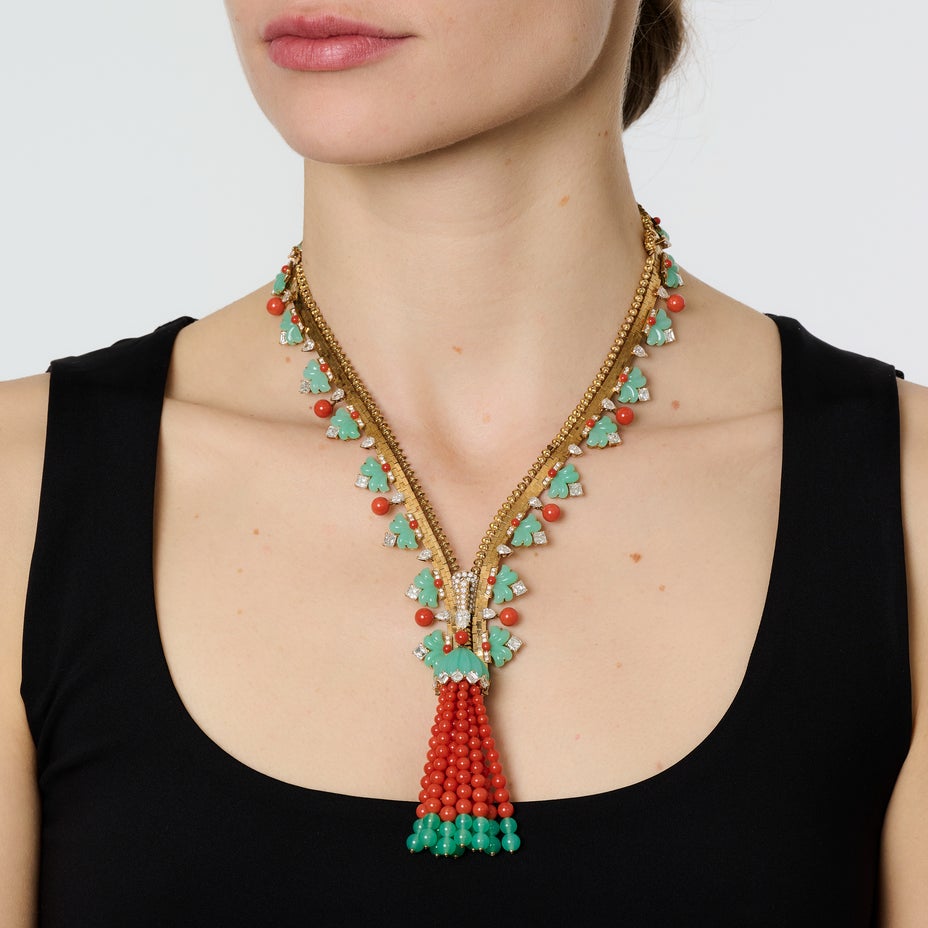
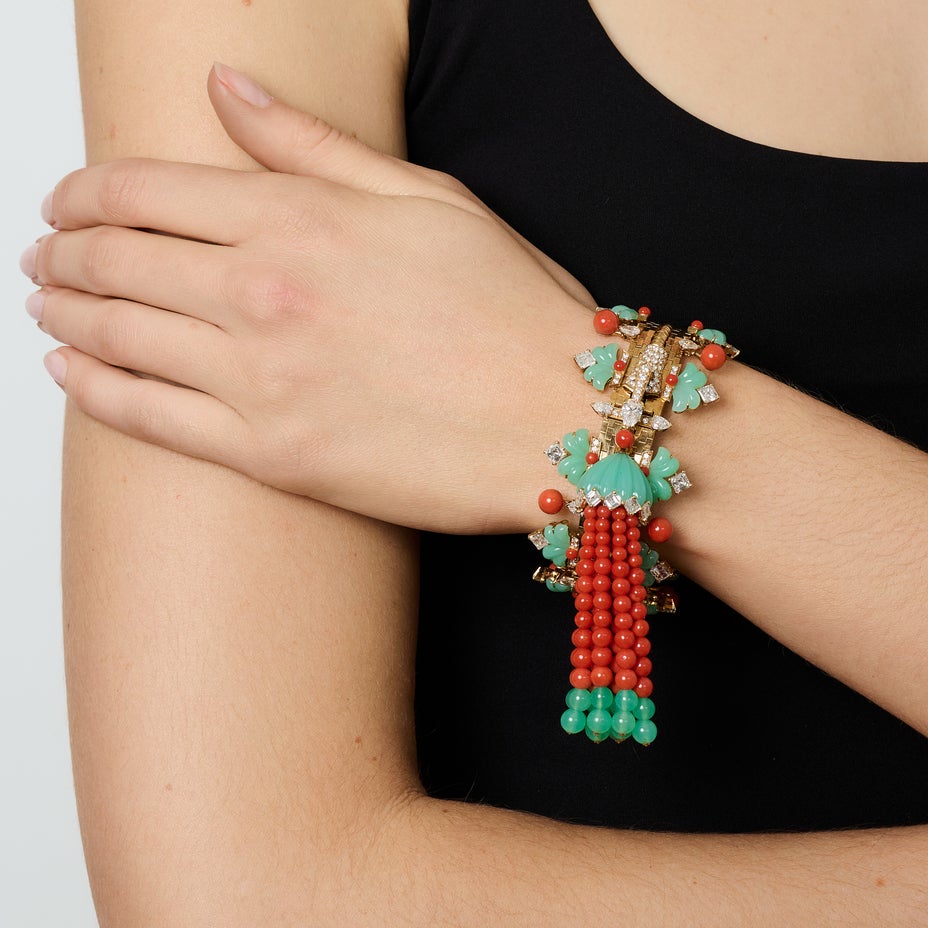
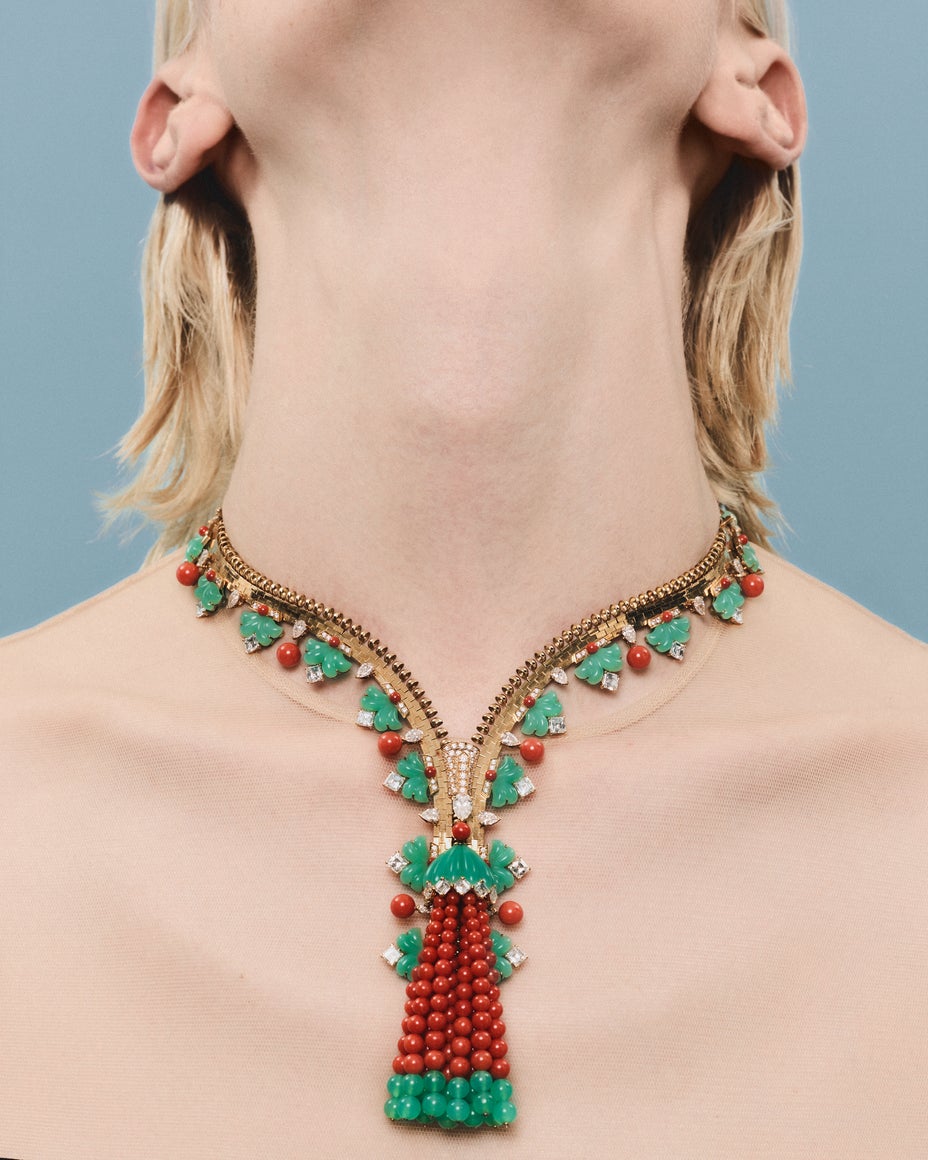
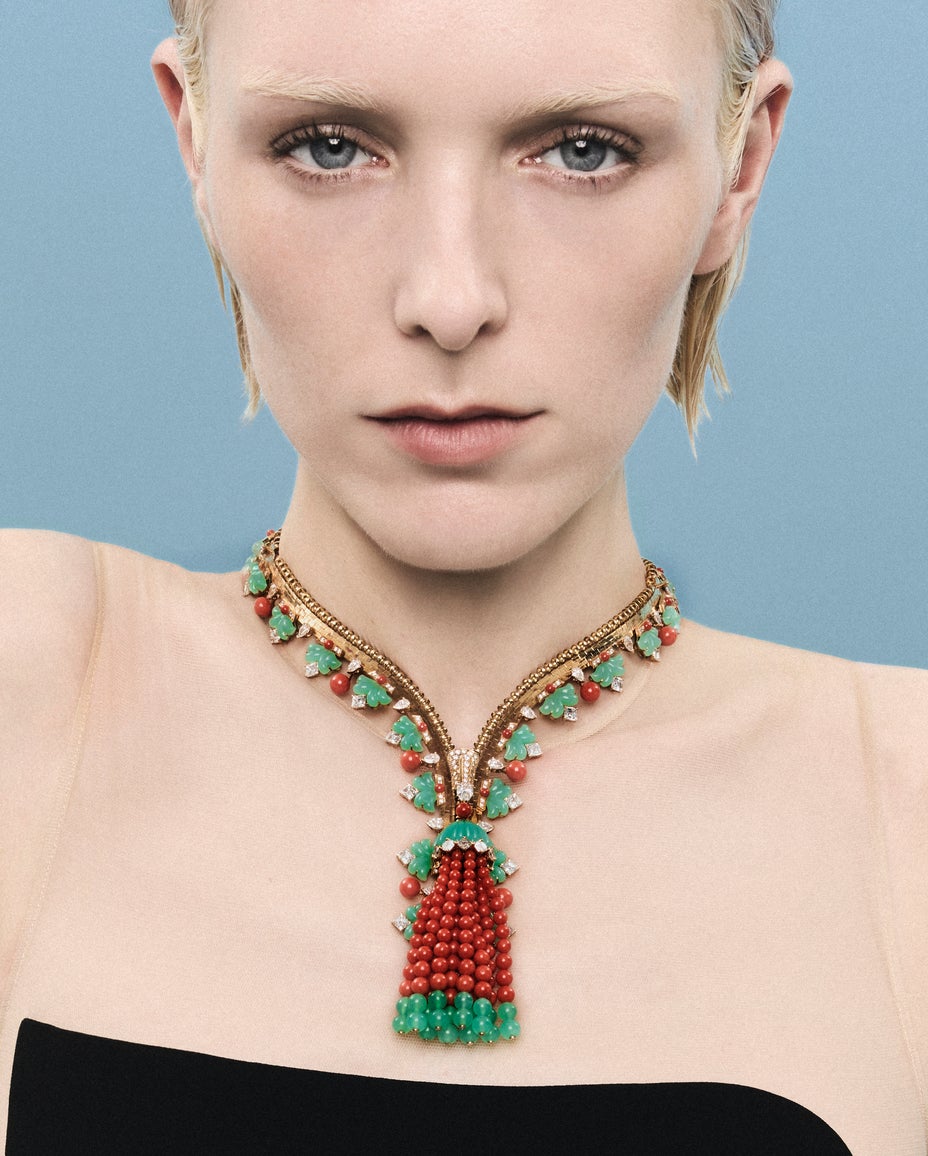
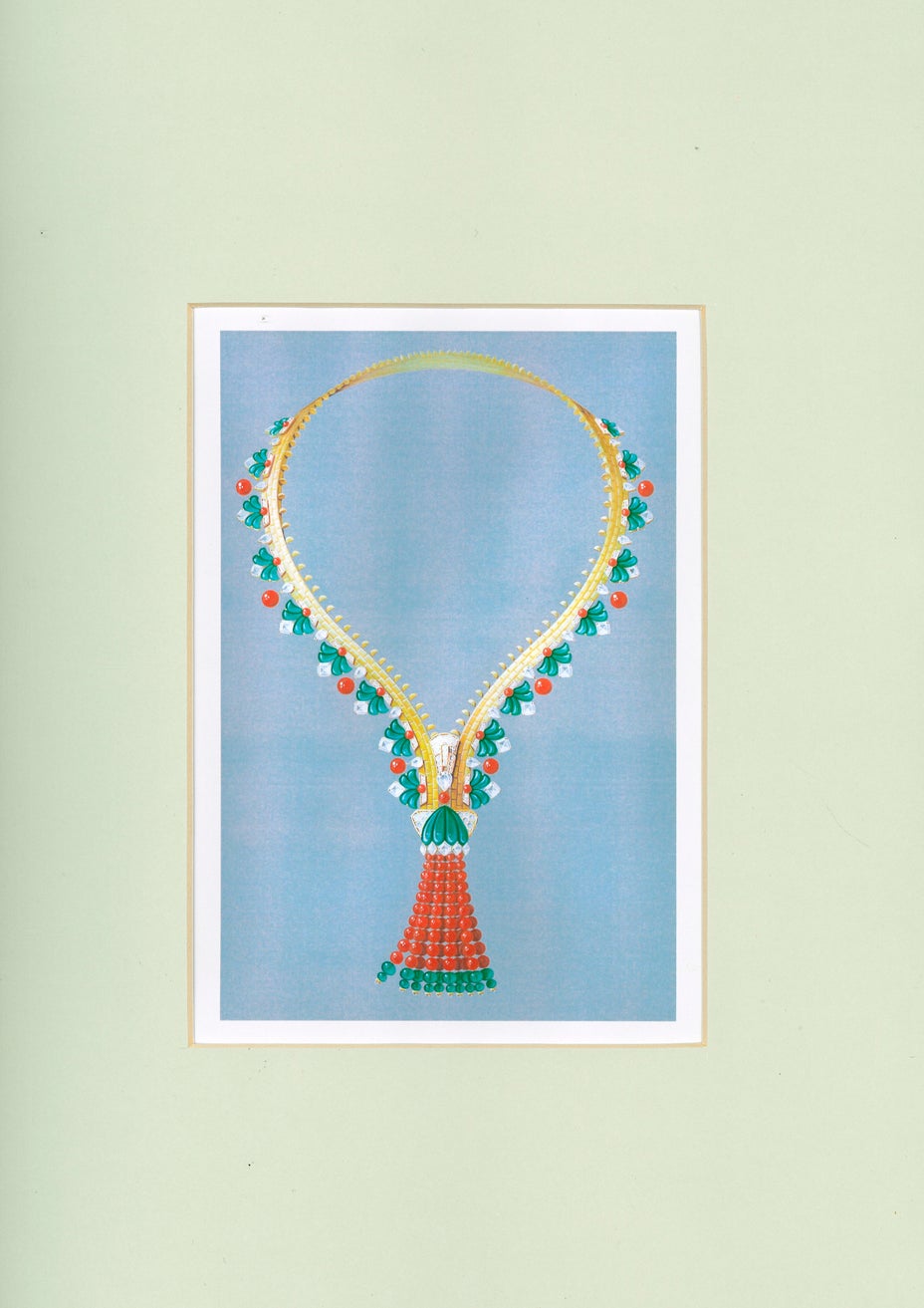
Coral, chrysoprase and diamond necklace/bracelet combination, 'Zip', 2012

CHF260,000–480,000
€283,000–522,000
$320,000–600,000
Live 11 May, 3 PM Switzerland Time
Of zip design, the gold zipper decorated with carved chrysoprase, coral cabochons, square- and brilliant-cut diamond motifs, alternating with pear-shaped diamonds, and similarly-shaped diamond and coral bead accents, supporting a tassel composed of coral and chrysoprase beads capped with carved chrysoprase and carré-cut diamonds, additional fitting to convert into a bracelet, necklace inner circumference approximately 450mm, bracelet length approximately 185mm, signed Van Cleef & Arpels, numbered, French assay marks for gold and maker's marks for Péry & Fils, two fitted cases and a pouch stamped Van Cleef & Arpels.

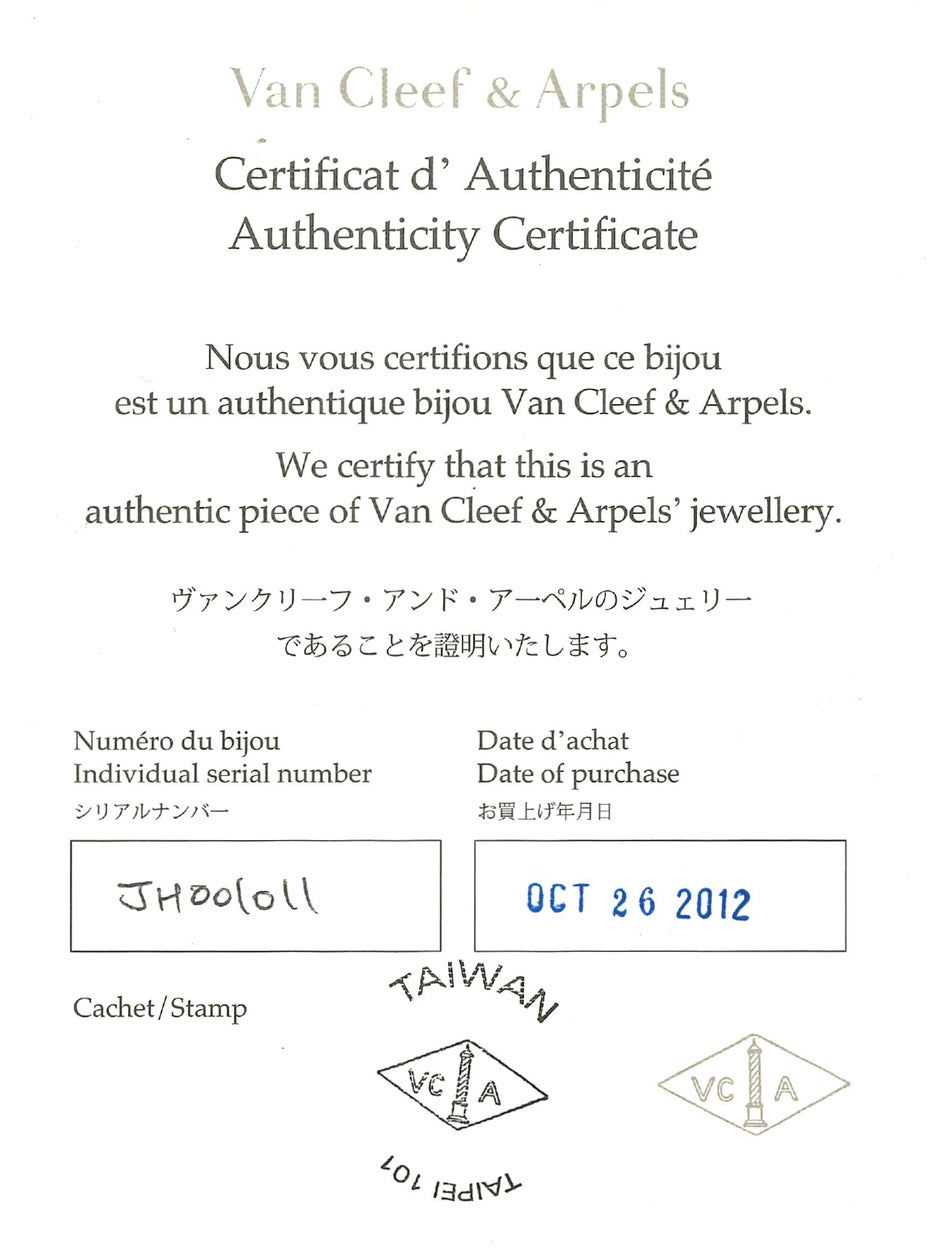
Accompanied by a Van Cleef & Arpels certificate of authenticity and the original invoice.
The Zip necklace, first created in 1950, stands as one of the most audacious and innovative designs by Van Cleef & Arpels. Seamlessly merging high jewellery with mechanical ingenuity, it transforms an everyday object into a work of exceptional artistry. Both visually striking and technically complex, the piece quickly established itself as an enduring icon of the maison.

Inspired by the growing presence of zippers in haute couture during the late 1930s, the concept was developed under the direction of Renée Puissant, daughter of Estelle Arpels and Alfred Van Cleef. She undertook the challenge of creating a fully functional zipper crafted from precious metals and gemstones—an unprecedented idea at the time. The concept is widely believed to have been suggested by Wallis Simpson, the Duchess of Windsor, a style icon and important patron of fine jewellery.

Realising this vision required overcoming technical challenges never before addressed in jewellery-making: achieving flexibility without compromising the integrity of the stones, developing invisible articulation, and engineering a precise sliding mechanism. The result was a transformable jewel that can be worn as a necklace when open and as a bracelet when closed.

Early versions reflected the bold, structured, and symmetrical aesthetics of the 1950s, typically executed in diamonds set in yellow gold or platinum. The contemporary interpretations are more fluid and refined, featuring a broader palette of gemstones, and a heightened emphasis on movement and elegance. These modern creations reinterpret the original concept while preserving its technical essence.
Today, the Zip necklace remains a testament to the maison’s ability to unite innovation with artistry—an enduring symbol of creativity, craftsmanship, and the transformative power of design.

Van Cleef & Arpels

French

When Alfred Van Cleef and Estelle Arpels fell in love, their marriage paved the way for iconic jewelry house Van Cleef & Arpels to become a symbol of unification. With their background in precious stone dealing, the Arpels found their perfect match in the Van Cleefs, a family of expert stonecutters. In 1906, Estelle's brother Charles established the company name with Alfred's help and opened shop in the Place Vendôme in Paris. To this day, this Parisian neighborhood is associated with turn-of-the-century luxury.

The Van Cleef & Arpels aesthetic has always had its finger on the pulse of worldwide trends: For example, the house took inspiration from Tutankhamen upon the Egyptian king's discovery in the 1920s, which spurred a global phenomenon marrying Egyptian Revival and Art Deco motifs. Over the decades, Van Cleef & Arpels has produced intricate watches, earrings and necklaces with a signature elegance that mirrors contemporary tastes. 

Browse artist