160
Rolex
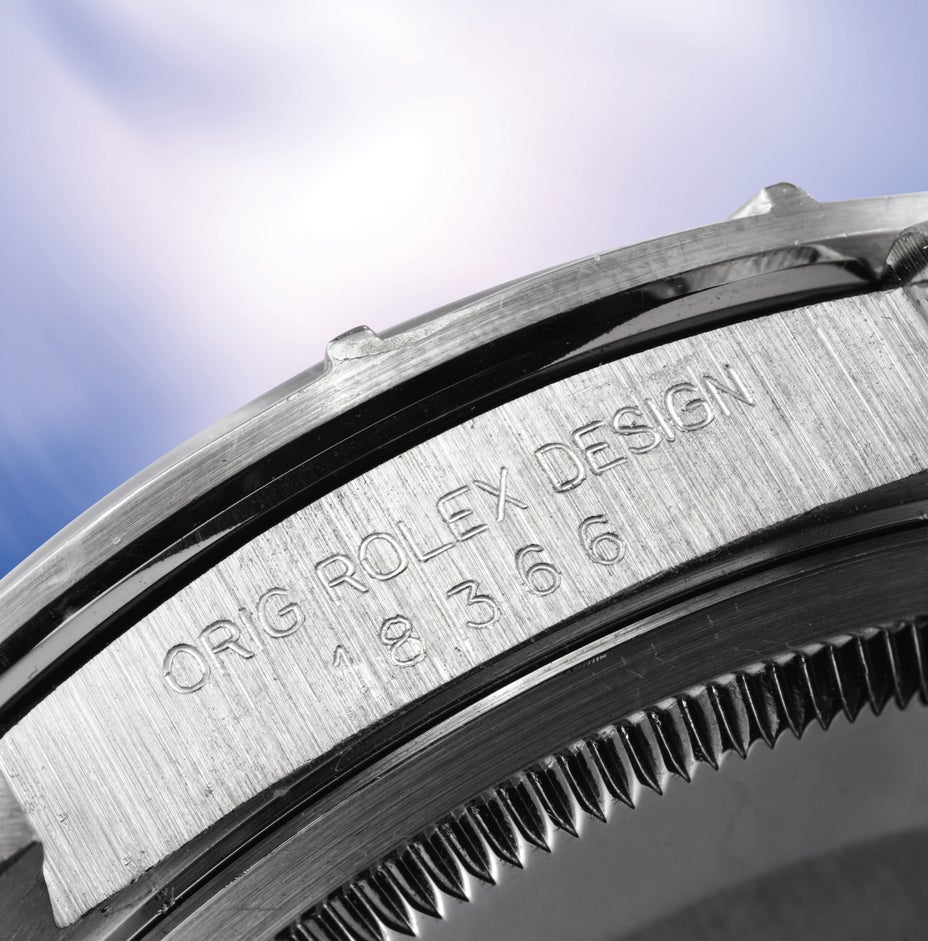
Ref. 18366, caseback stamped 18200 to the inside
Day-Date
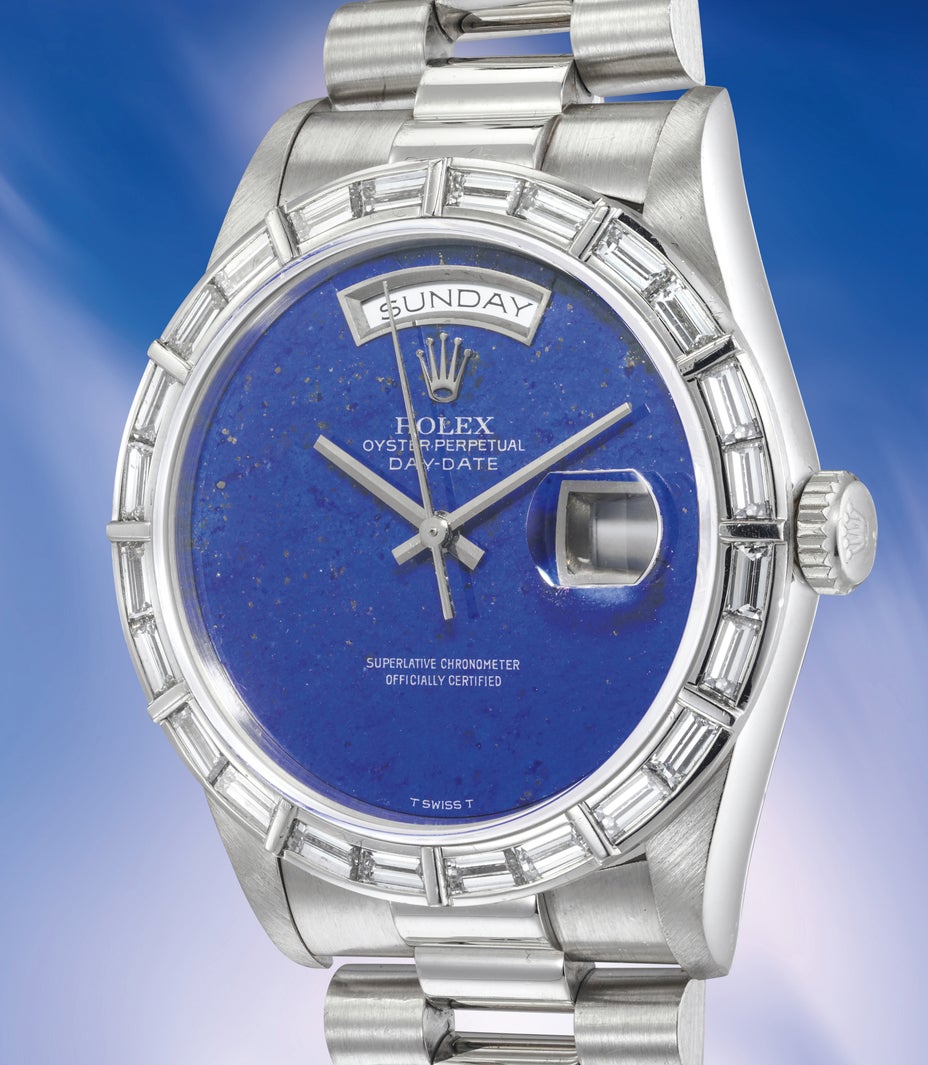
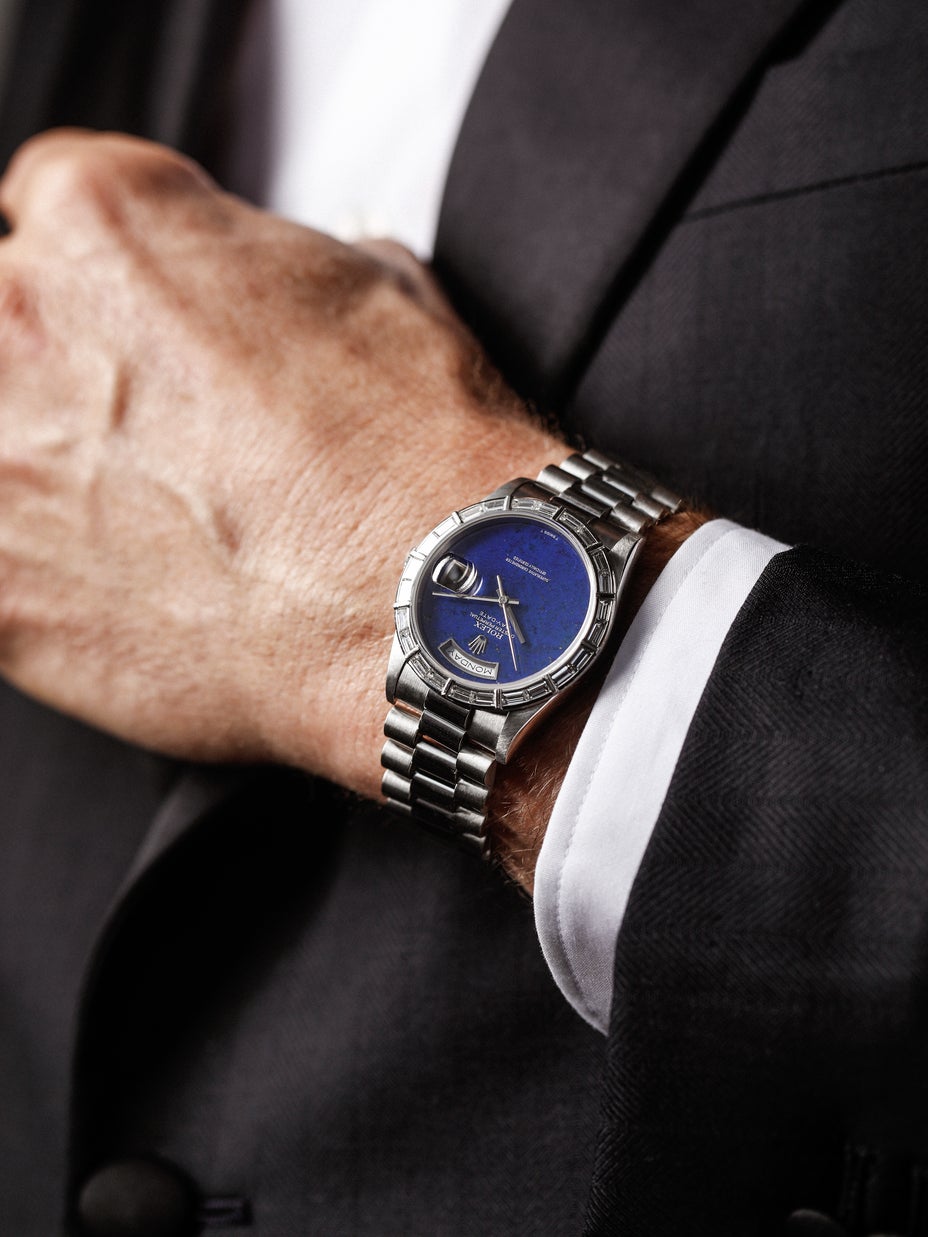
An astoundingly attractive and highly uncommon platinum calendar wristwatch with center seconds, lapis lazuli dial, baguette diamond-set bezel and bracelet
Full-Cataloguing
- Day of the week and date.
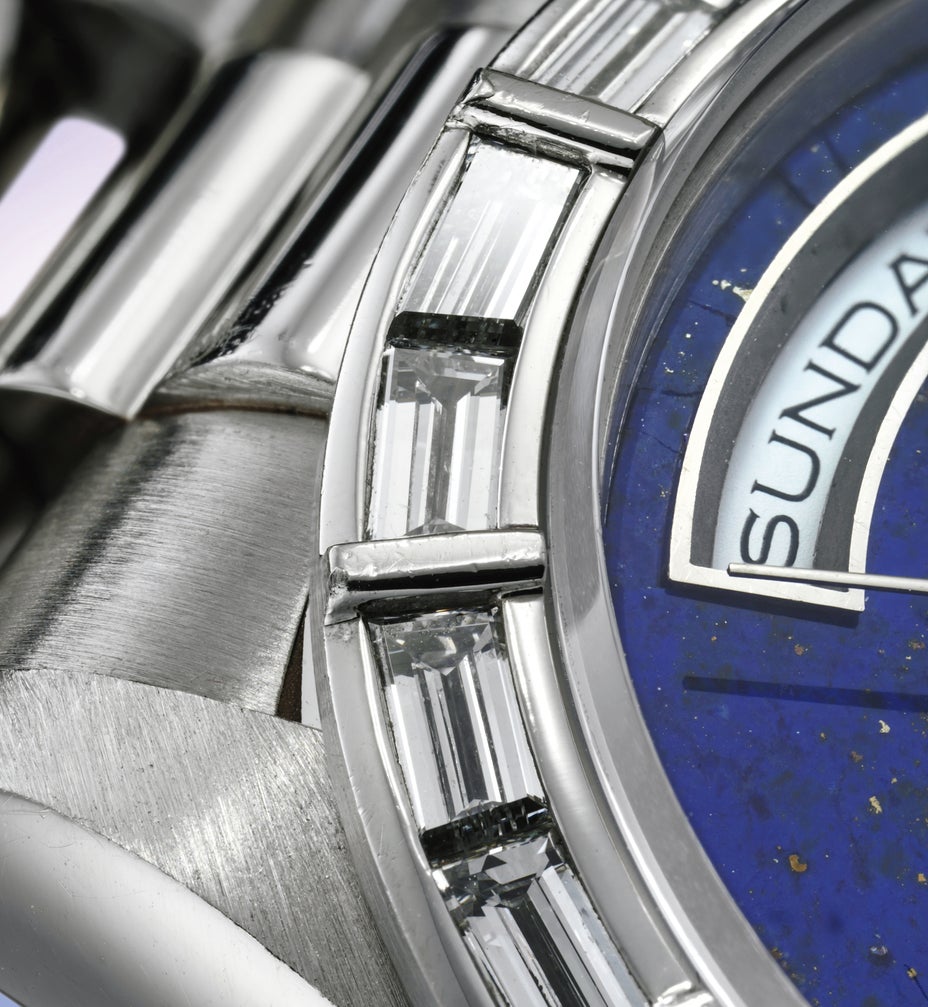
- Among the most exclusive Day-Date models, ref. 18366 identifies a platinum case featuring a bezel fully set with baguette-cut diamonds.
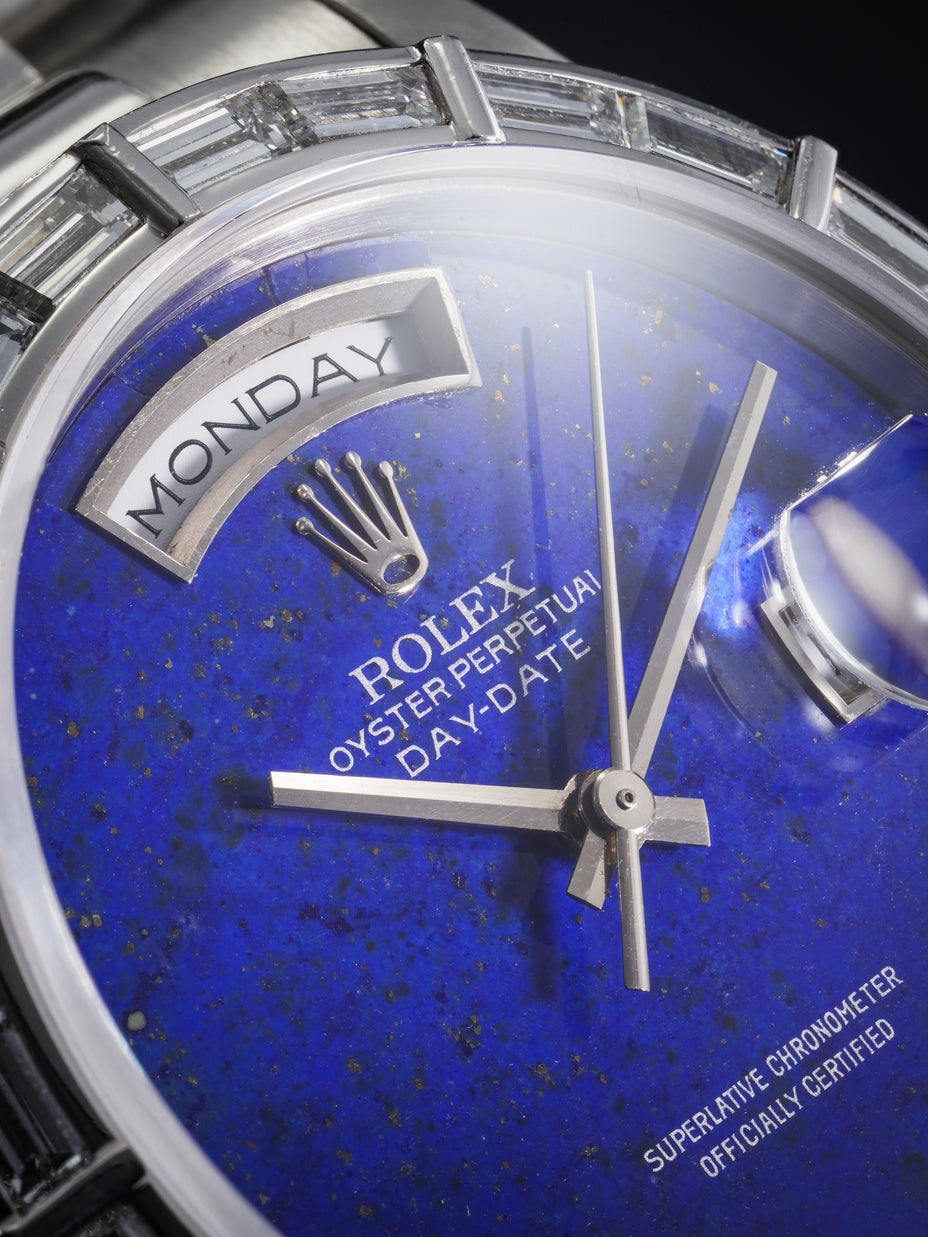
- This is one of the rarest variation of the reference, distinguished by the blue lapis lazuli dial.
- Possibly unpolished case with sharp edges and strong finish.
The icy beauty and aesthetic purity of reference 18366 are fully matched by its scarcity. As an example, Phillips only sold another example back in 2016. Even when extending the search to the market at large, it appears that only about 30 examples have ever surfaced.
Most specimens feature a grey soleil dial, either with diamond markers or Roman numerals. At times, more elaborate dials adorn the reference: the one previously sold at Phillips featured a blue degradé dial. Other examples sport different gem settings, blue soleil dials, salmon soleil dials, and the present lapis lazuli dial. This represents an obvious twist and an upgrade to the blue soleil dial: the deep, golden-specked blue of the lapis lazuli completely transforms the watch. The difficulty of obtaining stones of the required quality, coupled with the complexity and risk of the production process, implies a very high original sale price, thus explaining its incredible scarcity today.
Launched in the late 1980s, the model is defined by the platinum case and the baguette-set bezel. Notably, the gems are set in pairs, each pair bookended by platinum bars that act as 5-minute markers. While this configuration is, of course, shared by all specimens of the reference, pieces with a lapis lazuli dial feature no indexes—Rolex having decided to make the stone dial the undisputed star of the show, coincidentally rendering the platinum markers highly practical.
Rolex
Swiss | 1905Founded in 1905 England by Hans Wilsdorf and Alfred Davis as Wilsdorf & Davis, it soon became known as the Rolex Watch Company in 1915, moving its headquarters to Geneva in 1919. Like no other company, the success of the wristwatch can be attributed to many of Rolex's innovations that made them one of the most respected and well-known of all luxury brands. These innovations include their famous "Oyster" case — the world's first water resistant and dustproof watch case, invented in 1926 — and their "Perpetual" — the first reliable self-winding movement for wristwatches launched in 1933. They would form the foundation for Rolex's Datejust and Day-Date, respectively introduced in 1945 and 1956, but also importantly for their sports watches, such as the Explorer, Submariner and GMT-Master launched in the mid-1950s.
One of its most famous models is the Cosmograph Daytona. Launched in 1963, these chronographs are without any doubt amongst the most iconic and coveted of all collectible wristwatches. Other key collectible models include their most complicated vintage watches, including references 8171 and 6062 with triple calendar and moon phase, "Jean Claude Killy" triple date chronograph models and the Submariner, including early "big-crown" models and military-issued variants.