157
Rolex
Ref. 5512
Submariner
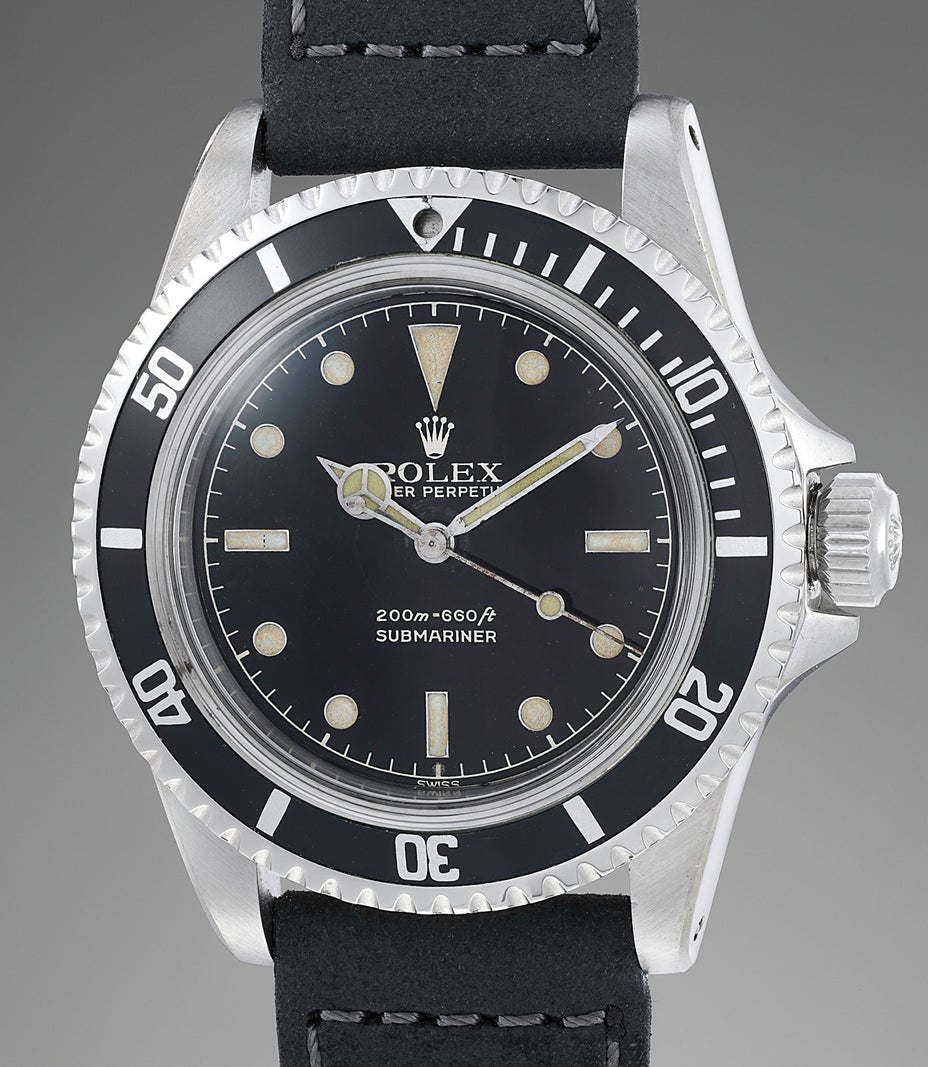
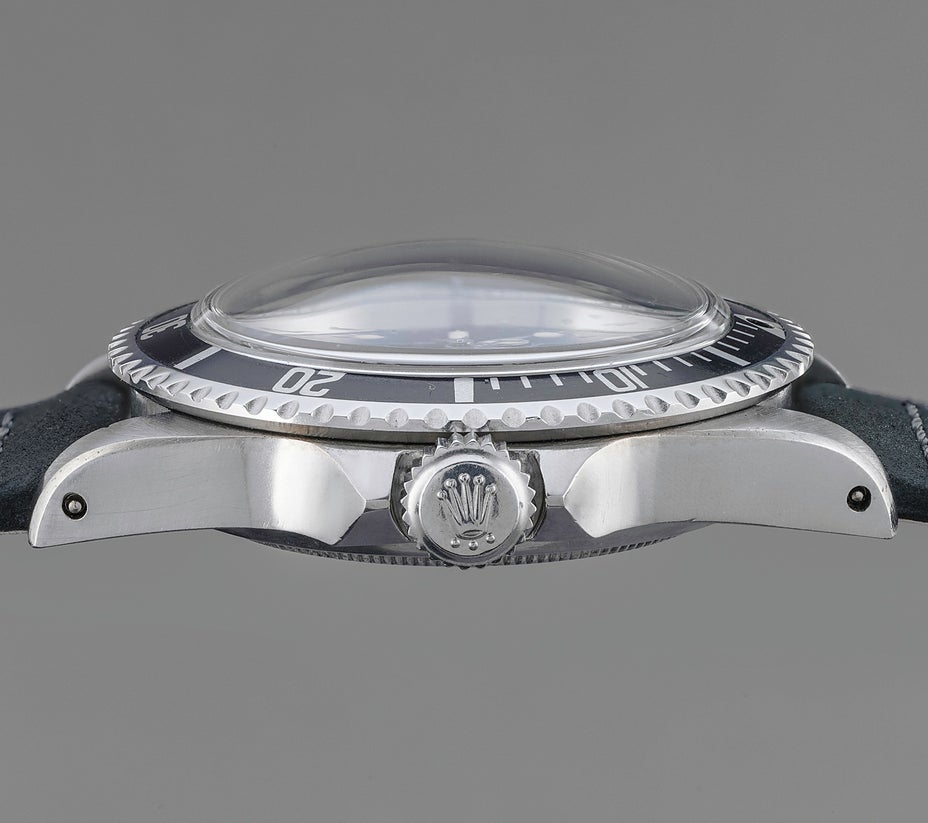
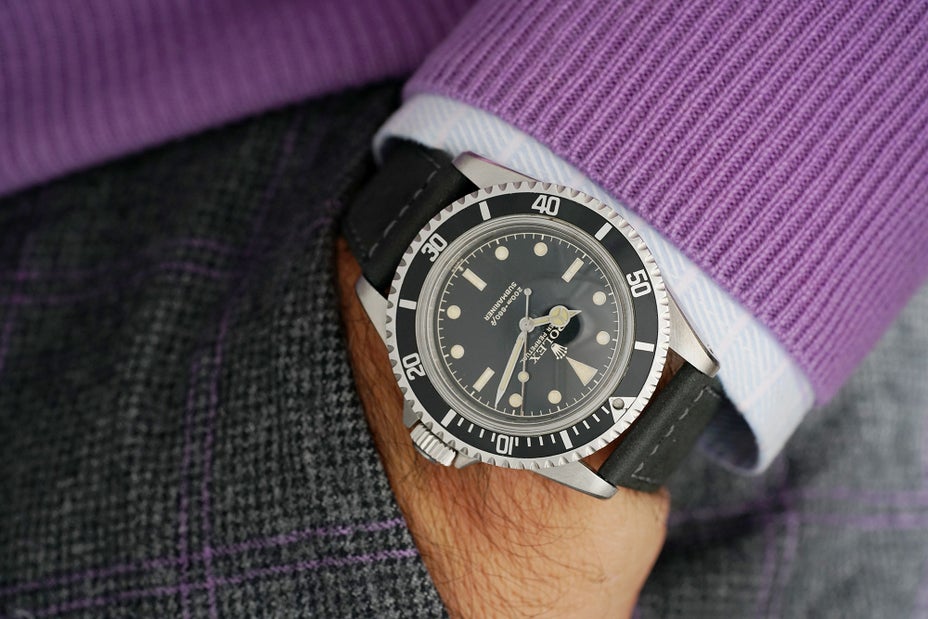
A fine, attractive and very well preserved stainless steel automatic wristwatch with center seconds, exclamation mark dial and pointed crown guards
Full-Cataloguing
The present early production piece from 1961 is particularly attractive as it reunites a multitude of unusual and sought-after traits, making it an extremely collectible piece.
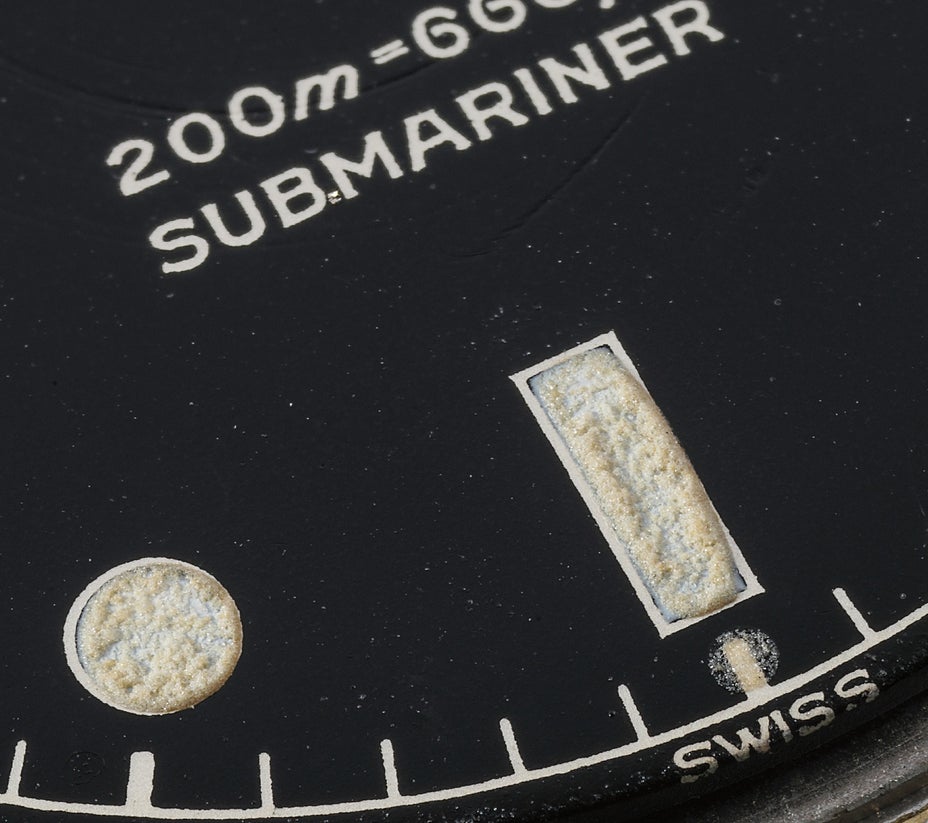
The black glossy dial presents a radium dot at 6 o’clock unmistakably identifying this as an “exclamation mark” dial - the name coming from the ensemble dot and index, which resembles an exclamation mark. Such dials were in production only during a short period of time between 1961 and 1962 and are one of the first attempts to identify a lower radiation count compared to earlier dials. In fact, the harmful effect of radiation was at that time in the process of being identified and regulated. Exclamation mark dials still feature radium - tritium will come immediately after - but in much lower amount than earlier specimens.
The case also boasts a particularly collectible trait: the pointed crown guards (or “Cornino” – literally “small horn” in Italian). The genesis of this detail is extremely interesting. The very first crown-guard cases featured large square crown guards. When clients complained about the bulkiness of this feature, Rolex filed away the square crown guard of the cases they had in stock, leaving only a small pointed guard. Thus, the “Cornino” was born. Successive cases will be produced with the flat crown guard which became the standard for the reference.
The black glossy exclamation mark dial, pointed crown guards and overall attractive condition make this timepiece a watch for the shrewd collector of rare Submariners.
Rolex
Swiss | 1905Founded in 1905 England by Hans Wilsdorf and Alfred Davis as Wilsdorf & Davis, it soon became known as the Rolex Watch Company in 1915, moving its headquarters to Geneva in 1919. Like no other company, the success of the wristwatch can be attributed to many of Rolex's innovations that made them one of the most respected and well-known of all luxury brands. These innovations include their famous "Oyster" case — the world's first water resistant and dustproof watch case, invented in 1926 — and their "Perpetual" — the first reliable self-winding movement for wristwatches launched in 1933. They would form the foundation for Rolex's Datejust and Day-Date, respectively introduced in 1945 and 1956, but also importantly for their sports watches, such as the Explorer, Submariner and GMT-Master launched in the mid-1950s.
One of its most famous models is the Cosmograph Daytona. Launched in 1963, these chronographs are without any doubt amongst the most iconic and coveted of all collectible wristwatches. Other key collectible models include their most complicated vintage watches, including references 8171 and 6062 with triple calendar and moon phase, "Jean Claude Killy" triple date chronograph models and the Submariner, including early "big-crown" models and military-issued variants.