ULTIMATE CONTEMPORARY
206
Rodney Graham
Welsh Oaks
Estimate
£100,000–150,000
Sold For
£122,500
1998
Seven gelatin silver prints.
Each 122 x 91.5 cm (48 x 36 in.) or the reverse.
Each signed, titled, dated, numbered AP 1 and '1-7' sequentially in pencil on the reverse of each flush-mount.
This work is number AP1 from the sold-out edition of 7 + 2 AP.
This work is number AP1 from the sold-out edition of 7 + 2 AP.
Full-Cataloguing
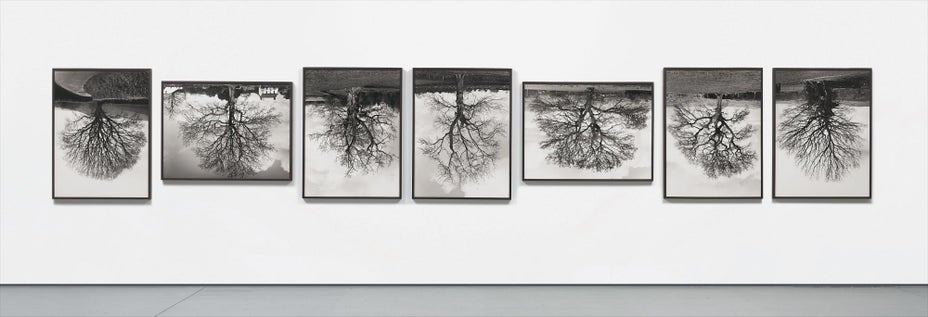
Rodney Graham’s masterwork Welsh Oaks (1998) marks the culmination of his nearly two-decade long investigation on the theme of the inverted tree. It all began with Camera Obscura (1979), one of his earliest works, for which Graham constructed a walk-in camera obscura structure in a farmer’s field near his family home in British Columbia. The public was invited to enter the pinhole camera to view the inverted image of a solitary tree realised on the inside back wall.
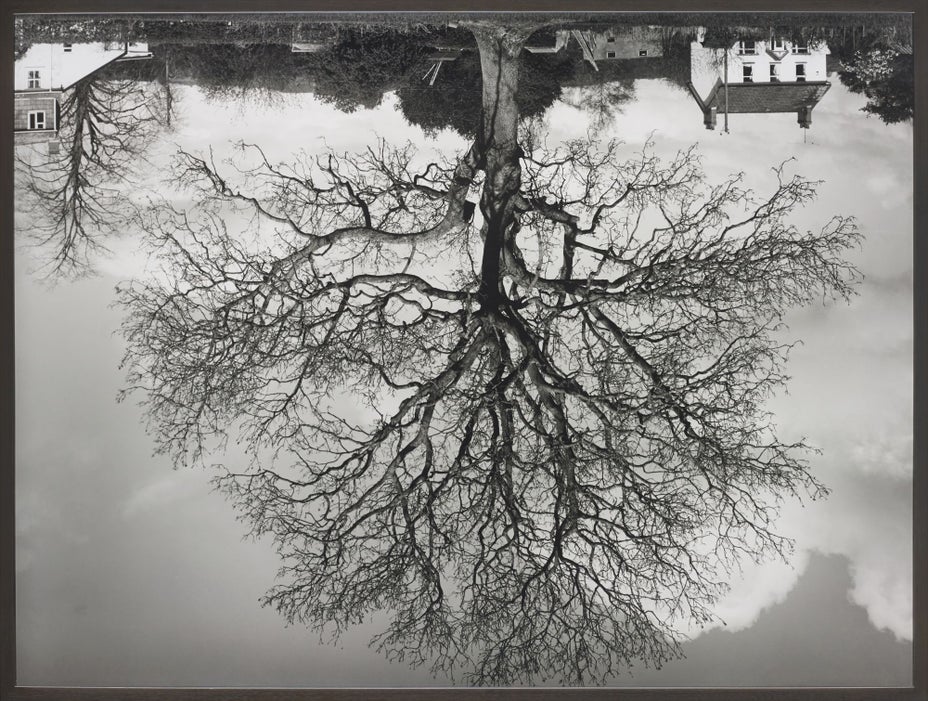
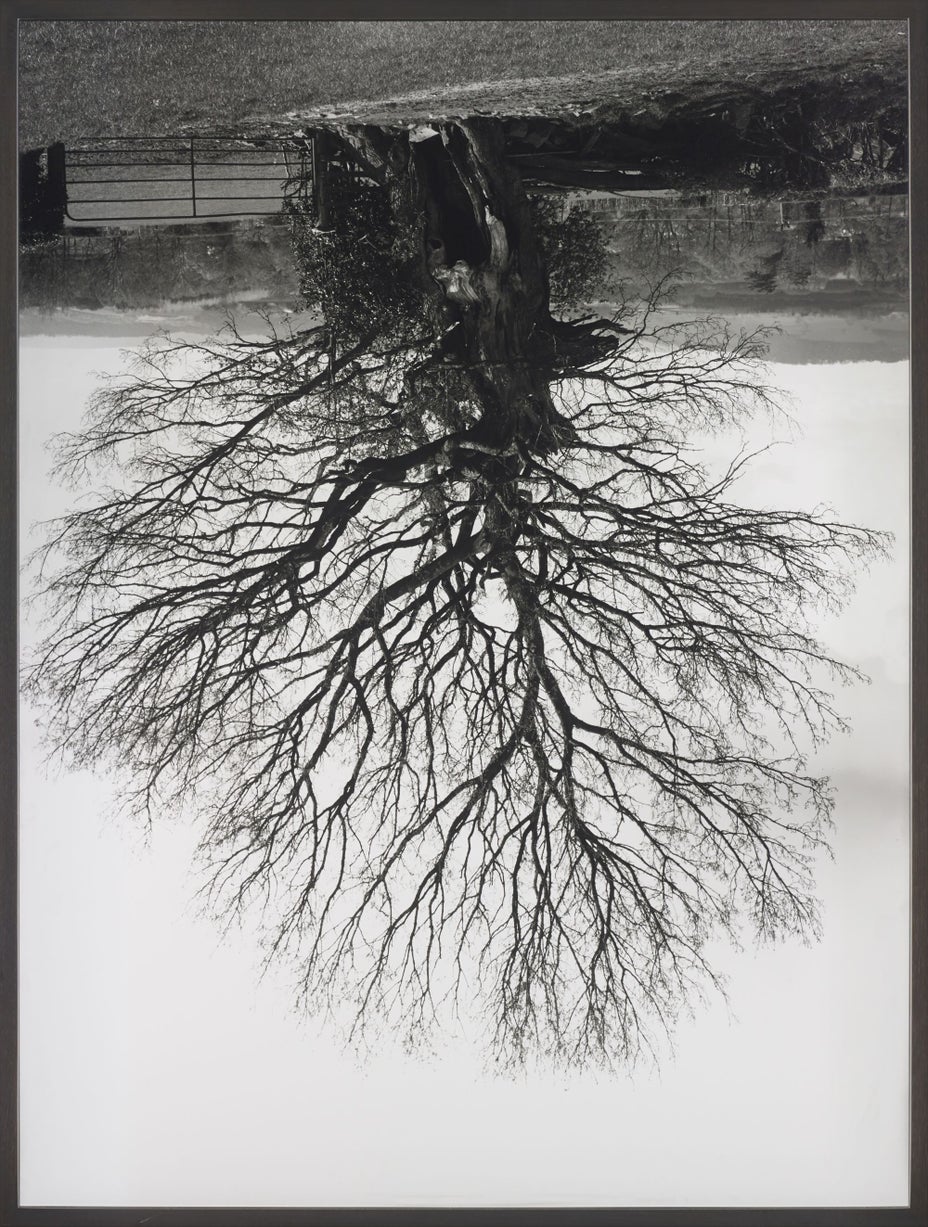
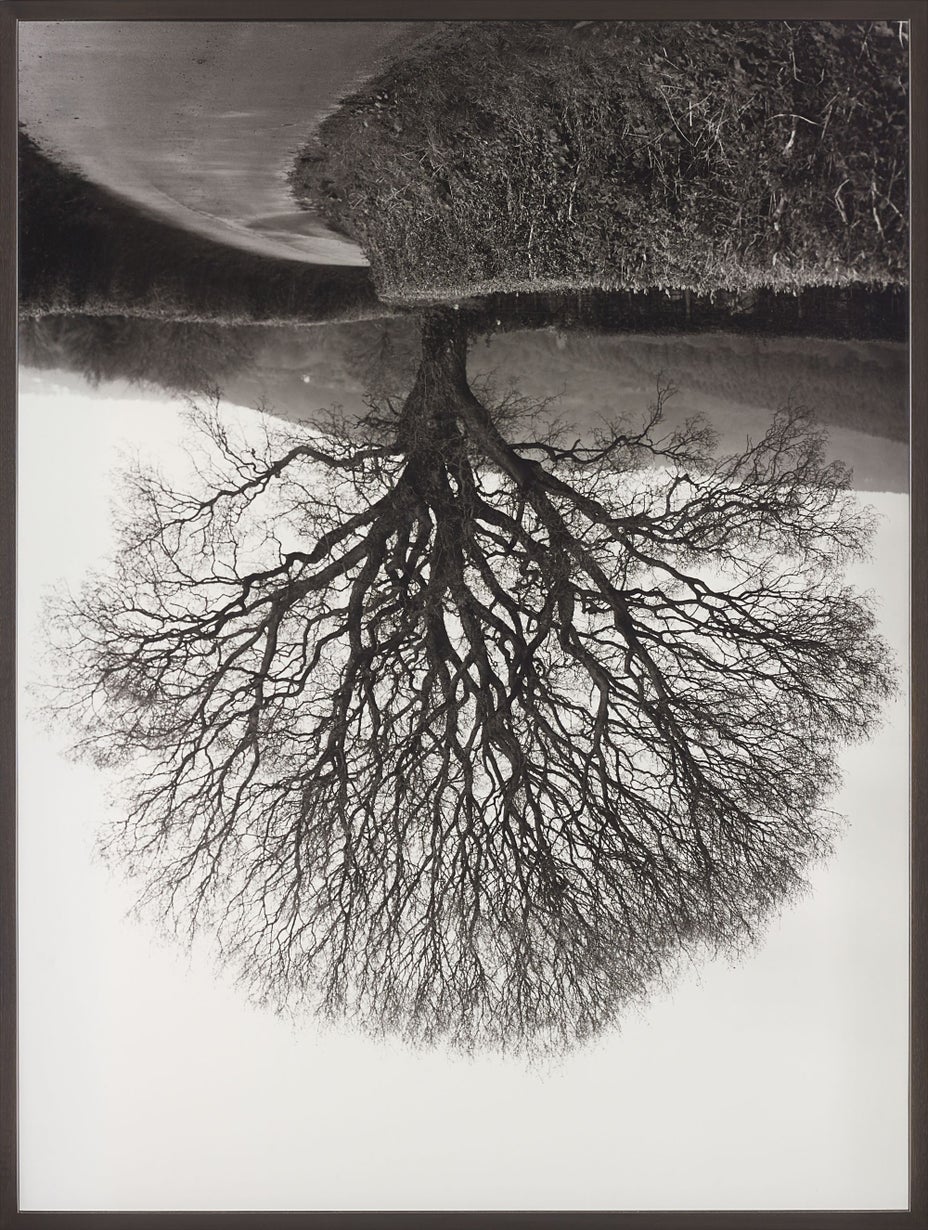
In the late 1980s, Graham moved away from the camera obscura structure and created inverted images of trees by photographing them using an 8 x 10 field camera then presenting the photographs upside-down. For his first series of inverted tree images, taken in Belgium, Graham hired a professional photographer and saw the images as 'commissioned portraits of trees'. He next travelled to the British countryside in pursuit of isolated trees and in 1990 created his series Oxfordshire Oaks. Eight years later, Graham returned to the British countryside to produce Welsh Oaks, his definitive work on the theme. With a simple yet evocative gesture of inverting the image, Graham reinterprets the solitary tree as an icon presenting the viewer with multiple narratives.
Welsh Oaks, was taken by Graham with an 8 x 10 large-format camera using black-and-white negatives and exists in two different formats, editions and print types. Executed in an edition of two, the larger format measures 226 x 183 cm or the reverse and although monochromatic, it was produced using colour photographic papers due to its expansive size. Still monumental in size, the present lot is AP1 from the smaller format, measuring 122 x 91.5 cm or the reverse, and was produced using gelatin silver papers in an edition of seven plus two artist’s proofs.
Compared with the oversized monochromatic prints, the gelatin silver prints yield a more detailed image as seen in the present work. Prints from the gelatin silver edition are held in various private and institutional collections, including The Museum of Contemporary Art, Los Angeles. This complete set comes from the collection of Donald Young (1942-2012), the pioneering Chicago contemporary art dealer, with whom Graham forged a long relationship. Young exhibited Welsh Oaks in his gallery in 1999.
“I was interested in the image of the inverted tree from a symbolic perspective, and from an empirical one – upside down is the way we actually ‘see’ things before the brain intervenes, and is the way things appear
on the ground glass back of the field camera…”
Rodney Graham
In the late 1980s, Graham moved away from the camera obscura structure and created inverted images of trees by photographing them using an 8 x 10 field camera then presenting the photographs upside-down. For his first series of inverted tree images, taken in Belgium, Graham hired a professional photographer and saw the images as 'commissioned portraits of trees'. He next travelled to the British countryside in pursuit of isolated trees and in 1990 created his series Oxfordshire Oaks. Eight years later, Graham returned to the British countryside to produce Welsh Oaks, his definitive work on the theme. With a simple yet evocative gesture of inverting the image, Graham reinterprets the solitary tree as an icon presenting the viewer with multiple narratives.
Welsh Oaks, was taken by Graham with an 8 x 10 large-format camera using black-and-white negatives and exists in two different formats, editions and print types. Executed in an edition of two, the larger format measures 226 x 183 cm or the reverse and although monochromatic, it was produced using colour photographic papers due to its expansive size. Still monumental in size, the present lot is AP1 from the smaller format, measuring 122 x 91.5 cm or the reverse, and was produced using gelatin silver papers in an edition of seven plus two artist’s proofs.
Compared with the oversized monochromatic prints, the gelatin silver prints yield a more detailed image as seen in the present work. Prints from the gelatin silver edition are held in various private and institutional collections, including The Museum of Contemporary Art, Los Angeles. This complete set comes from the collection of Donald Young (1942-2012), the pioneering Chicago contemporary art dealer, with whom Graham forged a long relationship. Young exhibited Welsh Oaks in his gallery in 1999.
“I was interested in the image of the inverted tree from a symbolic perspective, and from an empirical one – upside down is the way we actually ‘see’ things before the brain intervenes, and is the way things appear
on the ground glass back of the field camera…”
Rodney Graham
Rodney Graham
Canadian | 1949Rodney Graham pulls from cultural and intellectual history through photography, film, music, performance and painting. He presents narratives with puns and references to literature and philosophy, including Sigmund Freud and Kurt Cobain, with a sense of humor that contradicts his residence in the post-punk scene of late 1970s Vancouver.
In his film trilogy Vexation Island (1999), How I Became a Ramblin' Man (1999) and City Self/Country Self (2001), the artist plays characters like a castaway and a cowboy caught in repetitive cycles of actions and gestures. Such unconscious dream states are further explored in Graham's series of upside-down photographs of oak trees, which are hung to mimic camera obscura.