1033Σ︎
Patek Philippe
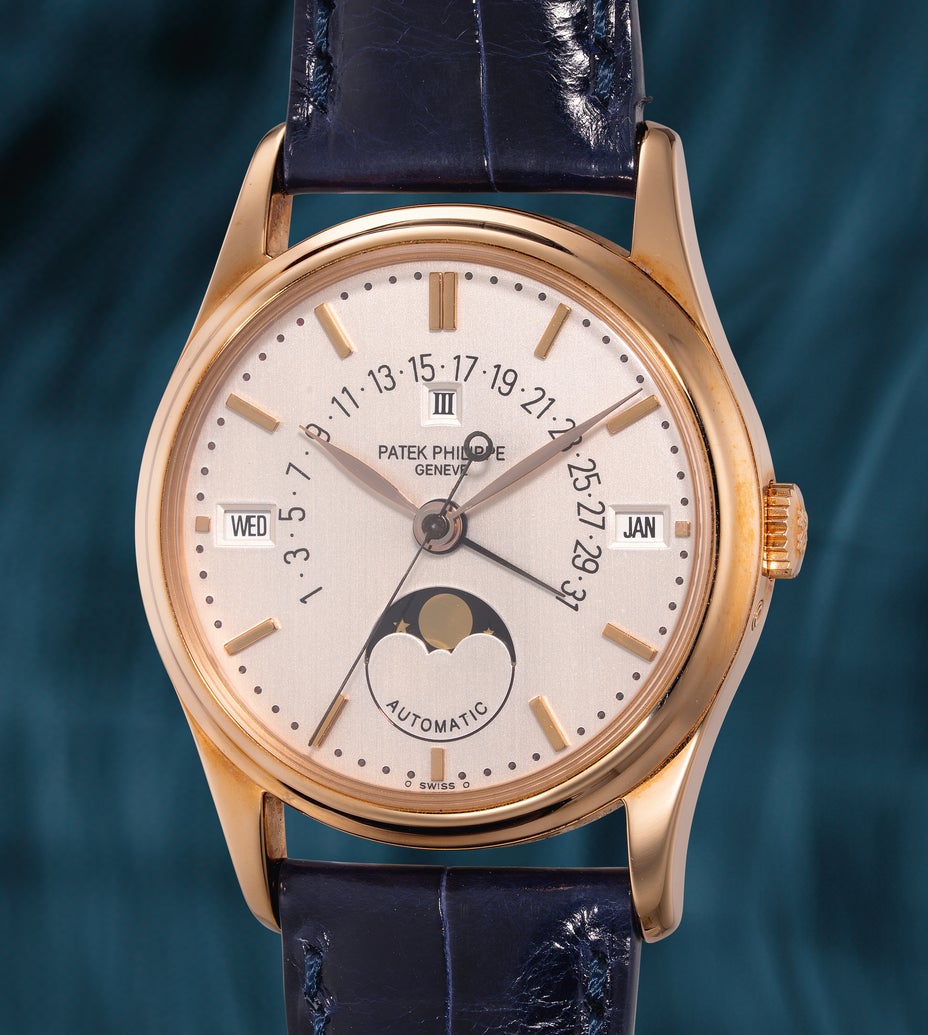
Ref. 5050R
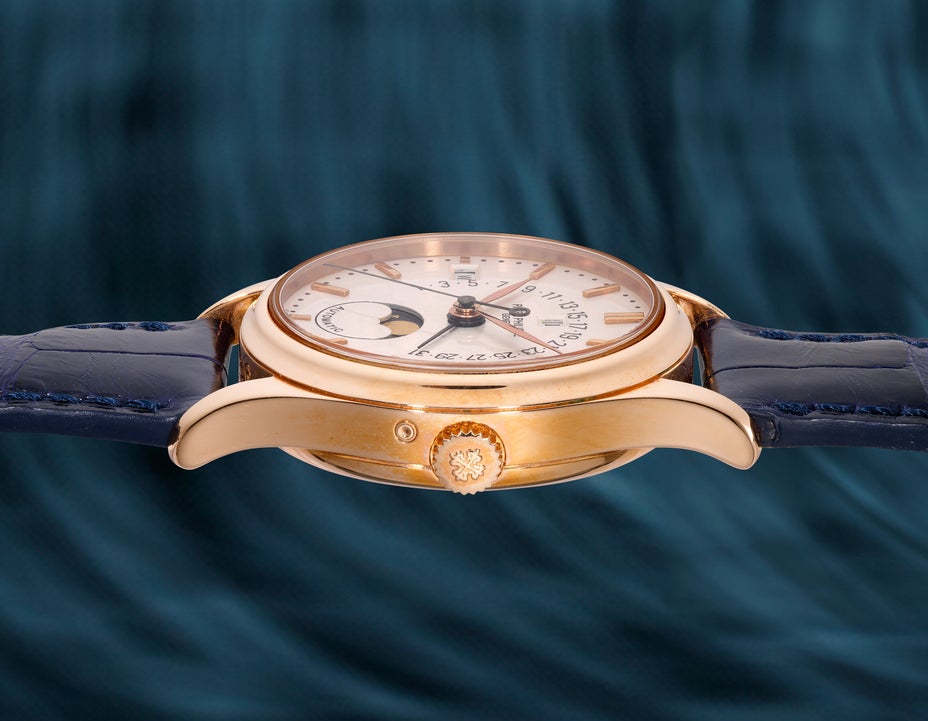
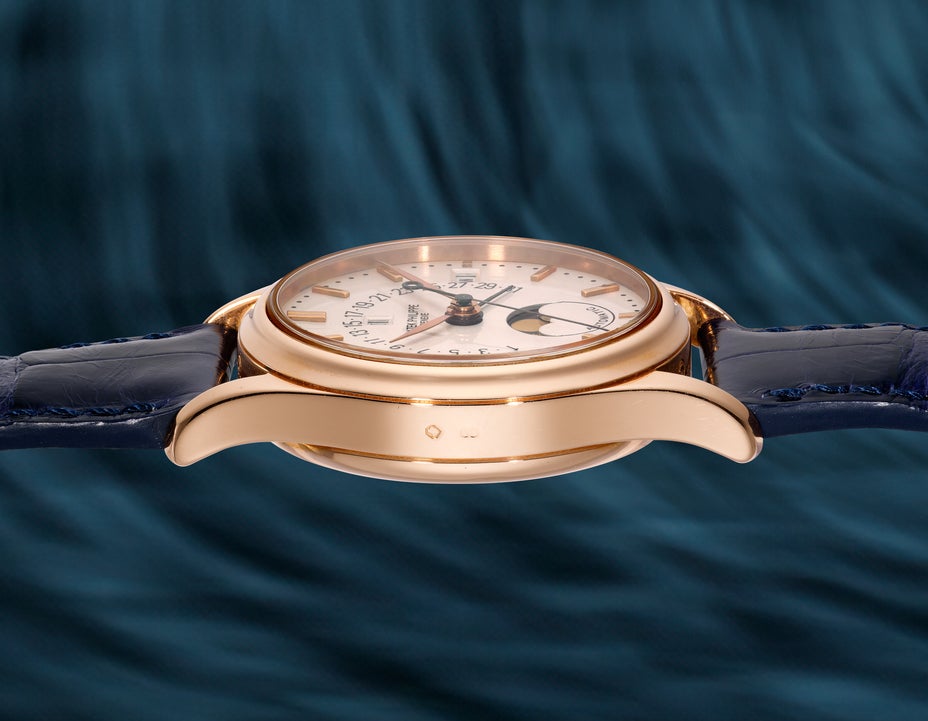
A rare and elegant pink gold perpetual calendar wristwatch with center seconds, retrograde date, moon phases and leap year indication
Full-Cataloguing
- According to research, only approximately 150 pink gold examples were made
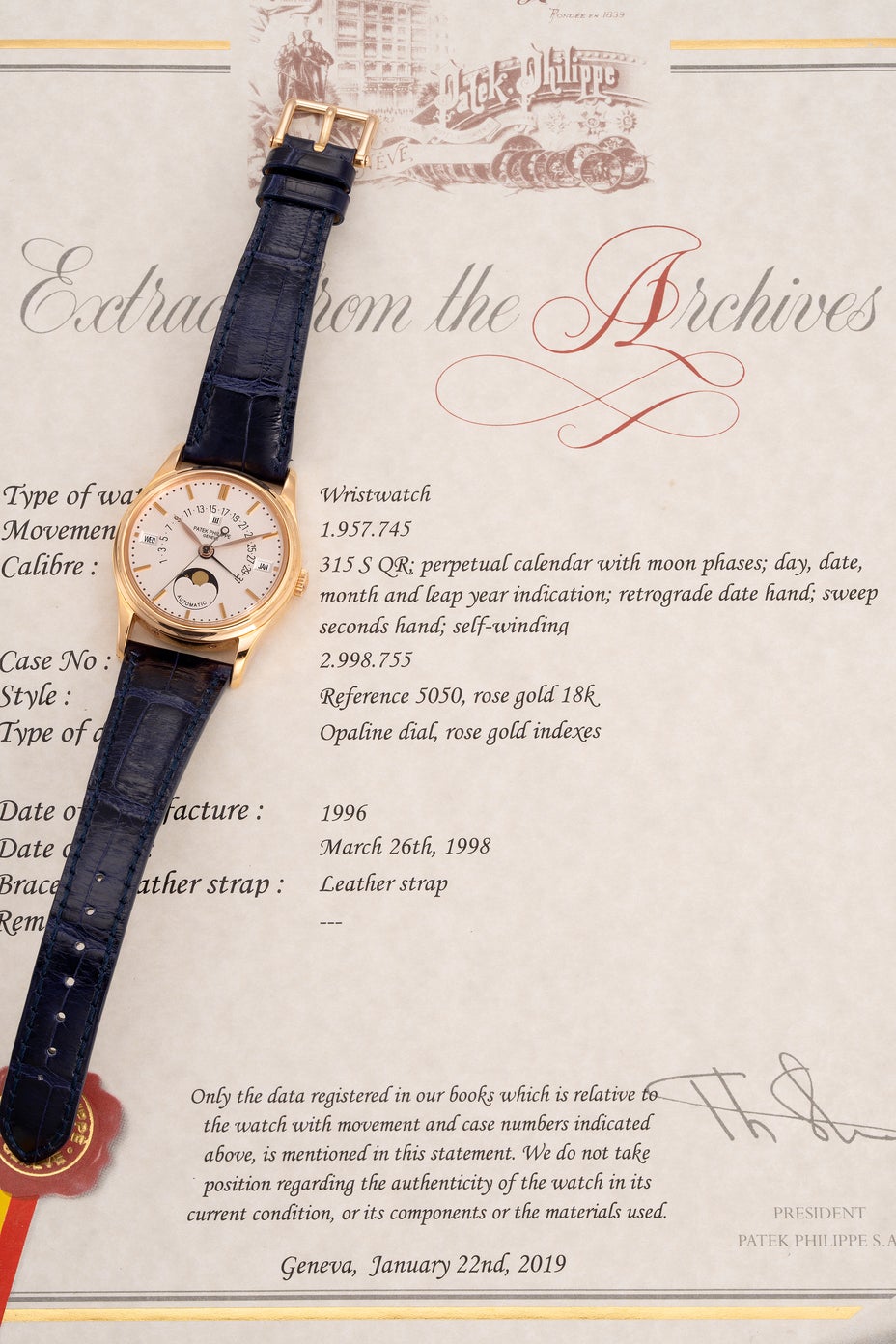
- Excellent overall condition with Extract from Archives
Introduced at the Basel Fair in 1993, the Patek Philippe ref. 5050—alongside its officer‑case successors, the ref. 5059 and ref. 5159—occupies a singular position in the maison’s horological canon. It is the only model to unite three distinct complications within a single wristwatch: a perpetual calendar, a retrograde fly‑back date, and a center seconds mechanism.
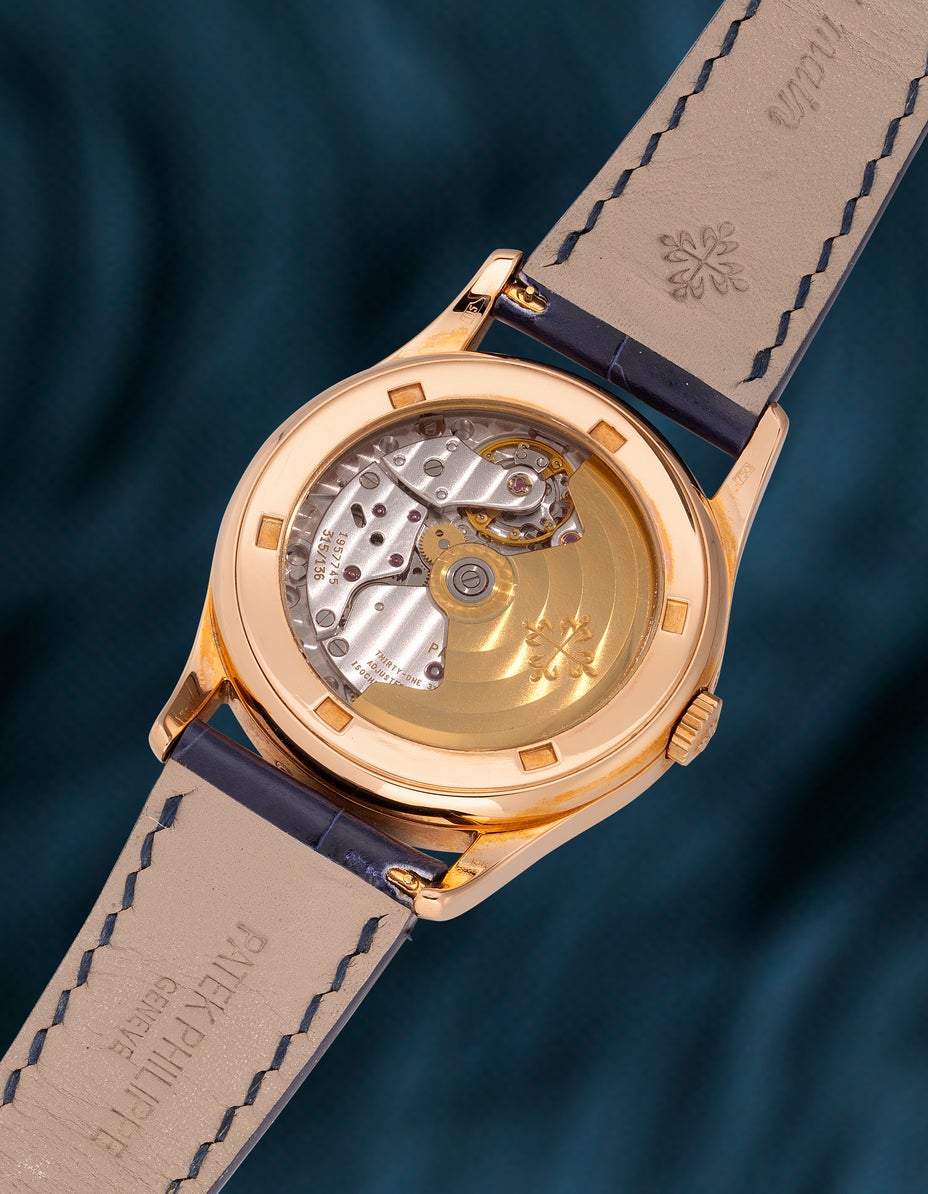
For the first time in the manufacture’s history, a perpetual calendar combined an automatic movement with center seconds—merging two defining attributes of its most celebrated predecessors. The automatic legacy of the ref. 3448 and ref. 3450 met the center seconds tradition of the ref. 2497 and ref. 2438‑1, creating a timepiece that honoured the past while forging its own identity. The retrograde date, sweeping across the upper arc of the dial, introduced a visual dynamic previously reserved for only the rarest and most bespoke creations—such as the modified ref. 96 with perpetual calendar—and never seen on a standard production model.
The ref. 5050 was offered in four metals—yellow gold, pink gold, white gold, and platinum—each embodying the restrained elegance for which Patek Philippe is revered. Some examples featured railway minute tracks and Roman numerals, others such as the present example from 1996, feature baton indexes. Discontinued in 2003, production totals remain modest; research suggests approximately only 150 pink gold examples were made. This scarcity, combined with its unique complication set and historical significance, renders the ref. 5050 a quietly compelling presence in the landscape of modern Patek Philippe perpetual calendars.
Patek Philippe
Swiss | 1839Since its founding in 1839, this famous Geneva-based firm has been surprising its clientele with superbly crafted timepieces fitted with watchmaking's most prestigious complications. Traditional and conservative designs are found across Patek Philippe's watches made throughout their history — the utmost in understated elegance.
Well-known for the Graves Supercomplication — a highly complicated pocket watch that was the world’s most complicated watch for 50 years — this family-owned brand has earned a reputation of excellence around the world. Patek's complicated vintage watches hold the highest number of world records for results achieved at auction compared with any other brand. For collectors, key models include the reference 1518, the world's first serially produced perpetual calendar chronograph, and its successor, the reference 2499. Other famous models include perpetual calendars such as the ref. 1526, ref. 3448 and 3450, chronographs such as the reference 130, 530 and 1463, as well as reference 1436 and 1563 split seconds chronographs. Patek is also well-known for their classically styled, time-only "Calatrava" dress watches, and the "Nautilus," an iconic luxury sports watch first introduced in 1976 as the reference 3700 that is still in production today.