835
Patek Philippe
Ref. 4119/1
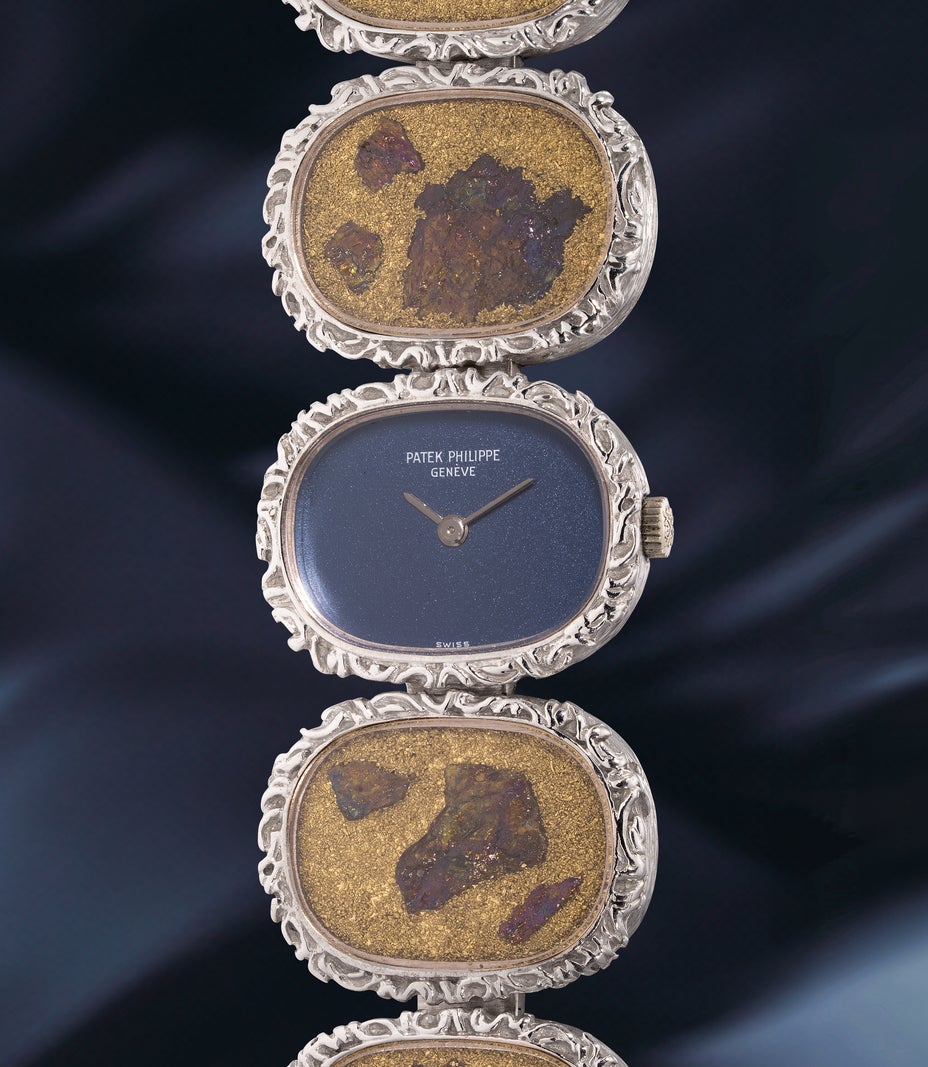
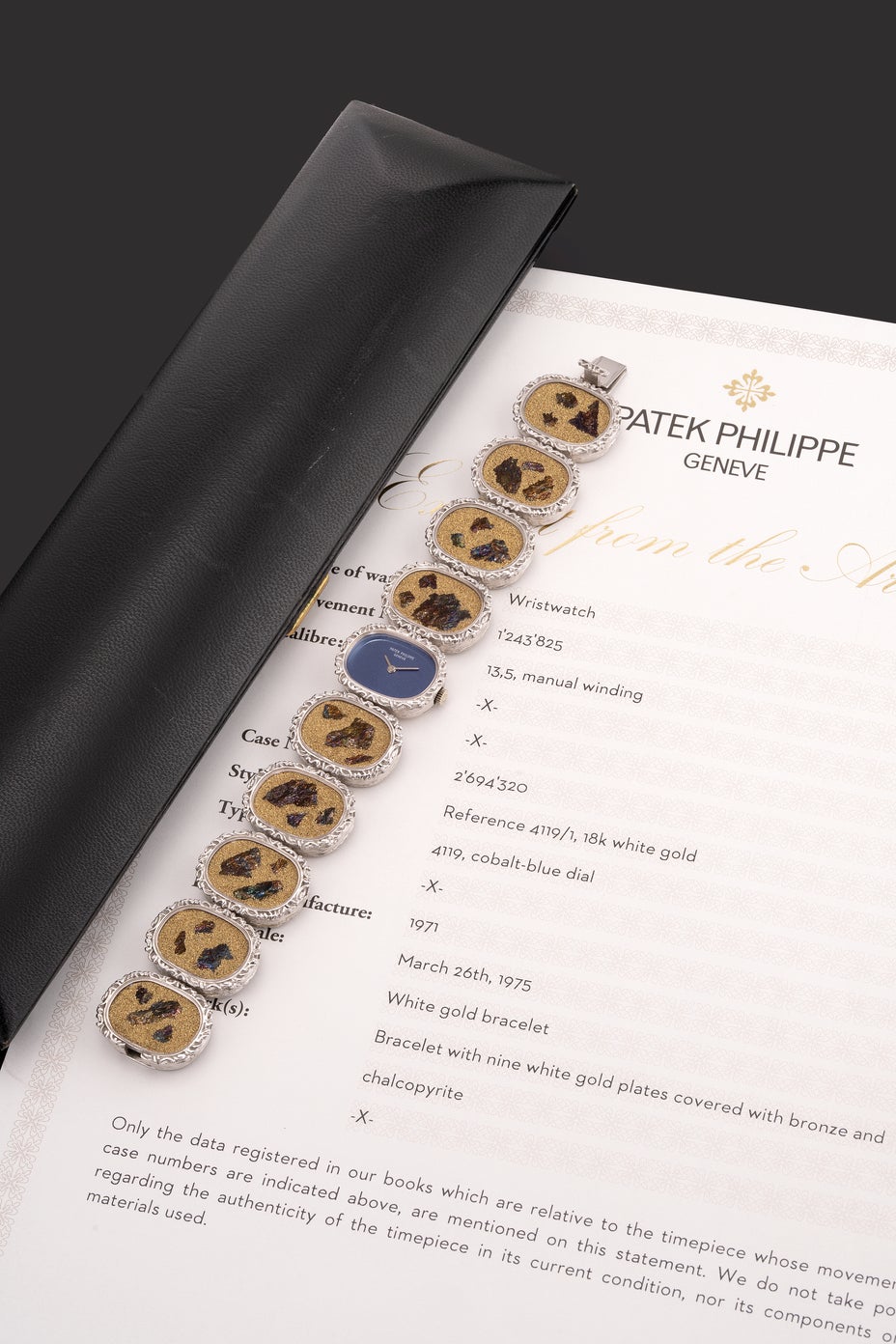
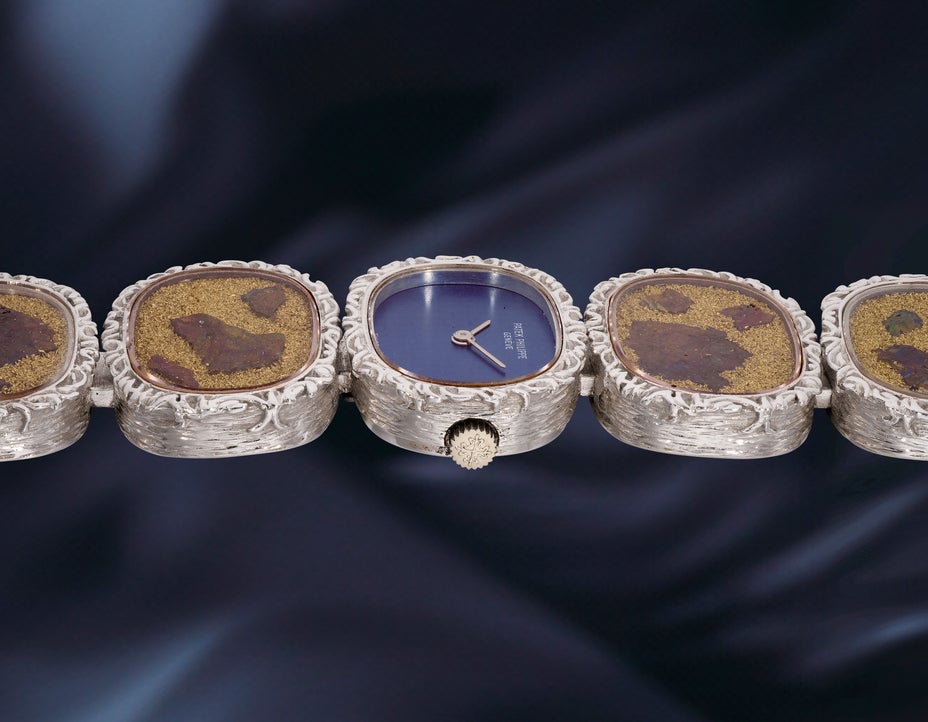
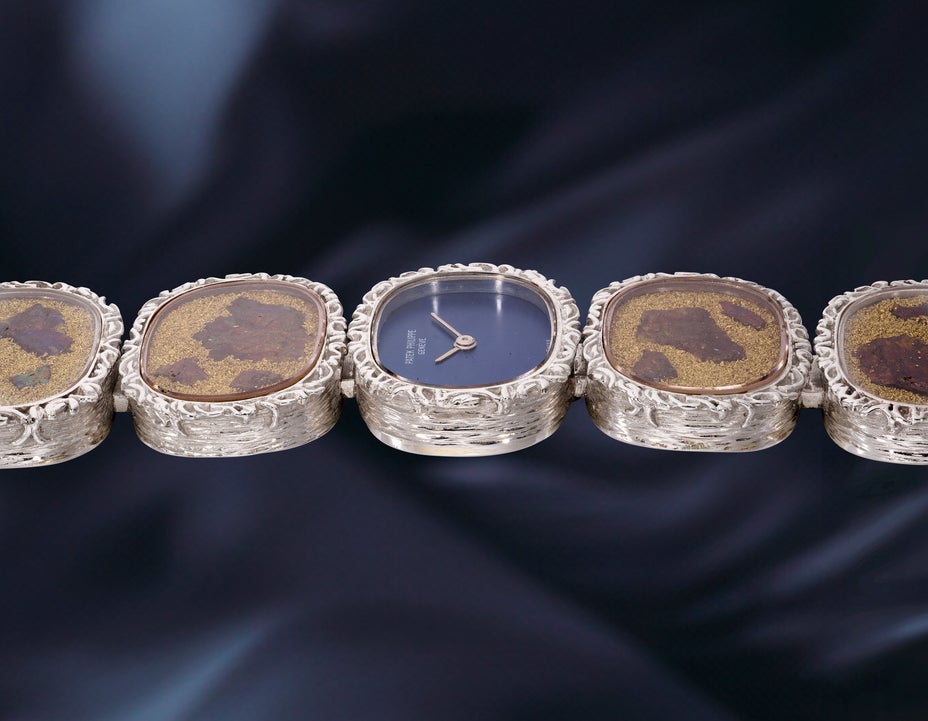
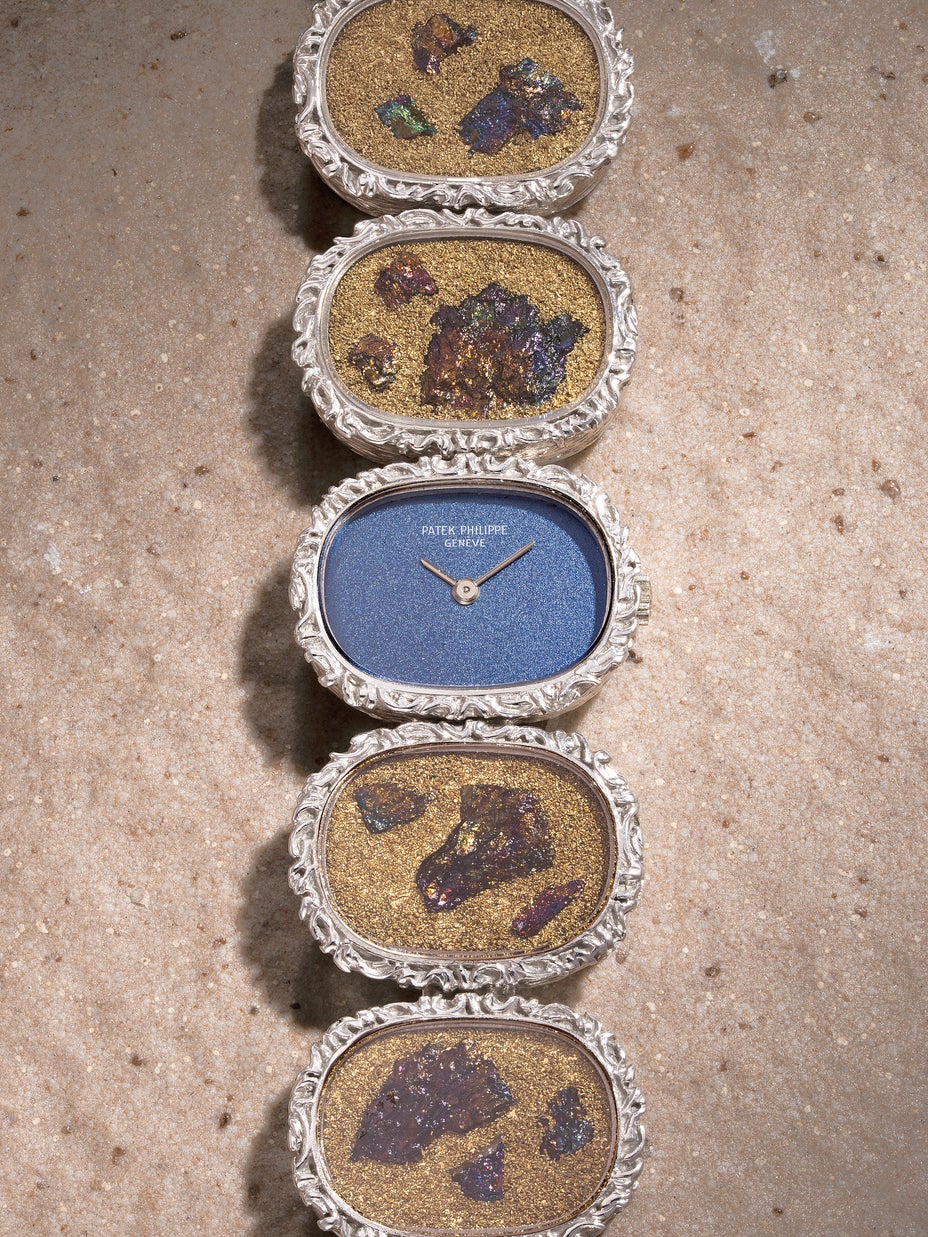
An extremely rare, possibly unique and exceptional lady’s white gold bracelet wristwatch with cobalt blue dial, integrated engraved medallions set with chalcopyrite and bronze powder and presentation box
Full-Cataloguing
- Fresh-to-the-market, and only example in white gold to appear
- Rare use of Chalcopyrite and bronze powder
- Confirmed by the Extract from the Archives
- Extremely well-preserved
The 1970s funk culture pulsed with infectious groove, syncopated rhythms, heavy basslines, and an unapologetically bold, liberated energy—think James Brown’s tight pocket, psychedelic flair, and a celebration of movement, attitude, and soulful confidence that invited everyone to get down. This era’s playful audacity and sculptural flair found elegant echoes in Patek Philippe’s ladies’ wristwatches, where designs embraced daring experimentation amid the Quartz Crisis.
A pinnacle of experimental extravagance, these timepieces transcended mere timekeeping to become bold statements of jewelry artistry. Master jewelers like Gilbert Albert and Georges L’Enfant drew inspiration from organic forms, textures, and unconventional materials, elevating them to new heights. The ref. 4117/1G bracelet watch—crafted with medallions covered in real iridescent butterfly wings and encircled by Top Wesselton diamonds—resides in the Patek Philippe Museum collection is just an example that truly captures the era’s sophisticated whimsy.
Fresh-to-the-market and the only white gold example known to have surfaced, the present ref. 4119/1G is an incredible statement piece. Born in 1971 and confirmed by the Patek Philippe Extract from the Archives, this timepiece features 10 engraved medallions in white gold (four at 12 o’clock and five at 6 o’clock, with the dial sandwiched in between). The dial is a clean, simple cobalt blue for maximum legibility. Each medallion forming the bracelet is set with shimmering bronze powder and three fragments of chalcopyrite, each uniquely iridescent and organic.
Chalcopyrite, a brass-yellow to golden copper iron sulfide mineral, is the world’s most important and abundant copper ore. It often displays a striking iridescent tarnish in purple, blue, or green hues, earning it the nickname "peacock ore." Due to the artisanal challenges of working with this material, the reference was produced in very limited quantities. To date, only three yellow gold versions of the 4119 are known. While yellow gold with its warm, “bigger is better” 1970s taste was overwhelmingly popular, white gold’s cooler, more subdued charm took a backseat, making examples like this one exceptionally rare.
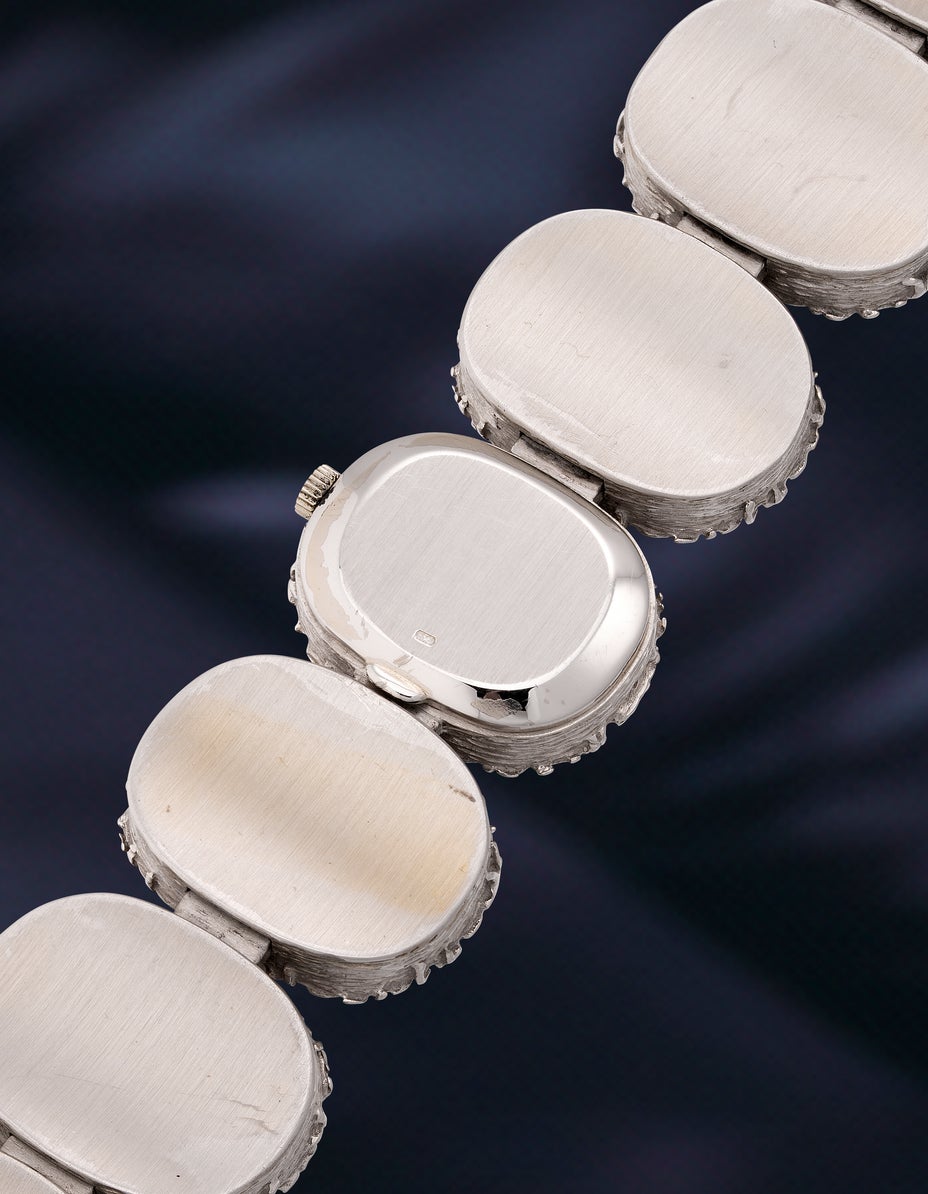
Extremely well-preserved, with crisp hallmarks on the snapped caseback and concealed clasp, the present 4119/1G captures a groovy yet timeless glamour that moves with the wearer as rhythmically as a perfect bass line.
Patek Philippe
Swiss | 1839Since its founding in 1839, this famous Geneva-based firm has been surprising its clientele with superbly crafted timepieces fitted with watchmaking's most prestigious complications. Traditional and conservative designs are found across Patek Philippe's watches made throughout their history — the utmost in understated elegance.
Well-known for the Graves Supercomplication — a highly complicated pocket watch that was the world’s most complicated watch for 50 years — this family-owned brand has earned a reputation of excellence around the world. Patek's complicated vintage watches hold the highest number of world records for results achieved at auction compared with any other brand. For collectors, key models include the reference 1518, the world's first serially produced perpetual calendar chronograph, and its successor, the reference 2499. Other famous models include perpetual calendars such as the ref. 1526, ref. 3448 and 3450, chronographs such as the reference 130, 530 and 1463, as well as reference 1436 and 1563 split seconds chronographs. Patek is also well-known for their classically styled, time-only "Calatrava" dress watches, and the "Nautilus," an iconic luxury sports watch first introduced in 1976 as the reference 3700 that is still in production today.