142Σ︎
Patek Philippe
Ref. 6102P-001
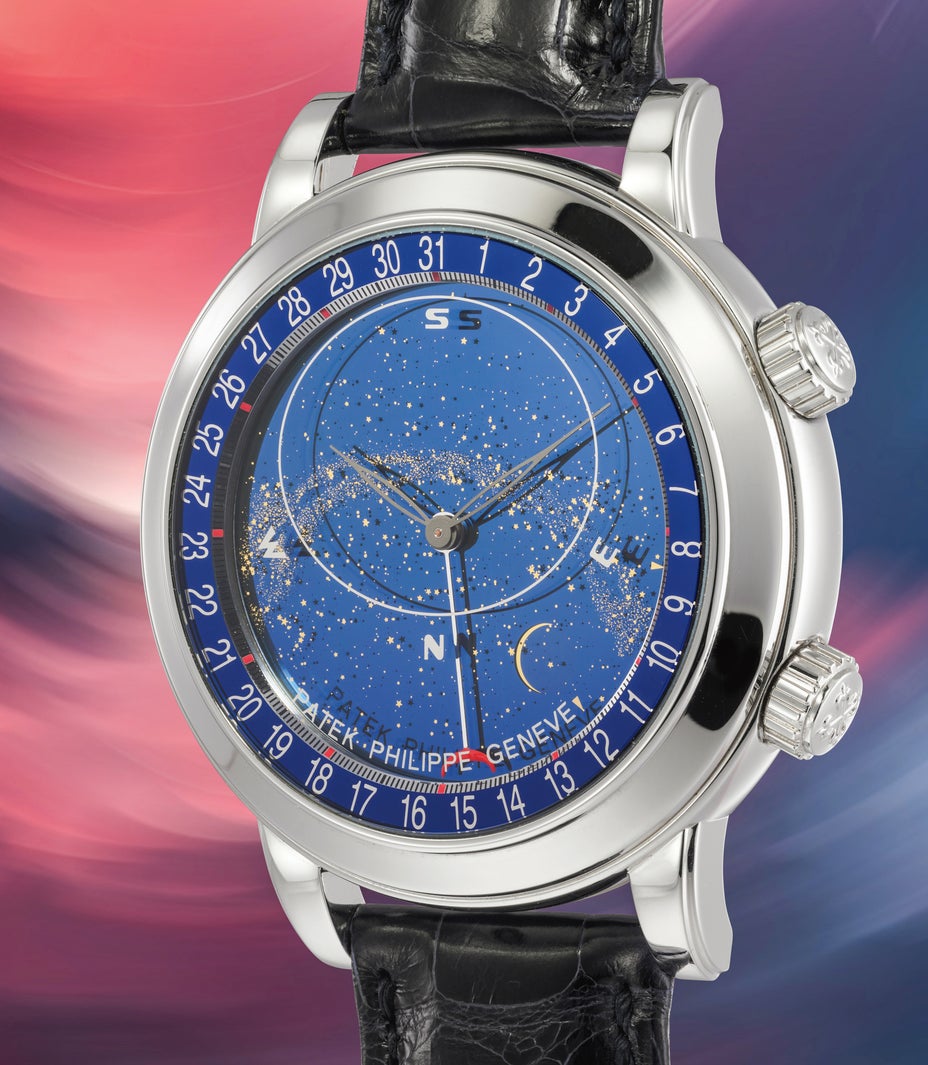
Celestial
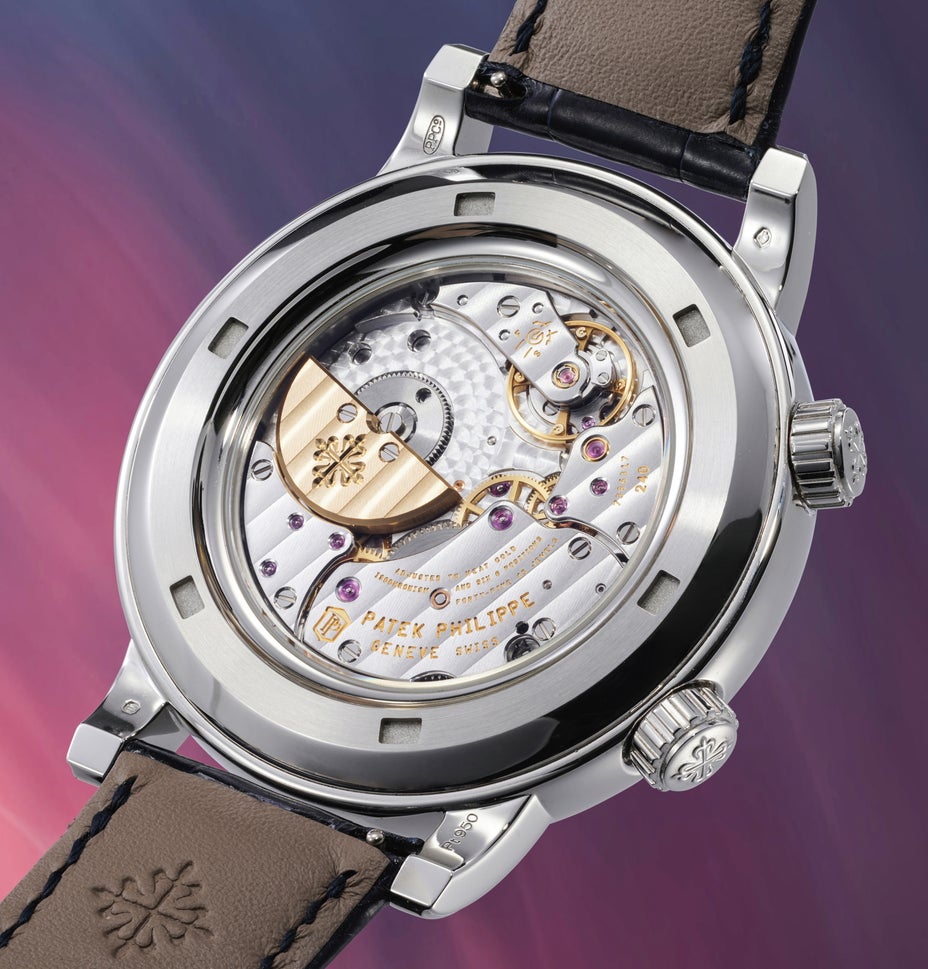
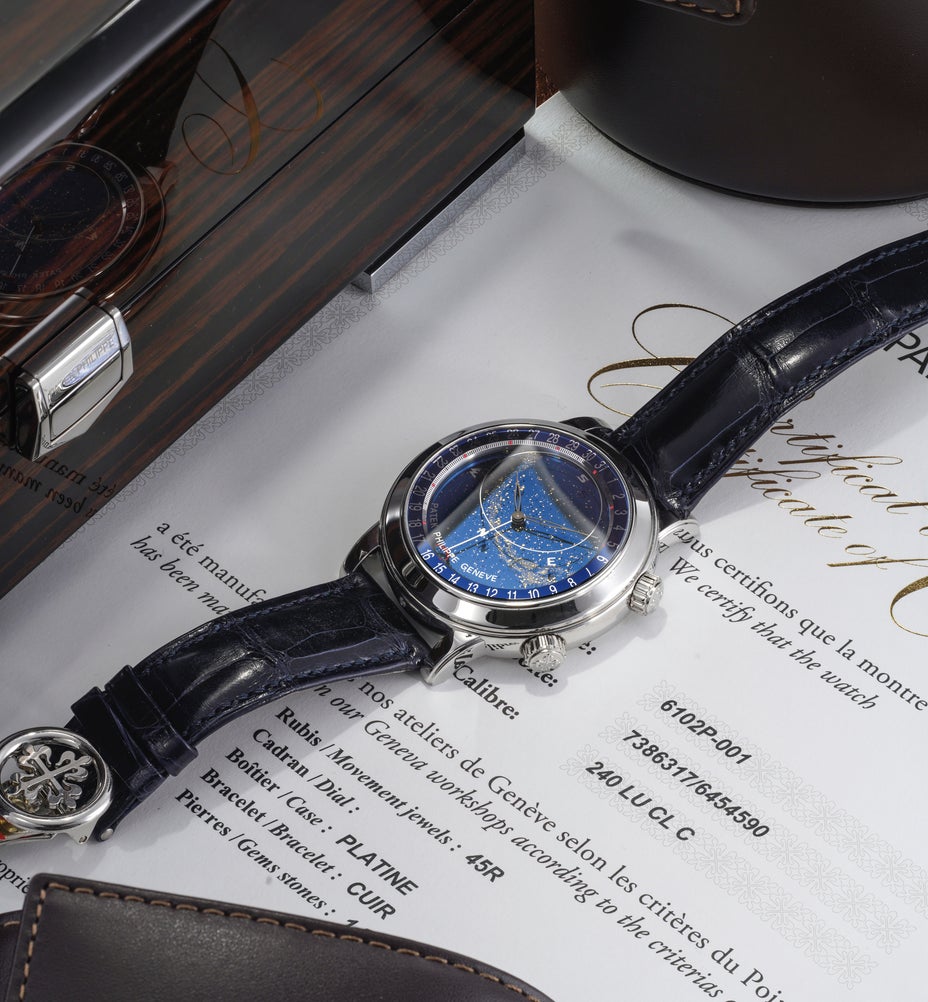
An extremely collectible and fascinating platinum automatic astronomical wristwatch with phases and position in the sky of the moon, sky chart, indication of the meridian passage of Sirius, date, certificate of origin and boxes
Full-Cataloguing
- Phases and orbit of the moon, sky chart, indication of the meridian passage of Sirius and date
- One of the very few Patek Philippe “pure” celestial wristwatches, the others being its gem-set siblings ref. 6103 and 6104, and its predecessor ref. 5102
- Extremely well preserved and offered with its full set of accessories
Celestial charts have been pioneered by Patek Philippe long before the 21st century, typically appearing on one-off or extremely limited-edition pocket watches such as the Graves Supercomplication, the Caliber 89, or the Star Caliber 2000. In 2001, however, the hyper-complicated reference 5002 marked the first appearance of a sky chart on a Patek Philippe wristwatch, albeit alongside numerous other complications. The first purely celestial wristwatch followed in 2002 with reference 5102. Reference 6102 is its evolution, launched in 2012, with the key technical upgrade being the addition of the outer date track.
The watch features a rotating sky chart, showing the sky currently visible above Geneva framed by a golden ellipse, and a moon that both orbits—indicating its apparent position in the sky and the moments of moonrise and moonset—and waxes and wanes. An often-overlooked detail is a single 6-point star on the chart; all other stars are either 5-point or dots of varying sizes. This 6-point star represents Sirius, the brightest star in the sky, and its position is highlighted on the rim of the dial by a tiny golden pointer, allowing the tracking of the star’s meridian passage.
Consequently, the timepiece tracks three different types of time: legal time, with a day lasting exactly 24:00:00; lunar time, measuring the interval between two meridian passages of the moon, with a lunar day averaging 24:50:28; and sidereal time, defined by the meridian passage of a distant star such as Sirius, with a sidereal day averaging 23:56:04. Additionally, the lunation—the interval between two full moons, averaging 28 days, 12:44:02—must also be incorporated into the system.
To achieve the highest possible synchronization of all these time indications, Patek Philippe evaluated approximately 25,000,000,000 different gear combinations before identifying the configuration that minimizes deviations for each indication. The results are remarkable: the deviation for a lunar day is 18.385 seconds per year, for a sidereal day 32.139 seconds per year, and the moonphase deviates by only 6.51 seconds per lunation.
Patek Philippe
Swiss | 1839Since its founding in 1839, this famous Geneva-based firm has been surprising its clientele with superbly crafted timepieces fitted with watchmaking's most prestigious complications. Traditional and conservative designs are found across Patek Philippe's watches made throughout their history — the utmost in understated elegance.
Well-known for the Graves Supercomplication — a highly complicated pocket watch that was the world’s most complicated watch for 50 years — this family-owned brand has earned a reputation of excellence around the world. Patek's complicated vintage watches hold the highest number of world records for results achieved at auction compared with any other brand. For collectors, key models include the reference 1518, the world's first serially produced perpetual calendar chronograph, and its successor, the reference 2499. Other famous models include perpetual calendars such as the ref. 1526, ref. 3448 and 3450, chronographs such as the reference 130, 530 and 1463, as well as reference 1436 and 1563 split seconds chronographs. Patek is also well-known for their classically styled, time-only "Calatrava" dress watches, and the "Nautilus," an iconic luxury sports watch first introduced in 1976 as the reference 3700 that is still in production today.