39
Patek Philippe
Ref. 3450
"Padellone"
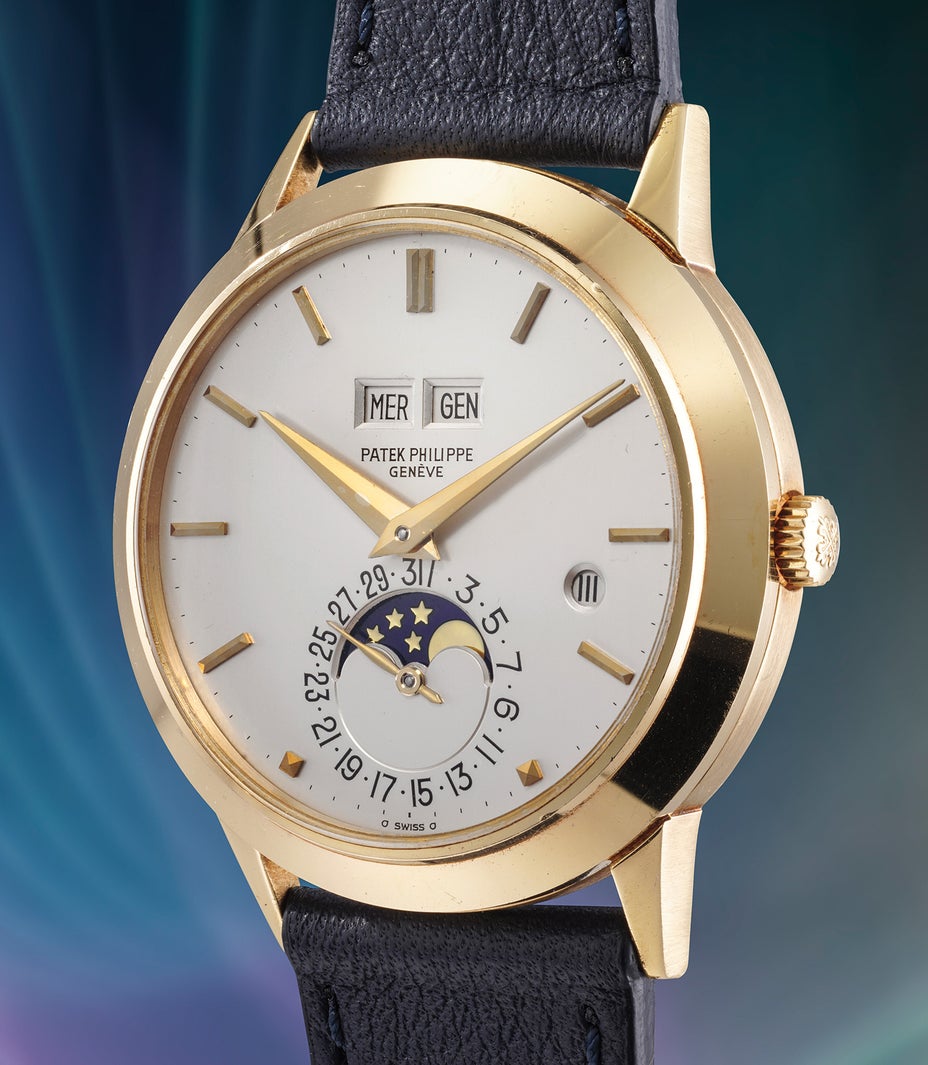
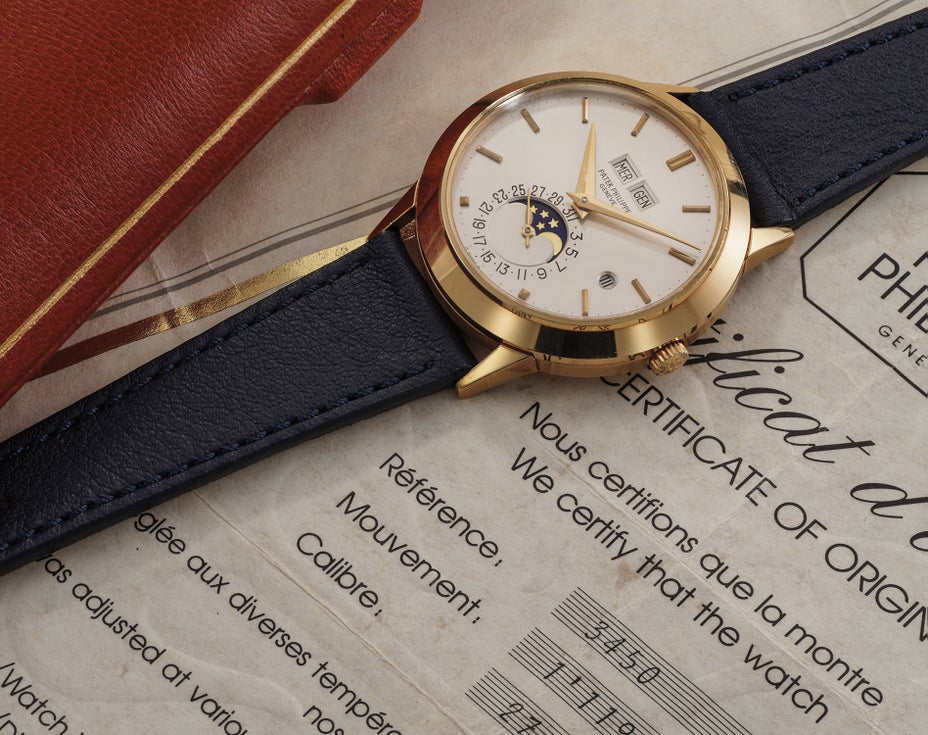
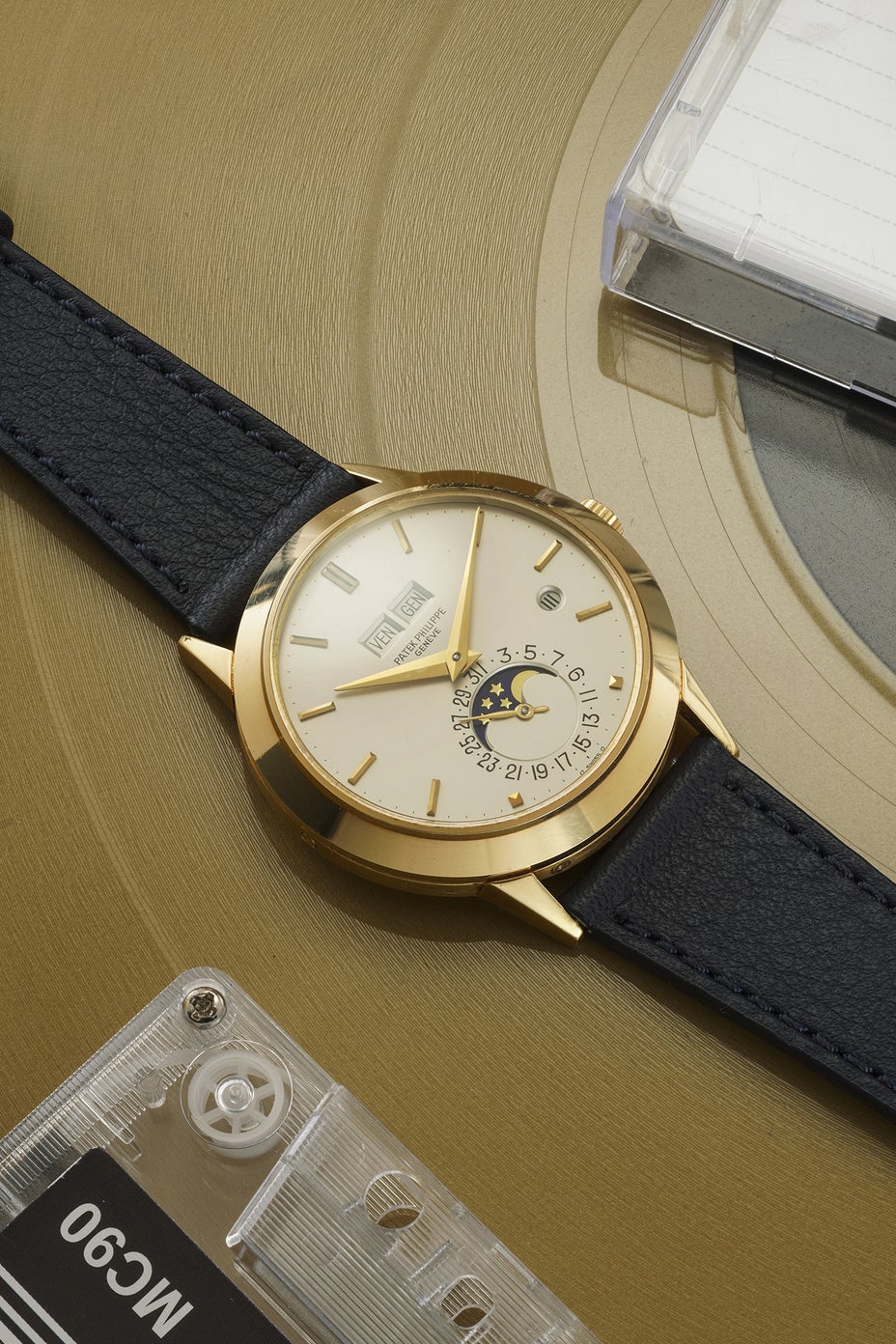
An extremely scarce, highly collectible and attractive yellow gold automatic perpetual calendar wristwatch with moonphases, certificate of origin and presenation box
Full-Cataloguing
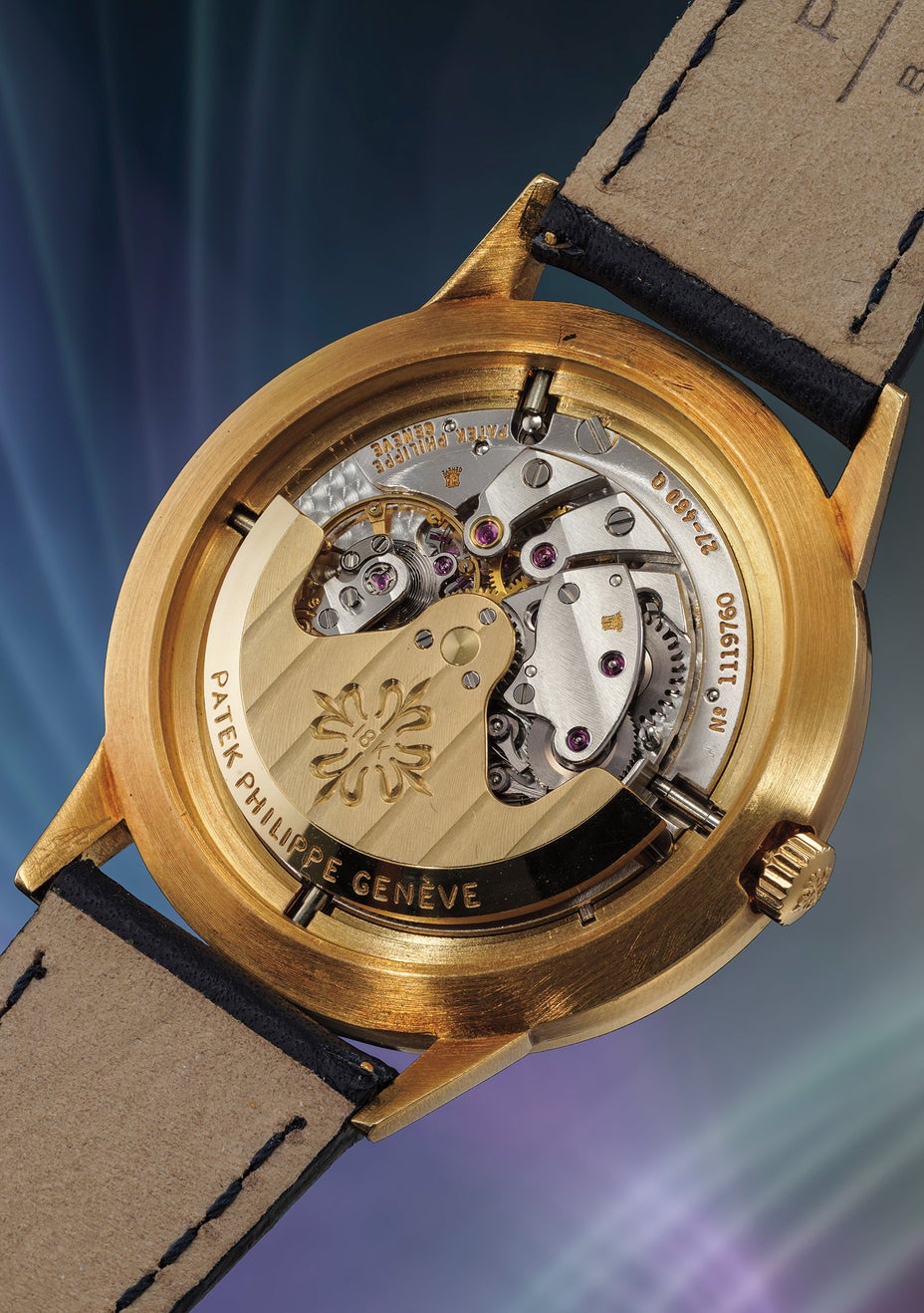
Reference 3450 launched in 1981 is the successor to ref. 3448, Patek Philippe's very first automatic perpetual calendar wristwatch. While aesthetically similar to its predecessor, it most notably features a leap year indication on the dial near 3 o’clock. In addition, its caseback is slightly smaller and is fitted with a "lip", enabling it to be easily removed. It is the first serially made Patek Philippe wristwatch featuring leap year indication.
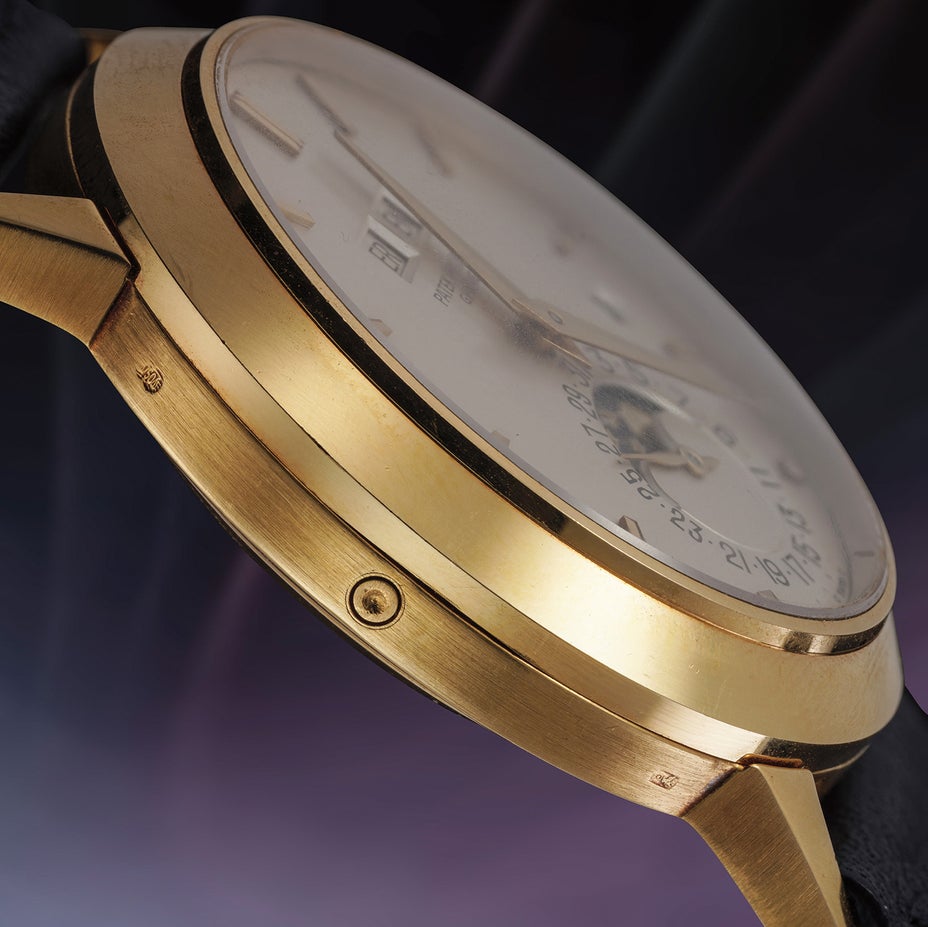
The case design of the model dates back to the 1960s (ref. 3448 was launched in 1962) and it is an ode to timelessly futuristic designs: the dial is airy and clean and the aesthetic impact of the watch is entrusted to the sculpted case defined by the straight, angular lugs, the large polished sloped bezel (thus its Italian nickname “Padellone” - meaning “big pan”) and the satin-finished band.
Technically, the model represents one of the pinnacles of watchmaking. It is powered by the caliber 27-460Q, the perpetual (Q: Quantiême) upgrade of calibre 27-460 which is considered one of the finest automatic movements of all time.
The present watch, manufactured in 1984, is among the very last examples of reference 3450s ever made before the introduction of reference 3940. While the first generation examples were fitted with a "red dot" to indicate the leap year, second generation examples displayed Roman numerals I, II, III and IV, like the present model.
The present timepiece is not only extremely well preserved with crisp hallmarks on the flank and beautifully angled lugs, but it is furthermore accompanied by its original Certificate of Origin, box and product literature.
Also due to its short run (1981 - 1985) Patek Philippe produced very limited quantities of reference 3450, typically casing the model in yellow gold. To date, scholars estimate that Patek Philippe produced only 237 examples in total - of which around 110 examples have come to the market - making it one of the rarest Patek Philippe perpetual calendar models ever produced in series.
Patek Philippe
Swiss | 1839Since its founding in 1839, this famous Geneva-based firm has been surprising its clientele with superbly crafted timepieces fitted with watchmaking's most prestigious complications. Traditional and conservative designs are found across Patek Philippe's watches made throughout their history — the utmost in understated elegance.
Well-known for the Graves Supercomplication — a highly complicated pocket watch that was the world’s most complicated watch for 50 years — this family-owned brand has earned a reputation of excellence around the world. Patek's complicated vintage watches hold the highest number of world records for results achieved at auction compared with any other brand. For collectors, key models include the reference 1518, the world's first serially produced perpetual calendar chronograph, and its successor, the reference 2499. Other famous models include perpetual calendars such as the ref. 1526, ref. 3448 and 3450, chronographs such as the reference 130, 530 and 1463, as well as reference 1436 and 1563 split seconds chronographs. Patek is also well-known for their classically styled, time-only "Calatrava" dress watches, and the "Nautilus," an iconic luxury sports watch first introduced in 1976 as the reference 3700 that is still in production today.