1085
Nicole Nielsen & Co for W. Lister & Sons
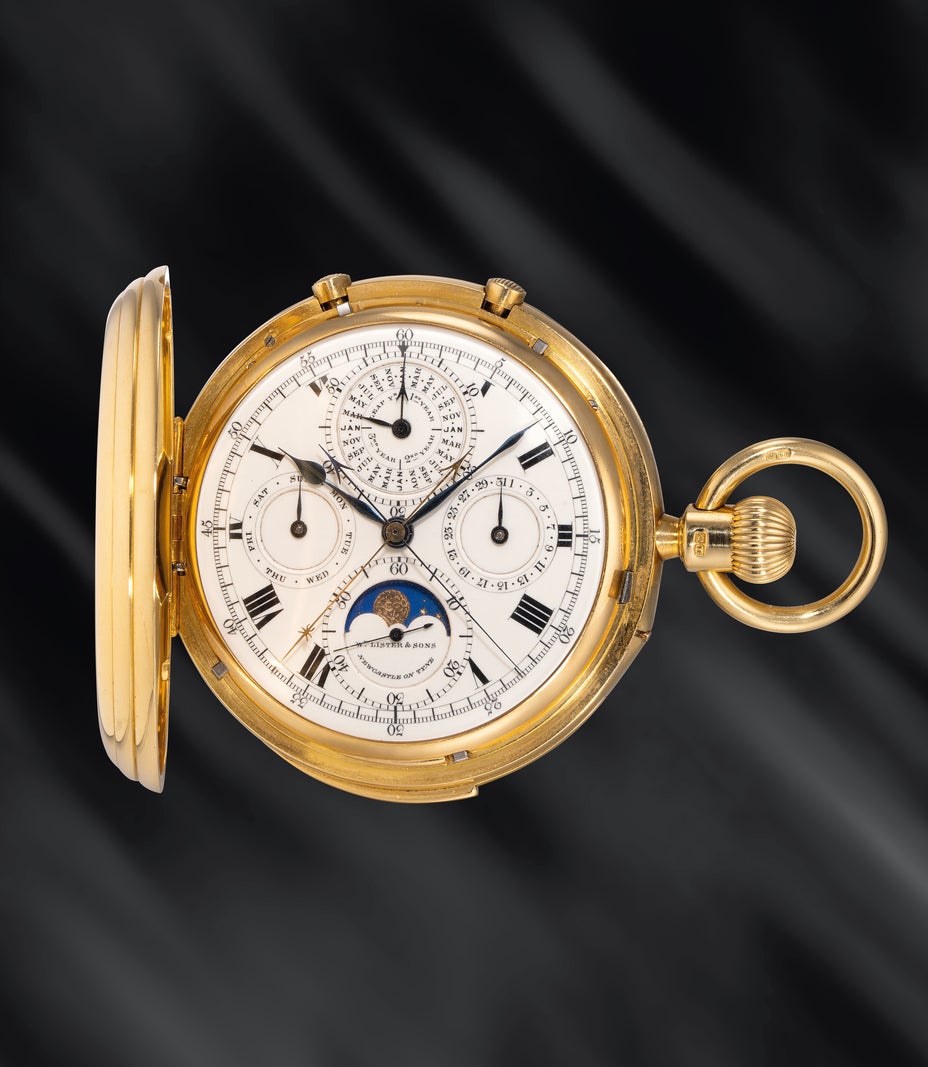
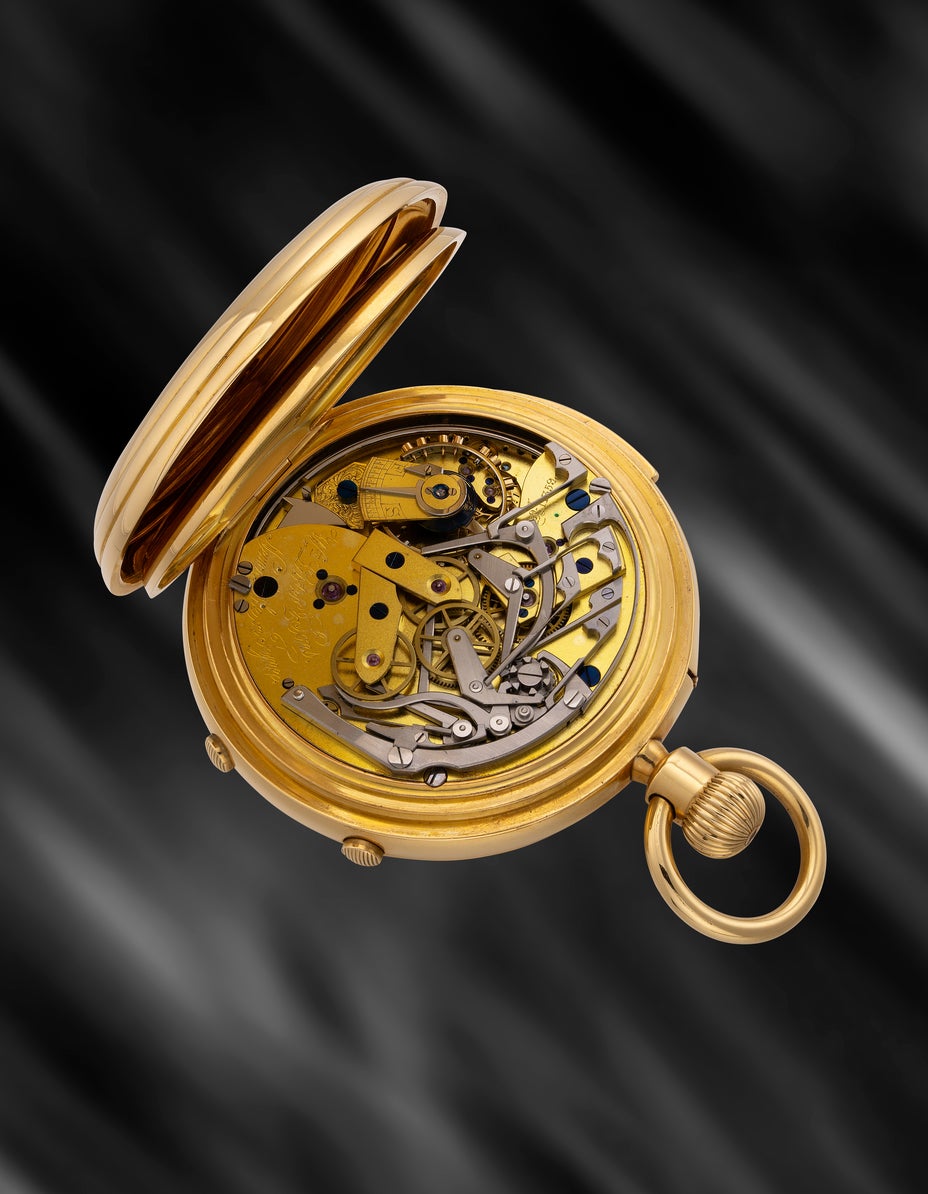
A mechanically complex, very rare and well-preserved yellow gold minute-repeating perpetual calendar split-seconds chronograph hunter-cased pocket watch with enamel dial, moon phases and leap year indication
Estimate
HK$120,000–240,000
€13,100–26,100
$15,400–30,800
Sold For
HK$698,500
Manufacturer
Nicole Nielsen & Co for W. Lister & Sons
Year
Circa 1900
Movement No
11359
Material
18K yellow gold
Calibre
Manual, 19” gilt brass three quarter plate English lever movement, 26 jewels
Dimensions
55mm diameter
Signed
Case, dial and movement signed
Full-Cataloguing
Good To Know:
- Minute repeater, split-seconds chronograph, perpetual calendar with leap year and moon phases
- Very well-preserved with crisp hallmarks
- Case by Emile Nielson
- Highly rare example and fresh-to-the-market
Three of the most exalted complications in horology: the minute repeater, split-seconds chronograph, and perpetual calendar with moon phases and leap year indication rank among the most sophisticated and technically demanding mechanisms ever devised. Even in the modern era, uniting these three elite complications into a single, harmonious timepiece is considered an extraordinary achievement. Yet this breathtaking yellow gold hunter-cased pocket watch with five knuckle hinges accomplished precisely that nearly two centuries ago crafted by the esteemed British firm W. Lister & Sons of Newcastle-upon-Tyne.
Established in 1821 with its first shop at 9 Grey Street (later moving to 32 & 34 Northumberland Street), W. Lister & Sons built a formidable reputation retailing precision timekeeping instruments by Nicole Nielsen alongside their exceptional gold and silversmithing. His sons, Clement and William Jr., joined the firm in the 1840s and went on to distinguish themselves at the Greenwich chronometer trials, securing first place in 1853 and third place in 1858. Nicole, Nielsen & Co. was the leading manufacturer of complicated watches in late 19th century London, and made watches and carriage clocks for leading makers such as Frodsham, but also marketed under their own name. The firm originated in 1840 when Adolphe Nicole, a partner in the firm of Nicole & Capt, Geneva, settled in London. In 1888 the firm was purchased by R.B. North, Nielsen being retained as joint managing director with Harrison Mill Frodsham. In 1888 the firm took the name of Nicole, Nielsen & Co.
At the turn of the 20th century, no nation could rival Great Britain’s supremacy in watchmaking artistry. From the late Victorian era through the Edwardian age, British workshops created pieces of unparalleled complexity and beauty. Today cherished by discerning collectors for their extreme rarity and groundbreaking innovation.
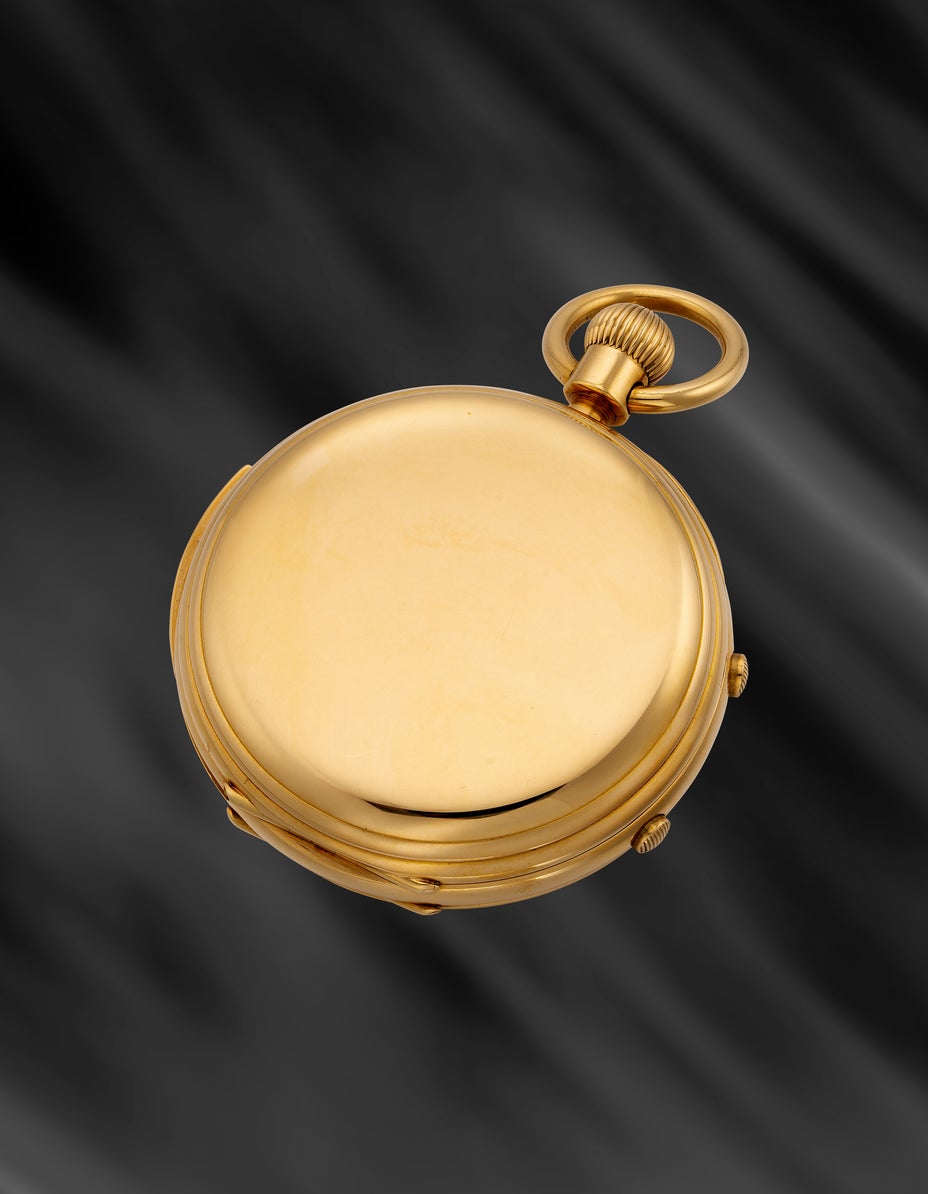
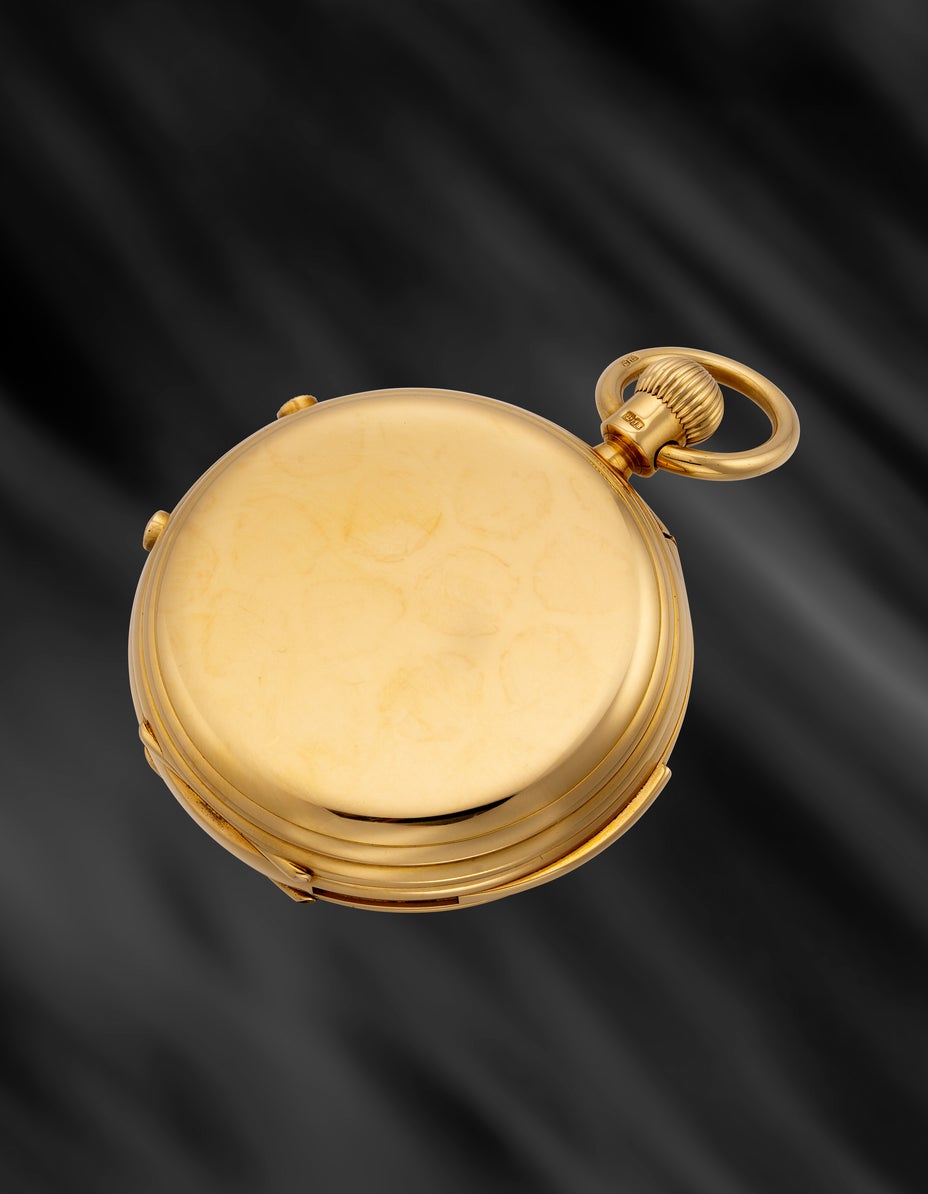
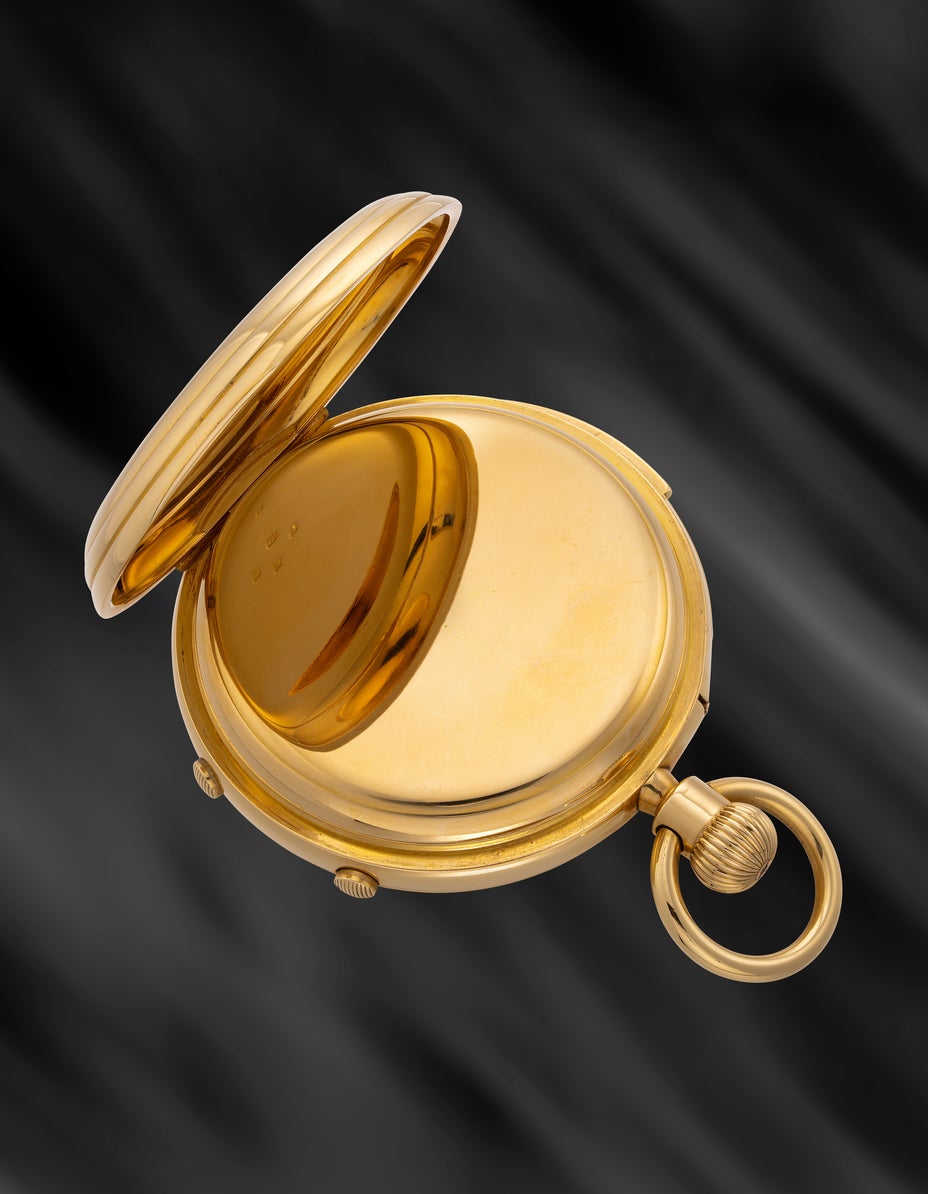
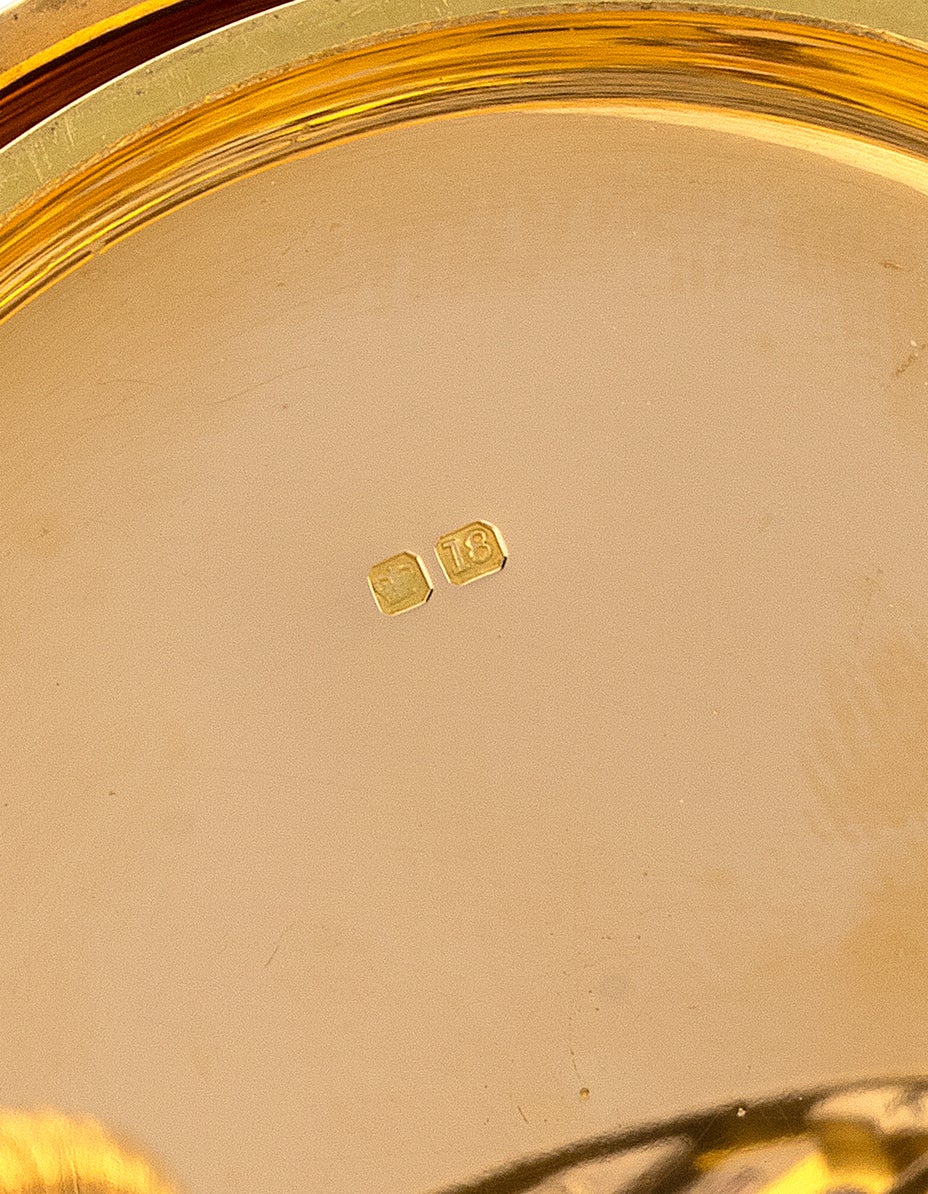
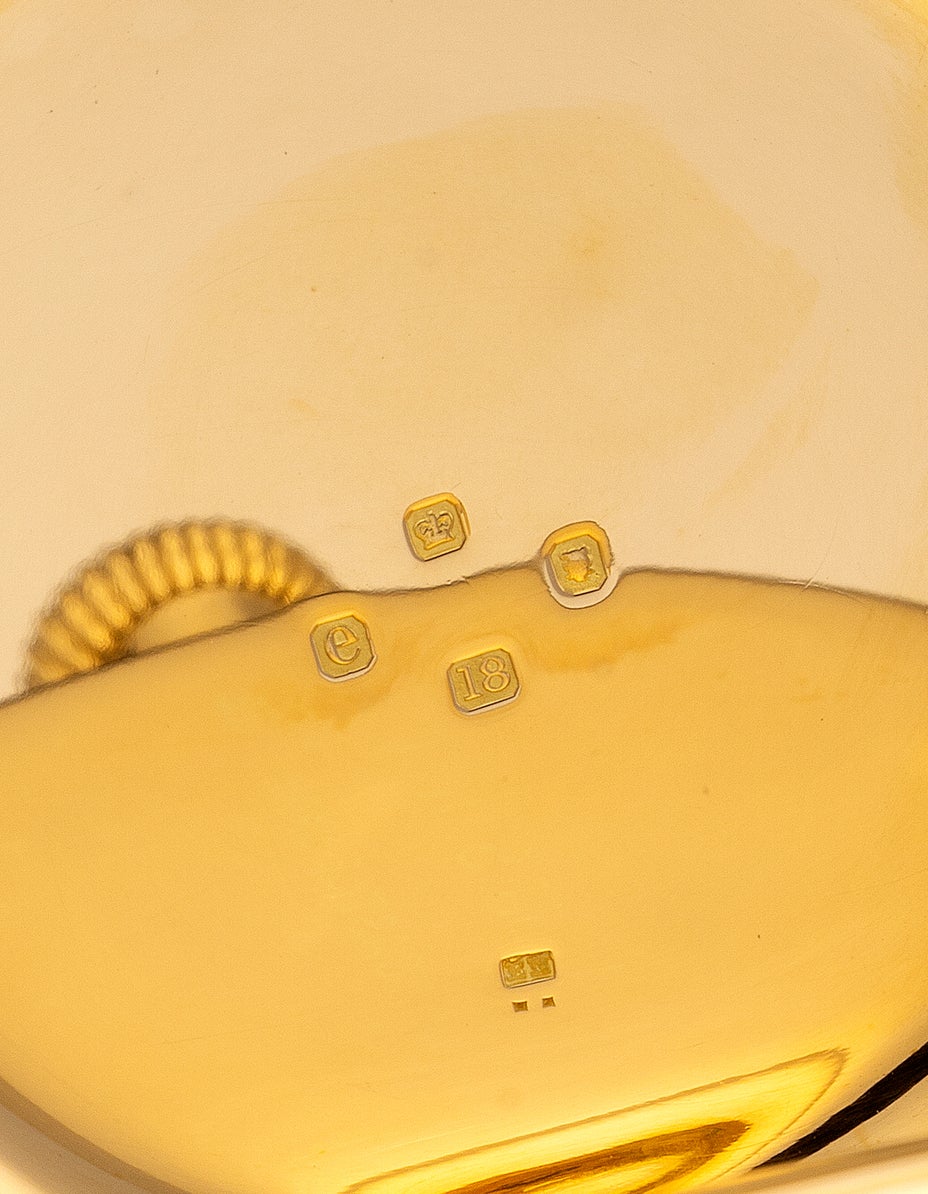
This extraordinary 18K yellow gold timepiece with a turning pendant has survived the centuries in remarkably well-preserved condition. Crisp hallmarks are visible throughout, including the “e” date letter, leopard’s head, 18K mark, and crown, confirming its British origin and dating it to circa 1900. The casemaker stamp "EN" indicates Emile Nielson who registered his sponsors mark in 1889. The Venetian tint enamel dial remains in stunning condition, while the minute repeater delivers chimes of exceptional clarity and musical precision. The split-seconds chronograph features elegantly finished blued steel and gold hands for simultaneous timing, and the deep blue enamel moon phase disc is adorned with delicate golden stars against a celestial night sky.
A similar example by Dent achieved a remarkable result of HK$952,500 in the Phillips Hong Kong Watch Auction: XXI in 2025. This magnificent pocket watch stands as a breathtaking testament to early 19th-century British ingenuity—a true wearable masterpiece that continues to astonish with its technical ambition, mechanical harmony, and timeless elegance.
- Minute repeater, split-seconds chronograph, perpetual calendar with leap year and moon phases
- Very well-preserved with crisp hallmarks
- Case by Emile Nielson
- Highly rare example and fresh-to-the-market
Three of the most exalted complications in horology: the minute repeater, split-seconds chronograph, and perpetual calendar with moon phases and leap year indication rank among the most sophisticated and technically demanding mechanisms ever devised. Even in the modern era, uniting these three elite complications into a single, harmonious timepiece is considered an extraordinary achievement. Yet this breathtaking yellow gold hunter-cased pocket watch with five knuckle hinges accomplished precisely that nearly two centuries ago crafted by the esteemed British firm W. Lister & Sons of Newcastle-upon-Tyne.
Established in 1821 with its first shop at 9 Grey Street (later moving to 32 & 34 Northumberland Street), W. Lister & Sons built a formidable reputation retailing precision timekeeping instruments by Nicole Nielsen alongside their exceptional gold and silversmithing. His sons, Clement and William Jr., joined the firm in the 1840s and went on to distinguish themselves at the Greenwich chronometer trials, securing first place in 1853 and third place in 1858. Nicole, Nielsen & Co. was the leading manufacturer of complicated watches in late 19th century London, and made watches and carriage clocks for leading makers such as Frodsham, but also marketed under their own name. The firm originated in 1840 when Adolphe Nicole, a partner in the firm of Nicole & Capt, Geneva, settled in London. In 1888 the firm was purchased by R.B. North, Nielsen being retained as joint managing director with Harrison Mill Frodsham. In 1888 the firm took the name of Nicole, Nielsen & Co.
At the turn of the 20th century, no nation could rival Great Britain’s supremacy in watchmaking artistry. From the late Victorian era through the Edwardian age, British workshops created pieces of unparalleled complexity and beauty. Today cherished by discerning collectors for their extreme rarity and groundbreaking innovation.
This extraordinary 18K yellow gold timepiece with a turning pendant has survived the centuries in remarkably well-preserved condition. Crisp hallmarks are visible throughout, including the “e” date letter, leopard’s head, 18K mark, and crown, confirming its British origin and dating it to circa 1900. The casemaker stamp "EN" indicates Emile Nielson who registered his sponsors mark in 1889. The Venetian tint enamel dial remains in stunning condition, while the minute repeater delivers chimes of exceptional clarity and musical precision. The split-seconds chronograph features elegantly finished blued steel and gold hands for simultaneous timing, and the deep blue enamel moon phase disc is adorned with delicate golden stars against a celestial night sky.
A similar example by Dent achieved a remarkable result of HK$952,500 in the Phillips Hong Kong Watch Auction: XXI in 2025. This magnificent pocket watch stands as a breathtaking testament to early 19th-century British ingenuity—a true wearable masterpiece that continues to astonish with its technical ambition, mechanical harmony, and timeless elegance.