12
J. W. Benson
"Double Dial Two Time-Zones"
An impressive and most probably unique yellow gold double-dialled two time-zone openface pocket watch with two side by side movements
Estimate
CHF15,000–30,000
€16,300–32,700
$19,200–38,400
Sold For
CHF177,800
Manufacturer
J. W. Benson
Year
Circa 1900
Movement No
3566
Model Name
"Double Dial Two Time-Zones"
Material
18k yellow gold
Calibre
Manual, jeweled
Dimensions
57mm diameter
Signed
Dials and movement signed
Full-Cataloguing
Good To Know:
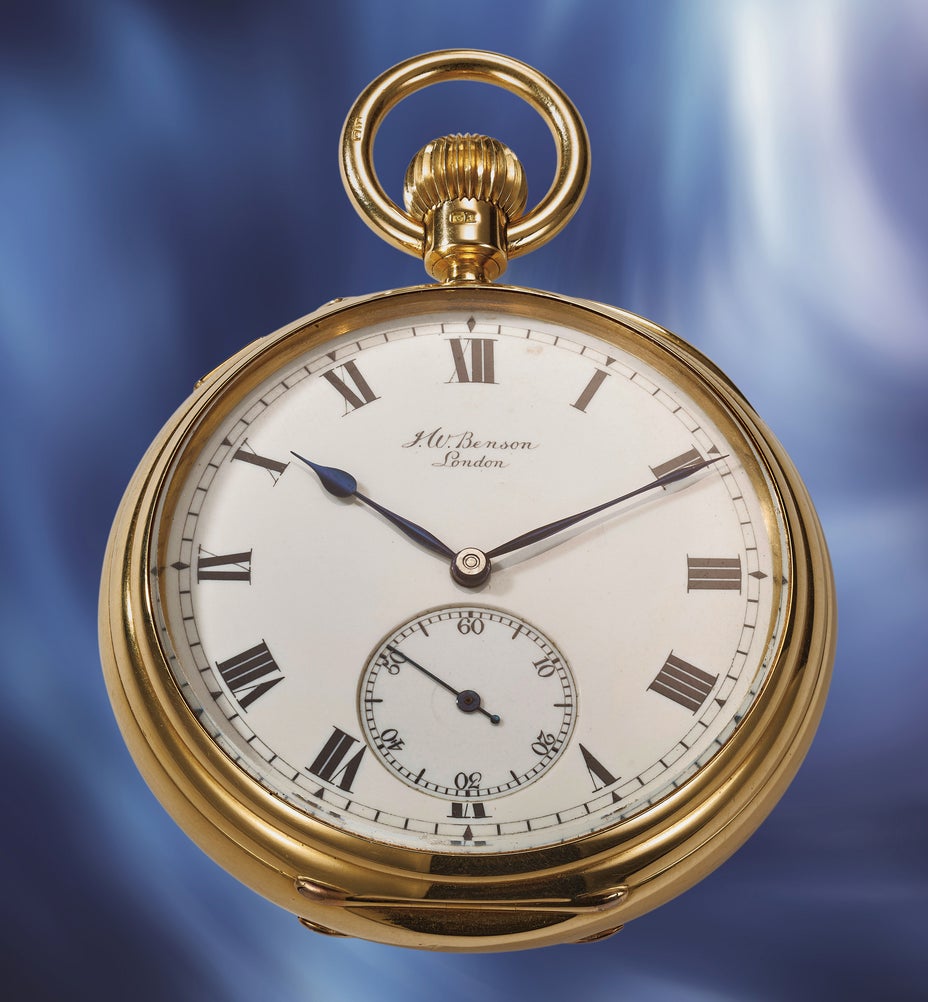
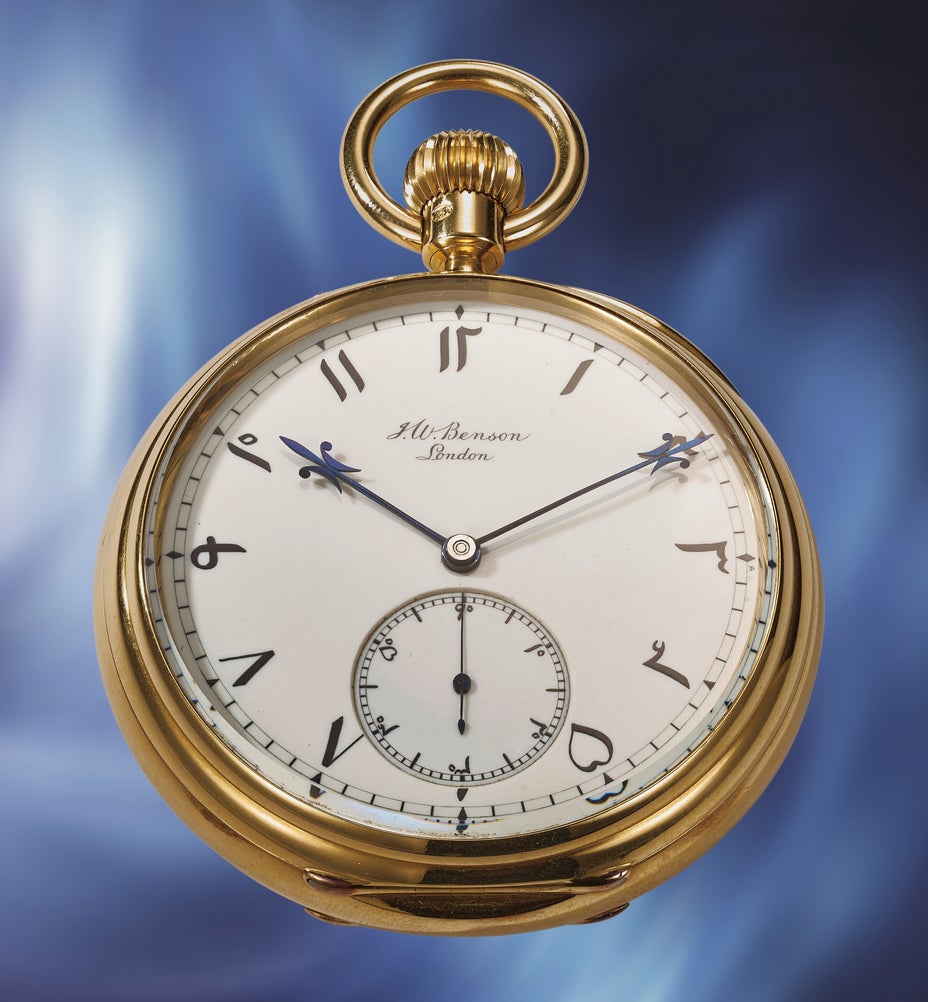
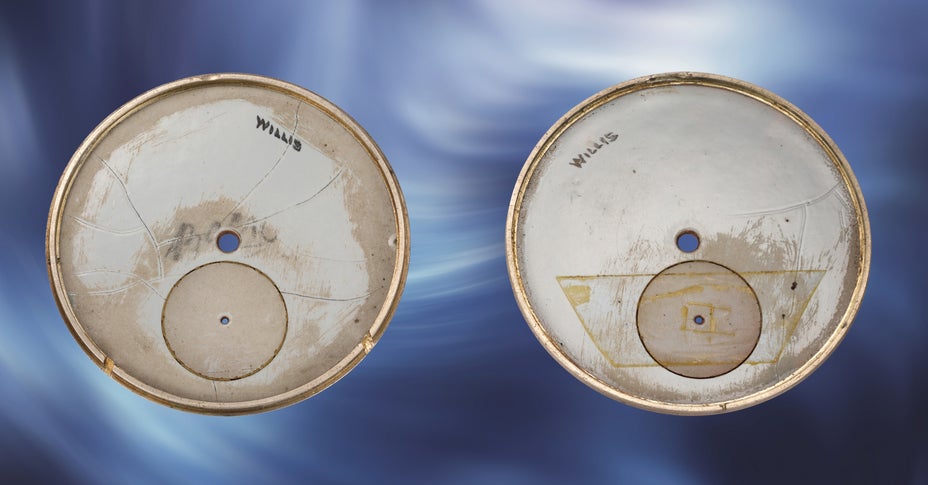
- Double dialled watch with two enamel dials, one side Roman numerals and the other Persian numerals
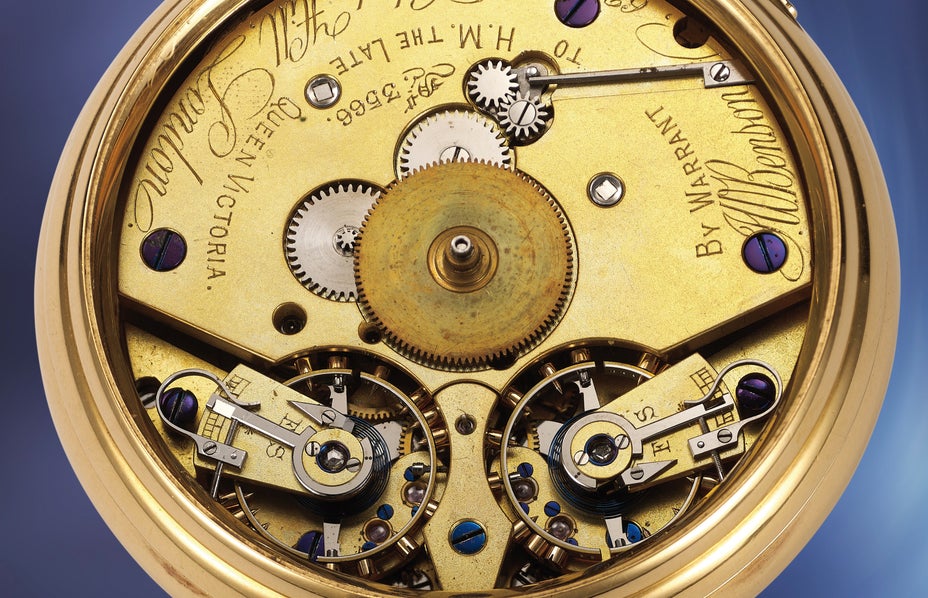
- Watch features two independent movements
J.W. Benson was originally set up by brothers James William Benson and Samuel Suckley Benson in the second half of the 19th century, who were both watchmakers and retailers of jewellery and silverware. After just eight years, the partnership was dissolved in 1855, and J.W. Benson carried on alone. By the 1860s, he was advertising his large and richly stocked shop with an adjoining workshop specialising not only in the manufacture of watches and clocks but also in their repair. He began to participate in both national and international expositions, including London in 1862, Paris in 1867 and the Inventions Exhibition of 1885, at which he unveiled the ‘Patent Dust and Damp Excluding Band for Watches’.
J.W. Benson died in 1878, leaving his sons Alfred and Arthur to continue the business. The following year, they were awarded a Royal Warrant by Queen Victoria, to which they would add those of the Prince of Wales and the Kings of Siam and Denmark.
The company ran successfully until the Second World War when their factory was bombed, and they ceased manufacturing but remained retailers until they were purchased by Mappin & Webb in the 1980s.
The present double dialled watch is breathtaking in its technical mastery. The watch features two independent movements that can be wound and set separately or in tandem, displaying two separate times that are indicated on each dial, one with Roman numerals and the other with Persian numerals.
It is fascinating to see the dual movement of the watch with the two escapements side by side and even though technically not a mechanism leading greater accuracy, it is a layout later seen in the Philippe Dufour DUality, F.P. Journe Resonance and more recently in David Candaux's DC 12.
- Double dialled watch with two enamel dials, one side Roman numerals and the other Persian numerals
- Watch features two independent movements
J.W. Benson was originally set up by brothers James William Benson and Samuel Suckley Benson in the second half of the 19th century, who were both watchmakers and retailers of jewellery and silverware. After just eight years, the partnership was dissolved in 1855, and J.W. Benson carried on alone. By the 1860s, he was advertising his large and richly stocked shop with an adjoining workshop specialising not only in the manufacture of watches and clocks but also in their repair. He began to participate in both national and international expositions, including London in 1862, Paris in 1867 and the Inventions Exhibition of 1885, at which he unveiled the ‘Patent Dust and Damp Excluding Band for Watches’.
J.W. Benson died in 1878, leaving his sons Alfred and Arthur to continue the business. The following year, they were awarded a Royal Warrant by Queen Victoria, to which they would add those of the Prince of Wales and the Kings of Siam and Denmark.
The company ran successfully until the Second World War when their factory was bombed, and they ceased manufacturing but remained retailers until they were purchased by Mappin & Webb in the 1980s.
The present double dialled watch is breathtaking in its technical mastery. The watch features two independent movements that can be wound and set separately or in tandem, displaying two separate times that are indicated on each dial, one with Roman numerals and the other with Persian numerals.
It is fascinating to see the dual movement of the watch with the two escapements side by side and even though technically not a mechanism leading greater accuracy, it is a layout later seen in the Philippe Dufour DUality, F.P. Journe Resonance and more recently in David Candaux's DC 12.