1088
Cartier
A highly rare and charming yellow gold miniature prism clock with original presentation box
Full-Cataloguing
- Smallest example to grace Phillips auction
- 18K yellow gold case with gold numeral dial and gold hands
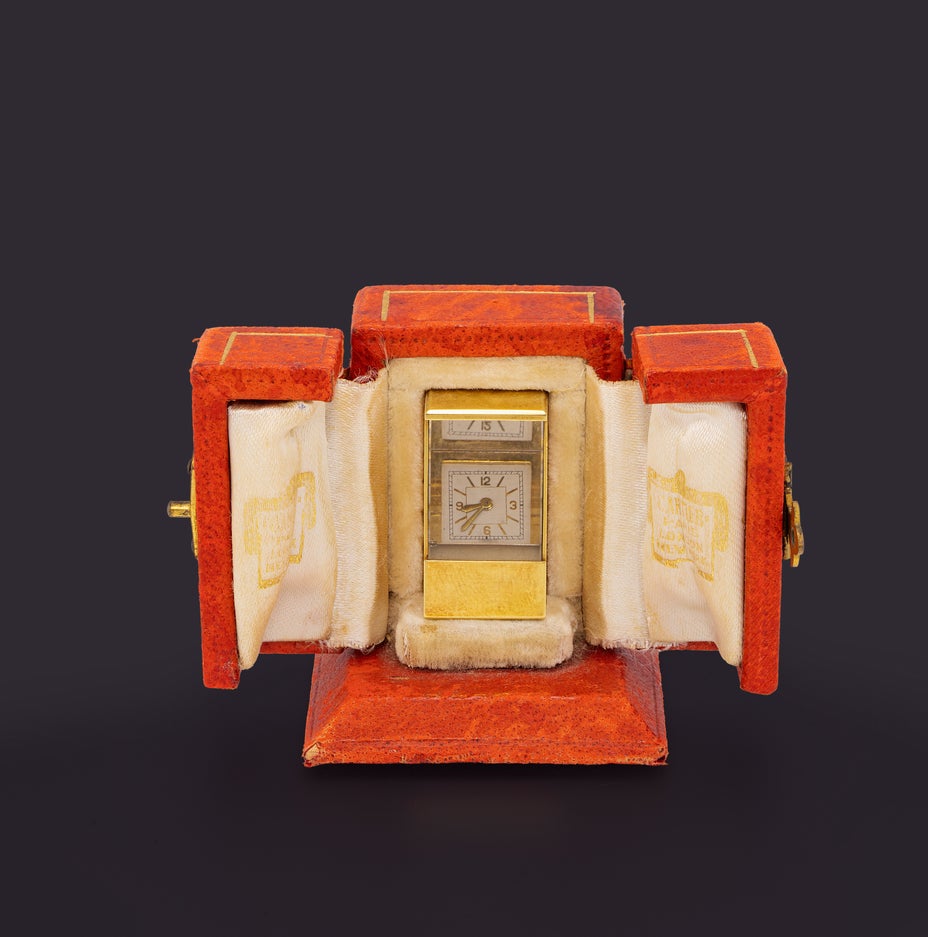
- Accompanied with its original Cartier box
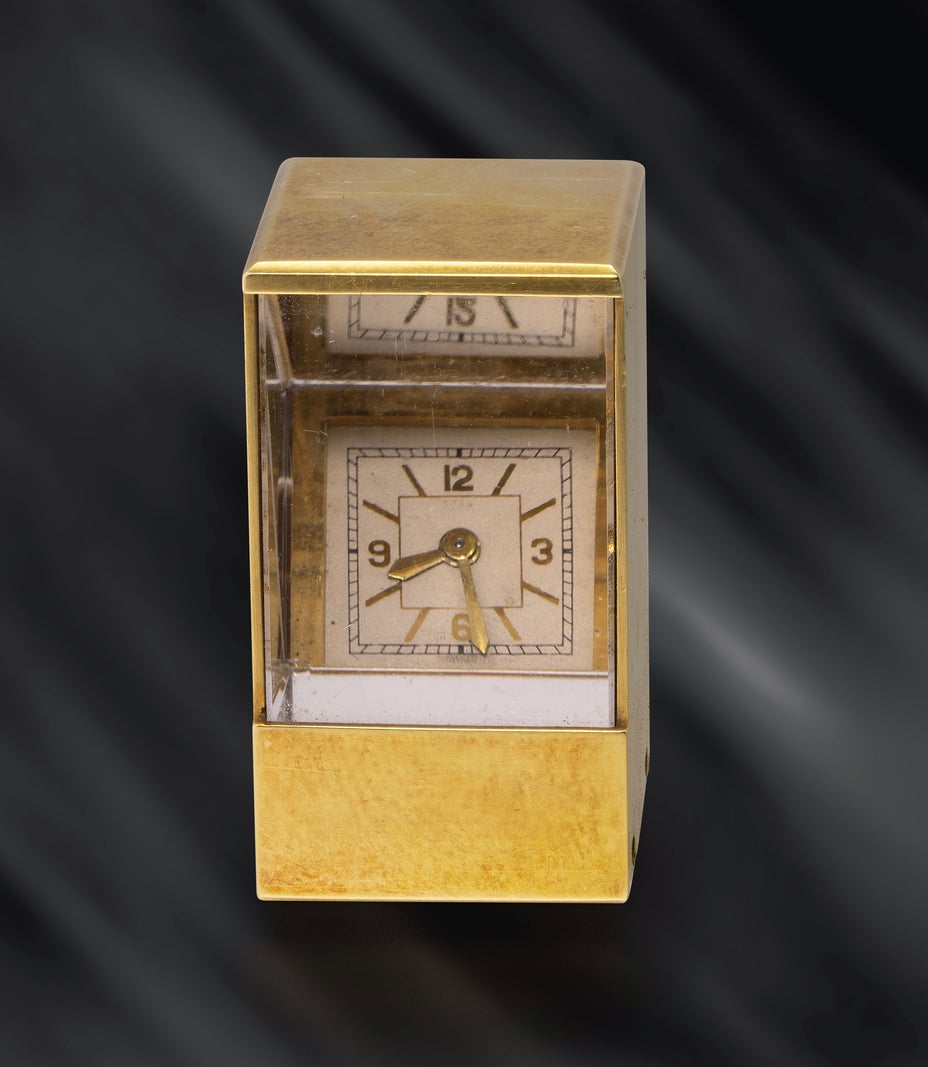
An intriguing and utterly charming horological marvel, this rare Prism Clock dates to 1945 and delights with its ingenious optical illusion, designed to mesmerize and amuse endlessly.
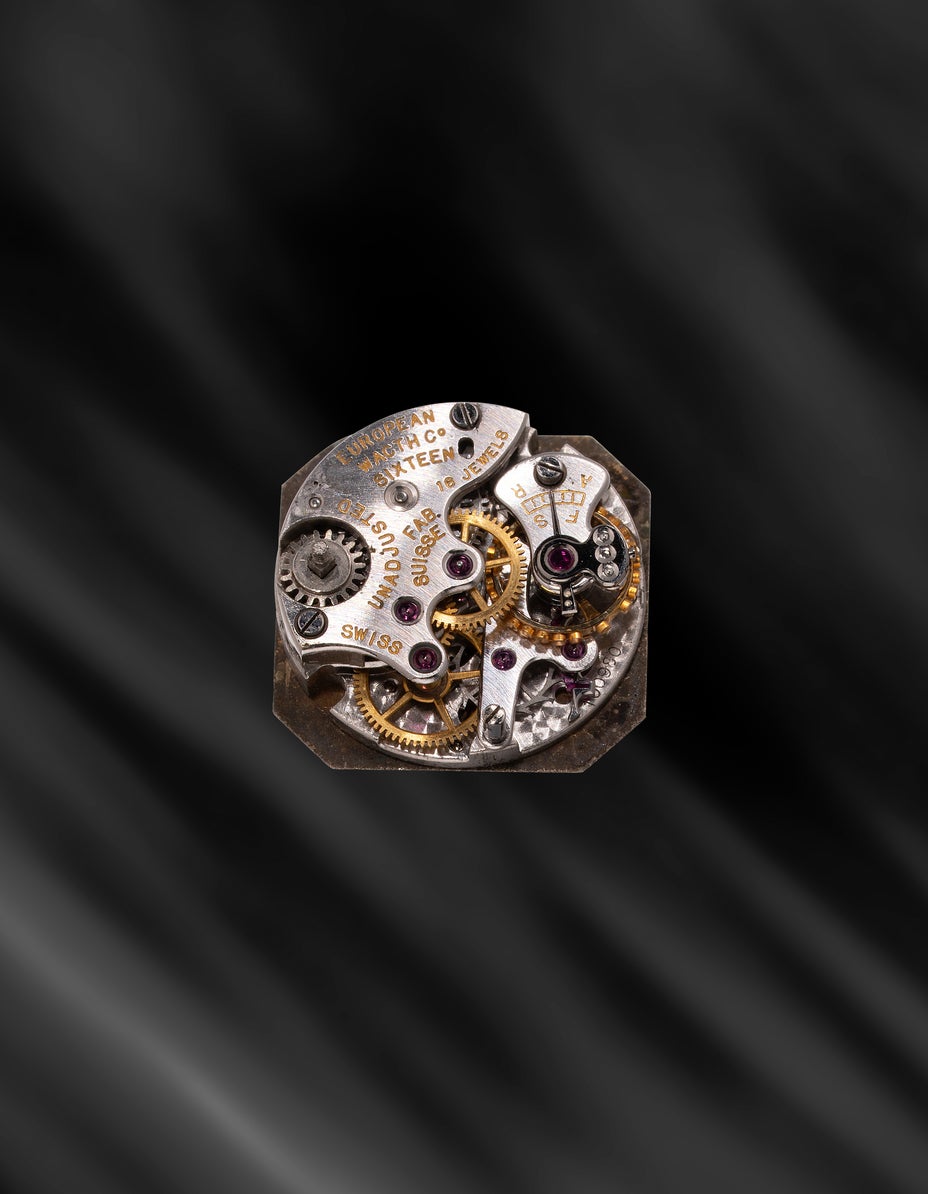
In 1937, Cartier secured a patent for this groundbreaking prism system, inspired by the principle of the periscope. Conceived by Gaston Cusin, a talented colleague of the renowned Maurice Couët (the mastermind behind Cartier’s iconic Mystery Clocks), the Prism Clock was created to captivate with pure visual wizardry. Cusin drew inspiration from periscope mechanics, ingeniously concealing the miniature clock movement and dial within the base. Two precisely angled prisms reflect and refract the dial and hands, making the time appear to float magically when viewed from the front at just the right angle—while the back remains mysteriously “empty.”
This clever illusion transforms a simple timepiece into a conversation-starting objet d’art, perfectly aligned with Cartier’s signature blend of technical innovation and playful elegance.
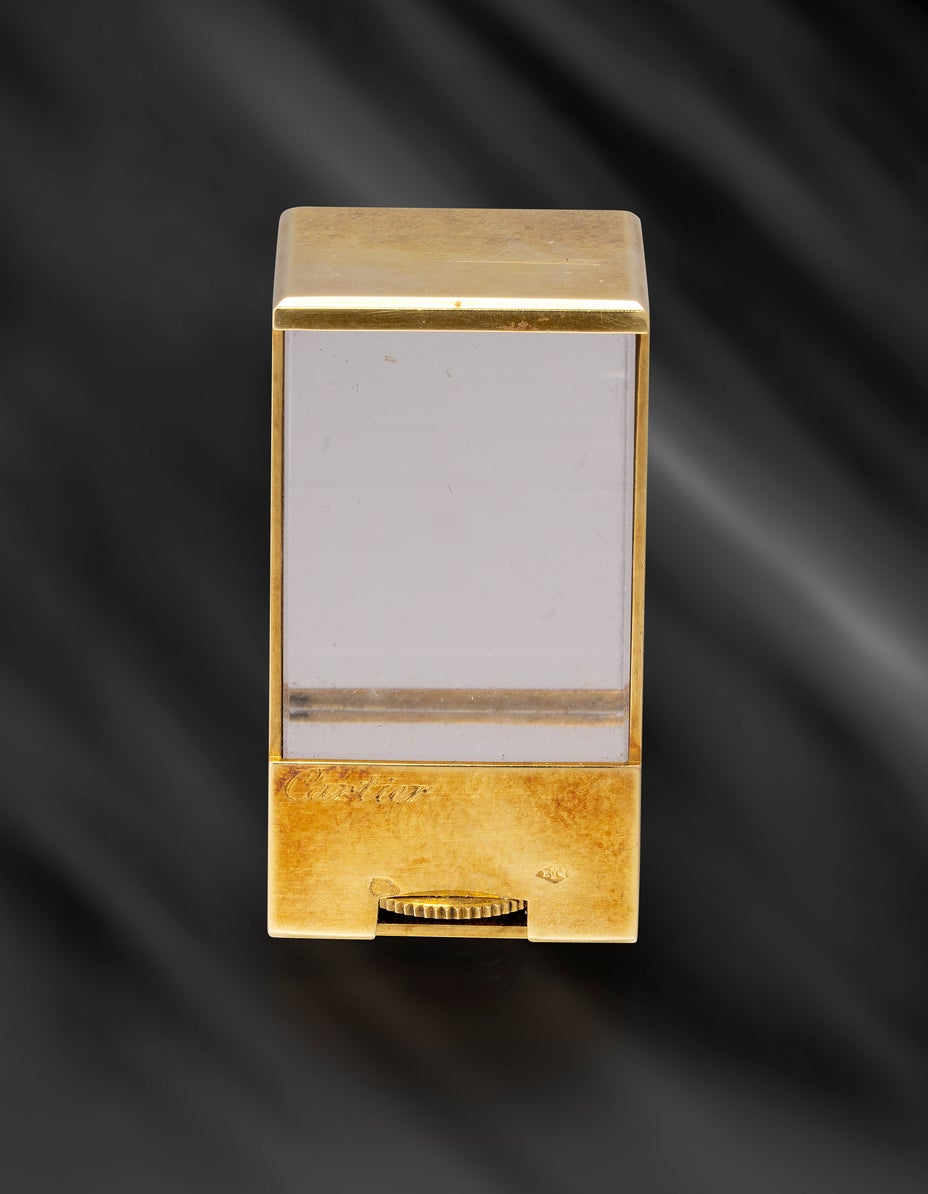
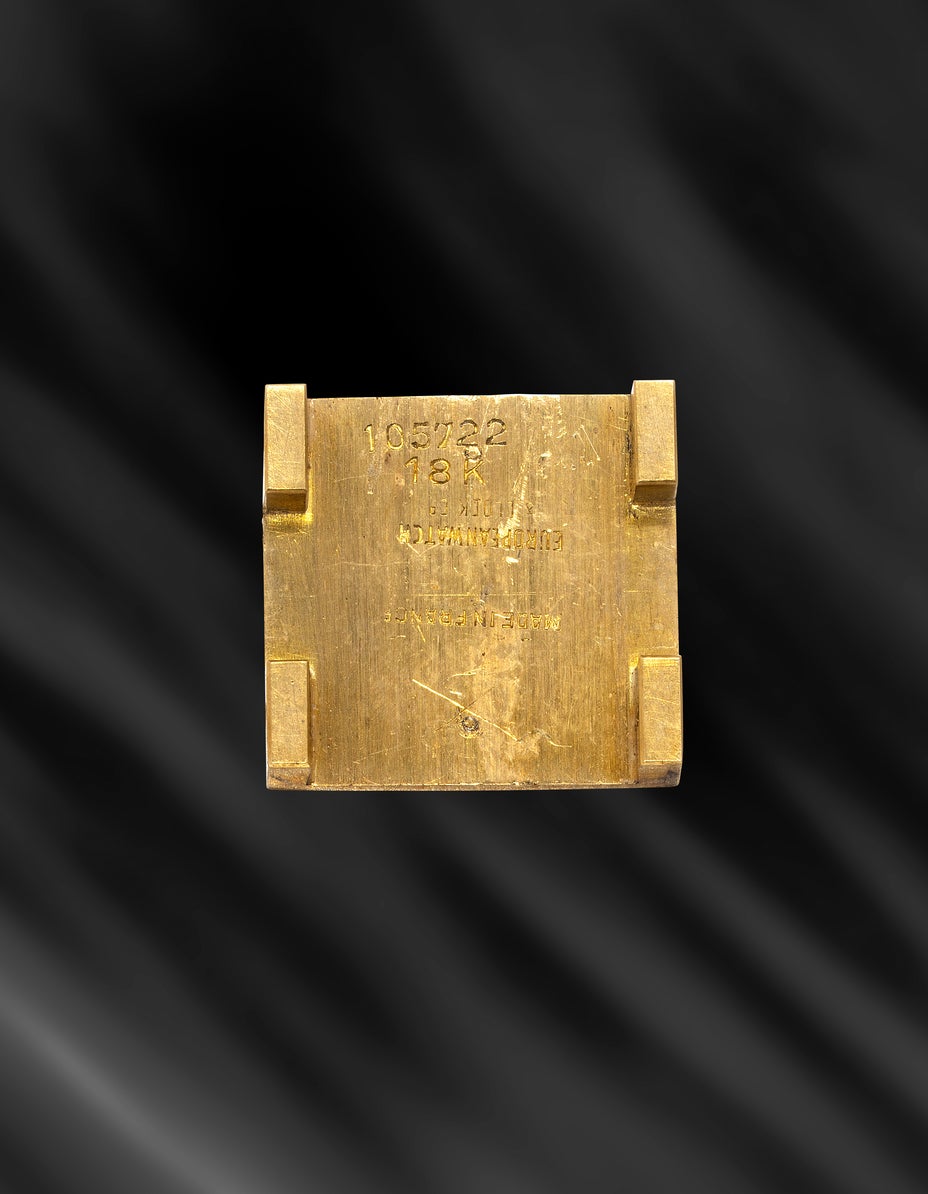
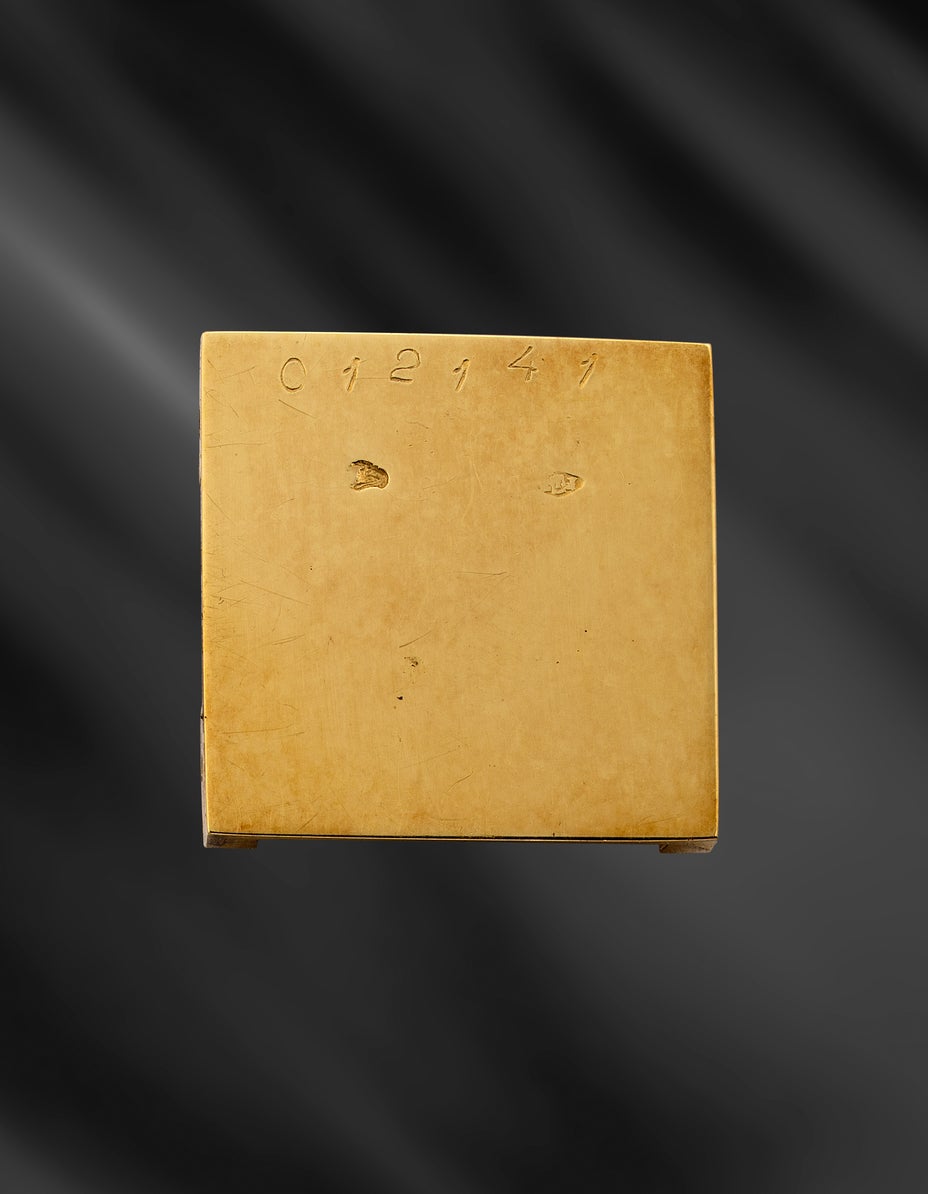
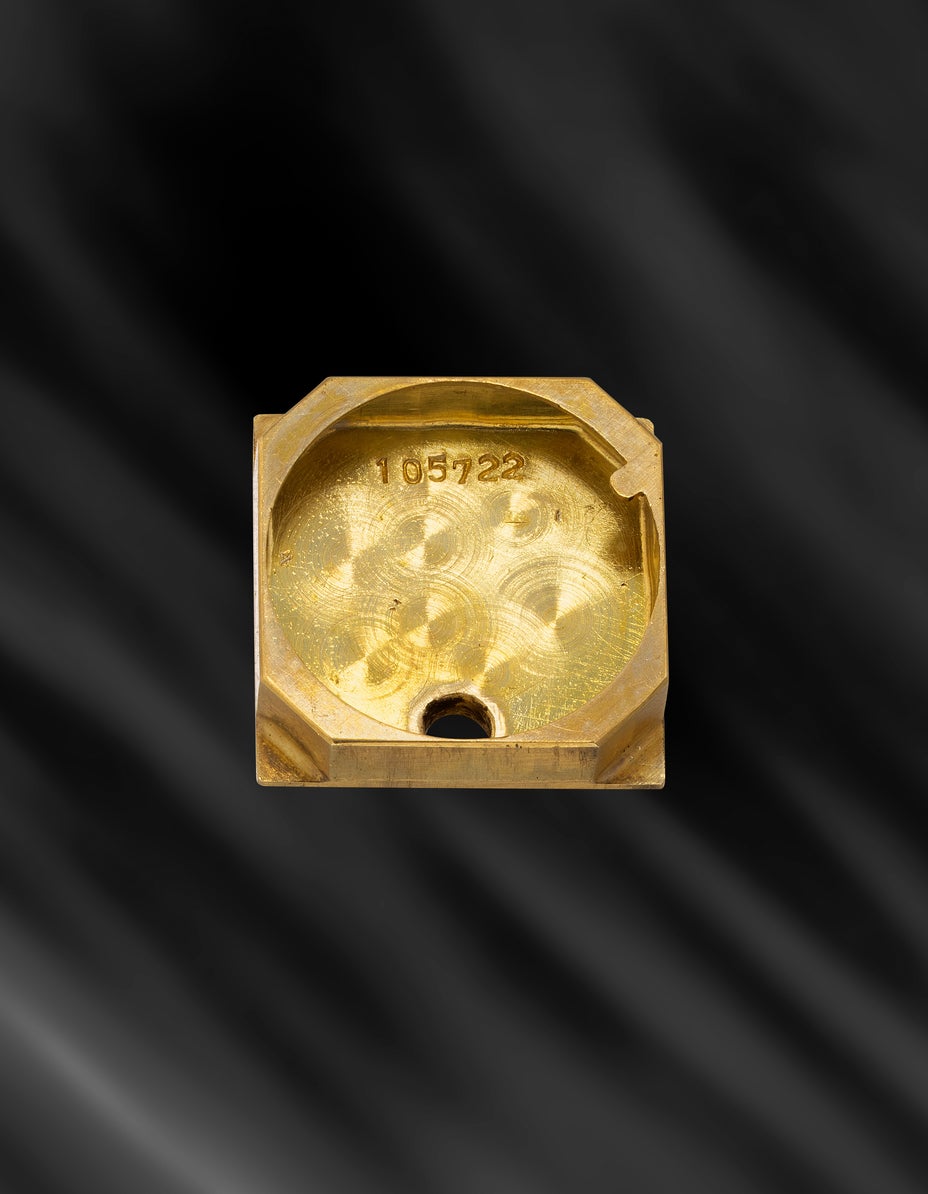
Such is the rarity of this model that, over the past decade, only a handful have ever appeared at public auction. Phillips had the honour to offer one of such in 2025 during Geneva Watch Auction: XXI. The present example features yellow gold numerals and complemented with yellow gold hands. Boasting its original Cartier stamped numbers, French eagle and EJ hallmarks, this clock is crafted in an even smaller case. As a final touch of refinement, this exceptional clock is accompanied by its original Cartier fitted presentation box signed Made in France.
Cartier
FrenchWith the Constitution of 1848 came a new standard for luxury in France. Founded one year prior by Louis-Francois Cartier, the house of Cartier was one of the first to use platinum in jewelry making. This incredibly expensive material became the stepping-stone for Cartier to experiment in form, mechanisms and attitude. It helped men move from pocket watches to wristwatches, effectively making the watch much more functional and prominent in a man's overall wardrobe.
Cartier did not only touch on functionality. Inspired by a commissioned painting by George Barbier featuring a black panther at the feet of an elegantly bejeweled woman, Cartier began incorporating wild animals in his designs—most notably, Cartier Panthère rings, bangle bracelets and watches. Yet it wasn't until the late 1960s that the house of Cartier debuted their iconic yellow and rose gold LOVE collection, which includes the famous bracelet that only a special screwdriver can open.