
229
Cartier
Mystery clock
A unique, extremely rare, impressive, and museum quality rock crystal, agate, rose quartz, nephrite, diamond, onyx, turquoise, mother-of-pearl, yellow gold and enamel mystery clock
Full-Cataloguing
- Mystery clock
- Important museum quality piece that features an 18th century chimera and is set with rock crystal, agate, diamonds, rose quartz, onyx, turquoise, seed pearl, mother-of-pearl, yellow gold and enamel
- We believe the present piece was purchased directly from Cartier
- It is prominently featured in Cartier literature
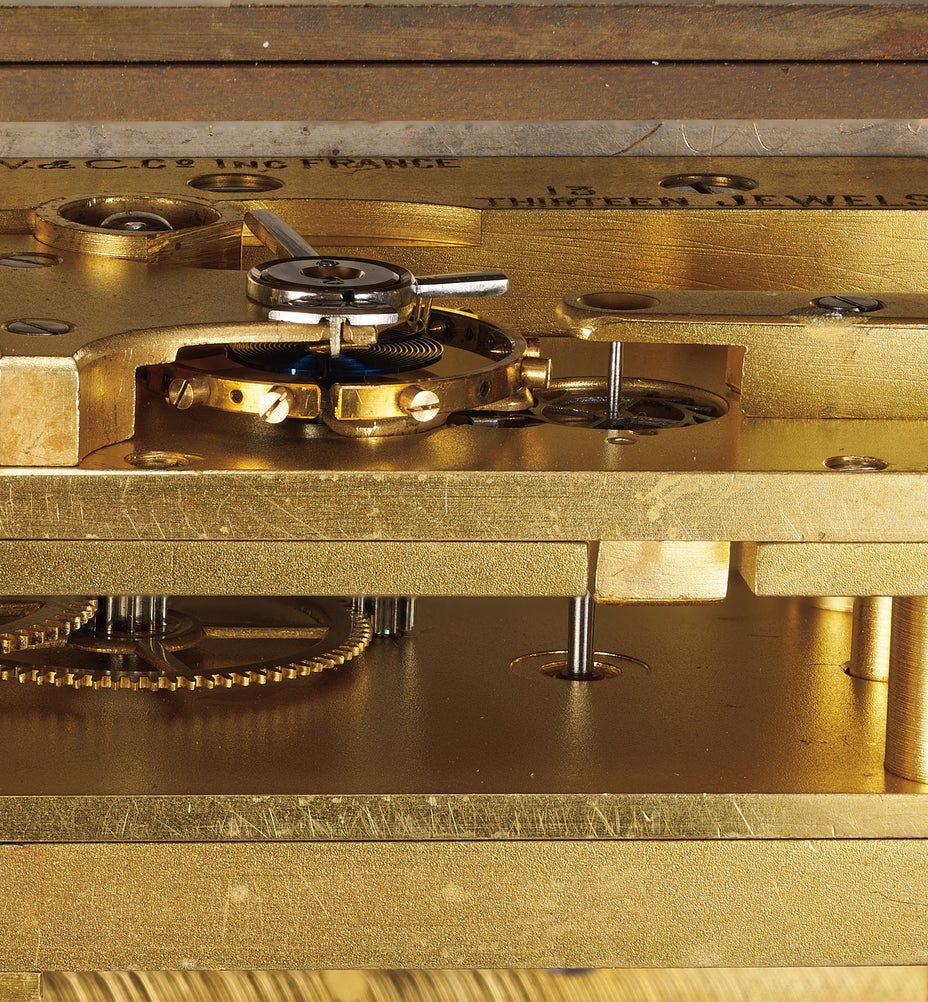
Cartier's Mystery Clocks are nothing short of mesmerizing and represent some of the most extraordinary feats in horological craftsmanship. First introduced in the early 20th century, these clocks are renowned for their seemingly magical design, in which the hands appear to float and move without any visible connection to the mechanism. The ingenious "mystery" lies in the hidden mechanism: transparent disks or rotating panels cleverly conceal the inner workings, giving the illusion that time is being measured by nothing more than sheer enchantment.
The movement’s construction was based on the creation of French clockmaker and illusionist Jean-Eugène Robert-Houdin in the 1830s. As a pioneer of modern illusionism, he paved the way for later watchmakers and illusionists, such as Maurice Coüet. Coüet came from a long lineage of watchmakers; both his father and grandfather worked for Breguet. He later moved to Paris to establish his own business, where he created table clocks exclusively for Cartier.
Each made by hand, Cartier lavishly adorned its Mystery clocks with an array of designs and materials, ranging from nephrite and jasper to diamonds, sapphires, emeralds, and rubies. Always expensive, they were never intended for mass production, and each piece is most likely unique. The designs were created by Charles Jacques or Georges Remy. While examples from the 1920s were more fantastical and often displayed chinoiserie or Egyptian themes, examples from the 1950s onward became more sculptural, experimenting with form and shape.
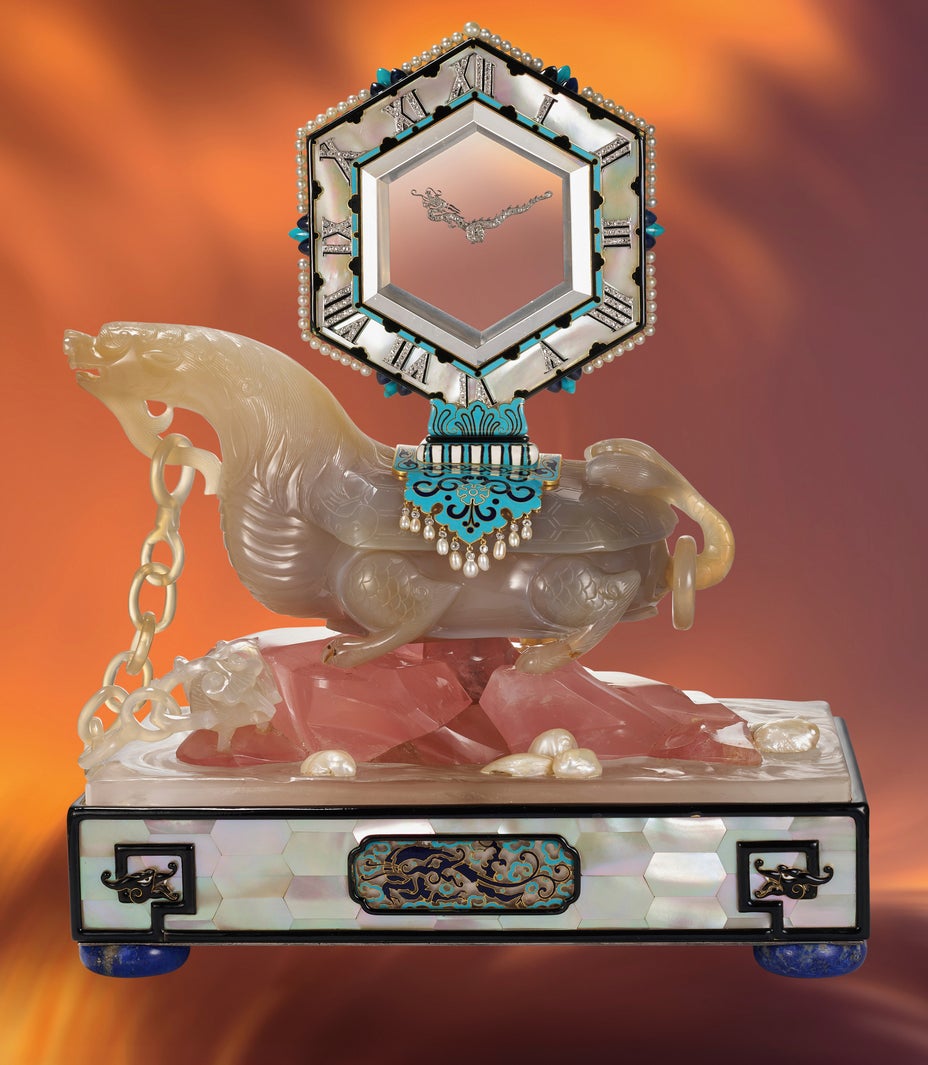
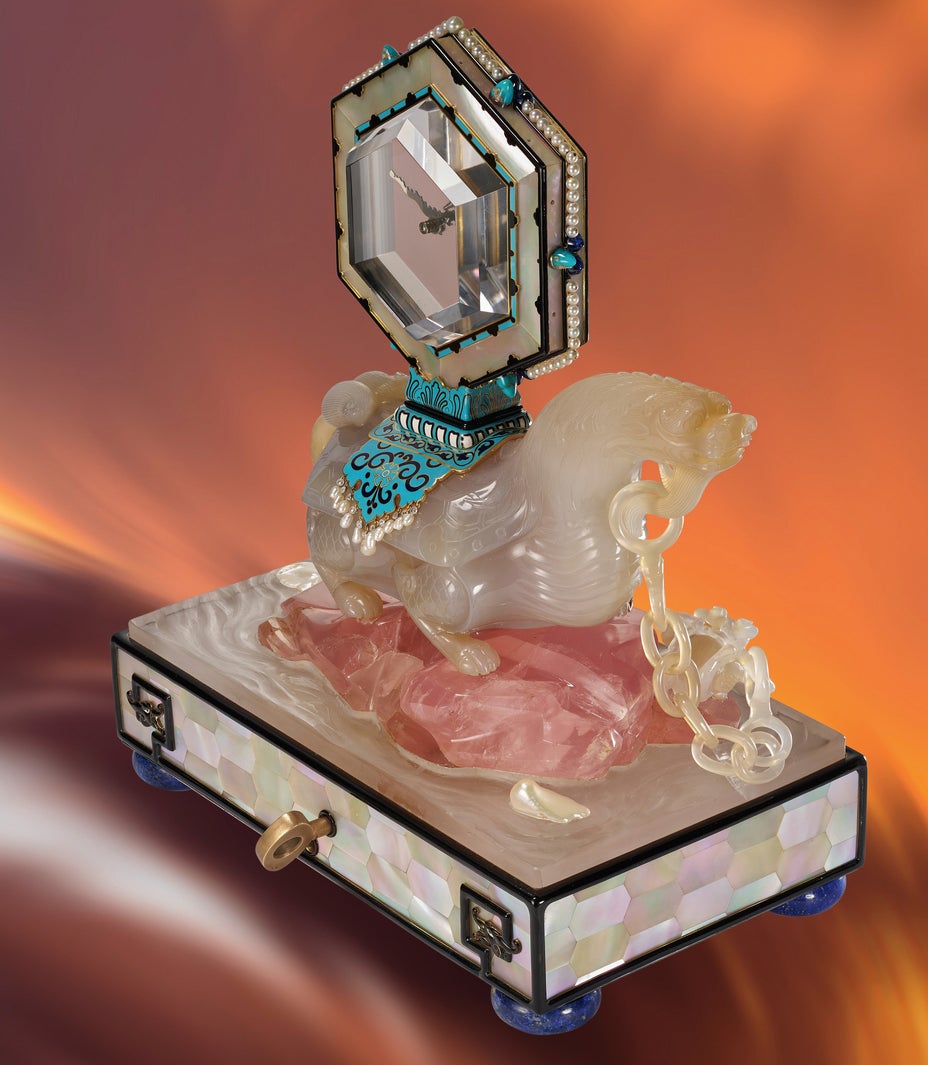
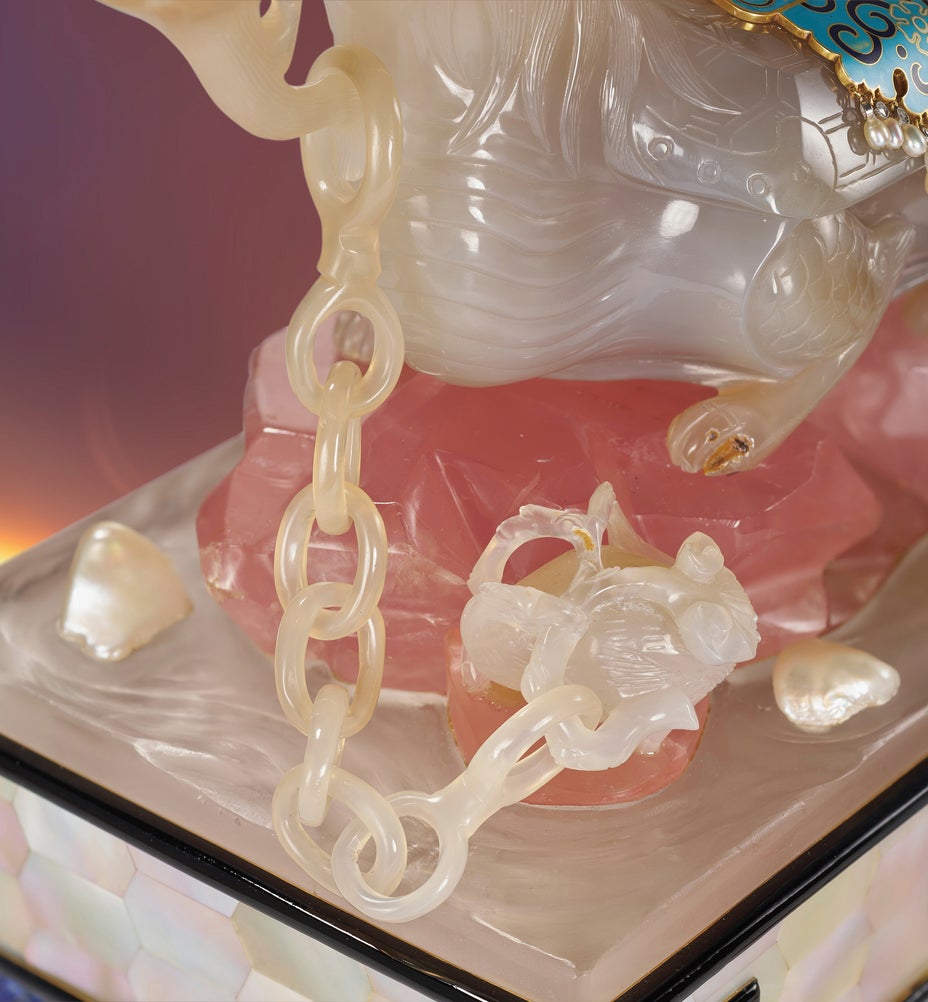
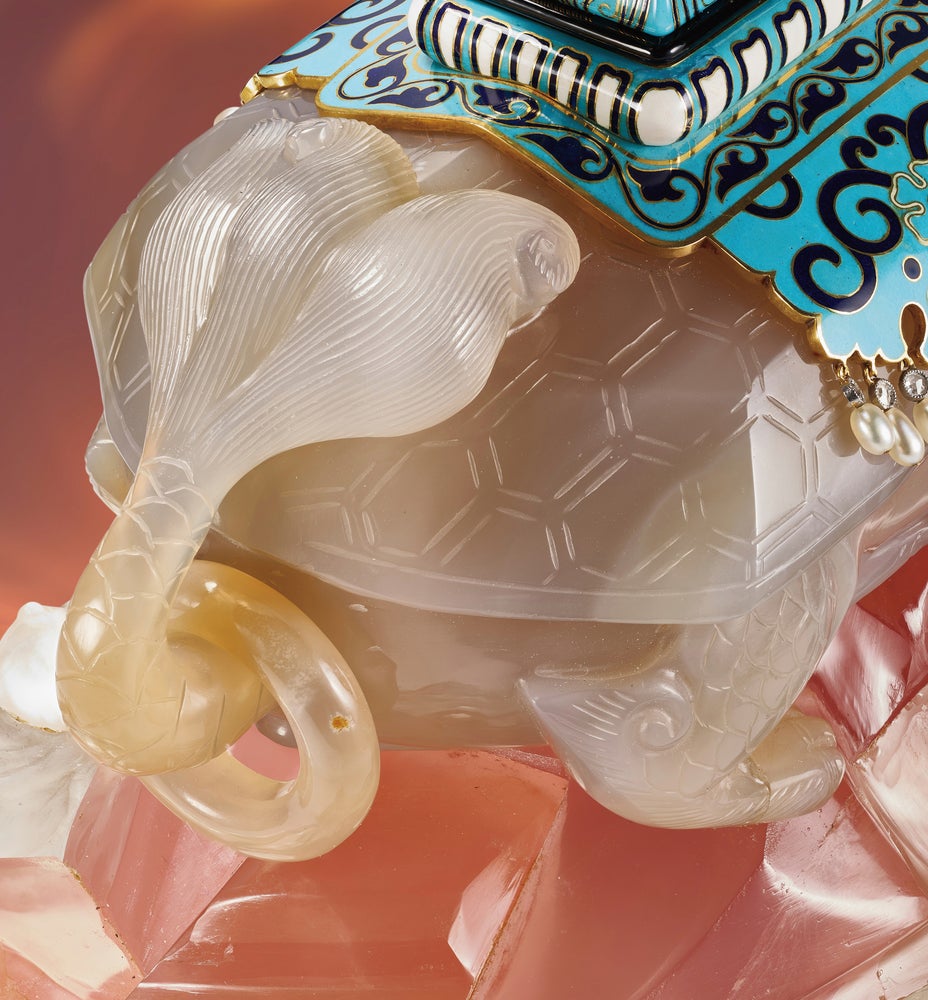
The present mystery clock is an imposing and stunning example that is without doubt museum quality and one of the most impressive mystery clocks Cartier produced. It features a beautiful sculpture depicting a bixie and dragon (chimera) suspended by a chain, which is most probably a 19th century creation that Cartier purchased and integrated into the masterpiece. A beautiful mother-of-pearl bezel is decorated with stylized clouds of black lacquer, diamonds, and turquoise, and the massive octagonal dial is set with diamond hands designed to resemble dragon wings. Below the mystery dial are seed pearls, giving the clock an additional touch of flair. The agate chimera is perched on sheets of rose quartz, which are supported by a mother-of-pearl and black lacquer box decorated with dragon and Art Deco motifs.
The bixie (辟邪), or chimera, is a mythical creature in Chinese folklore often depicted as a hybrid between a lion and a dragon. It is considered a protective figure believed to ward off evil spirits and negative energy. The bixie is associated with strength and protection and is frequently used as a symbolic guardian in Chinese art and architecture. In Chinese folklore, the dragon (龍) is a highly revered and significant mythical creature symbolizing power, strength, good fortune, and prosperity. Unlike the fearsome, destructive dragons of Western mythology, Chinese dragons are often seen as benevolent and auspicious beings closely associated with natural elements such as water, rain, and the heavens.
During this period, Cartier often incorporated elements from 18th and 19th-century China and Japan into its designs, as its salesmen frequently traveled to the Far East in search of exotic and rare treasures. In this case, it is likely that Cartier used an existing agate sculpture, reimagining it for the Western market.
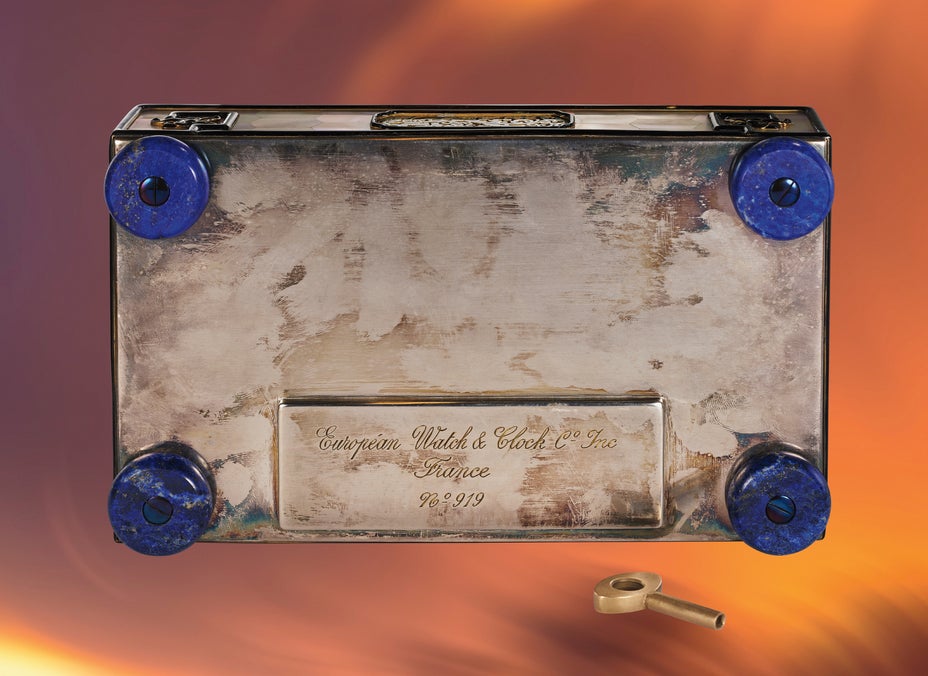
We believe the consignor purchased the present clock directly from Cartier in the 1980s, demonstrating how important the piece already was within the Cartier collection. Prominently featured in Cartier literature, this historically significant clock will most likely remain hidden and cherished again for many years to come. Its public sale at auction offers a unique opportunity to acquire not only an intricate and beautiful piece of horological history, but also a historically significant Art Deco object.
Cartier
FrenchWith the Constitution of 1848 came a new standard for luxury in France. Founded one year prior by Louis-Francois Cartier, the house of Cartier was one of the first to use platinum in jewelry making. This incredibly expensive material became the stepping-stone for Cartier to experiment in form, mechanisms and attitude. It helped men move from pocket watches to wristwatches, effectively making the watch much more functional and prominent in a man's overall wardrobe.
Cartier did not only touch on functionality. Inspired by a commissioned painting by George Barbier featuring a black panther at the feet of an elegantly bejeweled woman, Cartier began incorporating wild animals in his designs—most notably, Cartier Panthère rings, bangle bracelets and watches. Yet it wasn't until the late 1960s that the house of Cartier debuted their iconic yellow and rose gold LOVE collection, which includes the famous bracelet that only a special screwdriver can open.