920
Cartier
Tonneau
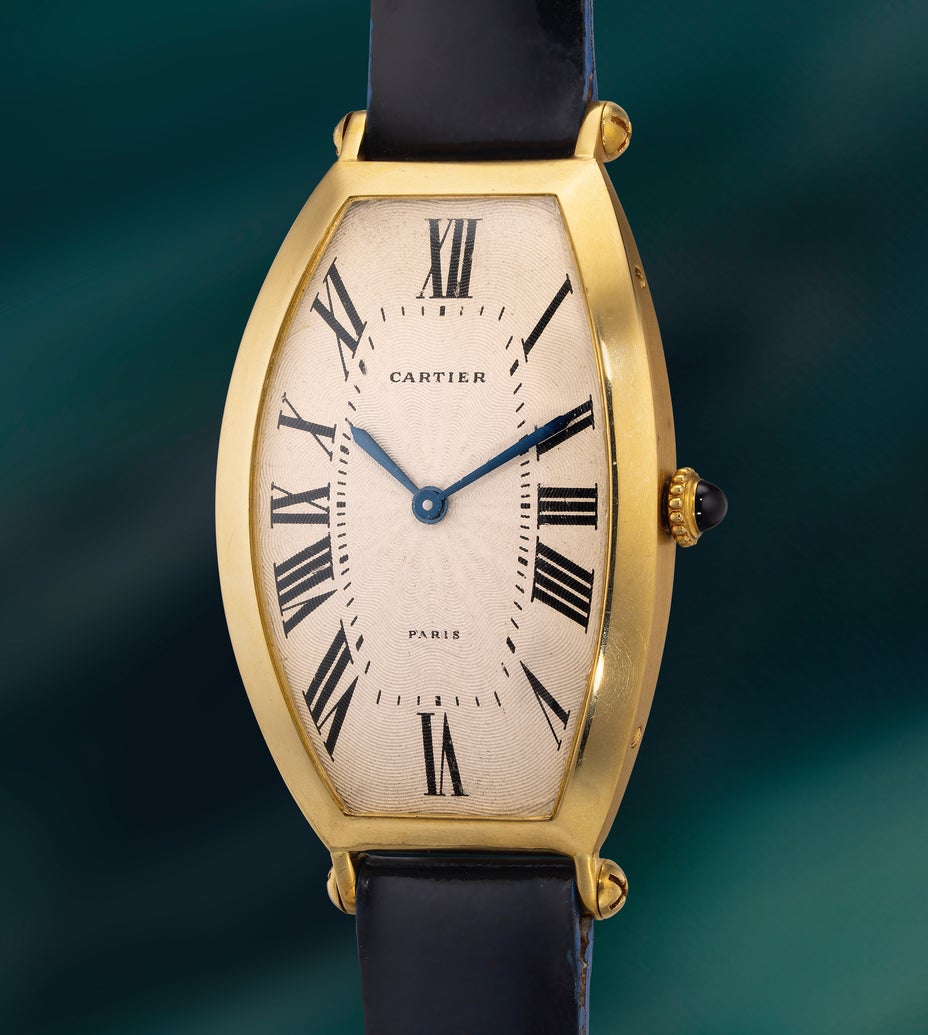
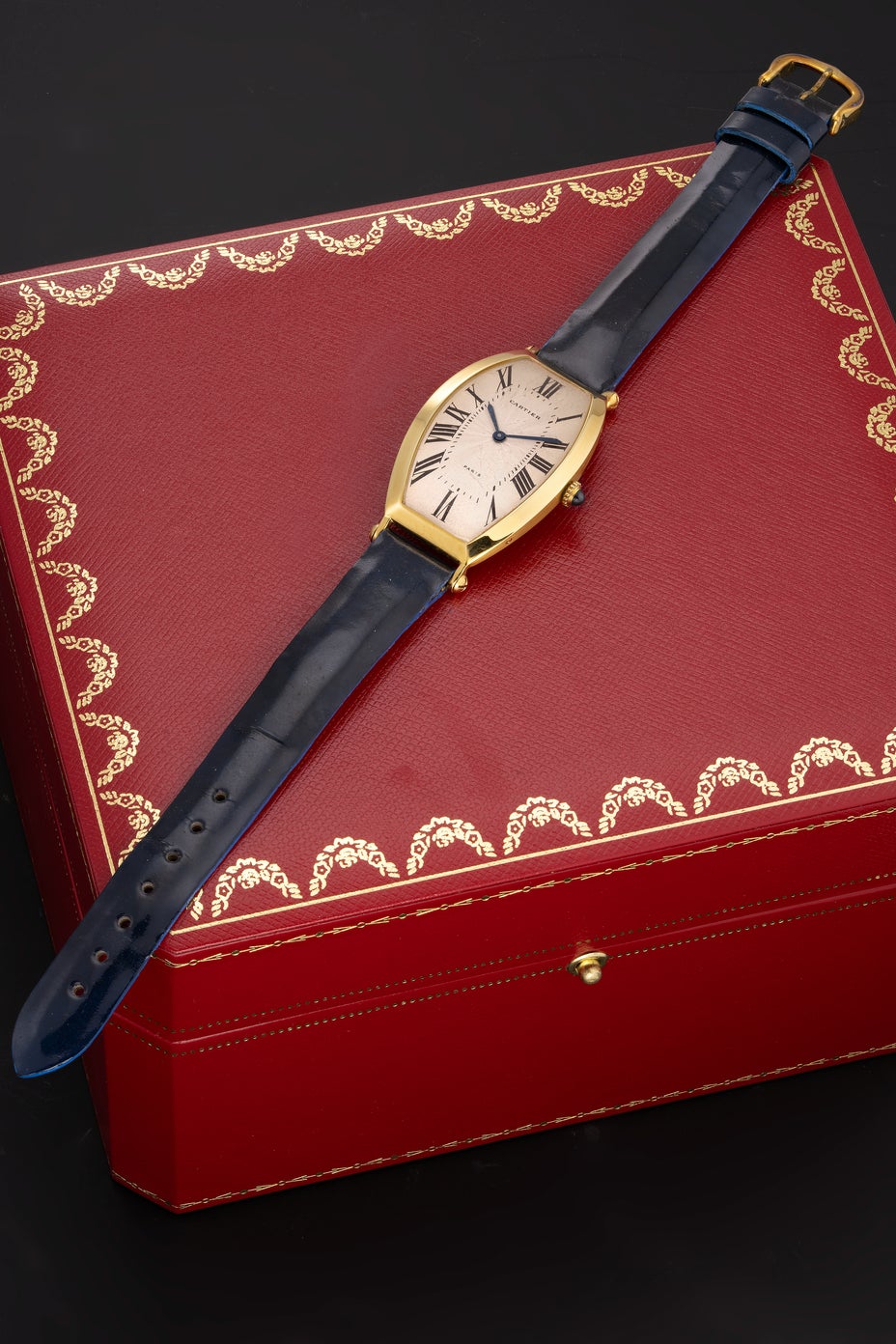
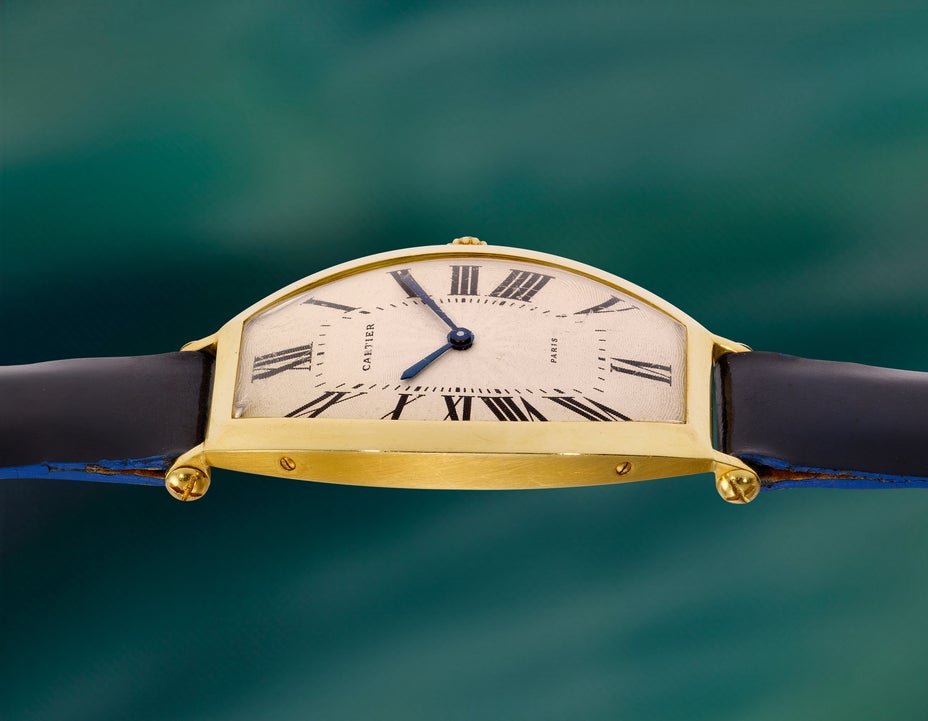
A rare and elegant yellow gold tonneau-shaped wristwatch with guilloché dial and presentation box
Full-Cataloguing
- Guilloché dial with traditional blued hands and Roman numerals
- Paris-signed without hidden Cartier signature
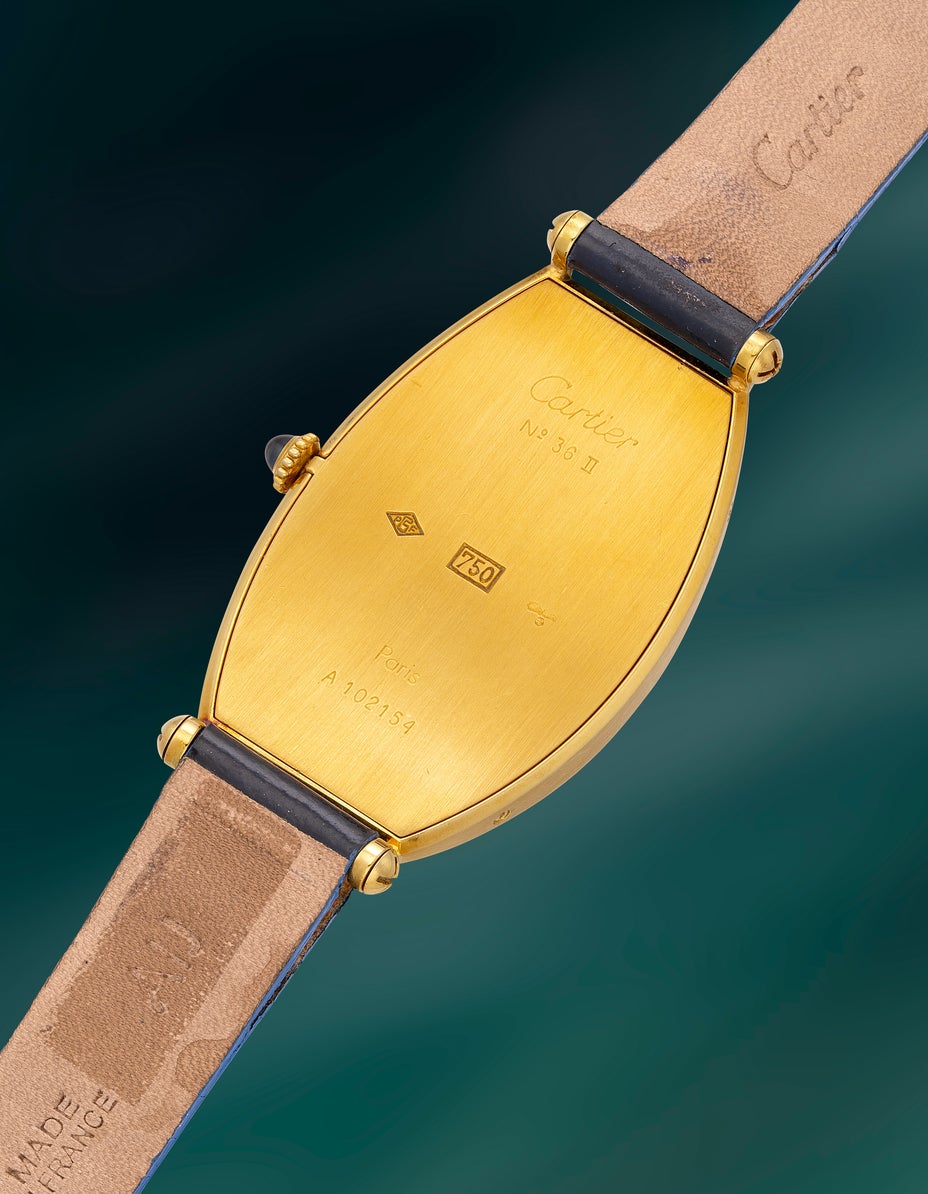
- Crisp hallmarks and engravings on the caseback
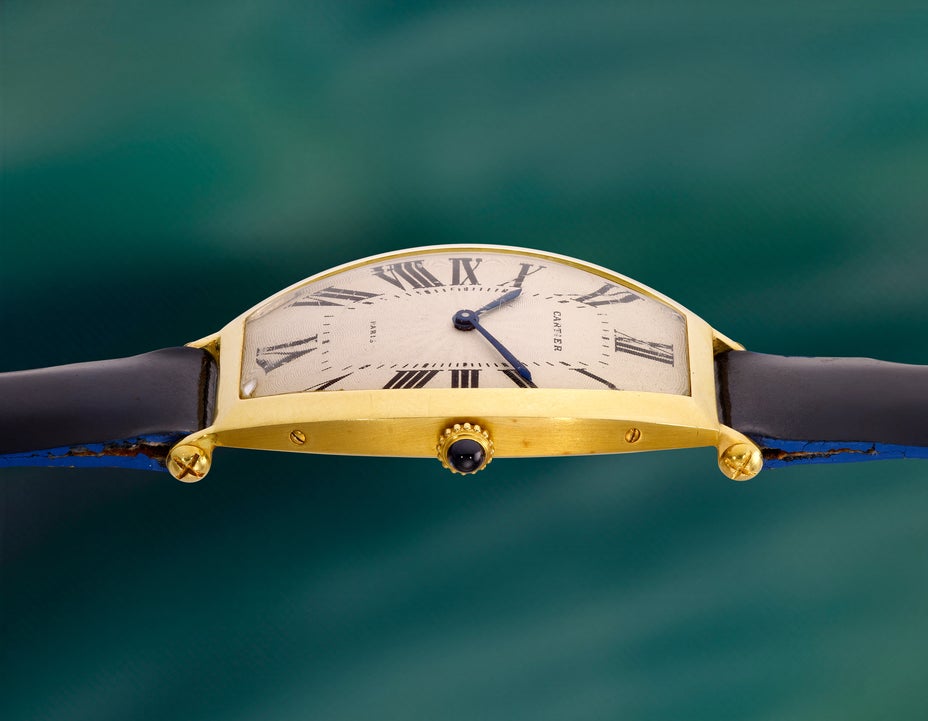
The Tonneau, one of the most iconic Cartier wristwatches from the early 20th century, was the second watch designed by Louis Cartier, after Santos Dumont, in 1906. With an unconventional barrel-shaped case instead of a rounded case, the Tonneau was easily recognizable and stood out amongst other watches in the era as a symbol of Art Deco style watches.
The dial of the present watch is a typical Cartier dial with the iconic Roman numerals that carries the ethos of early 20th century Cartier aesthetics. The dial is a rare Paris-signed dial, which specifies this Tonneau was made in Paris and must-likely retailed at the legendary 23 place Vendôme boutique in Paris, in which present day Cartier watches do not bear such signature anymore. The originally off white dial, now aged with charm, paired with the traditional Cartier blued hour and minutes hands and sapphire cabochon crown, elevates the vintage look of the watch. The subtle guilloché on the dial is also a notable fine touch to Cartier’s artistry in decorative watchmaking.
The Cartier Tonneau separates the Maison from other watch manufacturers to establish as an icon in classy and innovative watch designs. This Tonneau is the continuation of the essence of the Maison’s design perspective; it is the desirable timepiece for Cartier’s loyal patrons and watch connoisseurs to admire the diminishing masculine elegance in modern times.
Cartier
FrenchWith the Constitution of 1848 came a new standard for luxury in France. Founded one year prior by Louis-Francois Cartier, the house of Cartier was one of the first to use platinum in jewelry making. This incredibly expensive material became the stepping-stone for Cartier to experiment in form, mechanisms and attitude. It helped men move from pocket watches to wristwatches, effectively making the watch much more functional and prominent in a man's overall wardrobe.
Cartier did not only touch on functionality. Inspired by a commissioned painting by George Barbier featuring a black panther at the feet of an elegantly bejeweled woman, Cartier began incorporating wild animals in his designs—most notably, Cartier Panthère rings, bangle bracelets and watches. Yet it wasn't until the late 1960s that the house of Cartier debuted their iconic yellow and rose gold LOVE collection, which includes the famous bracelet that only a special screwdriver can open.