8112
Cartier
Ref. W0100110
Carriage clock
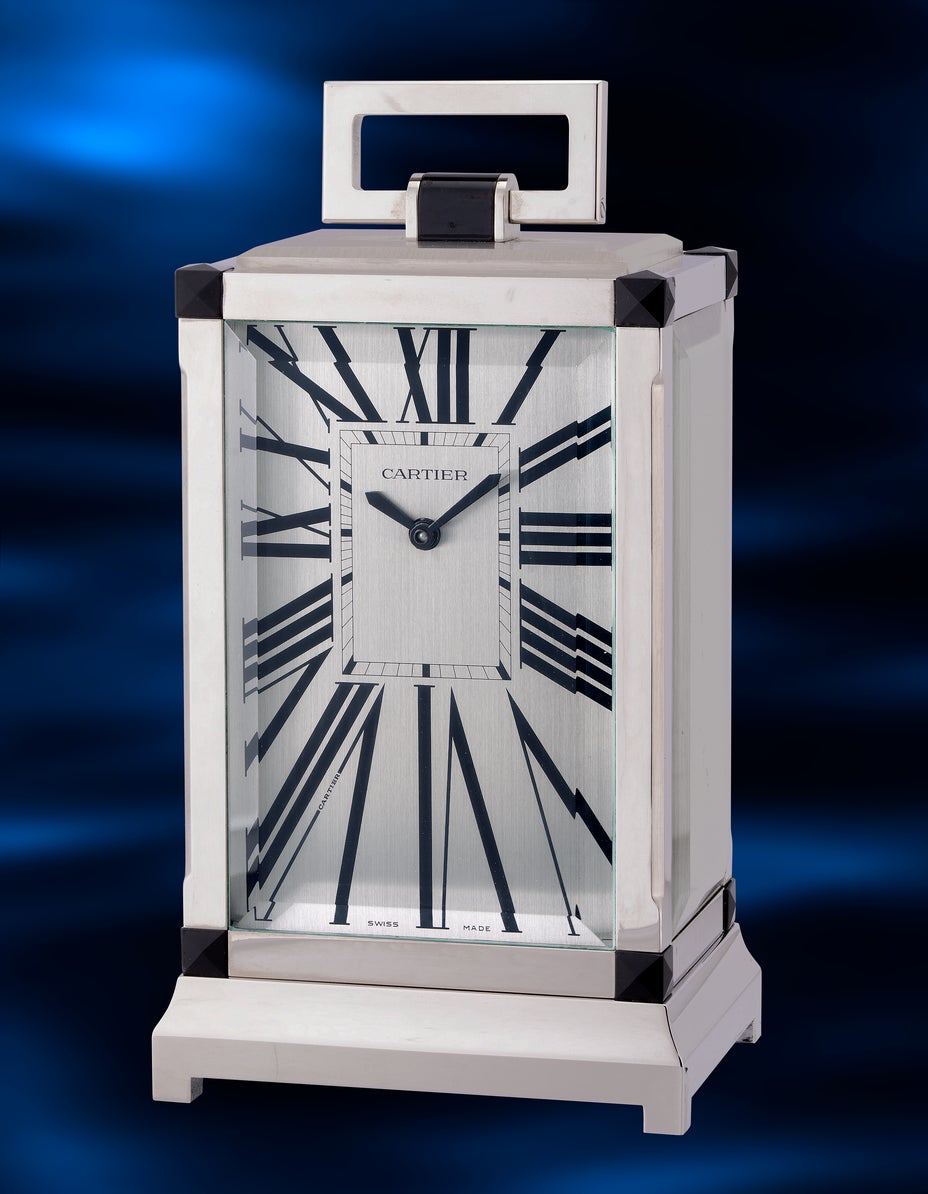
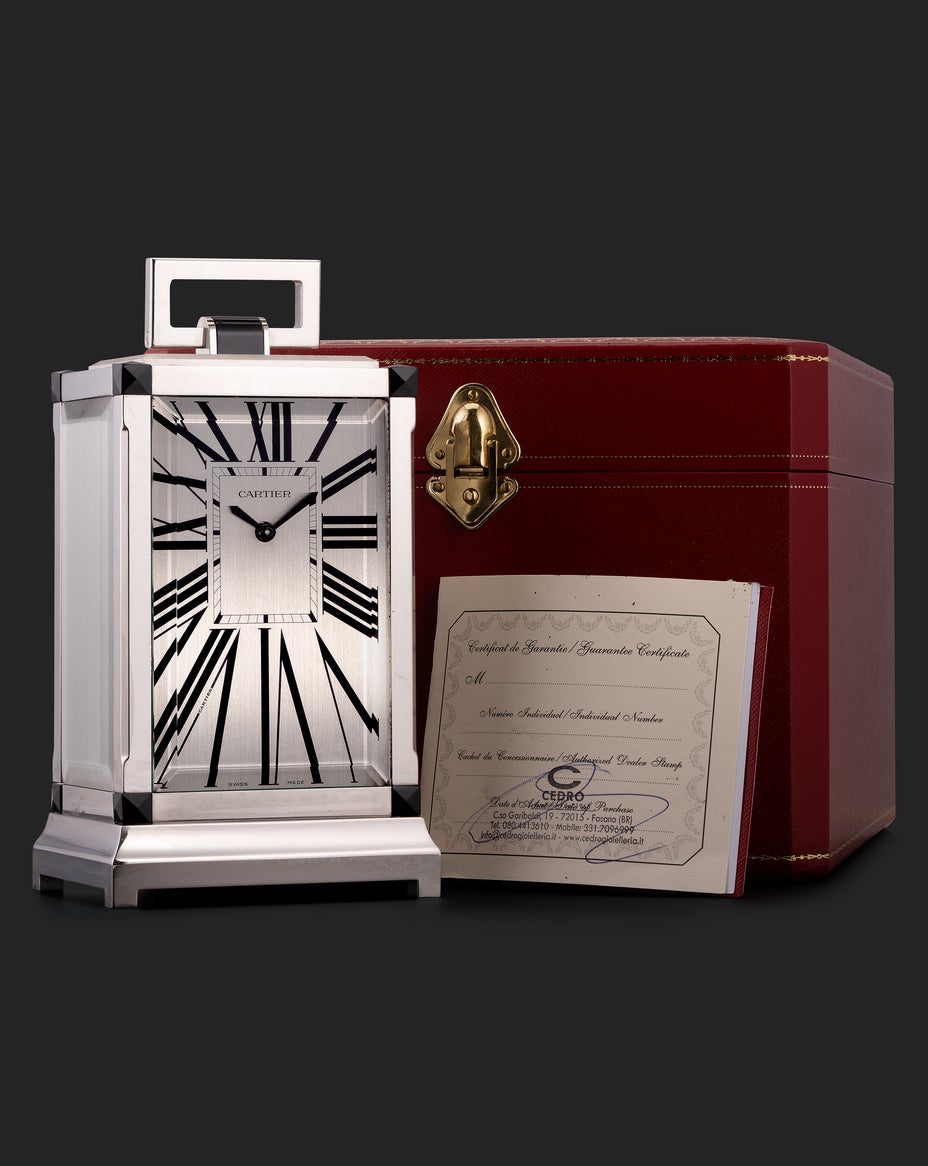
A rarely seen and attractive palladium finished stainless steel carriage clock with onyx embellishment, onyx decorated winding key, guarantee and presentation box
Full-Cataloguing
- The carriage clock in intriguing and attractive Art Deco style has a finely polished palladium finished case, decorated with pyramidal onyx cabochons at the corners and mineral glass on the sides. The dial echoes the colour of the case with a silver coloured satin-brushed dial, paired with the signature Roman numerals and chemin de fer track of Cartier. The secret signature of the Parisian Maison can also be seen at the VII numeral.
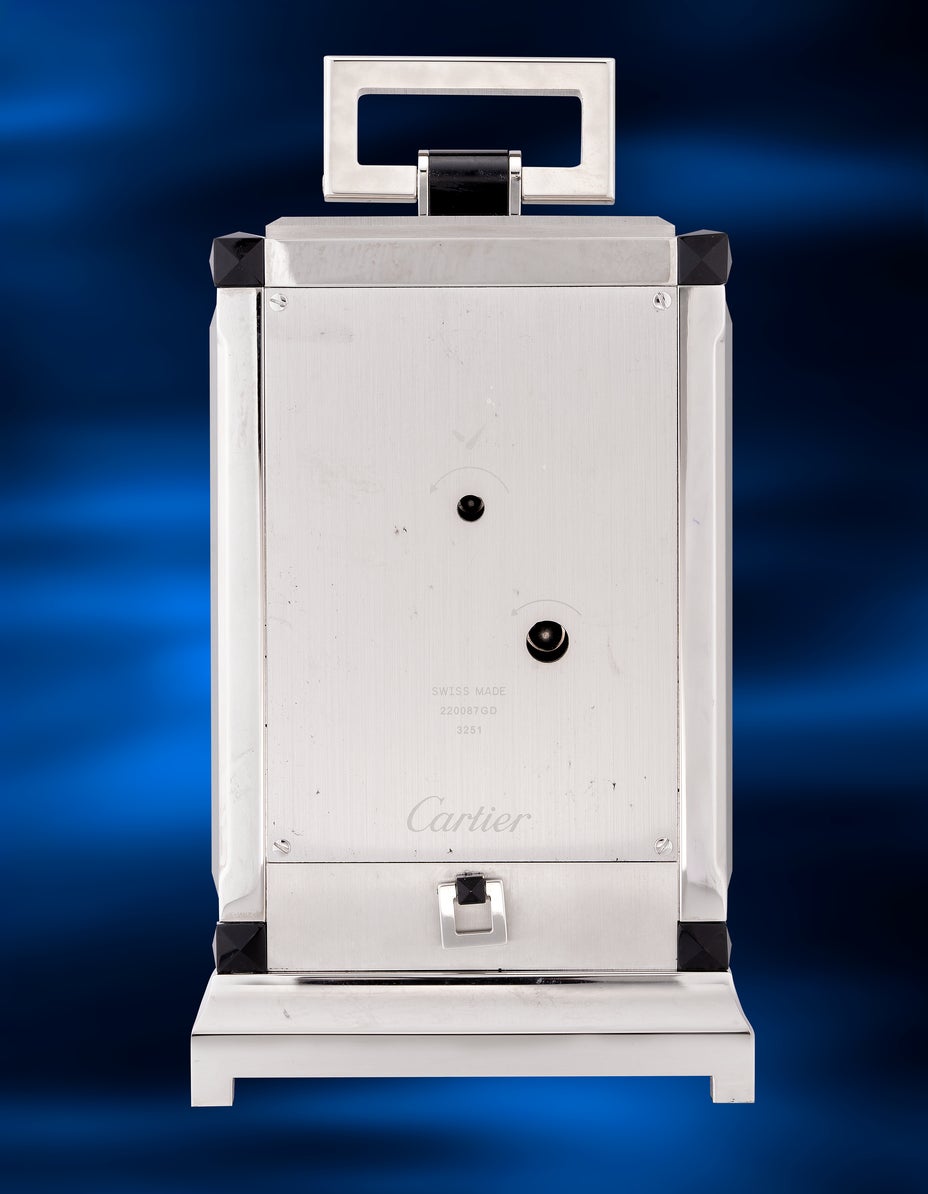
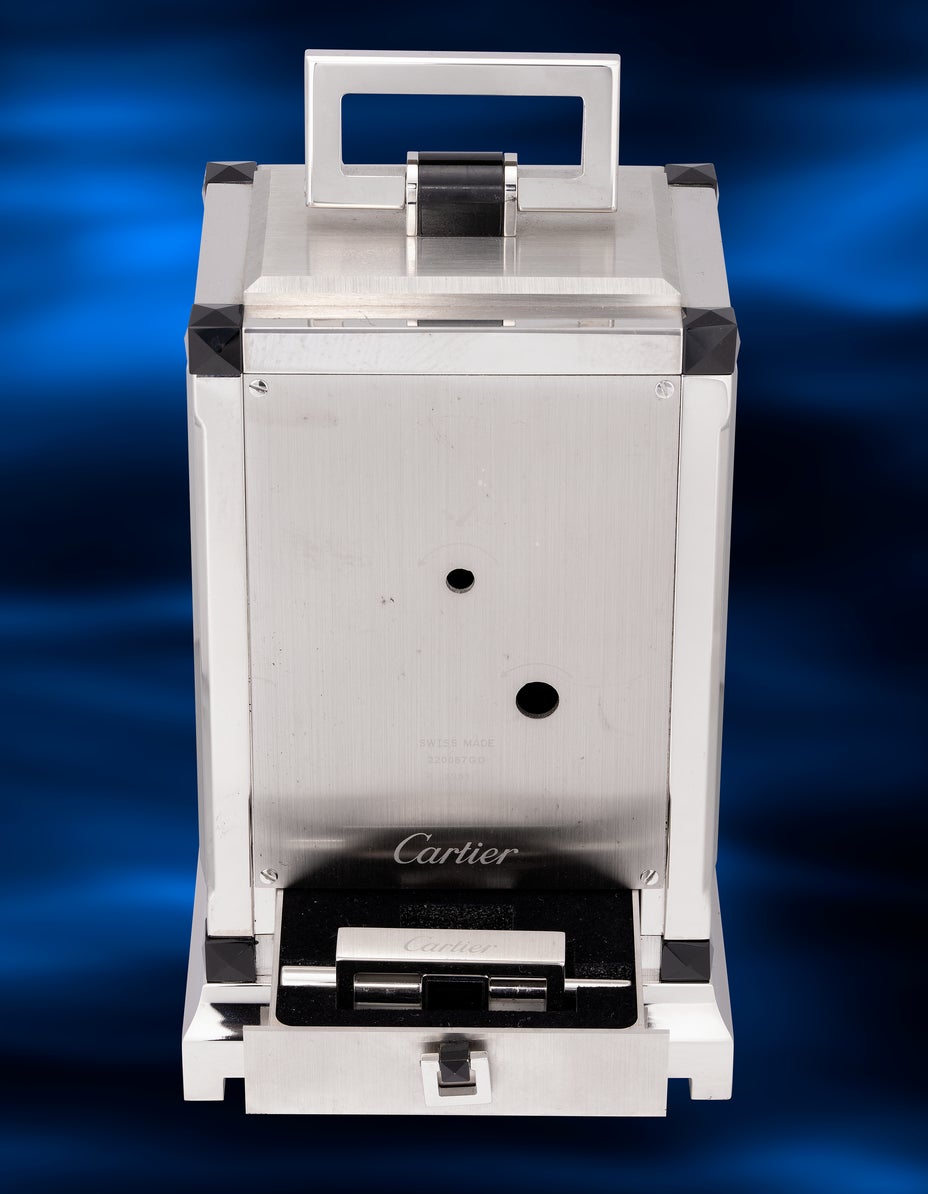
- The carriage clock runs on a 8-day power reserve, it is an ideal clock to be an eye-grabbing piece without the fuss of constant winding. It comes with a Cartier winding key decorated with onyx cabochon, showing Cartier’s attention to small accessories.
- This clock grabs the essence of signature Cartier Art Deco designs and modernization of century-old carriage clocks. It is a rare collector’s item for Cartier lovers and clockwork enthusiasts.
Cartier
FrenchWith the Constitution of 1848 came a new standard for luxury in France. Founded one year prior by Louis-Francois Cartier, the house of Cartier was one of the first to use platinum in jewelry making. This incredibly expensive material became the stepping-stone for Cartier to experiment in form, mechanisms and attitude. It helped men move from pocket watches to wristwatches, effectively making the watch much more functional and prominent in a man's overall wardrobe.
Cartier did not only touch on functionality. Inspired by a commissioned painting by George Barbier featuring a black panther at the feet of an elegantly bejeweled woman, Cartier began incorporating wild animals in his designs—most notably, Cartier Panthère rings, bangle bracelets and watches. Yet it wasn't until the late 1960s that the house of Cartier debuted their iconic yellow and rose gold LOVE collection, which includes the famous bracelet that only a special screwdriver can open.