132
Cartier
Rectangulaire
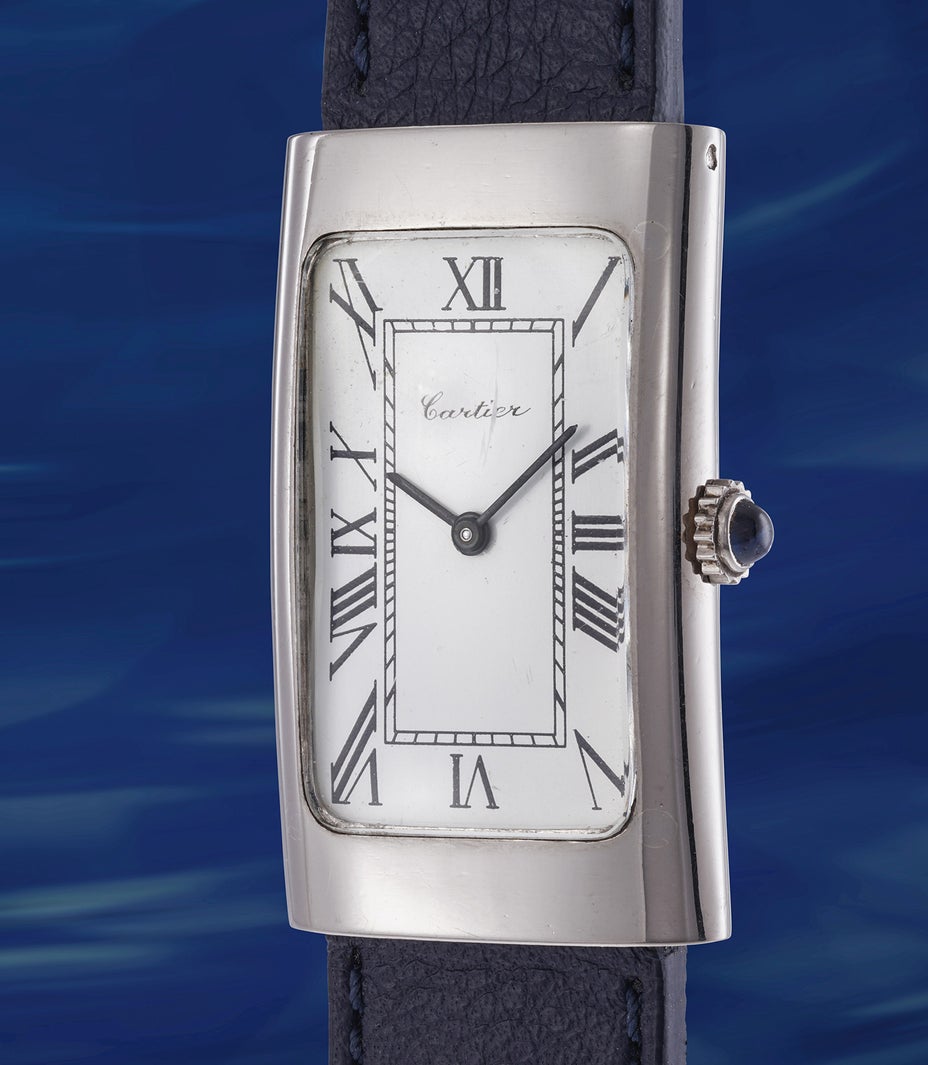
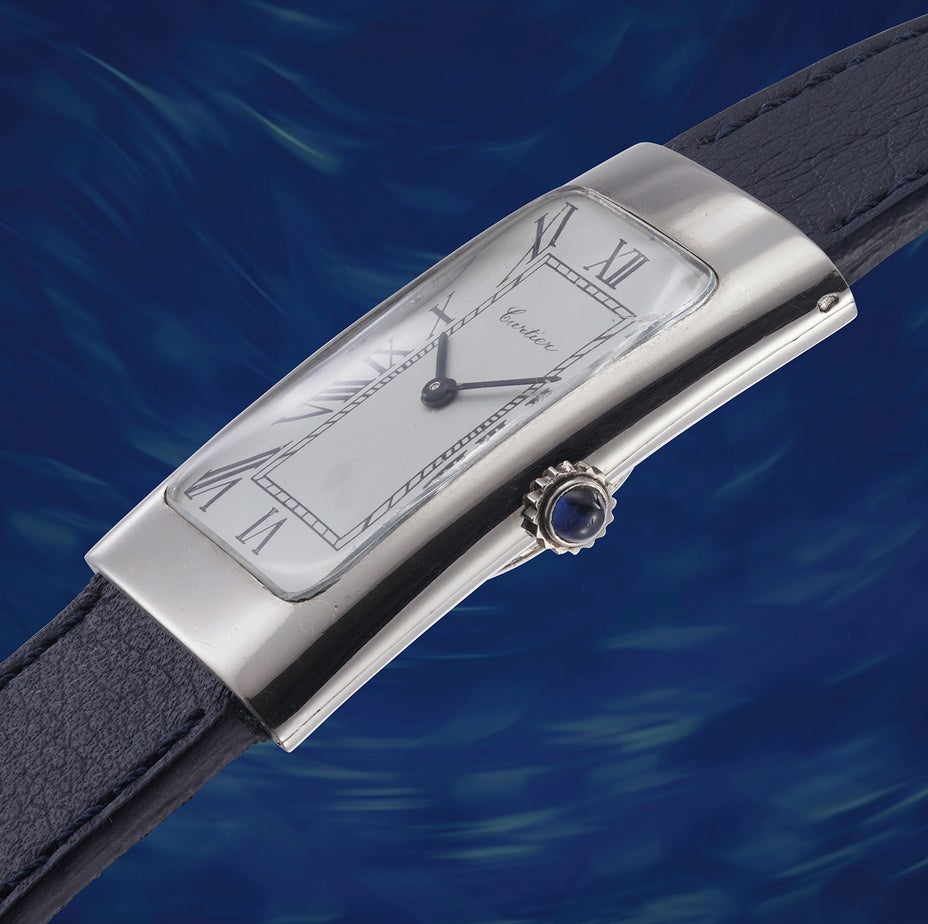
An elegant and unusual white gold rectangular wristwatch with Roman numerals
Full-Cataloguing
When wristwatches first appeared in the early 20th century, they were little more than pocket watches with lugs soldered on. Cartier broke convention by introducing shaped cases—Tonneau, Tortue, and Tank—that would become milestones of horological design.
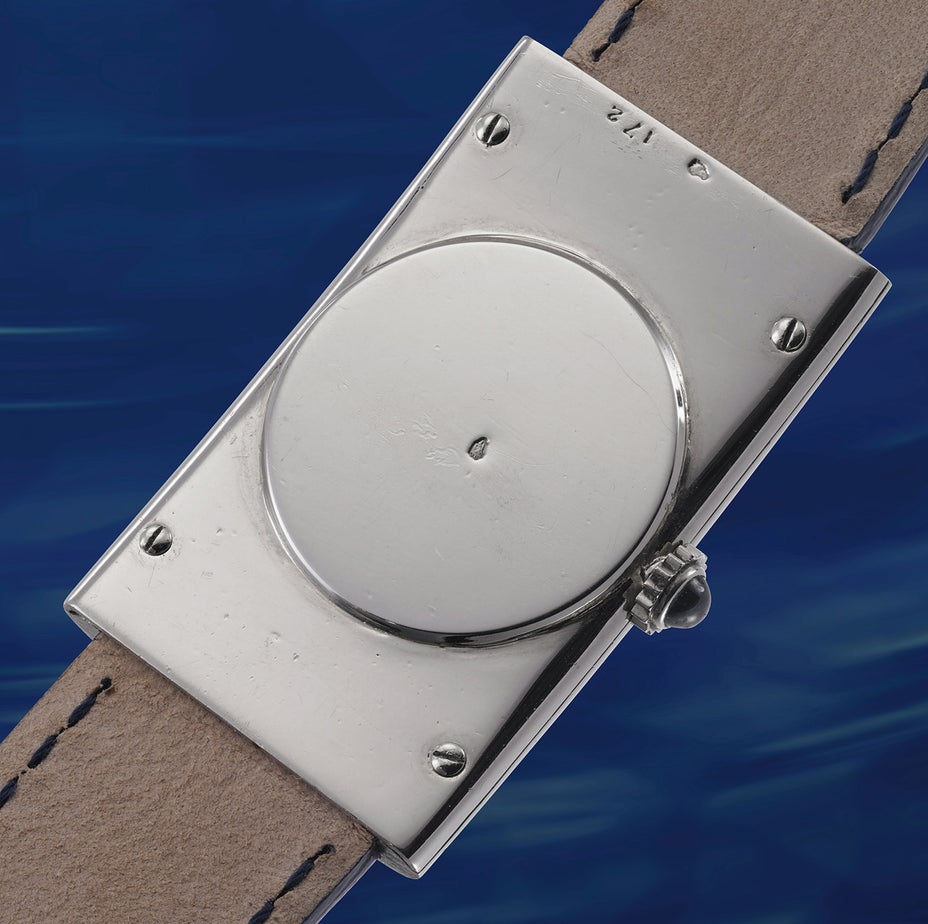
The present example, however, is no ordinary model, but a rarely found Rectangulaire. Produced in the 1970s, it features a rare rounded case without lugs, most likely retailed by Cartier Paris, as confirmed by the crisp eagle head hallmark on the case. Its extra-slim profile and integrated leather strap ensure it sits beautifully on the wrist, while the dial is distinguished by an unusual Cartier signature font. Even rarer is the Vacheron Constantin movement, showing how Cartier had outsourced their movements in the past. The present watch is prominently displayed in Cartier White Bianco by Osvaldo Patrizzi, page 189, Antiquorum Editions.
Cartier
FrenchWith the Constitution of 1848 came a new standard for luxury in France. Founded one year prior by Louis-Francois Cartier, the house of Cartier was one of the first to use platinum in jewelry making. This incredibly expensive material became the stepping-stone for Cartier to experiment in form, mechanisms and attitude. It helped men move from pocket watches to wristwatches, effectively making the watch much more functional and prominent in a man's overall wardrobe.
Cartier did not only touch on functionality. Inspired by a commissioned painting by George Barbier featuring a black panther at the feet of an elegantly bejeweled woman, Cartier began incorporating wild animals in his designs—most notably, Cartier Panthère rings, bangle bracelets and watches. Yet it wasn't until the late 1960s that the house of Cartier debuted their iconic yellow and rose gold LOVE collection, which includes the famous bracelet that only a special screwdriver can open.