227
Cartier
"Tank Basculante"
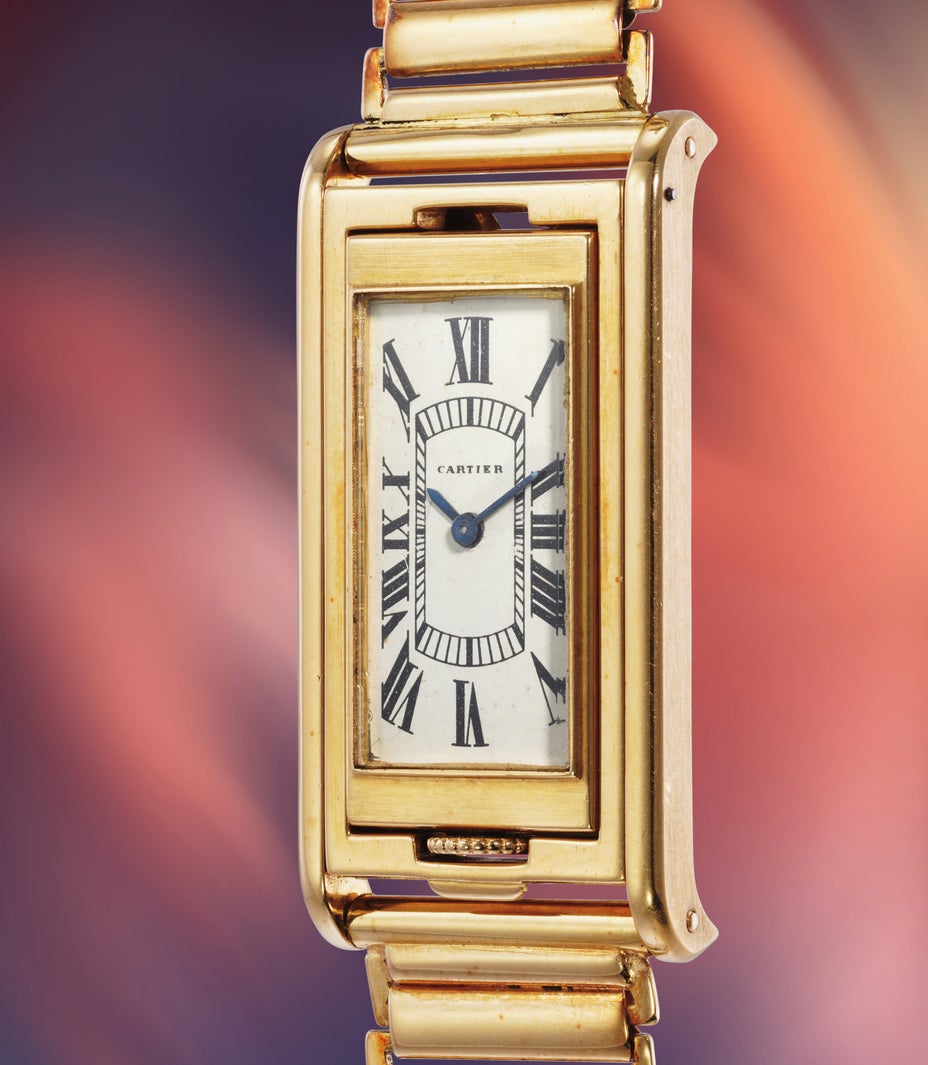
A fine and attractive rectangular shaped yellow gold "basculante" wristwatch with Gay Frères bracelet
Full-Cataloguing
- Early version of the Basculante from circa 1945
- Preserved in excellent and attractive condition
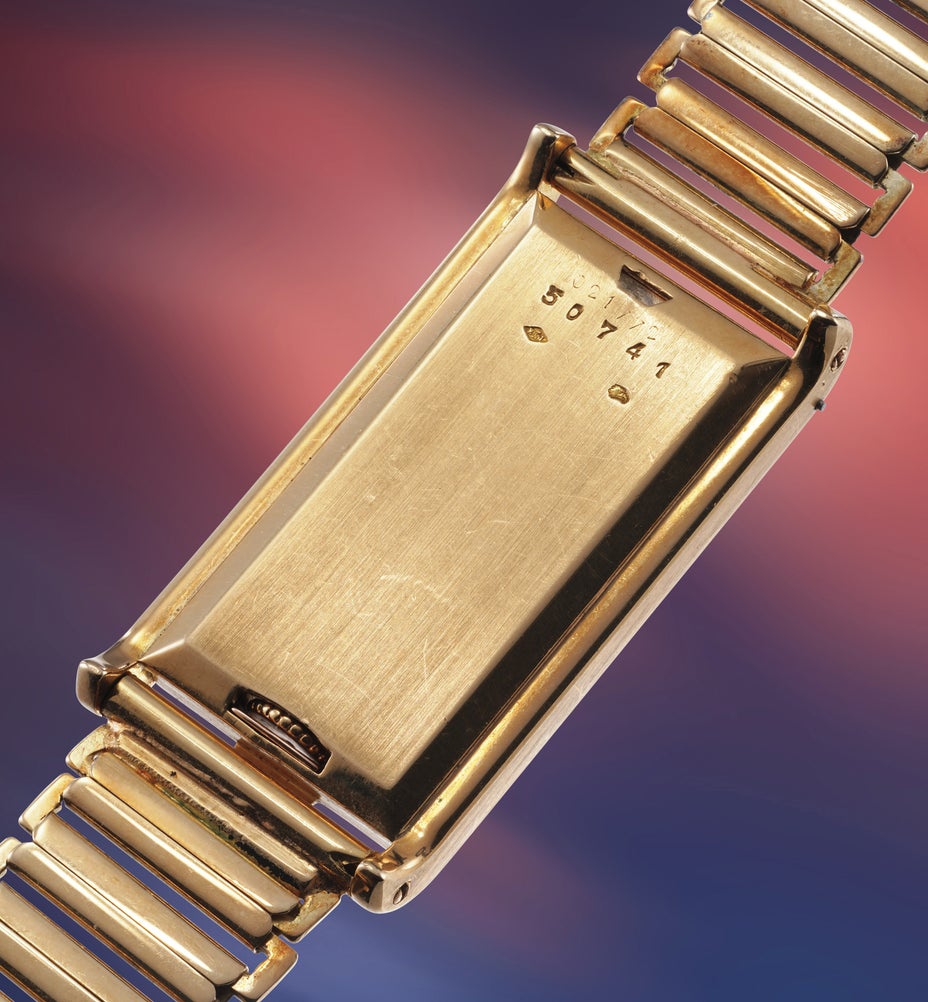
- Fitted with a Gay Frères bracelet - a rarity in itself
The Cartier "Tank Basculante" model was launched to the market in 1932. An offshoot of the original Tank design (first created 1919–1920), its name comes from the French word basculante, meaning “tilting” — a direct reference to its unique reversible case mechanism. This model allowed for a complete 360 degree rotation of the case to thus protect the crystal and consequently the dial during sporting activities - similar to Jaeger LeCoultre's Reverso model.
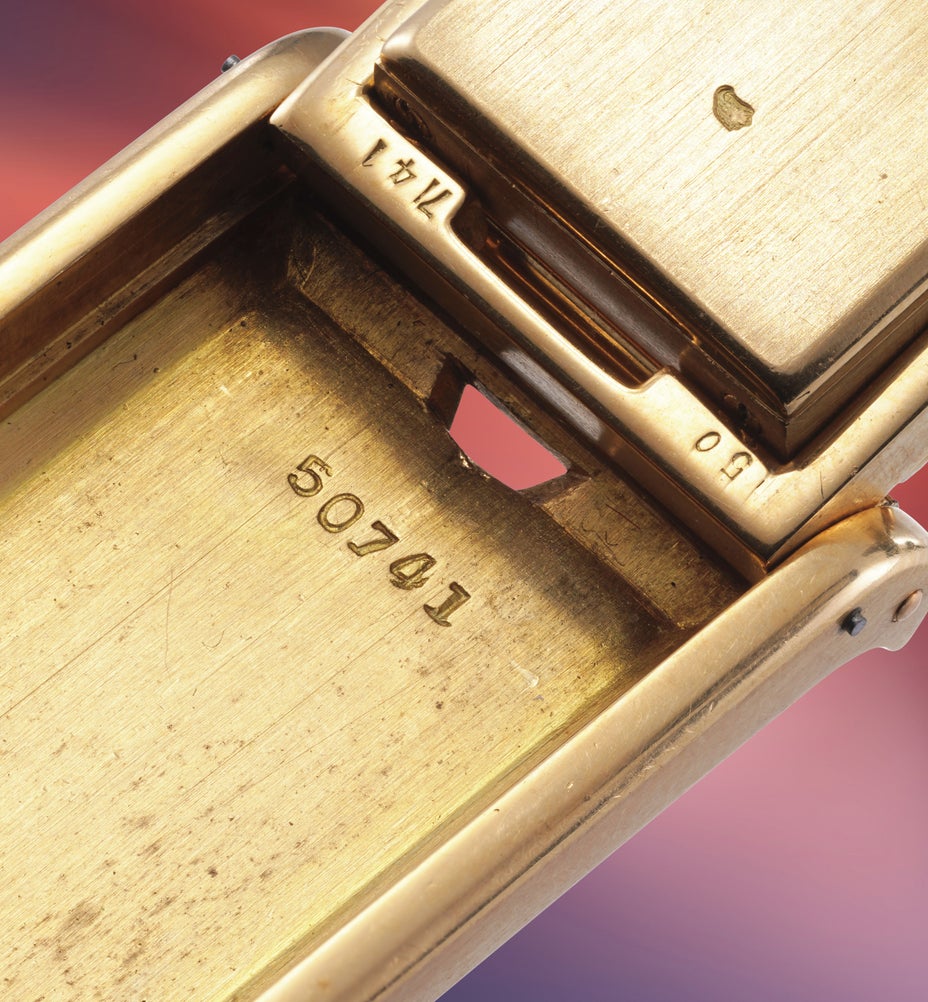
Similar to the Reverso, its development was a joint collaboration between Le Coultre, César de Trey of Spécialités Horlogers in Lausanne and Jaeger in Paris, resulting in the patent for the watch in 1932 reserved for Cartier. It was initially known as the "Cabriolet Reversible". The rarity of this present watch is furthermore enhanced by the beautiful condition case, still clearly engraved with the Cartier numbers, the EJ maker's mark and original aged dial.
Cartier
FrenchWith the Constitution of 1848 came a new standard for luxury in France. Founded one year prior by Louis-Francois Cartier, the house of Cartier was one of the first to use platinum in jewelry making. This incredibly expensive material became the stepping-stone for Cartier to experiment in form, mechanisms and attitude. It helped men move from pocket watches to wristwatches, effectively making the watch much more functional and prominent in a man's overall wardrobe.
Cartier did not only touch on functionality. Inspired by a commissioned painting by George Barbier featuring a black panther at the feet of an elegantly bejeweled woman, Cartier began incorporating wild animals in his designs—most notably, Cartier Panthère rings, bangle bracelets and watches. Yet it wasn't until the late 1960s that the house of Cartier debuted their iconic yellow and rose gold LOVE collection, which includes the famous bracelet that only a special screwdriver can open.