58
Audemars Piguet
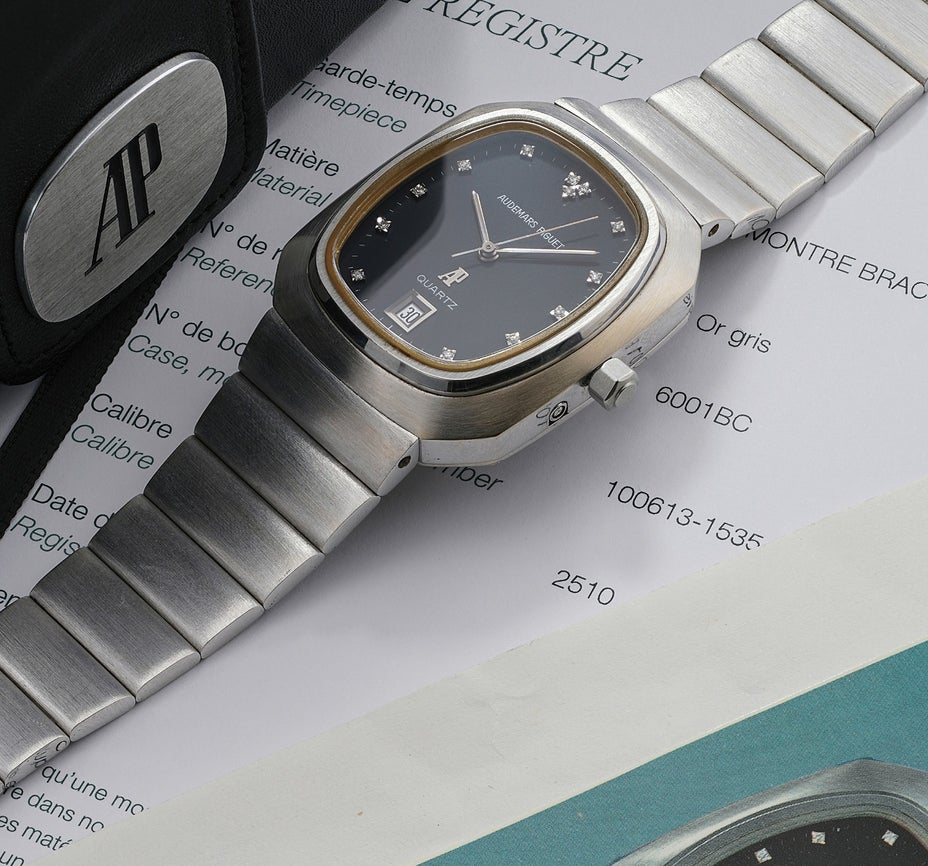
Ref. 6001BC
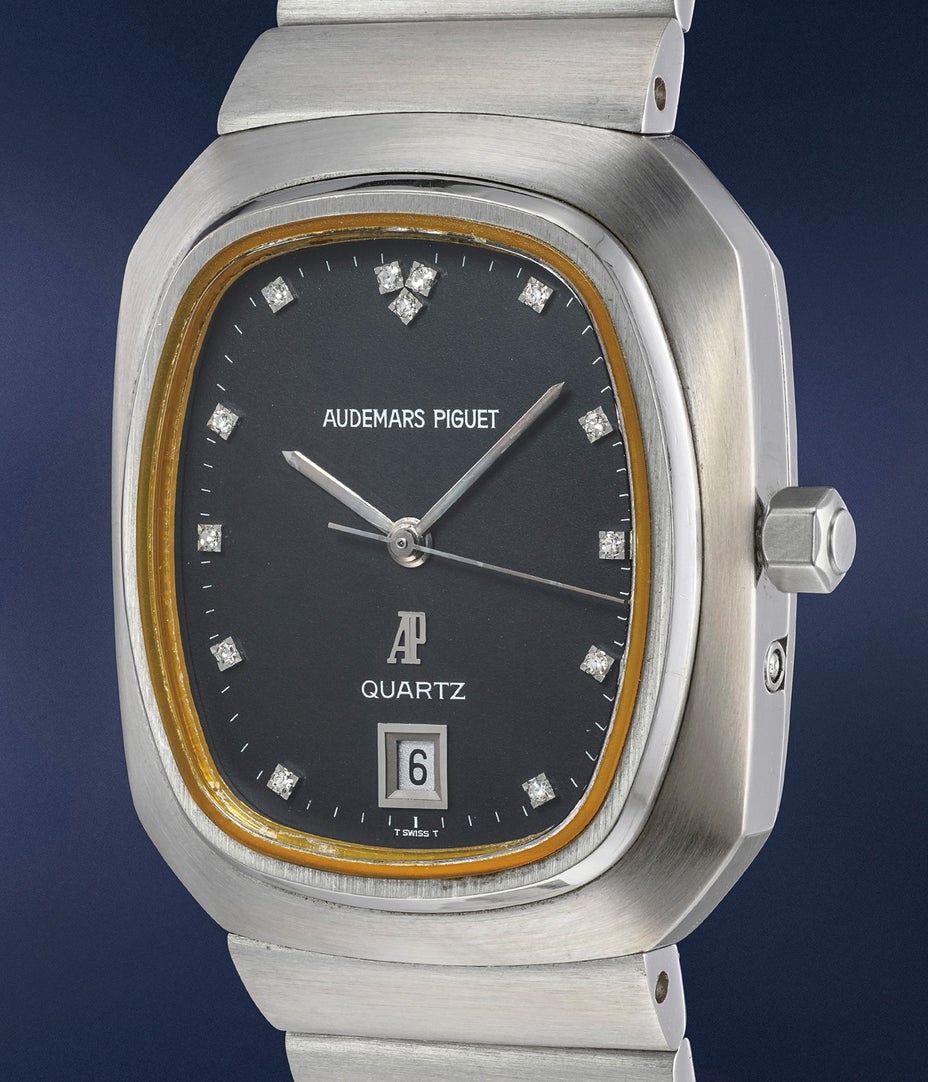
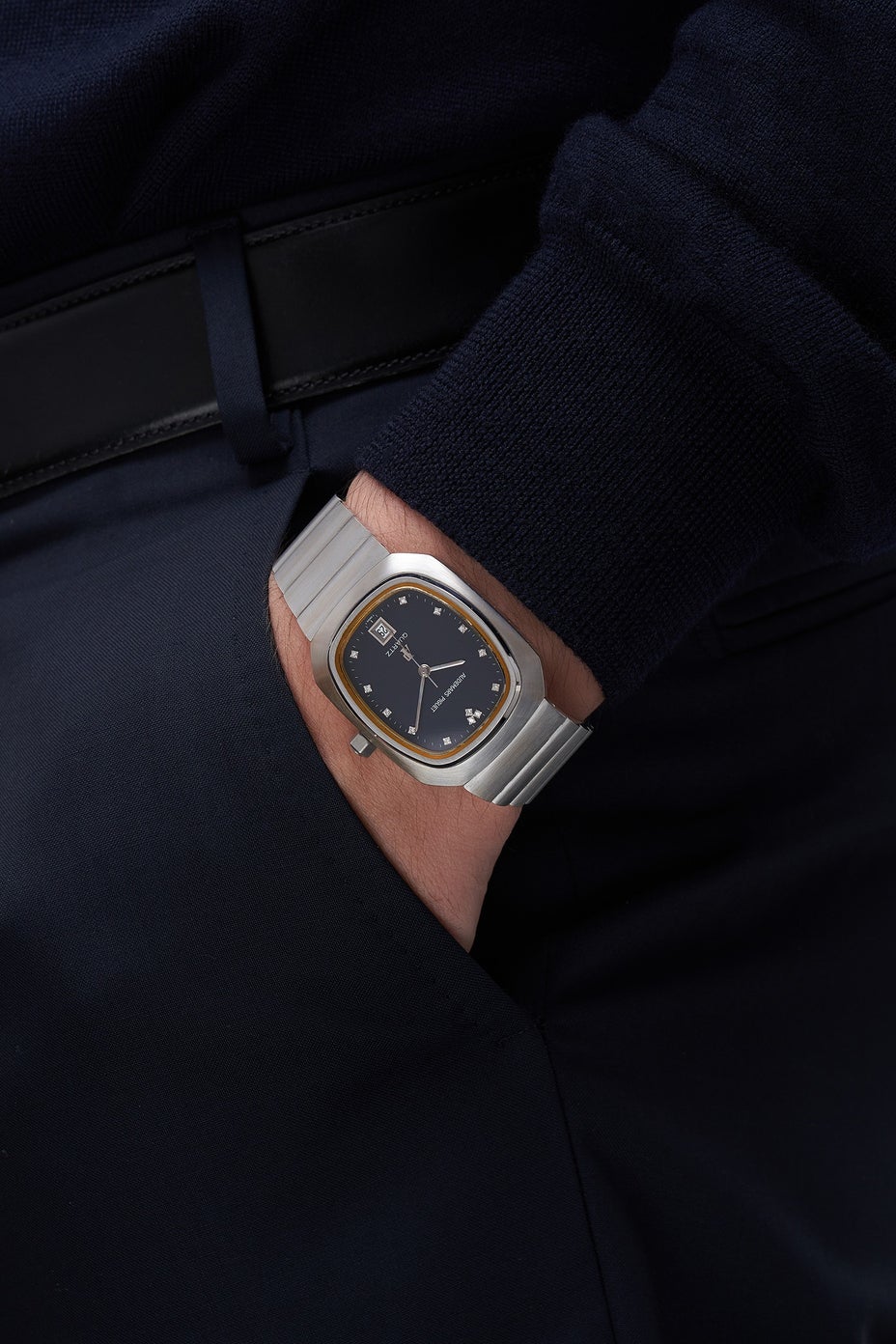
A very attractive and rare oval-rectangular octagonal-shaped white gold quartz wristwatch with date and bracelet
Full-Cataloguing
While brands such as Rolex or Patek Philippe had participated in the developing of the Beta 21 quartz movement, Omega had developed the ultra precise Megaquartz caliber 1510 - precise to one second a month. Omega supplied this movement to Audemars Piguet, who labelled it as cal. 2510, which can be found in the present reference 6001. The small pusher under the crown enables the wearer to correct the one second discrepancy.
Design-wise, the reference 6001 is almost a rectangular Royal Oak, keeping with the 8 edges to the bezel . It even features the AP at 6 o’clock like the beloved reference 5402 A Series. It is entirely possible that this reference was the brainchild of Gerald Genta given the aesthetic similarities with the Royal Oak.
The present example is part of an incredibly rare series made in white gold with diamond hour markers adding a dash of flamboyance to an already incredibly good looking timepiece.
Audemars Piguet
Swiss | 1881A specialist in the manufacture of complications since it was established in 1881, Audemars Piguet never ceases to impress with a rich history of creating bold, even audacious, timepieces underpinned by traditional watchmaking at its finest. This Le Brassus-based Swiss manufacturer is one of only two major manufacturers still owned by the founding family. Since its earliest days, AP is considered a leader in the field of minute repeaters and grande complication pocket and wristwatches. The brand is devoted to preserving the history of watchmaking in the Vallée de Joux, showcased at their superb museum in Le Brassus.
Today, the brand is best known for its Royal Oak models, a revolutionary luxury sports watch launched in 1972. Other key models include early minute repeating wristwatches, vintage chronograph wristwatches, such as the oversized reference 5020, perpetual calendar watches and the Royal Oak Offshore, first introduced in 1993.