61
Henri Cartier-Bresson
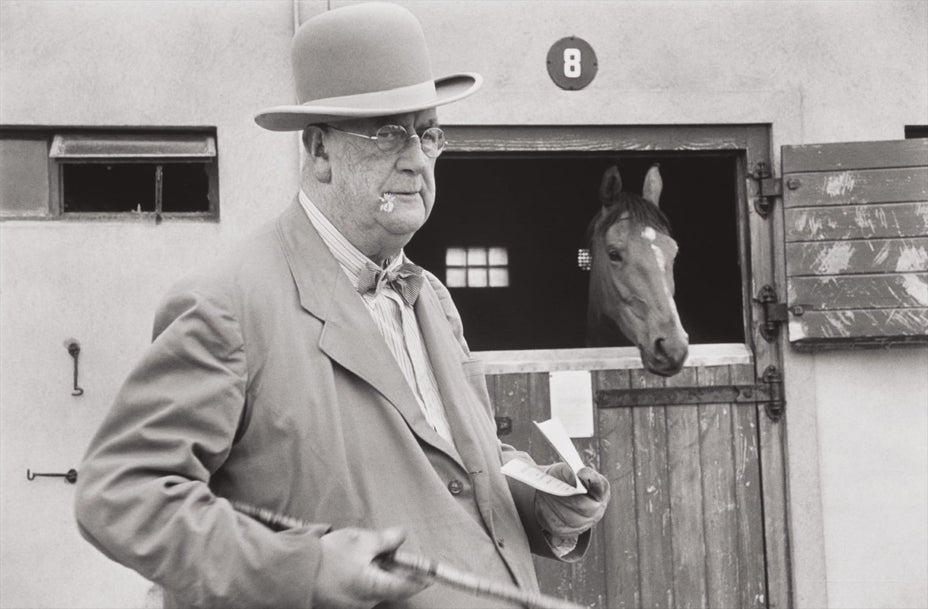
At the Curragh Racecourse Near Dublin, Ireland
Full-Cataloguing
Fifteen years later, while on assignment for the Harper’s Bazaar September 1952 issue, Cartier-Bresson traveled to Dublin, Ireland to photograph a horse auction at the famed Curragh racecourse (lot 61). This return to the region occurred just five years after the creation of Magnum and only seven years after the conclusion of World War II. The ten images included in the magazine extolled how people have returned to enjoying the simple pleasures of life (lots 59-61). On both of these assignments, separated by over a decade, Cartier-Bresson captured the spectators rather than the spectacle.
Henri Cartier-Bresson
French | B. 1908 D. 2004Candidly capturing fleeting moments of beauty among the seemingly ordinary happenings of daily life, Henri Cartier-Bresson's work is intuitive and observational. Initially influenced by the Surrealists' "aimless walks of discovery," he began shooting on his Leica while traveling through Europe in 1932, revealing the hidden drama and idiosyncrasy in the everyday and mundane. The hand-held Leica allowed him ease of movement while attracting minimal notice as he wandered in foreign lands, taking images that matched his bohemian spontaneity with his painterly sense of composition.
Cartier-Bresson did not plan or arrange his photographs. His practice was to release the shutter at the moment his instincts told him the scene before him was in perfect balance. This he later famously titled "the decisive moment" — a concept that would influence photographers throughout the twentieth century.